



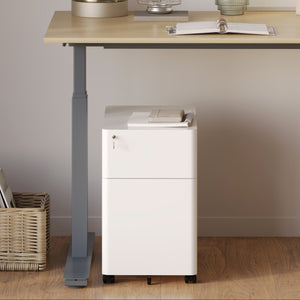

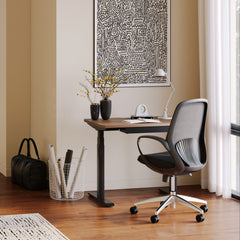
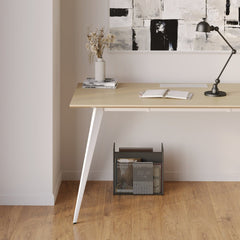
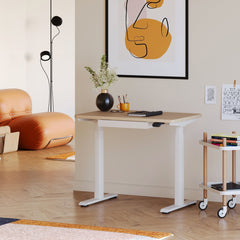

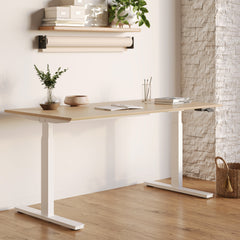

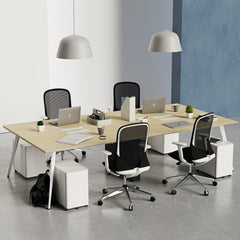
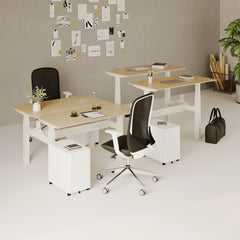
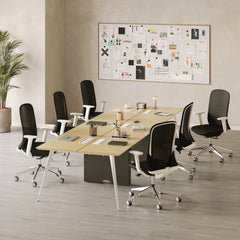


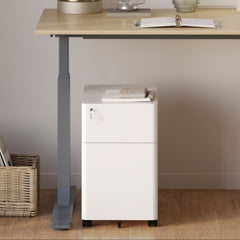


Filing Cabinet Choices for Cleaner Workstation Planning
Cleaner workstation planning starts with filing storage that matches the desk, document volume, security needs, and daily workflow. Explore how cab...
Learn more
Visit quiz page to see how we makes it easy to create an inspiring workplace


A stylish ergonomic office chair only performs as well as the workspace it sits in. When the desk is too tall, too low, or too shallow, even a well-designed chair can feel “wrong” because your body is forced to compensate. A quick geometry check makes the next steps clearer and prevents buying a chair that fights your setup.
Start with the desk surface height and what is happening below it. A chair needs enough height range to bring your elbows to a comfortable keyboard level, but you also need room for your knees and thighs under the desk. If your knees bump the underside or you have to scoot back to fit, posture tends to collapse and lower back fatigue creeps in.
Sit with shoulders relaxed and elbows close to your sides. Your forearms should feel supported and level as you type, without shrugging. If your wrists angle up because the desk is high, or your shoulders rise to reach the keyboard, you will feel it in the neck and upper back long before the chair “breaks in.”
A reliable starting point is three right angles: hips, knees, and elbows around 90 degrees. Feet rest flat, shoulders stay relaxed, and the backrest supports you without forcing you forward.
The personalization tweak is simple: adjust for your proportions. Some people have longer legs and shorter torsos, or the opposite. If you can reach a comfortable keyboard height but your feet float, that is not a chair failure. It is a cue to add stable foot support so your thighs can relax and your lower back stays supported.
When the desk height is the main constraint, the smartest move is to start with the surface. A chair can be adjusted, but it cannot change the laws of geometry. If you are evaluating chair options alongside desk options, browse the Urbanica desk collection with chair fit in mind. Look for a surface height and leg clearance that let you sit upright with relaxed shoulders and stable feet. That single alignment step makes every chair choice easier and more comfortable.
Ergonomics can sound complicated, but the practical parts are repeatable. The goal is not to sit rigidly. The goal is to support neutral posture and allow movement. Our simplest rule is this: prioritize adjustability that changes how your body loads the chair, then evaluate comfort and style.
Seat height is the foundation. If it is too low, you end up reaching up to the desk and rounding the shoulders. If it is too high, feet lose contact and the front edge compresses the underside of the thighs. A good fit lets you keep feet supported and elbows comfortably aligned with your work surface.
Seat depth is one of the most underused controls. A seat that is too deep tends to pressure the backs of the knees and encourages sliding forward, which disconnects the backrest from your spine. A seat that is too shallow leaves the thighs unsupported and can make your hips feel unstable.
With your hips all the way back, check the gap between the front edge of the seat and the back of your knee. About 2 to 3 finger widths is a practical range for many bodies. The goal is support without compression.
When the seat pushes into the knee area, circulation and comfort suffer. Many people respond by raising the seat to reduce pressure, then feet start to dangle. That trade-off shows up later as lower back fatigue. Seat depth solves that chain reaction.
Lumbar support should feel like guidance, not a hard bump. The right support helps your spine stay neutral so you do not rely on muscle tension to hold yourself up.
If you feel pressure high in the mid-back, or if the lower back feels “pushed forward” in a way that forces your ribs to flare, lumbar placement may not match your natural curve. Another clue is needing to perch forward to feel comfortable.
A small adjustment can be enough. Overcorrecting often feels intense at first, then fatiguing later. The most reliable test is whether you can breathe deeply and keep shoulders relaxed while sitting back fully.
Armrests are not just for comfort. They are load-sharing tools. When set correctly, they reduce shoulder elevation and keep the upper back calmer during long work sessions.
Raise armrests until your shoulders feel relaxed, not lifted. Your elbows should be lightly supported, and your wrists should stay neutral while typing.
If armrests force your elbows outward, shoulders and neck often tighten. If they squeeze inward, wrists can bend. Look for a position where your forearms can move naturally between keyboard and mouse.
Ergonomics is dynamic. A chair that supports small posture changes helps reduce static loading. Instead of treating upright as “correct” and recline as “lazy,” use both strategically.
Tilt tension should be firm enough to support you but not so stiff that you avoid moving. For focused work, you want stable support. For reading and calls, a gentle recline can unload the spine and let you breathe more easily.
When you lock a chair rigidly, the body tends to find movement elsewhere, usually by rounding the shoulders or leaning forward. A controlled recline is often healthier than a forced upright posture.
A chair should move when you want it to and stay stable when you do not. Flooring matters. The right caster type and a stable base reduce micro-strain from constant repositioning.
On carpet, wheels may feel sluggish, causing you to pull yourself forward with your back and shoulders. On hard floors, a chair that rolls too freely can feel unstable. The right configuration depends on your workspace.
A stable base keeps you balanced during small movements and recline transitions. It also supports confident sitting, which matters more than people think when you are working for long stretches.
A chair is part of the room, not just a tool. Style matters because it affects how the workspace feels and how likely you are to maintain the space. Good design can support good habits.
Clean lines and restrained details reduce visual clutter. This style works in home offices and professional settings because it pairs easily with different desks and lighting.
Soft forms can reduce the “equipment” look and make a workspace feel more personal. When a chair feels like it belongs in the room, it gets used consistently.
Darker palettes can look crisp and professional and tend to blend into modern work setups. They also pair well with monitors, accessories, and matte finishes.
Comfort is not only softness. It is temperature, friction, and how the chair responds over time.
Breathable materials can help comfort during longer sessions. Softer surfaces can feel good initially but may not offer the same temperature control. The best choice depends on how long you sit and the climate of your room.
Choose materials you can realistically maintain. A chair should support your routine, not require a new routine. Consider how it handles dust, pet hair, and everyday contact.
A practical way to keep things cohesive is to pick one dominant finish and one supporting accent. Let the chair echo the desk or the hardware, then keep the rest simple. If you want to compare silhouettes, finishes, and categories in one place, use the Urbanica office chair collection as a reference point for what fits your space.
A chair can look perfect and still fit poorly. A fast, repeatable fit test protects comfort and helps you compare options fairly.
Sit back fully. Adjust seat height until feet feel stable and your hips feel level. If you cannot get stable feet without pushing into the backs of the knees, the height and depth combination may not match your setup.
With hips back, confirm the knee gap. If the front edge presses, it will likely become a problem over longer sessions.
Lean back and breathe. Support should feel present and calm. If it feels aggressive or misplaced, you will likely compensate by perching forward.
Place hands on the keyboard. If shoulders rise or wrists bend, adjust armrests and seat height. If the desk forces a bad angle, address desk height or keyboard placement.
Recline slightly as you would during a call. The chair should support the spine and allow you to stay open-chested, not slump.
Fast discomfort is information. Pay attention to numbness, pressure behind the knees, tailbone discomfort, and a feeling that your head drifts forward. Those signs often predict fatigue later.
| Fit factor | How to test in under 60 seconds | What “good” feels like | Common mistake |
|---|---|---|---|
| Seat height | Feet on floor, hips level, elbows near desk height | Stable feet, relaxed shoulders | Raising seat to fix knee pressure instead of adjusting depth |
| Seat depth | Sit back, check space behind knees | Thighs supported without knee compression | Perching forward to avoid pressure |
| Lumbar support | Lean back and take two slow breaths | Supportive and neutral, not forceful | Treating “more pressure” as “better support” |
| Armrests | Type for 20 seconds, then move to mouse | Shoulders down, wrists neutral | Armrests too high, causing shrugging |
| Recline and tilt | Recline slightly, return upright | Smooth movement and stable support | Locking upright all day |
| Stability and roll | Shift position, scoot slightly | Chair moves when you want, stable when you stop | Wrong casters for the floor, causing strain or sliding |
The fastest way to choose is to match the chair to how you work. This keeps the decision grounded in real use, not trends.
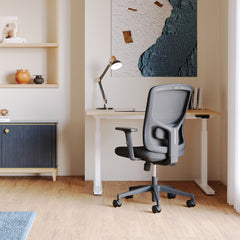
For long sessions, look for an ergonomic task chair approach with a supportive backrest and adjustability that helps you maintain neutral posture while you work. If you are considering a chair positioned in that category, review the Novo Chair product page while focusing on adjustability and how the chair supports a stable seated position.
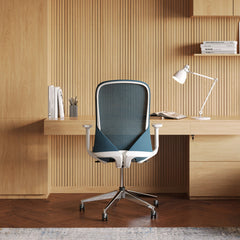
Some workdays call for a more structured feel, especially when you prefer a steady sitting posture. The right fit is a chair that supports you without forcing you into an unnatural curve. For a chair presented as ergonomic with office use in mind, explore the Onyx Chair product page and evaluate it against your desk height and your preferred posture.
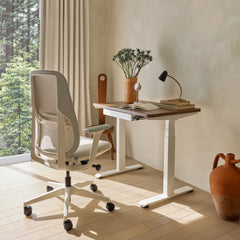
Hybrid setups often need a chair that looks at home in the room while still supporting real work. Prioritize comfort cues like relaxed shoulders, stable feet, and a backrest that supports you during both focused work and calls. For a design-forward seating option, see the Muse Chair product page and think about how it complements the surrounding furniture while still meeting your comfort baseline.
Some spaces are shared, used for quick tasks, creative sessions, or occasional work. In those cases, the best choice is often a chair that feels welcoming, moves easily, and stays comfortable without constant micro-management. If you are browsing a versatile option, check the Seashell Chair product page and use the fit test to confirm it supports your body and your desk.
A chair rarely arrives “perfect” out of the box. The comfort difference comes from setup. The goal is to reduce strain at the knees, lower back, shoulders, and wrists.
Set seat height so feet feel stable and hips feel level. Then set seat depth so your thighs are supported and the knee gap is comfortable. This pairing prevents the common cycle of raising the seat to relieve knee pressure, then losing foot support.
Sit back fully and place lumbar support where it meets the natural curve of your lower back. If the chair has adjustable backrest features, keep changes small. The target is a calm, supported feeling, not a forced arch.
Set armrest height so shoulders drop naturally. Then adjust width so elbows stay close to the body without pinching. The easiest check is whether you can type with neutral wrists and move to the mouse without shoulder tension.
Choose a recline angle that supports upright work and a slightly reclined posture for reading or calls. Adjust tension so you can move without fighting the chair. Movement is part of ergonomic comfort.
If the monitor is too low or far away, the neck will lean forward regardless of chair quality. Bring the screen to a comfortable height and distance so the head stays stacked over the shoulders.
1. Sit all the way back and relax your shoulders.
2. Adjust seat height until feet feel stable.
3. Set seat depth to support thighs while keeping a comfortable gap behind the knees.
4. Adjust lumbar support to meet the natural curve of the lower back.
5. Set backrest position so you can sit back without feeling pushed forward.
6. Raise armrests until shoulders feel relaxed, not lifted.
7. Adjust armrest width so elbows rest naturally by your sides.
8. Set recline and tilt tension so you can shift posture smoothly.
9. Align monitor height to reduce forward-head posture.
10. Re-check typing posture for 30 seconds and make small corrections.
The most honest test of an ergonomic office chair is how it feels after regular use. Comfort is not a single sensation. It is how the chair supports your body across different tasks.
A very soft seat can feel pleasant immediately but may not support consistent posture. If the pelvis sinks unevenly, the spine compensates. A chair that feels supportive and balanced tends to age better in everyday use.
A mild adjustment period can happen as you learn the controls and your body settles into a better posture. Bad fit is different. If you feel consistent pressure behind the knees, tailbone discomfort, or shoulder tension that does not improve with setup, the geometry likely does not match your desk-to-body alignment.
A quick reset can prevent hours of static loading. Every so often, sit back, take a breath, relax shoulders, and re-center feet. The chair supports you best when you use the backrest and keep your base stable.
Use upright posture for focused typing and gentle recline for reading or calls. The goal is to distribute load rather than hold one position all day.
If your desk height forces the seat higher than comfortable for your feet, use stable foot support. This protects the knees and lower back by maintaining a reliable base.
A trustworthy purchase process is simple: test fit, verify function, and confirm it works with your workspace. Avoid hype, avoid unrealistic expectations, and prioritize comfort that holds up in daily use.
Check the chair’s stability when sitting and when slightly reclined. Roll it a short distance on your floor. It should move smoothly and stop predictably without feeling like it slides away from you.
Confirm both armrests adjust evenly and feel secure. Small wobble can be normal in some designs, but the armrests should feel reliable under light support.
Test the recline and return. Movement should feel controlled, not jerky. If the chair has multiple controls, learn what each one does before making big changes.
Before you lock in your routine, make sure every lever and knob behaves as expected. Set the chair up for your body and desk, then do the two-task test again. The right chair does not require constant fiddling to feel comfortable.
For shoppers who prefer guidance, product context, and practical support details, use workspace service and shipping FAQs to understand how we help customers evaluate fit and plan workspace purchases. A confident choice comes from clarity, not pressure.
A quick guide should lead to action. The most reliable path is to decide based on discomfort signals and workspace geometry, then confirm with a consistent fit test.
Start with seat height and monitor alignment. Many comfort issues come from a desk that is too high or a monitor that pulls the head forward. Then adjust seat depth and armrests. If discomfort improves quickly, you may not need a new chair. If discomfort persists and you cannot achieve stable feet, comfortable knee clearance, and calm lumbar support, replacement becomes the rational next step.
Prioritize seat depth and stable foot contact. A chair that supports the thighs without compressing behind the knees prevents the chain reaction of raising the seat too high.
Choose a chair that lets you sit back comfortably and use a gentle recline when needed. Look for a backrest feel that supports neutral posture without forcing an exaggerated curve.
Armrests should help shoulders relax and keep wrists neutral. Monitor alignment prevents forward-head posture that no chair can fully fix.
Standardize the basics: seat height range, seat depth suitability, stable base, and intuitive controls. A chair that most people can set up quickly reduces ongoing discomfort complaints.
Body proportions vary. Armrest geometry, lumbar preference, and desk height differences can change the best fit. When possible, prioritize chairs that offer enough adjustment to meet different bodies without requiring complicated setup.
A stylish ergonomic office chair works best when the workspace is aligned, the fit is verified, and the setup is dialed in thoughtfully. That combination creates comfort that feels real and sustainable, without relying on hype or unrealistic promises.


You have unlocked free shipping!
You're saving $29 and unlocked free shipping!
Leave a comment