



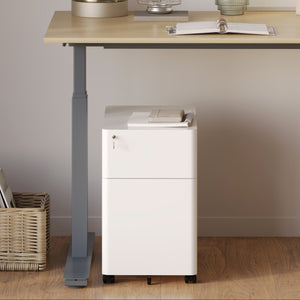






















Filing Cabinet Choices for Cleaner Workstation Planning
Cleaner workstation planning starts with filing storage that matches the desk, document volume, security needs, and daily workflow. Explore how cab...
Learn more
Visit quiz page to see how we makes it easy to create an inspiring workplace


Open-concept homes are designed to feel expansive. Removing walls allows natural light to travel freely and creates a sense of connection between kitchen, living, and work areas. However, without intentional furniture placement, these spaces can quickly feel scattered.
The secret to making open layouts work is not adding dividers. It is using furniture to quietly define zones. With thoughtful placement of desks, chairs, and ergonomic solutions, you can create clear boundaries while preserving openness. The result is a home that feels both spacious and structured.
Every zone needs a focal point. In an open layout, this anchor prevents areas from blending into one another without purpose.
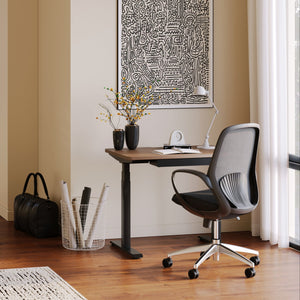
For a home office corner within a shared living area, investing in quality Office Furniture Los Angeles solutions ensures the workspace feels intentional rather than temporary. A defined desk setup, paired with supportive seating, instantly signals that this area serves a specific function.
When each zone has one strong anchor piece, visual clarity follows naturally. The anchor should be proportional to the space and positioned thoughtfully to guide movement rather than interrupt it.
Ask yourself:
What is the primary purpose of this zone?
What furniture piece best represents that function?
Does its placement create natural boundaries?
Start there, and build outward.
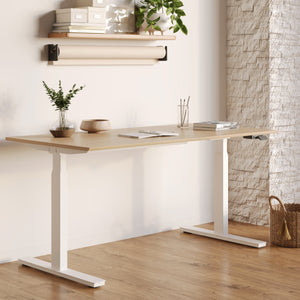
In open-concept homes, desk placement can subtly separate work from relaxation. Instead of pushing a desk randomly against a wall, consider orientation.
Facing the desk toward a wall:
Reduces distractions
Visually defines a work boundary
Creates psychological separation
Floating a desk perpendicular to a wall can:
Act as a divider
Segment a larger room
Add depth
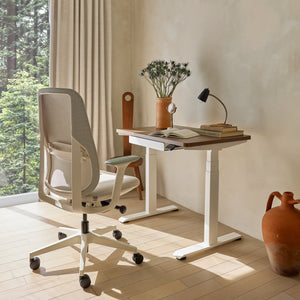
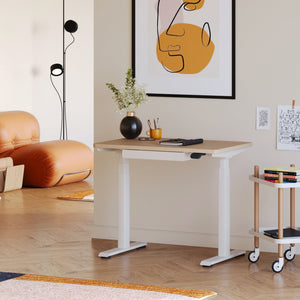
A clean-lined standing desk allows flexibility in shared spaces. Its adjustable height feature adapts to different tasks while maintaining a minimal footprint. In open layouts, flexibility matters because zones may shift based on daily needs.
Benefits include:
Adaptable posture changes
Reduced visual bulk
Easy repositioning
When defining zones, avoid blocking natural pathways. Leave enough space for smooth transitions between kitchen, living, and office areas.
Clear circulation keeps openness intact while furniture placement provides structure.
Alignment brings order to open spaces. When desks, sofas, and storage units follow the same visual line, the room feels organized.
Use:
Parallel furniture placement
Consistent spacing
Coordinated heights
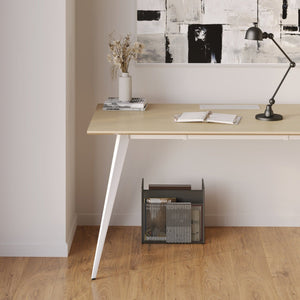
A streamlined office desk with balanced proportions helps define a workspace without overwhelming the surrounding area. Its structured design naturally signals function.
Bullet points to maintain clarity:
Keep desk edges aligned with flooring patterns
Match desk height with surrounding furniture
Avoid oversized frames
Open-concept design thrives on flow. Instead of bulky partitions, let furniture arrangement create gentle separations.
Small shifts in angle and orientation make a noticeable difference.
Layout affects focus. Studies on the office productivity design show that defined work zones improve concentration and reduce mental fatigue.
In open homes, blurred boundaries can lead to distractions. A clearly arranged workspace encourages productivity even when it shares a room with other activities.
Psychological separation can be achieved through:
Distinct desk placement
Focused lighting
Consistent ergonomic setup
The brain responds positively to clearly defined environments.
An organized desk strengthens the perception of a separate workspace. A mounted monitor arm lifts screens off the surface, freeing space and enhancing clean lines.
Advantages:
Improved posture
Reduced clutter
Stronger visual structure
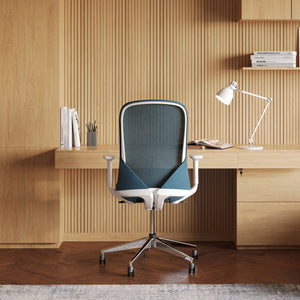
Seating plays a central role in defining zones. A well-designed ergonomic office chair signals that the area is intended for focused work rather than casual lounging.
Bullet points for seating impact:
Choose supportive lumbar design
Maintain consistent color with desk
Avoid bulky silhouettes
Too many decorative items blur boundaries. Keep each zone focused by limiting accessories to essentials.
Ergonomics combined with restraint reinforces purpose.
While walls are absent, rugs and lighting create invisible frames. A rug under a desk area visually outlines the workspace. A dedicated task light signals functional focus.
Keep lighting consistent in temperature but vary intensity between zones.
Soft living room lighting encourages relaxation. Brighter desk lighting promotes alertness. Together, they define purpose without physical barriers.
|
Zone Type |
Anchor Piece |
Supporting Element |
Visual Effect |
|
Work Area |
Office desk |
Monitor arm |
Focused productivity |
|
Living Area |
Sofa |
Area rug |
Relaxed comfort |
|
Dining Space |
Dining table |
Pendant lighting |
Social gathering point |
|
Reading Nook |
Accent chair |
Floor lamp |
Quiet retreat |
|
Hybrid Workspace |
Standing desk |
Ergonomic chair |
Flexible function |
This table highlights how specific furniture pieces define purpose within open layouts.
Consistency keeps zones connected. Use:
Similar wood finishes
Matching metal tones
Coordinated upholstery
While each zone should feel distinct, avoid drastic color changes. Subtle shifts work better.
Bullet points:
Stick to one main neutral
Introduce accent tones sparingly
Repeat materials across zones
Open-concept homes rely on breathing room. Leave gaps between zones to maintain spaciousness.
Overfilling destroys flow. Underfilling feels incomplete. Balance is essential.
Open homes often serve multiple purposes. A workspace may double as a homework area or creative station.
Flexible furniture choices allow adaptation without full redesign. Adjustable desks, supportive chairs, and minimal accessories make transitions seamless.
When zones are defined through thoughtful placement rather than permanent dividers, the space remains adaptable.
Open-concept homes often share the same flooring and ceiling height, which can make every area feel visually flat. One subtle but powerful trick to define zones is working with vertical variation.
Different functional areas can feel distinct simply by adjusting furniture height.
For example:
A standing desk naturally sits higher than a dining table
A lounge chair sits lower than a task chair
Open shelving adds vertical framing
These variations signal different uses without the need for physical barriers.
Visual separation becomes stronger when elements align at different heights.
You can:
Position artwork above one zone only
Install task lighting at desk level
Keep living areas at lower visual weight
This creates subtle visual tiers inside one open space.
While adding height variation, avoid visual clutter.
Do not overcrowd walls
Keep shelving minimal
Maintain consistent metal finishes
Height differences should create structure, not chaos.
When vertical levels are used thoughtfully, open-concept layouts gain depth and clarity without sacrificing spaciousness.
Before finalizing your open-concept layout, review this checklist to ensure every area feels purposeful.
Assign a clear anchor to each zone
Position desks to guide movement
Maintain clear walkways
Use alignment to create order
Elevate screens to reduce clutter
Choose ergonomic seating
Keep lighting purposeful
Coordinate materials across zones
Avoid bulky partitions
Leave breathing space between functions
Open-concept homes succeed when furniture does the defining. With intentional placement and ergonomic solutions, you can enjoy both spaciousness and structure.
One room can serve many purposes, as long as each corner knows exactly what it is meant to do.


You have unlocked free shipping!
You're saving $29 and unlocked free shipping!
Leave a comment