























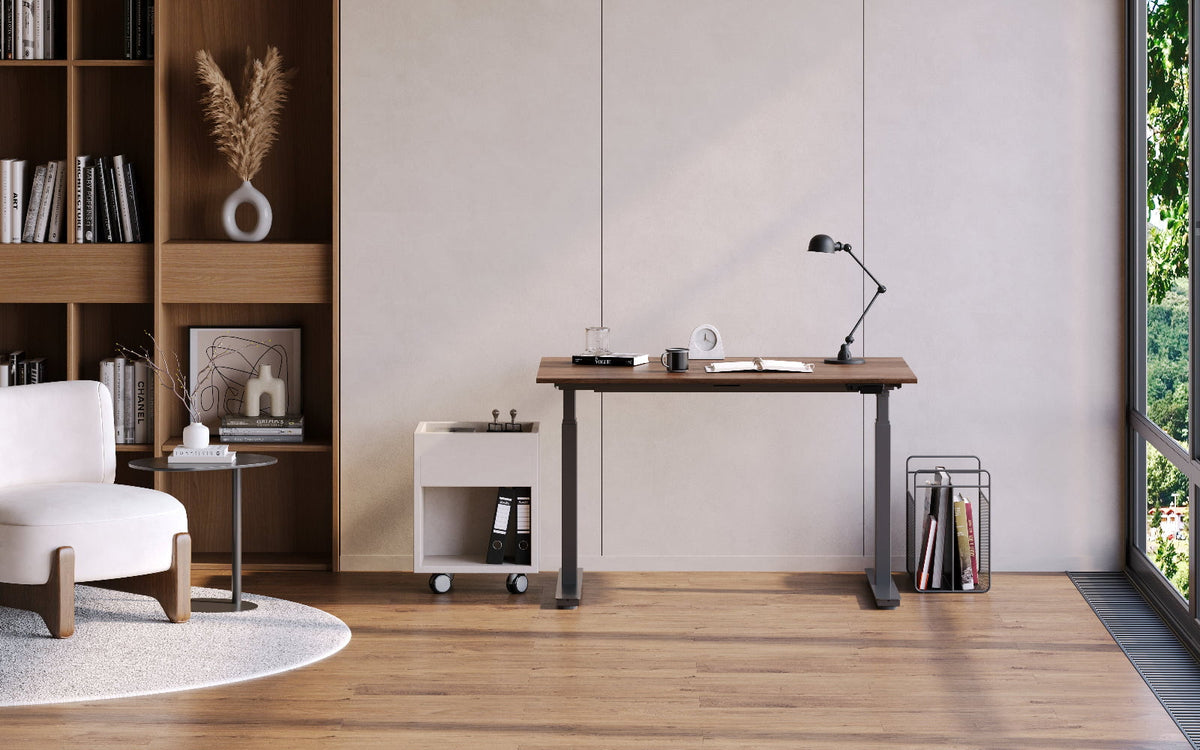
Smart Table Ideas from Japanese Home Design

The spatial logic that defines smart tables
Japanese interiors treat emptiness as an active element. We design with that mindset because intentional spacing makes furniture perform better in small, shifting, and multi use homes. Rather than crowding a room, the smart table approach creates strategic voids around a surface so the table becomes a flexible anchor instead of a static obstacle. This principle guides decisions about footprint, edge curvature, and placement so the piece supports circulation, daylight, and multi tasking without visual clutter.
Ma and purposeful negative space
Ma is not absence. It is the readable margin that lets objects breathe and people move without friction. For tables this means sizing the tabletop to the activity rather than sizing the activity to the tabletop. A table that respects ma will feel lighter and allow adjacent functions to coexist. We use this principle to determine how deep a surface needs to be, where legs should sit, and which edges can be tapered to improve sightlines.
Compact living translated into multi use surfaces
High density living demands furniture that performs more than one role well. A table should accept a laptop, support casual dining, and store desktop tools without becoming a catchall of clutter. Our product thinking favors surfaces that accommodate quick transitions so a studio can move from office to dining to creative studio within minutes. That is why we curate pieces and layouts that make small rooms feel more generous and functional, not busier.
Practical applications of sliding and layered surfaces
Sliding panels and layered tops allow a surface to reveal function only when needed. Hidden storage, pull out trays, and overlapping boards can isolate cables, conceal chargers, or add an elevated surface for video calls. These solutions borrow from traditional sliding door systems while remaining simple to manufacture and maintain. The result is a cleaner visual field and surfaces that adapt to everyday rhythms. Explore our curated collection of compact desk options for small layouts when planning a flexible corner workspace.
Low profile design and grounded ergonomics
Low tables express quiet utility. They keep sightlines open and establish a human scale that feels calming. When translated into contemporary tables, the low profile approach is about preserving intimacy and encouraging a closer relationship between body and surface.
Chabudai influence on reach and social symmetry
Traditional chabudai prioritize equal access. A lower surface reduces reach variance between seated people, creating shared eye level and a sense of parity. For modern living this equates to surfaces that invite collaboration and casual conversation. When we design family friendly tables we consider reach radii and how every seat experiences the table surface in the same way.
Grounded workflows for mixed activities
A lower tabletop reduces visual obstruction and works well where multiple activities occur in a single room. It makes it easier to supervise children, maintain eye contact, and arrange layered seating for reading, gaming, or casual meetings. We balance low height with ergonomic cushions or lap supports so longer work sessions remain comfortable.
Minimal surfaces that support focused work
Simplicity is not minimalism for its own sake. A clean surface supports concentration by removing competing elements from the immediate field. Our simple modern office desk exemplifies this: the form is honest, the storage restrained, and the lines intended to hold only the tools a user needs for the task at hand.
Vertical flexibility and adaptable heights
Adaptability in height is one of the most direct ways a table can respond to varied needs. Vertical flexibility supports healthy movement, alternating postures, and functional layering in tight rooms.
Layered heritage applied to adjustable solutions
Historically, multi level furnishings created utility without expanding a footprint. Today, motorized or manual height adjustment updates that same idea. Instead of fixed zones, a surface can rise for standing tasks or lower for seated focus. This vertical agility is particularly useful in homes that serve as both studio and office.
Choosing when to use height adaptation
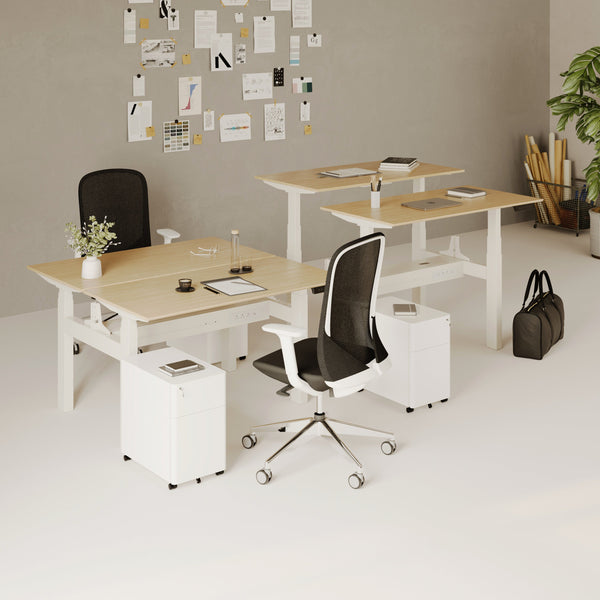
Adjustable surfaces are valuable when tasks vary throughout the day or when multiple users of different statures share a piece. For those who switch between sitting and standing, consider a piece designed around smooth transitions rather than abrupt changes. Our adjustable standing desk design aims to offer stable movement and deliberate integration with the room aesthetic.
Micro tables for corners and transitional spaces
Not every workspace needs a large footprint. Micro tables help reclaim corners, hallways, and alcoves as purposeful zones. These surfaces are ideal for quick check ins, charging stations, or laptop tasks without changing the room’s primary function. For tight areas that still require standing or higher access, consider a compact mini standing desk that prioritizes vertical utility with minimal intrusion.
When multi level is preferable to a single plane
Multi level solutions shine when the user performs layered tasks like drawing while referencing materials, or when they need a primary surface plus an elevated monitor shelf. Single plane tables are better when a simplified workflow and visual calm are the priority. Evaluate the sequence of tasks and the frequency of role shifts to choose the most appropriate approach.
Communal layouts and shared table systems
Japanese washitsu and other communal room types prioritize balance and hospitality. Those spatial customs inform how modern shared tables should be composed to encourage cooperation without sacrificing personal workspace.
Translating tatami room logic into group tables
Tatami spaces are organized to preserve flexibility and respect for personal space. In practical terms this means modular seating and tables that do not impose a hierarchy. Group tables should create equal sightlines, predictable movement paths, and unobstructed access for every participant.
Designing clustered workstations for fairness and focus
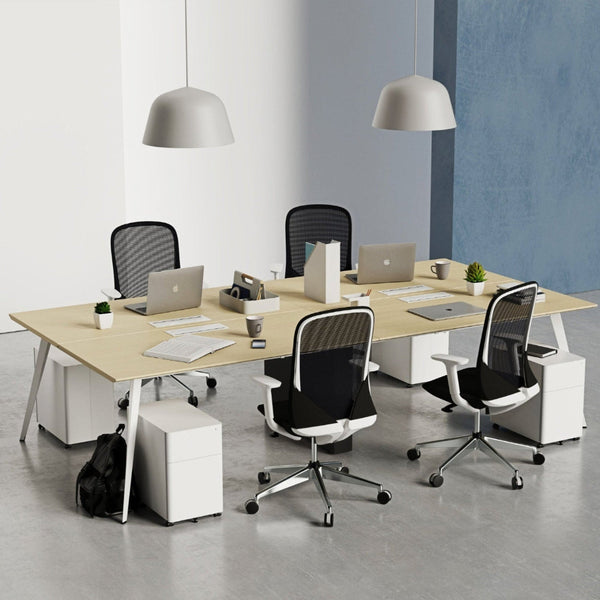
When multiple people need to work side by side, table design should maintain clear personal boundaries while fostering shared infrastructure such as cable channels or communal power. Our four-person workstation layout follows these principles by arranging stations so users benefit from both proximity and personal territory.
Privacy without isolation
Partitions and screens can create privacy yet keep a sense of openness. Low partitions, angled screens, and partial height panels inspired by Japanese screens can reduce visual distraction while preserving social connection. These devices should be tuned to sightlines, not used simply to segment space.
Scalable systems for growing households and teams
Homes and teams evolve. The best furniture anticipates change and can be reconfigured or combined to meet new demands.
Reconfigurability modeled after ryokan transitions
Ryokan rooms convert between functions with subtle moves. Folding futons, removed tables, and rearranged tatami mats transform the same footprint into different experiences. Scalable tables borrow this logic by offering modular segments that join, separate, or fold to change capacity and role.
Table types for larger collaborative needs
Large format tables provide continuous access for teams, but they must be organized to avoid chaos. Surface zoning, integrated cable troughs, and clearly defined seating modules keep tools accessible while maintaining order. A purpose built communal surface should balance individual territory with shared utility. Consider our six-person workstation format when configuring a shared, permanent workspace.
Efficient pairing for two person workflows
Two person stations are deceptively complex. They must provide equal foot room, access to outlets, and a sense of personal space. Symmetry in legroom and a central cable channel often resolve common conflicts. Our two-person standing desk setup is developed with these everyday realities in mind.
Movement lines and circulation planning
A table should fit into the human paths that define a room. We plan table placement so doors, seating, and storage remain accessible. Good circulation reduces accidental collisions and makes shared activities comfortable. Think about how people enter, leave, and navigate around the surface when choosing orientation and clearance.
Ergonomic foundations and safe usage
Ergonomics is practical care for the body over time. Tables that encourage healthy postures and natural movement reduce fatigue and support sustained use.
Posture and surface relationships informed by seated culture
Japanese floor practices teach attention to the whole body. Even when a table is used with chairs, that ethos influences distance to the surface, the depth of the top, and the angle between the torso and the forearm. Correct relationships among these elements keep shoulders relaxed and wrists neutral.
Designing for reach, sightline, and long term comfort
A meaningful ergonomic design considers the range of motions a user will perform. For keyboard work align the forearms parallel to the floor. For writing allow surface area for arm sweep. For collaborative tasks provide elbow clearance and unobstructed knee space. For reference on workplace ergonomics and safe practices consult OSHA ergonomic guidance to align choices with established recommendations.
Tailoring ergonomics to specific activities
Different tasks have different needs. Reading requires a lower head angle and a slightly reclined posture. Typing needs a flat wrist and forearm support. Crafts or assembly call for nearer reach and neutral shoulders. Choose table dimensions and accessories according to the dominant activity in each zone.
Material choices, maintenance, and long term value
Sustainable thinking and simple maintenance are pillars of reliable furniture. Materials should age gracefully and be readily serviceable.
Selecting materials for longevity and quietness
Hardwoods, responsibly sourced veneers, and powder coated metal offer durability and restrained aesthetics. Finishes that hide wear yet can be spot maintained extend a table’s usable life. Choose joinery that can be tightened or replaced so the piece can be refreshed rather than discarded.
Maintenance patterns that preserve calm interiors
Easy to clean surfaces, accessible cable routes, and replaceable trim reduce the effort of living with furniture. A table that is easy to care for invites use and discourages avoidance. Provide clear instructions for tightening fasteners and protecting surfaces from prolonged moisture exposure.
Practical layout patterns and selection checklist
A clear method for planning mitigates guesswork. Use the following ordered checklist when choosing or placing a smart table.
1. Measure the available footprint including door swings and clearances.
2. Identify primary tasks the table must support and list them by frequency.
3. Choose a surface depth and height that align with the most common tasks.
4. Decide whether modulating height or layered surfaces will add measurable value.
5. Confirm circulation distances of at least 24 inches behind seated positions and 36 inches for high traffic aisles.
6. Select materials that match intended wear, maintenance ability, and acoustic needs.
7. Plan cable and power integration before final placement.
Comparative table of table typologies
| Table Type | Best Use Cases | Spatial Impact | Key Design Feature |
|---|---|---|---|
| Low profile table | Family rooms, casual dining, multipurpose living | Keeps sightlines open | Low leg profile, shallow depth |
| Adjustable height table | Home office, makerspace, standing tasks | Adds vertical adaptability | Smooth height transition mechanism |
| Compact micro table | Corners, hallways, niche work zones | Reclaims unused space | Small footprint, vertical utility |
| Cluster workstation | Collaborative teams, family projects | Centralizes shared tasks | Defined personal modules, cable channels |
| Large format table | Workshops, group coordination | Requires dedicated clearance | Surface zoning, integrated storage |
How this design language shapes living spaces
Evolving homes require furniture that helps residents shift roles without friction. Tables that prioritize adaptable height, modular assembly, and unobtrusive storage allow rooms to perform year after year. As designers and makers we favor solutions that extend usefulness through repairable parts and simple geometry. By focusing on proportion, circulation, and human scale we create smart tables that support calmer, more functional homes while honoring the quiet intelligence of Japanese design.
Related Articles
-
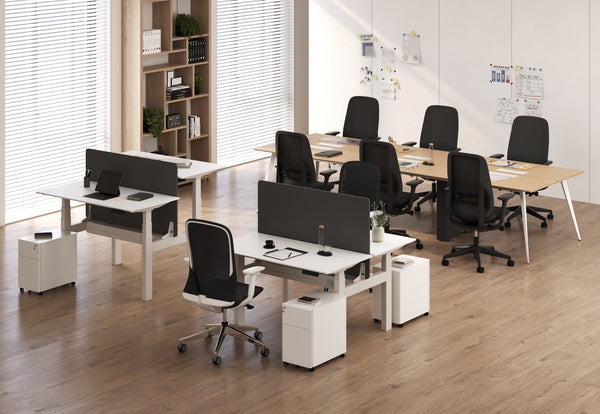 Our Conference Chairs and Meeting Tables Compared, so You Can Furnish a Huddle Room, a Meeting Room, or a Boardroom for Eight in One Order
-
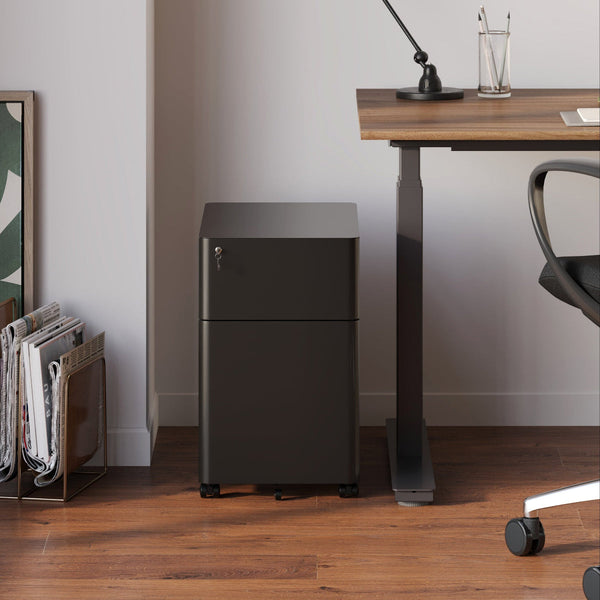 Best Filing Cabinet Options for Minimalist Offices That Still Need Real Storage
-
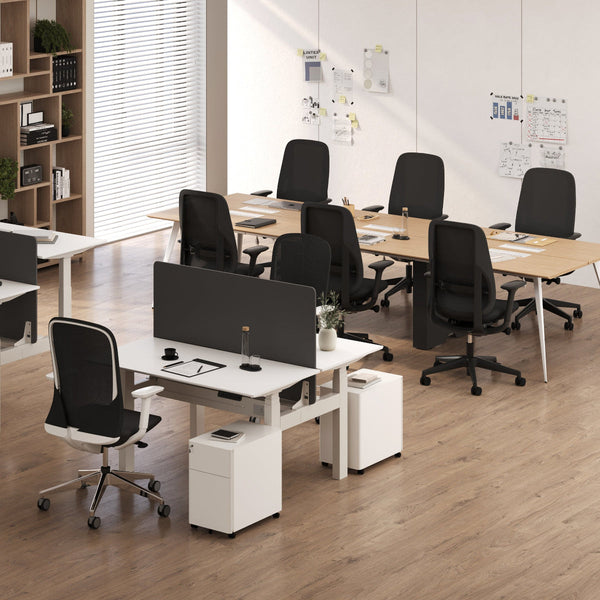 How to Make a Filing Cabinet Feel Like Part of the Room Instead of Extra Furniture
-
 How to Match a Filing Cabinet with Your Desk for a Cleaner Office Look
-
 Best Filing Cabinet Styles for Modern Home Offices That Need Hidden Storage
-
 Best Laptop Stand Options for Minimalist Desk Setups
