



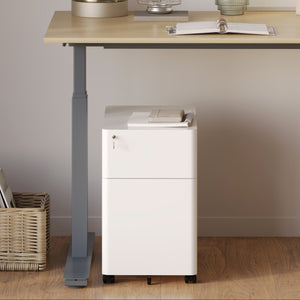






















Filing Cabinet Choices for Cleaner Workstation Planning
Cleaner workstation planning starts with filing storage that matches the desk, document volume, security needs, and daily workflow. Explore how cab...
Learn more
Visit quiz page to see how we makes it easy to create an inspiring workplace


Living in a small space does not mean settling for a cramped or cluttered home. In fact, some of the most stylish interiors are compact ones that use furniture layout strategically. The way furniture is selected, placed, and scaled can dramatically change how a room feels. With the right approach, even the smallest room can feel open, intentional, and comfortable rather than tight or overwhelming.
This guide breaks down practical furniture layout strategies that help rooms feel larger without removing personality or function. From workspaces to living areas, these principles focus on balance, proportion, and thoughtful placement.
Many people assume that limited space is the main reason a room feels small. In reality, layout choices play a bigger role than actual dimensions. Poor furniture placement interrupts flow, blocks sightlines, and creates visual noise. Even a large room can feel cramped when furniture is oversized or placed without intention.
In small spaces, every piece of furniture should serve a clear purpose. When layout supports movement and visibility, the room naturally feels lighter and more spacious. This is not about minimalism for its own sake. It is about clarity and function working together.
Oversized furniture is one of the fastest ways to make a small room feel smaller. Scale matters more than style when space is limited.
It is better to have fewer well-scaled pieces than many small items competing for attention. Visual simplicity helps the eye move freely.
Choose furniture with slimmer profiles
Avoid bulky arms and thick frames
Keep seat heights and desk heights visually light
Leave visible floor space whenever possible
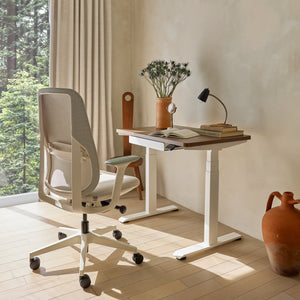
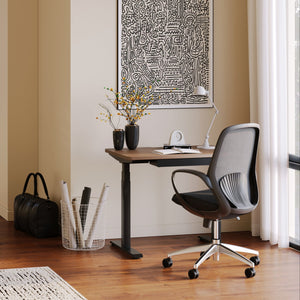
A compact work setup using Small Standing Desk California allows productivity without dominating the room, making it ideal for limited square footage.
When movement through a room feels natural, the space feels larger. Obstructed walkways and awkward furniture placement shrink a room visually.
Furniture should guide movement, not block it. Clear paths create openness even in tight layouts.
Keep main walkways unobstructed
Float furniture slightly away from walls when possible
Avoid placing large items directly in entry paths
Align furniture with architectural lines
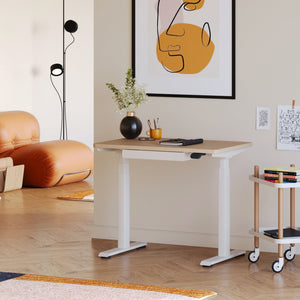
An adjustable standing desk supports flexible layouts by adapting to different uses without needing extra furniture.
Small rooms benefit from vertical thinking. Using height rather than width keeps floor space open. However, too much vertical storage can overwhelm the room if not handled carefully.
The key is restraint. Choose vertical pieces that feel light and integrated rather than heavy and dominant. Clean lines and open structures help maintain visual balance while maximizing function.
A small room should have one primary focal point. This gives the eye a place to rest and prevents the space from feeling scattered.
In workspaces, the desk is usually the anchor. In living areas, it may be seating or a table.
Keep the anchor visually simple
Arrange secondary furniture around it
Avoid competing focal points
Maintain consistent spacing
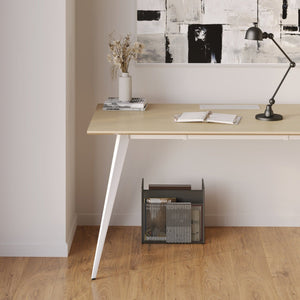
A streamlined office desk works well as a visual anchor that organizes the room without overwhelming it.
Lighting and visibility play a major role in how spacious a room feels. Natural light should be allowed to travel freely across the space. Blocking windows with tall or bulky furniture instantly shrinks the room.
Keeping sightlines open from one end of the room to the other creates a sense of depth. This can be achieved by choosing furniture with open bases, slim legs, and lighter finishes.
|
Furniture Feature |
Effect on Small Rooms |
|
Slim profiles |
Reduces visual weight |
|
Raised legs |
Creates visible floor space |
|
Neutral finishes |
Keeps the room cohesive |
|
Adjustable pieces |
Reduces need for multiples |
|
Open structures |
Improves light flow |
Furniture that adapts and visually recedes allows the room itself to take center stage.
Small rooms should never sacrifice comfort. Poor ergonomics can make compact spaces feel even more restrictive over time.
Modern ergonomic solutions are designed to support the body without adding visual clutter.
Adjustable screen positioning
Arm support that keeps shoulders relaxed
Seating that supports posture without bulk
Layouts that encourage movement
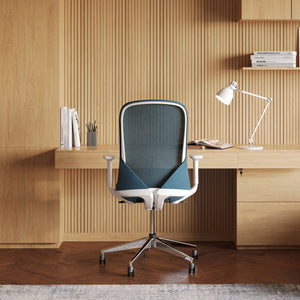
Research like furniture planning principles for small spaces highlights the importance of thoughtful furniture choices in compact interiors. Functional accessories such as a monitor arm and a supportive office chair help maintain comfort without crowding the room.
One of the most important steps in small space design is editing. If a room feels crowded, the solution is often removing one item rather than rearranging everything.
Every piece should earn its place. Ask whether it supports daily routines or simply fills space. Negative space is not empty space. It is what allows the room to breathe and feel larger.
Over time, small spaces benefit from slow, intentional updates rather than frequent additions.
Designing for small spaces is about working smarter, not harder. With the right furniture layouts, even compact rooms can feel open, functional, and stylish.
Furniture scaled to the room
Clear walkways and sightlines
One strong functional anchor
Vertical space used thoughtfully
Ergonomic comfort without bulk
When layout decisions are intentional, size stops being a limitation. Small rooms can feel just as comfortable and stylish as larger ones, sometimes even more so.


You have unlocked free shipping!
You're saving $29 and unlocked free shipping!
Leave a comment