


























How Team Desks and Panels Create Better Daily Work Zones
Team desks and workstation panels do more than organize seating. Together, they define personal work areas, manage sightlines, support smoother cir...
Learn more

Visit quiz page to see how we makes it easy to create an inspiring workplace


Calm desk lighting changes the way a workspace feels before the first email is opened or the first meeting begins. A desk can have the right chair, the right surface, and the right tools, yet still feel visually tense when the lighting is too stark, uneven, or dependent on overhead brightness alone. The goal is not to flood the workstation with light. The goal is to create a softer field around the work zone so focus feels natural, screens feel less severe, and the desk carries a sense of order.
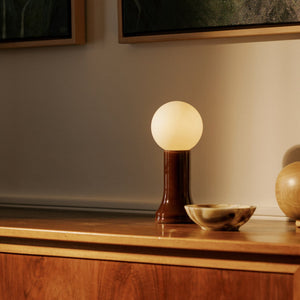
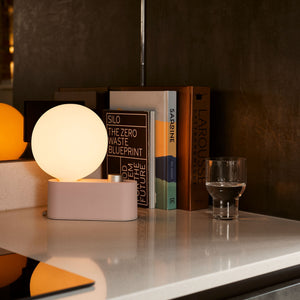
The recycled glass Shore Table Lamp fits into that kind of workspace because it behaves as both a functional light source and a visual anchor. Its presence helps define the desk as a calmer place to think, read, write, sketch, review, or reset between tasks. When styled with intention, it can soften the hard lines of monitors, keyboards, metal frames, office walls, and daily equipment without making the space feel decorative for decoration’s sake.
Strong workspaces are built from restraint. A lamp should not compete with the laptop, overwhelm the surface, or add another layer of clutter. The Shore Table Lamp works best when it is given breathing room, paired with compatible materials, and placed where its glow supports the rhythm of work rather than interrupting it.
A common mistake in work lighting is treating brightness as the whole solution. Brighter does not always mean better. A highly lit desk can still feel harsh if the lamp reflects in the monitor, casts shadows over notebooks, or sits too close to the user’s eye line. Calm desk lighting begins with where the lamp lives, how it relates to the screen, and how it interacts with nearby surfaces.
For laptop and monitor users, the back corner of the desk is often the most balanced position for a table lamp. It keeps the lamp away from the keyboard and mouse zone, prevents the base from crowding active work tools, and creates a gentle background layer behind the screen. This helps the desk feel less flat, especially during early mornings, late afternoons, or cloudy workdays when overhead light can feel dull.
The lamp should sit far enough from the monitor to avoid reflection across the screen. If the screen has a glossy finish, place the lamp slightly off-axis rather than directly behind or beside the display. The goal is to let the lamp soften the desk environment without becoming visible glare.
A desk used for handwritten notes, printed documents, samples, or sketching needs a slightly different approach. The lamp can sit toward the side of the work surface, ideally opposite the dominant writing hand, so shadows do not fall across the page. For right-handed users, a left-side lamp position often feels more natural. For left-handed users, the reverse may work better.
The Shore Table Lamp should still remain outside the main reach zone. A calm desk leaves room for movement. When a lamp sits too close to the notebook, it can make the surface feel crowded, even when the lighting itself is pleasant.
When the desk is positioned near a wall, the Shore Table Lamp can create a softer visual edge by sitting near the rear corner where the desk meets the wall plane. Matte walls usually produce a gentler effect than glossy ones because they do not bounce light sharply back into the room. This is useful in compact offices, home work corners, and studio desks where every object is visible.
The lamp should feel integrated into the architecture of the desk, not like an afterthought placed wherever space remains.
A table lamp feels calm only when the desk surface supports it. Even a beautifully shaped lamp can look busy when surrounded by chargers, loose cables, stacked notebooks, cups, and extra devices. The surface needs enough open space to let the lamp read as part of a considered work setup.
Larger desks allow the Shore Table Lamp to sit with more negative space around it, which makes the whole arrangement feel more deliberate. Smaller desks require stricter editing. On a compact work surface, the lamp should share the desk only with essential tools: a laptop or monitor, a keyboard, a small notebook, and one or two restrained accessories.
A clean surface also helps the lamp’s material stand out. Glass has a different visual quality from plastic, metal, or solid wood. It benefits from space around it because the eye can read its shape, transparency, and color more clearly.
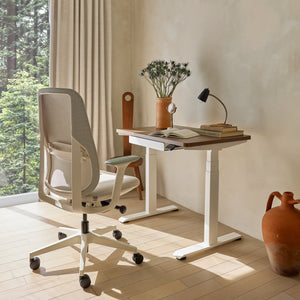
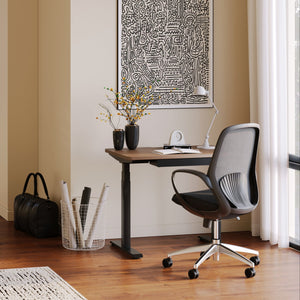
For workstations that need more flexibility in posture and layout, adjustable ergonomic office desks provide a strong foundation for styling lighting around actual work habits rather than forcing the lamp into a fixed, cramped arrangement.
The Shore Table Lamp can work across several desk finishes, but the surrounding palette should feel intentional. A warm wood desk can make brown-toned glass feel grounded and natural. Light oak can make sea green feel fresh without becoming too bright. White desks can support smoke grey when the goal is a cleaner, more minimal work setting. Black or metal-heavy desks often benefit from a softer lamp form because it balances the sharper edges of equipment and frames.
A good rule is to connect the lamp color to one other element nearby. That element might be a chair fabric, a tray, a wall tone, a storage piece, or the undertone of the desk surface. The connection does not need to match exactly. It only needs to feel related.
A calm desk does not require many objects. It requires the right objects in the right roles.
One primary work surface with enough open space for active tasks
One soft lamp source positioned outside the main typing or writing zone
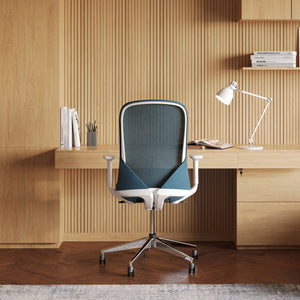
One ergonomic seating position aligned with the screen and desk height
One cable route that keeps cords away from the center of the desk
One small personal object that adds warmth without adding clutter
One open zone reserved for papers, notes, or temporary work materials
One nearby storage point for items that do not need to stay visible
This formula keeps the Shore Table Lamp from becoming another accessory in a crowded arrangement. It lets the lamp perform as a calming visual anchor.
Color influences how lighting feels, especially when the lamp is visible on the desk throughout the day. A calm office palette does not have to be neutral, but it should be controlled. The Shore Table Lamp works best when its color supports the larger emotional tone of the workspace.
Bottle brown feels most natural around warm woods, cream walls, tan leather, woven textures, and earth-toned accessories. It can help a desk feel less clinical without making it feel casual. This is a strong direction for private offices, reading-heavy workstations, and desks where the user wants a grounded atmosphere.
The key is to avoid surrounding it with too many competing warm accents. One brown lamp, a wood surface, and a muted accessory are usually enough.
Sea green can give a desk a softer, more restorative character. It pairs well with light oak, off-white walls, plants, pale grey textiles, and creative work materials. In a studio or hybrid office, it can introduce color without turning the desk into a display area.
This color direction works especially well when the lamp is allowed to stand apart from visual clutter. Sea green has enough presence to be noticed, so the rest of the desk should stay edited.
Smoke grey suits workspaces with black monitor arms, white desks, grey chairs, metal accessories, and restrained palettes. It keeps the lighting layer subtle, which can be helpful in offices that already have strong visual structure. A smoke grey lamp can soften a minimal desk without changing the overall design language.
The effect is especially strong when paired with matte finishes, simple trays, and clean cable management.
A lamp is not styled in isolation. The seated position changes how the light feels. A lamp that looks perfect when standing may feel distracting when viewed from the chair. The seated eye line should always guide placement.
When the chair sits too low or the desk feels too high, the lamp may appear closer to eye level than intended. When the chair supports a more upright posture, the lamp can sit in the background rather than entering the direct field of vision. This is why seating, desk height, monitor position, and lamp placement should be adjusted together.
In collaborative offices, ergonomic conference seating can support meeting areas where comfort and a professional visual tone matter, while the lighting nearby keeps the room from feeling overly stark.
Many work desks serve more than one function. A designer may review samples with a client. A manager may have a brief conversation beside the desk. A remote worker may shift from solo focus to a video call. In these settings, the Shore Table Lamp can help the desk feel less transactional.
Place the lamp where it contributes warmth to the shared zone without blocking sightlines. It should not sit between two people who need to speak across a desk. It should sit to the side, creating atmosphere while the central surface remains usable.
Not every lamp solves the same workspace need. The Shore Table Lamp is strongest when the desk needs softness, material interest, and a calmer mood. Another lamp may be better when the setup requires a different form or mounting option.
The Shore Table Lamp is well suited to desktops where atmosphere matters as much as visibility. Its recycled glass form gives the work surface a softer focal point, which can be especially helpful in offices filled with screens, cables, rectangular furniture, and hard edges.
It should be treated as part of a layered lighting setup. Overhead or room lighting can provide general illumination, while the Shore lamp brings a softer tone to the immediate work area.
Some workspaces need a lamp that can shift visually between a desk role and a wall-mounted style. In that case, the Alumina desk lamp and wall sconce is a more accurate fit because the product page presents it as both a desk lamp and wall sconce. It also has a powder-coated aluminum material language, which creates a different look from recycled glass.
The choice comes down to the feeling of the workspace. Shore leans softer and more atmospheric. Alumina reads cleaner, more architectural, and more direct in form.
| Work Lighting Need | Shore Table Lamp Styling Role | Alumina Lamp Styling Role |
|---|---|---|
| Softer desk atmosphere | Creates a gentle visual anchor with recycled glass | Supports a cleaner modern lamp presence |
| Material warmth | Adds translucent texture to the desktop | Adds a powder-coated aluminum look |
| Wall-based placement | Best treated as a table lamp | Suitable where a wall sconce option is preferred |
| Minimal workstations | Works well when given open space | Works well in structured modern setups |
| Creative desk styling | Brings color and softness to the surface | Adds a sharper design accent |
Calm desk lighting does not have to stop at the individual workstation. In many offices, focus shifts throughout the day between a desk, a meeting table, a breakout corner, and a small touchdown surface. The Shore Table Lamp can support this wider rhythm when placed thoughtfully.
A meeting table needs clear sightlines, open tabletop space, and enough room for laptops, notes, samples, and conversation. A table lamp placed directly in the center may not always be practical because cords, glare, and visual obstruction can get in the way. A better approach is to position the lamp on a nearby credenza, side surface, or desk edge where it softens the room without interrupting use.
For small group discussions, a round meeting table for huddle spaces can create a more balanced collaborative layout, while a nearby Shore Table Lamp adds a softer lighting layer that keeps the work setting from feeling rigid.
Breakout zones, reading corners, and small call areas benefit from furniture that feels lighter than a formal desk. A compact surface can hold a laptop, notebook, or drink while the lamp creates a lower-pressure atmosphere. This is especially useful in offices where people move between focus work and casual collaboration.
A compact bistro table for informal work zones pairs naturally with this idea because it supports smaller office and home spaces where everyday work, coffee breaks, or brief collaboration may happen. The Shore Table Lamp should sit nearby rather than crowding the tabletop if the surface is being used for active tasks.
Modern work environments often combine residential comfort with professional structure. A home office corner may need to look clean on video calls. A studio desk may need to support sketches, samples, and screens. A shared office may need to feel polished without becoming cold. Lighting is one of the easiest ways to bring softness into these work settings without changing the entire furniture plan.
Bright daylight can make a workspace feel energized during the day, but the same room may feel flat once natural light fades. A table lamp helps bridge that shift. The Shore Table Lamp can create continuity between daylight hours and lower-light work periods because it gives the desk its own visual identity.
For creative offices shaped around clean silhouettes, adaptable furniture, and focused work zones, modern work furniture for local creative offices supports the broader environment around the desk, while the lamp adds the softer layer that makes the setup feel complete.
Hybrid workstations have to perform in multiple ways. They need to support typing, reading, video calls, and quiet concentration. The Shore Table Lamp can help soften the background of a video frame when placed behind or beside the main screen, but it should not sit where it creates visible glare or distracts from the user.
A calm camera-facing desk usually includes a clean wall or shelf line, a contained lighting source, and limited visual clutter. The lamp should contribute warmth without becoming the center of the frame.
Even a soft lamp can feel wrong when placement and surroundings are ignored. Small styling choices often determine whether the desk feels composed or distracting.
A lamp positioned too close to the screen can create reflection, edge glare, or uneven brightness behind the monitor. Move the lamp farther back, shift it to the side, or use the wall behind the desk to diffuse the visual effect.
The Shore Table Lamp needs space around its base. Pens, chargers, sticky notes, trays, cups, and small decor can quickly turn the lamp area into a clutter cluster. Keep the lamp zone simple so the glass form remains readable.
A single lamp in a dark room can create too much contrast between the screen and surrounding space. Calm desk lighting works better with layers. General room light, natural light, and a table lamp can work together so the desk feels balanced.
Lamp color should connect with the desk, chair, wall, floor, or accessories. When the color is isolated, it can feel accidental. When it relates to another finish, the entire work area feels more composed.
The Shore Table Lamp brings the most value to a workspace when it is styled as part of a complete desk environment. Its role is not to dominate the surface or replace every other lighting layer. Its role is to soften the visual field, add material warmth, and make the desk feel more settled during focused work.
A calm desk depends on a few honest choices: place the lamp where it avoids glare, give it room to breathe, match its color to the surrounding palette, keep the work surface edited, and let seating, desk height, and lighting work together. When those details are handled well, desk lighting becomes more than a finishing touch. It becomes part of how the workday feels.


You have unlocked free shipping!
You're saving $29 and unlocked free shipping!
Leave a comment