



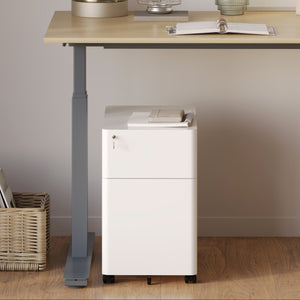






















Filing Cabinet Choices for Cleaner Workstation Planning
Cleaner workstation planning starts with filing storage that matches the desk, document volume, security needs, and daily workflow. Explore how cab...
Learn more
Visit quiz page to see how we makes it easy to create an inspiring workplace

Remote work has changed how partners organize domestic life and professional focus. When two people rely on a single room, or sometimes a single workstation, the office chair becomes shared infrastructure. A well-chosen chair supports two bodies with different proportions, different work rhythms, and different comfort preferences. The goal is not to find a compromise that leaves both people slightly uncomfortable. The goal is a setup that adapts quickly, protects long-term health, and fits the aesthetic character of a home that now carries the weight of daily work.
A chair that serves two users must be more forgiving than a chair intended for a single body. Swapping users several times a day exposes weaknesses in build quality, awkward levers, or limited ranges of motion. When those weaknesses appear, frustration rises and productivity falls. Shared chairs that adjust smoothly and predictably help couples protect posture while also protecting the relationship from avoidable friction.
Different lower-back support needs that change with height, curvature, and energy level
Armrest width and height that affect shoulder relief for typing and mousing
Seat depth that prevents leg pressure for one user while still letting the shorter user plant feet
Tilt tension that gives movement to one partner without feeling unstable for the other
Quick personalization so nobody wastes time hunting for the right lever
Shared infrastructure works when it is reliable, easy to understand, and fast to hand off. When both partners can adjust a chair in less than thirty seconds, the chair disappears into the background. The work, and the people, come to the foreground.

Healthy sitting relies on neutral alignment, frequent micro-movements, and support that meets the spine rather than forcing the spine to meet the chair. Couples benefit from a simple posture framework that both people understand and can apply every time they sit.
Trusted guidance helps partners align on vocabulary and goals. The safest approach is to follow workstation posture guidance from NIOSH, which emphasizes neutral joint angles, feet grounded, and lumbar support that preserves natural spinal curves. When both users use the same reference playbook, adjustments feel cooperative instead of subjective.
Teach the chair in the same order each time so the process becomes automatic.
Set height so the hips are level with or slightly above the knees. Both feet should rest flat on the floor or a footrest. Correct height reduces pressure on the lower back and keeps the pelvis neutral, which makes every other setting more effective.
Slide the seat pan so there is a two- to three-finger gap behind the knees. The taller partner may need more depth to avoid edge pressure. The shorter partner will likely need less depth to sit back and contact the lumbar support.
Position lumbar support to meet the small of the back, not above it. Chairs with height and depth control make this faster for alternating users. For couples, a strong lumbar range reduces the need to add cushions or compromise on backrest angle.
Set height so elbows rest close to 90 degrees without lifting the shoulders. Adjust width and pivot so the forearms follow the natural line to the keyboard or mouse. Shared users often forget this step, yet it is key for shoulder relief.
Light recline with controlled tension encourages movement without feeling loose. One partner may prefer a firmer feel for task focus, the other a more relaxed travel for reading or calls. Learn the tension knob setting that gives both people a comfortable range.
Even pristine posture can lead to fatigue if held too long. Build a habit of small changes every 20 to 30 minutes. Lean back slightly, alter hip angle, move the feet, and reset armrests for the next task. A shared chair that moves smoothly invites these resets rather than discouraging them.
Speed of customization is the overlooked performance metric in shared seating. The best chair for couples is the chair that adapts fast and consistently, day after day.
Levers and dials should be easy to reach while seated, with clear icons and predictable travel. Chairs that let you adjust height, depth, lumbar, and armrests without standing reduce hand-off friction. A model with intuitive lumbar controls shines for alternating users, such as the multi-user lumbar chair for shared offices.
Use discreet stickers or a fine-point marker on hidden edges to note each partner’s preferred settings. A tiny dot for seat depth, a small line for armrest height, and a mark for tilt tension can cut adjustment time to seconds. The system should be minimal, elegant, and reversible.
| Feature for Shared Use | Why It Matters | What To Look For | Notes for Two Users |
|---|---|---|---|
| Seat height range | Accommodates different leg lengths | Gas lift with ample travel | Taller users need higher max height without wobble |
| Seat depth slider | Prevents knee pressure and slouching | Smooth track with clear stops | Shorter users must still reach lumbar support |
| Lumbar adjustability | Supports curves for both spines | Height and firmness control | Helps during long writing or coding sessions |
| Armrest 3D or 4D | Aligns shoulders and wrists | Height, width, pivot, depth | Keeps elbows close, reduces shoulder shrug |
| Tilt tension range | Enables movement choices | Dial with broad range | One partner can recline without destabilizing the other |
| Caster quality | Saves floors, improves mobility | Floor-appropriate wheels | Soft casters for hardwood, firm for carpet |
A compact chair can be a strong pick when space is tight and users sit in shifts. Consider a model known for efficient adjustability like the compact ergonomic seat with precise adjustments, which helps small rooms function like larger studios.
Two users double the duty cycle. Materials and mechanisms must hold their shape under frequent adjustments, not just occasional tweaks.
Mesh backs offer airflow that helps partners with different temperature preferences. High-density foam in the seat pan avoids bottoming out while still distributing weight evenly. For variety in materials and silhouettes, browse breathable office seating across styles to evaluate options that withstand daily hand-offs.
Quality casters roll quietly and reduce scuffs. Soft polyurethane wheels suit hardwood and tile, while firmer casters can help on carpet. A stable base spreads load evenly and delivers a quiet, confident feel when both users change posture frequently.
Daily: dust the backrest, brush crumbs from the seat, and wipe contact points. Weekly: vacuum mesh and check fasteners. Monthly: inspect wheels for threads or hair, then clear them with tweezers. Small routines preserve both hygiene and performance.
A home office lives inside a home, which means the chair must harmonize with the furniture and textures already present. Couples often blend different taste narratives, from minimal to eclectic. A chair that softens visual tension supports emotional ease.
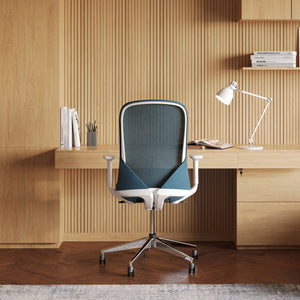
A chair with gentle curves and a calm profile integrates across styles. The sculptural task chair for modern interiors demonstrates how form and function can meet without shouting for attention. When the visual language is calm, the space reads as intentional, not improvised.
Neutral frames paired with textured fabrics feel warm rather than sterile. Place the chair where side light, not only overhead light, reduces screen glare and eye strain. Smaller rooms benefit from lighter finishes that recede visually, giving the impression of more space.
Soft partitions, rugs, and plants can suggest separate zones without blocking sight lines. When each partner has a defined zone, chair adjustments and rolling paths become more predictable and considerate.
A thoughtful layout determines how effectively two people can move, collaborate, and stay out of each other’s way.
Run desks parallel to maintain quiet individual focus, or angle them in an L to share light and equipment. Keep at least a chair’s depth behind each workstation so both users can recline and stand freely. For fitting surfaces to seating geometry, evaluate two-person desk options that save space and map depths to the chair’s seat travel and tilt range.
If one partner handles calls while the other performs deep work, seat the caller closer to soft finishes that absorb sound. When shifts alternate, post a small schedule and a checklist of settings to reduce back-and-forth friction.
Power strips with right-angle plugs keep cords flat. Cable sleeves and floor guides protect caster movement. The chair should glide, not snag, so cord routing becomes an ergonomics issue as much as a tidiness issue.
Execution beats theory. Treat your setup like a small project and bring both users into each step.
1. Measure floor area and desk depths.
2. List must-have chair features for both users.
3. Choose finish and fabric families that match your interior.
4. Map cable runs and power access before placing furniture.
5. Test a full adjustment ritual for each partner, seat to armrests.
6. Mark memory points for height, depth, and tension.
7. Set a six-week comfort review on the calendar.
A cohesive set saves time and keeps the design language consistent. If you plan to outfit two work zones at once, consider coordinated bundle planning for couples so chairs and desks align in scale, finish, and adjustability without guesswork.

Static seating penalizes creativity and long calls. Chairs that encourage healthy motion help both partners stay alert without constant conscious effort.
Look for backrests and seats that move in concert, so the pelvis stays supported as the torso leans and returns. Subtle auto-balance features can make movement feel natural rather than manual.
If you prefer a chair that encourages micro-shifts during creative work, consider the responsive movement chair that follows your posture. Balanced motion lets couples share one seat across different task types without constant tinkering.
A good chair is the foundation. Habits are the structure built on top of that foundation. Share the same rituals so each person inherits a healthy setup, not a mystery.
Height: set to foot-flat position
Depth: confirm the knee gap
Lumbar: align with the lower back curve
Armrests: fine-tune for keyboard reach
Tilt: choose firm for focus, freer for calls
Wheels: clear the roll path
Wipe arm pads, inspect bolts, and confirm that tilt tension still suits both users. A quick wheel check prevents grit from grinding down bearings. Treat maintenance as part of the workweek, not an afterthought.
Data can be simple. The aim is not to quantify everything, but to notice patterns that guide better choices.
Minutes to adjust when swapping users
End-of-day neck or lower-back discomfort on a 1 to 10 scale
Number of micro-movements per hour, even if estimated
Times you needed to re-route cables or clear clutter to roll
If each partner’s adjustments differ so much that you spend more time tuning than working, two chairs may be justified. A second chair can also serve as a meeting seat for guests or as a flexible perch in another room. The measure is not luxury, it is the preservation of health and focus.
Remote work may be universal, but how couples adapt their home offices varies widely by climate, housing type, and cultural approach to shared living. Understanding these geographic nuances helps furniture designers and homeowners make better decisions about shared seating and layout choices.
In warmer regions, breathable mesh or hybrid polymer backrests maintain comfort through long afternoons of heat and humidity. Couples in cooler climates often prefer upholstered finishes or thicker foam padding that hold warmth while preserving posture support. Material adaptability ensures that both users remain comfortable without relying on seasonal swaps.
Urban apartments, suburban homes, and rural studios all pose different ergonomic challenges. Compact city dwellings benefit from streamlined designs with smaller footprints and full adjustability. Suburban homes, where space may be more abundant, allow for dual work zones and separate desks, reducing the need for constant chair hand-offs. Recognizing these environmental contexts lets couples select furniture that enhances daily workflow rather than simply fitting the square footage.
Cultural differences shape the meaning of shared space. In some regions, collaboration and proximity define comfort; in others, quiet independence holds greater value. Chairs that can pivot between upright task posture and relaxed recline support these differing rhythms of cooperation. The universal constant is empathy in design—furniture that allows both partners to thrive according to their own comfort cues.
Local design traditions influence what “ergonomic” feels like in practice. Scandinavian-style workspaces emphasize natural light and neutral materials to promote calm focus. Japanese interiors prioritize minimalism and floor alignment, encouraging mindful posture and efficiency. Understanding these perspectives deepens appreciation for how shared ergonomic furniture supports not only the body but also the broader cultural idea of balance at home.
As remote work normalizes globally, ergonomic solutions for couples will evolve beyond one-size-fits-all. Regional climate, housing design, and lifestyle expectations will continue shaping how shared office chairs are built, marketed, and customized. The most successful designs will honor geography and individuality at once—offering shared comfort that feels authentic wherever the workspace exists.


You have unlocked free shipping!
You're saving $29 and unlocked free shipping!
Leave a comment