

























Filing Cabinet Choices for Cleaner Workstation Planning
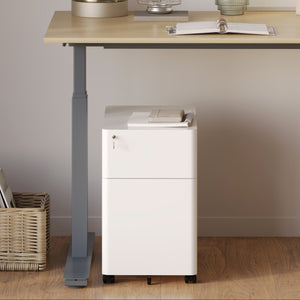
Cleaner workstation planning starts with filing storage that matches the desk, document volume, security needs, and daily workflow. Explore how cab...
Learn more
Visit quiz page to see how we makes it easy to create an inspiring workplace

A desk is not a neutral stage. It directs attention, shapes posture, and sets the rhythm for how the brain enters and stays in productive flow. Environmental psychology shows that orderly, legible spaces reduce cognitive friction. When the immediate field of view is calm and intentional, working memory stops wasting cycles on irrelevant signals and can stay with the task at hand.
Every object in sight competes for micro-attention. Tangled chargers, spare pens, and scattered notes form a stimulus soup that nudges the brain to context switch. The remedy is not perfectionism. It is consistent elimination of non-essential items from the visual plane. Keep only tools that support the current task on the top surface. Everything else belongs in a drawer, tray, or concealed organizer.
Matte surfaces reduce glare and squinting. Natural finishes soften contrast and create a visual field that the eyes can rest on between screen glances. Balanced lighting that avoids harsh downlight helps prevent constant pupil adjustment. These details may seem small, yet together they dial down sensory strain so attention can remain steady.
Reliable guidance helps prevent strain. For fundamental posture, reach, and layout parameters, reference the ergonomic workspace standards from the CDC. These principles are practical, conservative, and focused on user wellness.
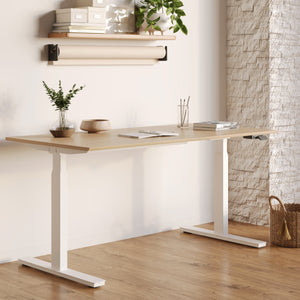
The primary surface dictates how far you reach, where your elbows rest, and what sits within eye level. A focused desk reduces excess depth and visual noise, keeps the work zone compact, and supports predictable movement.
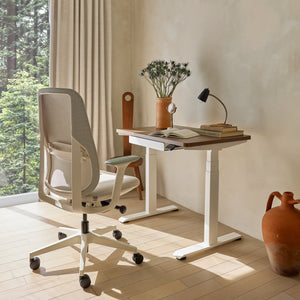
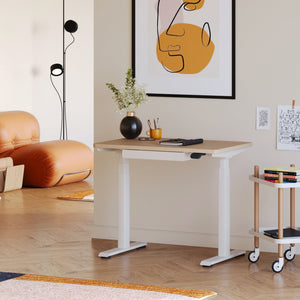
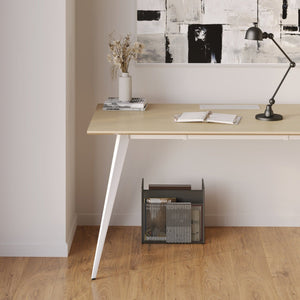
A clean-lined platform reduces cognitive load by removing visual interruptions. A streamlined Scandinavian workstation balances proportion, neutral color, and functional simplicity. This style works well for analytical and creative tasks because it promotes a consistent, low-friction backdrop that lets important objects stand out without clutter.
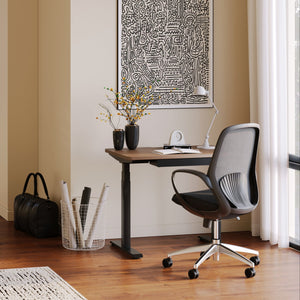
Static postures fatigue the body, which eventually blunts attention. A sit-to-stand office desk upgrade invites small, periodic posture changes that sustain alertness. Brief standing intervals restore circulation and encourage broader breathing patterns. The goal is gentle variability, not constant motion, so the mind stays clear while the body remains comfortable.
Pair a compact, neutral-toned desk with a simple monitor arm and a concealed power route. Keep only three items on the surface during deep work, such as a notebook, a water bottle, and either a keyboard or a trackpad. Store the rest just out of sight but within easy reach.

Power should be convenient and invisible. If you must hunt for a charger or reach under the desk, you will break concentration. The best solutions shrink the distance between device and outlet while hiding visual clutter.
Workflows become smoother when power lives where you plug in. Integrated charging ports for minimalist setups place outlets and USB access within the surface, which removes cable arcs from view and reduces hand movement. The surface stays clear, posture stays stable, and context switching drops.
Not every workspace supports built-in modules. A portable clamp-on charging hub attaches without tools and moves with you when layouts change. For teams that reconfigure or freelancers who alternate rooms, this flexibility keeps the focus on the task rather than the infrastructure.
1. Identify the two devices you charge most often.
2. Place power access within a forearm-length reach.
3. Route charging leads along a single path that does not cross the typing zone.
4. Label both ends of each cable for quick identification.
5. Remove any charger that you have not used in a week.
Cables are unavoidable, but cable chaos is optional. If lines cross the visual field, the brain reads them as unresolved tasks. Tidy routing reduces noise, protects equipment, and makes cleaning faster.
A flexible spine cable routing system gathers cords into a single path from the underside of the desk to the floor. This prevents snagging during height adjustments and keeps pathways clear for feet and chairs. The visual effect is order, and the functional benefit is easier changes when you add or remove devices.
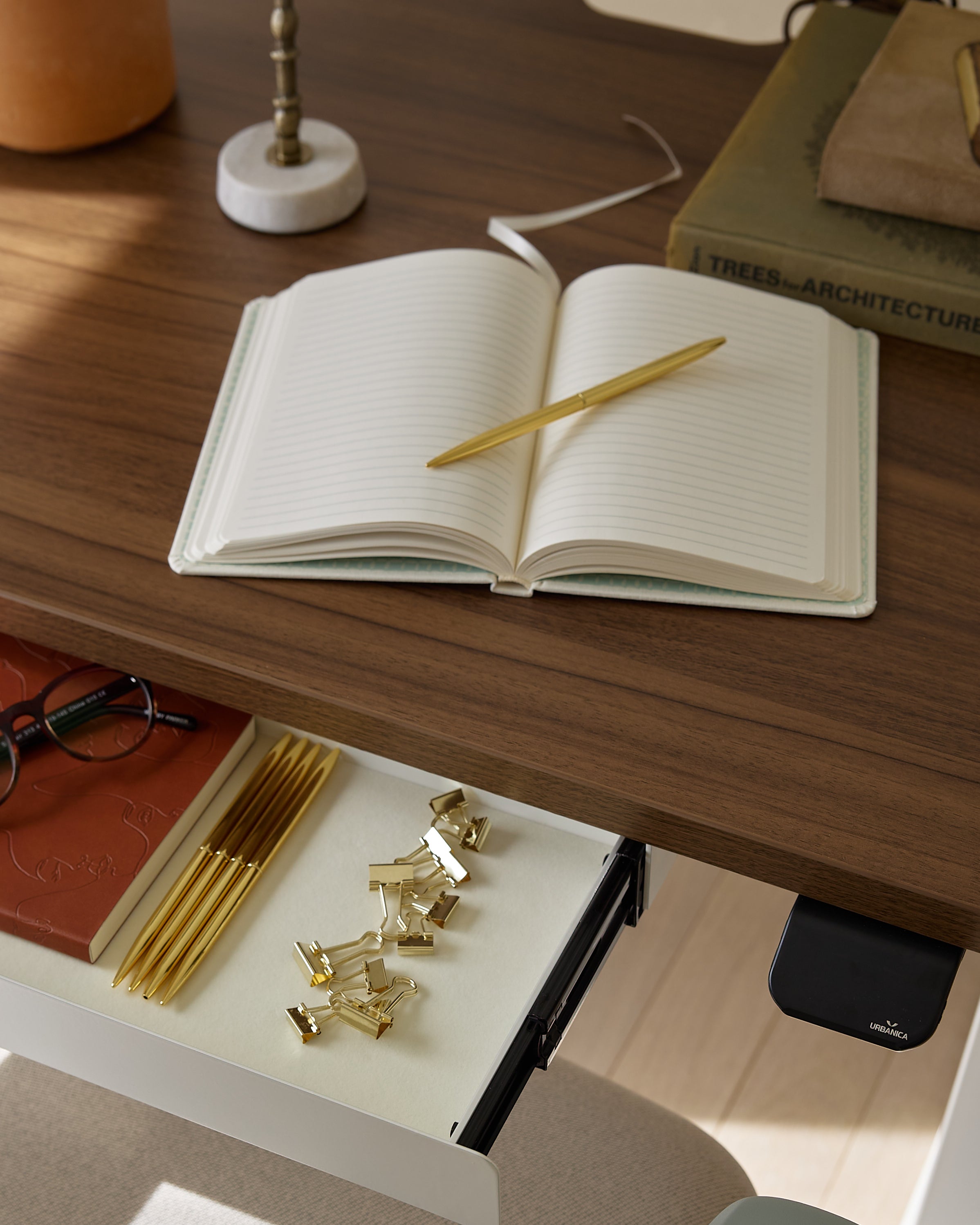
For more static setups, an under-desk cord organization tray conceals power bricks and excess length. Pair this with short, right-length cables to avoid loops. The result is a top surface free of cords and a lower zone that you rarely need to touch.
Before: four visible loops, one dangling adapter, two cords across the knee space.
After: zero loops, all slack in a tray, one vertical spine.
Outcomes: faster cleaning, fewer accidental unplugs, calmer visual field.
Ergonomics is attention insurance. When the body is aligned, cognitive effort is not lost to discomfort.
If the screen sits too low, the neck bends, shoulder tension builds, and eyes strain. An ergonomic adjustable laptop riser brings the display to eye height so the head can stack over the spine. Pair with an external keyboard to keep elbows near 90 degrees and wrists neutral.
Upright alignment helps maintain even breathing and reduces perceived exertion during mental tasks. Keep forearms supported, feet flat, and hips slightly above knees. Small corrections at the start of a focus block prevent drift into slouching later.
Neck: slow nods and gentle turns.
Shoulders: roll forward and back, then shrug and release.
Thoracic spine: seated twists, each side for a few breaths.
Wrists: flexion and extension with a light shake to finish.

The desk surface should present a simple visual story. Primary tools sit in the foreground. Secondary items are within reach but not competing for attention.
Focus zone: keyboard, pointing device, notebook.
Support zone: phone stand, water, reference doc.
Staging zone: items in use this hour, cleared when done.
Limit the palette to a few neutral tones. High contrast draws the eye repeatedly. A consistent, subdued color set acts like a quiet background that supports long, uninterrupted sessions.
Transitions create attention leaks. Physical containers and repeatable layouts tighten boundaries between tasks so the mind does not drag residue from one activity to the next.
Use one tray for the current project. When you change tasks, move the tray out and bring in the next one. This keeps the desk honest and the mind clear.
A fixed spot where items go when the session ends. Every object has a home, so the surface is ready for the next block of focused work.
Eyes are part of the attention system. Reduce strain and you extend focus time without pushing harder.
Combine indirect ambient light with a low-glare task lamp. Aim for even illumination across the desk to reduce constant pupil changes. Avoid direct light on glossy surfaces. If reflections appear on the screen, adjust the lamp angle rather than increasing brightness.
Warm to neutral light helps most people stay comfortable across long sessions. If you work late, use a consistent color temperature to avoid jolting the visual system.
Sound, texture, and scent are easy to overdo. Subtle adjustments work better than dramatic ones.
Soft desk pads, felt coasters, and a modest rug reduce the sharpness of keystrokes and chair movement. If you add background audio, choose constant textures over lyrics to avoid semantic interference with reading or writing.
Keep the items you touch most similar in finish. Sudden texture shifts can be distracting. A coherent tactile palette lowers micro-irritations the brain would otherwise register.
Minimalism is not about owning less for its own sake. It is about reducing interference so important work stands out.
Handle each object once. If it is not part of the current block, return it to its home. This simple behavior prevents the slow creep of clutter that steals mental bandwidth.
Match a clean physical setup with a tidy digital environment. Fewer open apps and tabs reduce context switches just as fewer visible objects reduce visual noise. The brain benefits from the unity of both spaces.
End each session with a quick ritual. Clear the surface, align input devices, and coil any loose cable. Small consistency builds reliability in attention.
Compact rooms can sharpen discipline because they force intentional choices. The key is vertical thinking and nested storage.
Mount a narrow shelf above the desk for reference materials and device stands. Keep the top surface for current work only. Use a slim file box to park papers in progress.
If you share a room, use a rolling caddy for peripherals. Park it beside the desk during work, then slide it away to reset the environment without moving individual items.
When spaces are shared, predictability is a gift to everyone’s focus.
Use a small, movable indicator that tells others when you are in a deep work block. This reduces interruptions without needing constant conversation.
If you do not own the desk, bring a compact kit that recreates your core ergonomics fast. A laptop riser, compact keyboard, and a short charging bundle restore familiar posture and power flow in minutes.
Good focus design works for diverse bodies and needs. Aim for adjustability and clear reach paths.
Put the most used items within the comfortable arc of your elbows. Keep pathways under the desk free. If mobility aids are part of your setup, route cables along edges to prevent snags.
If you are sensitive to light or sound, prioritize soft, indirect illumination and high quality noise control. The goal is consistent comfort that does not ask the brain to adapt constantly.

Workspaces do not exist in isolation. Climate, daylight exposure, and regional design traditions influence how focus is sustained. Adapting your desk setup to environmental context ensures comfort and consistency, whether working in a bright loft or a compact urban studio.
Where you position the desk relative to windows matters. In north-facing rooms, consistent ambient light prevents glare cycles that strain the eyes. In warmer climates, angling the desk slightly away from direct sunlight helps control heat and reflections. Natural daylight boosts serotonin and circadian stability, but balance it with soft blinds or diffusers to maintain even illumination throughout the day.
Humidity, temperature, and airflow shape comfort levels that directly influence attention. In dry regions, add subtle humidity control to prevent eye strain from prolonged screen exposure. In cooler spaces, ensure warm but indirect lighting to maintain alertness without harsh brightness. Every climate rewards micro-adjustments that align physical comfort with cognitive stability.
Desks that echo local craftsmanship or cultural simplicity often feel more grounding. Scandinavian-inspired lines emphasize minimalism and rhythm; Japanese-style balance promotes spatial calm; modern North American designs integrate utility and modular function. Blending these principles with your personal identity builds emotional resonance, making the desk a place you naturally want to return to.
Urban settings introduce sound layers that can subtly degrade focus. Simple adjustments, like repositioning the desk near a textured wall or curtain, dampen echo and external chatter. In quieter suburban or rural settings, a bit of ambient sound—such as low white noise or instrumental background—can maintain engagement without isolation. Acoustics that match environmental context sustain flow for longer periods.
| Common Risk in the Workspace | Simple Fix at the Desk | Expected Attention Benefit |
|---|---|---|
| Screen below eye line | Raise with a stable riser and use an external keyboard | Reduces neck strain and extends comfortable focus time |
| Power reach under the desk | Add surface-level access or a clamp-on hub | Fewer interruptions and smoother task transitions |
| Cable loops in sight | Route through a tray or vertical spine | Lower visual noise and faster device changes |
| Mixed, shiny textures | Choose matte and neutral finishes | Less glare and steadier eye comfort |
| Overflowing surface | Use a single-project tray and a reset shelf | Clear task boundaries and fewer context switches |
1. Clear the visible surface, leaving only the current task tools.
2. Raise the screen to eye level and confirm elbow angle near 90 degrees.
3. Place power within forearm reach, preferably at the surface.
4. Route every cable along one path, either vertical or under-desk.
5. Create a single-project tray and retire all other items to a reset shelf.
6. Set a soft, indirect task light to avoid screen glare.
7. End the day with a 60-second closeout ritual so tomorrow begins with a clean stage.
Daily focus grows in spaces that reduce interference and make the next right action obvious. Choose a quiet desk foundation, keep power and cables disciplined, align your screen and posture, and apply a light touch to the sensory field. These choices are simple, repeatable, and honest about what actually improves concentration. With consistent practice, your desk becomes an ally that helps your mind enter flow and stay there.


You have unlocked free shipping!
You're saving $29 and unlocked free shipping!
Leave a comment