




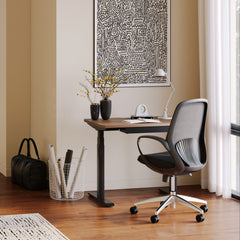
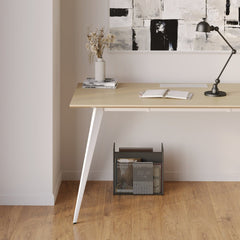
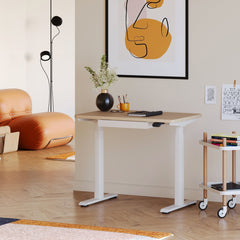

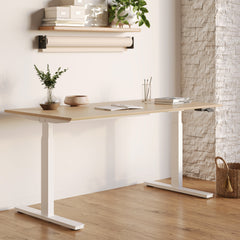

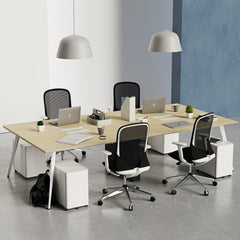
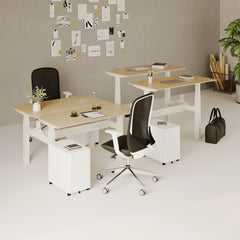
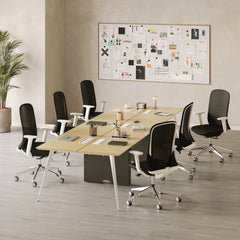


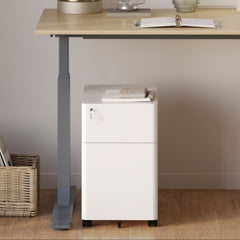


Filing Cabinet Choices for Cleaner Workstation Planning
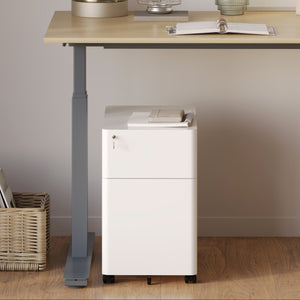
Cleaner workstation planning starts with filing storage that matches the desk, document volume, security needs, and daily workflow. Explore how cab...
Learn more
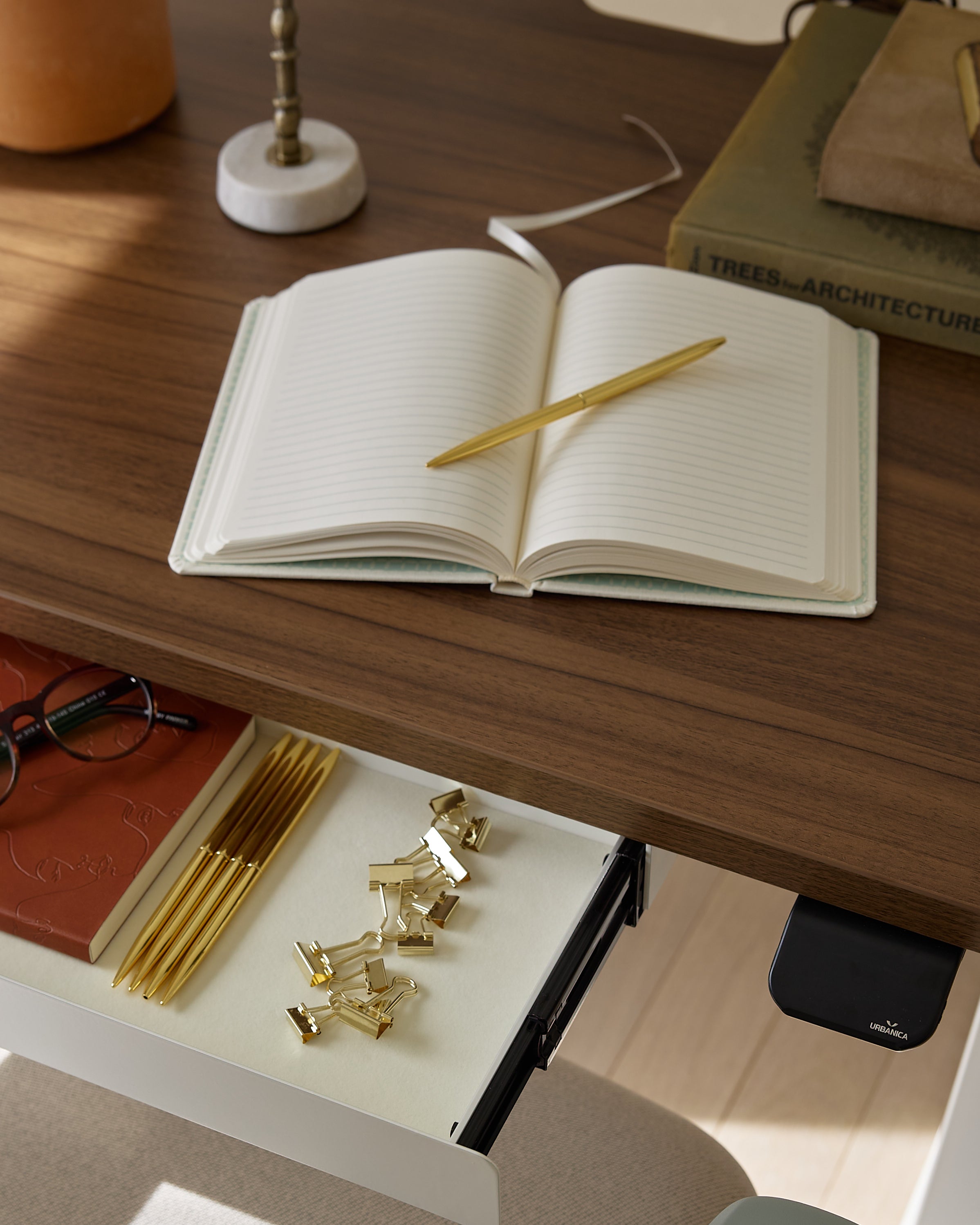
Visit quiz page to see how we makes it easy to create an inspiring workplace


A quality ergonomic office chair starts working the moment it fits your body and your desk, not when the marketing copy says it does. In a home office, small mismatches add up fast because the setup is often improvised, the desk height is fixed, and the chair has to handle everything from deep-focus work to quick emails.
Set seat height so your feet rest fully on the floor and your knees land in a comfortable range, usually close to 90 to 105 degrees. When the seat is too high, you end up sliding forward or perching on the edge, which pulls your pelvis out of neutral and forces your back to do extra work.
A quick body check:
Sit back so your pelvis is supported by the backrest.
Place both feet flat on the floor.
If your heels lift or your legs dangle, lower the seat or use a footrest.
If your knees rise above your hips, raise the seat slightly or lower the desk surface if possible.
Seat depth is the quiet deal-breaker. A seat that is too deep presses into the back of the knees, limits blood flow, and encourages you to scoot forward to escape the pressure, which reduces back support.
Use a simple clearance check:
Sit with your hips fully back.
Aim for a small gap between the front edge of the seat and the back of your knees.
If the seat edge touches the back of the knee, the chair is likely too deep for your leg length, or the seat depth needs adjustment.
Think of your pelvis as the base of the spine. If it tips backward, the upper back and neck compensate. The fix is usually not “sit up straight.” The fix is setting the chair so your pelvis can stay neutral with minimal effort.
Helpful cues:
Your sit bones should feel like they are bearing weight, not your tailbone.
Your lower back should feel supported, not pushed forward aggressively.
You should be able to take a deep breath without feeling compressed at the waist.
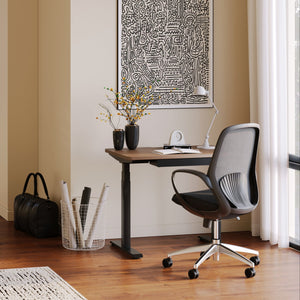
Home offices are personal, and the chair needs to fit your space. Still, fit comes first. If you want to compare silhouettes and ergonomic formats, start by scanning a broader set of options and narrowing by the adjustment features that match your body and desk. Our Urbanica office chair lineup makes it easier to compare chair types side by side before you commit to a specific design.
Back support is not one setting. It is a relationship between lumbar shape, recline mechanics, and how you move during work. A chair that feels “supportive” for three minutes can feel exhausting after two hours if the support lands in the wrong place or locks you into one posture.
Effective lumbar support fills the natural curve of the lower back. It should not feel like a hard knot pushing you forward. The best test is subtle.
Try these quick checks:
Sit with your hips back and shoulders relaxed.
Take a slow, deep breath.
If the lumbar area feels like it blocks your breathing or forces your ribs forward, it may be too aggressive or positioned too high.
If your low back collapses and your pelvis rolls back, the support may be too low or not present.
Static posture is the enemy of comfort. Micro-movement, small shifts that keep the spine from being loaded the same way for hours, is what a quality ergonomic chair should enable.
For home office work, the sweet spot is usually a slight recline that lets you relax the spine while keeping your hands in reach of the keyboard. Tilt tension matters because it controls whether you can move smoothly or whether you either fight the chair or fall backward.
A reliable setup approach:
Start upright to set seat height and armrest height.
Add a small recline that still allows you to type without reaching.
Increase tilt tension until the recline feels supported, not bouncy.
Room temperature, clothing, and session length all affect comfort. Breathable backs can help reduce heat build-up, while more cushioned backs may feel softer for short sessions. Neither is universally “better.” What matters is whether the backrest supports your thoracic area and lower back without forcing a posture that feels unnatural.
If you want a clear reference point for how we describe ergonomic adjustability on a product page, the Novo Chair specifications are a helpful example of what to look for when evaluating back support features and overall chair configuration.
Many home office aches start above the desk, not below it. When arm support is wrong, the shoulders rise, the neck tenses, and wrists bend in ways that create strain over time. The goal is simple: let your arms rest lightly while your hands do precise work.
Armrests should meet your forearms, not lift your shoulders. If you feel your shoulders creeping upward, the armrests are likely too high. If you feel like you are supporting your arms with your neck and upper back, they are likely too low or too far away.
A clean cue:
Relax your shoulders.
Let your elbows sit close to your sides.
Adjust armrests until your forearms feel supported without pushing your shoulders up.
Armrests that are too wide pull elbows outward. That often leads to wrist deviation, especially while using a mouse. Armrests that are too narrow can feel cramped and encourage awkward elbow angles.
For mouse work, it often helps to keep the mouse close enough that your elbow stays near your torso. Small changes in mouse position can be more effective than forcing your shoulder to reach.
Even when armrests are the correct height, pad placement matters. If the pad presses into the forearm, you can feel tingling or numbness after long sessions. Ideally, arm support is gentle. You should feel stabilized, not pinned.
For readers comparing ergonomic chair formats, the Ergonomic Onyx Chair is one example of an ergonomic chair page where arm support is a key part of the chair’s working posture, which helps frame what “usable armrests” look like in practice.
Seat comfort is often treated as softness. Long-session comfort is more about support, pressure distribution, and a seat edge that does not interfere with circulation. A quality ergonomic chair should feel stable and calm, not like you are constantly shifting to escape discomfort.
A seat can feel plush in a quick test and still be wrong for long work sessions. If a seat compresses too easily, the pelvis can tilt backward, which reduces lumbar support and increases low-back fatigue.
What to look for instead:
Even support under the sit bones.
No sharp pressure points.
A stable platform that does not bottom out quickly.
A good seat edge slopes gently rather than cutting into the back of the thighs. This is especially important for shorter users or for anyone who sits with their knees close to the desk.
Common signs the seat edge is not working:
Tingling legs after sitting.
A constant urge to perch on the edge.
Feeling “stuck” in place because moving feels better than staying supported.
Fabric choice is practical. It affects grip, temperature, and how easily you can shift posture. In warmer rooms, a breathable surface can feel more consistent. In cooler rooms, upholstery can feel more comfortable against the skin. The key is to choose what supports your daily routine and the way you sit.
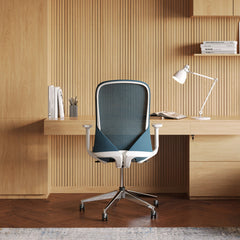
If your home office also functions as a living space, style matters too. The chair should feel appropriate in the room, not like an industrial object dropped into a bedroom corner. The Muse Chair materials and measurements are useful when you want to evaluate comfort and scale while keeping a clean aesthetic that fits a home environment.
A chair cannot fix a desk that forces awkward reach, or a monitor position that bends the neck. Home office ergonomics is a system. When chair height, desk height, and screen placement work together, the body stops fighting the setup.
The most reliable anchor is elbow position while typing:
Elbows close to your sides.
Forearms roughly parallel to the floor.
Wrists neutral, not bent upward.
If the desk is high and the chair is raised to match, feet may dangle. That is a common home office trap. A footrest can solve it, but it is better to find a desk height that naturally fits your body when possible.
A simple monitor rule:
Screen height should allow your head to stay balanced over your shoulders.
If you are constantly looking down, the neck takes the load.
Laptop setups often create forced neck flexion. The practical fix is to raise the laptop screen and use an external keyboard and mouse so your arms and shoulders can stay relaxed.
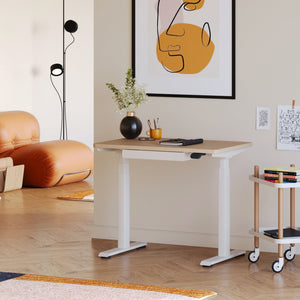
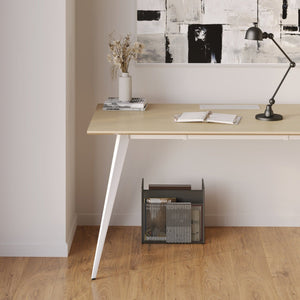
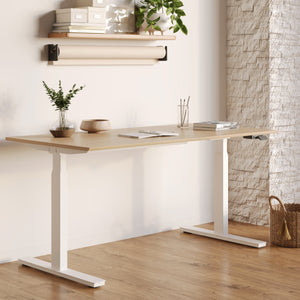
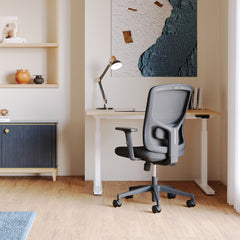
Some home offices need flexibility, especially when one workspace serves multiple users. If you are exploring different desk formats that can support neutral arm positioning and screen placement, our standing and office desk options can help you compare sizes and styles that work with ergonomic seating.
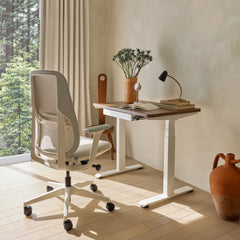
Home offices often live in corners, shared rooms, or compact apartments. Ergonomics does not require a large footprint. It requires clearances that allow movement, a chair scale that fits the room, and a layout that supports focus.
Movement is part of ergonomics. If the chair cannot slide back or if you constantly bump into a wall, you will adapt by twisting, perching, or leaning forward.
Practical checks:
Allow enough room to roll back from the desk.
Keep frequently used items within easy reach.
Avoid stacking storage where your knees or feet need to go.
A chair that does not roll well on a rug can change posture. People lean forward to “pull” themselves closer, which loads the upper back and neck. If you use a rug, consider whether the chair can roll smoothly, or use a surface that allows the chair to move without resistance.
Some home offices need a chair that looks good at a dining table and still performs at a desk for shorter work sessions. The key is to be honest about usage. If you work long days, a fully ergonomic chair usually wins. If you work in short sessions and prioritize a cohesive look, a performance-oriented home chair can be a smart compromise.
The Seashell Chair breathable mesh details are a helpful reference for readers who want a chair that feels at home in a compact space while still emphasizing day-to-day comfort features.
“Quality” should mean predictable performance, durable materials, and a chair that holds its adjustments over time. It should not mean unrealistic claims, or a promise that one chair fits every body. The safest way to shop is to focus on signals you can verify.
A few honest quality indicators:
The chair feels stable when you sit and shift.
Adjustments move smoothly and hold position.
The base and frame feel consistent, not wobbly.
The seat and back do not creak excessively under normal movement.
Warranties are not guarantees of personal comfort, but they can reflect how a product is supported. The most useful approach is to read what is covered, what requires normal care, and what counts as misuse.
| What to evaluate | Why it matters in a home office | What “good” usually feels like | What a mismatch often feels like |
|---|---|---|---|
| Seat height range | Keeps feet stable and reduces forward scooting | Feet fully planted, knees comfortable | Dangling legs, perching, knee pressure |
| Seat depth | Protects circulation and keeps back support usable | Small clearance behind knees | Numbness, sliding forward, pressure behind knees |
| Lumbar contact | Supports neutral pelvis and reduces low-back fatigue | Support that feels present but not sharp | Either no support or an aggressive push |
| Recline control | Enables micro-movement without losing keyboard reach | Small recline, easy return to work posture | Either rigid stiffness or uncontrolled rocking |
| Armrest positioning | Reduces shoulder lift and wrist strain | Shoulders relaxed, wrists neutral | Neck tension, shrugged shoulders, wrist bending |
| Seat edge shape | Prevents thigh compression | Gentle front edge, no “cutting” | Tingling legs, urge to shift constantly |
| Stability and base | Keeps movement predictable | Smooth rolling, stable transitions | Wobble, uneven feel, noisy movement |
Home office buying decisions are safer when you use a repeatable protocol. Instead of judging a chair by the first minute, test it through the adjustments that matter for your body and your desk.
1. Set seat height so feet are fully supported and knees feel comfortable.
2. Check seat depth by sitting back and confirming you have clearance behind the knees.
3. Confirm lumbar contact by relaxing your shoulders and taking a deep breath.
4. Adjust armrests so shoulders stay down and wrists remain neutral while typing.
5. Test a small recline that supports your back without forcing you to reach for the keyboard.
6. Shift positions slightly and confirm the chair supports movement rather than locking you in.
7. Roll and turn gently to confirm stability and predictable motion.
Many people want the confidence of a showroom without forcing a showroom trip. We built an online showroom-quality office furniture experience to make it easier to evaluate pieces for real rooms, understand what you are choosing, and plan a setup that fits your space and work habits.
Even a great chair can start feeling “off” if the setup shifts. Home offices change, monitors move, keyboards drift, and people develop new habits. A monthly re-tune keeps the chair aligned with the way you actually work now.
Seat height: returns feet support and pelvic stability.
Armrest height: reduces neck and shoulder tension.
Back support feel: keeps lumbar contact consistent as posture changes.
A useful rule is to change one lever at a time and then work for a while. Too many changes at once makes it hard to identify what helped.
Neck and upper shoulder tension often points to screen height, armrest height, or reaching for the mouse.
Wrist discomfort often points to keyboard height, wrist angle, or arm support that is too high or too low.
Low-back fatigue often points to seat depth, lumbar placement, or a posture that slides forward.
Tingling legs often points to seat height or a seat edge pressing into the thighs.
Sometimes the issue is not adjustment. It is fit. If you have consistent discomfort after careful setup and small changes, the chair may not match your body dimensions or your desk constraints. At that point, the safest move is to choose a chair with the right adjustment range rather than forcing a compromise.
When you want a clear product reference focused on ergonomic chair function rather than hype, the Ergonomic Novo Chair is one of the chairs our team often points to as a baseline for evaluating what a dedicated ergonomic chair page should communicate about support and adjustability.
A quality ergonomic office chair is not a luxury feature. It is a daily tool that should make work feel calmer, more stable, and less physically demanding. The most reliable path is systematic: fit the chair to your body, pair it to the desk, set the screen to protect the neck, and revisit the setup often enough that small drift never becomes chronic discomfort.
When the setup is built around honest fit and realistic expectations, the chair stops being something you “tolerate” and becomes something you can trust, day after day, in a home office that actually supports the way you live and work.


You have unlocked free shipping!
You're saving $29 and unlocked free shipping!
Leave a comment