






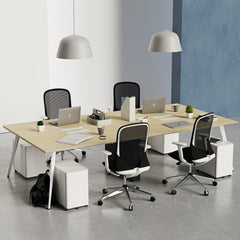
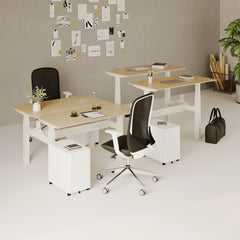
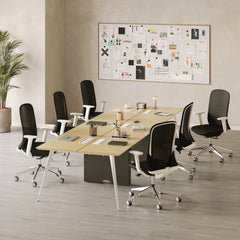


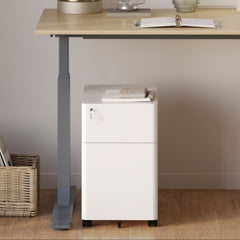


Filing Cabinet Choices for Cleaner Workstation Planning
Cleaner workstation planning starts with filing storage that matches the desk, document volume, security needs, and daily workflow. Explore how cab...
Learn more
Visit quiz page to see how we makes it easy to create an inspiring workplace


Urban workspaces rarely fail because a piece of furniture is “bad.” They fail because the space has hidden constraints that turn good furniture into daily friction. When we plan offices for dense city footprints, we start with the obstacles that do not show up in inspiration photos: narrow doorways, sharp hallway turns, uneven floors in older buildings, outlets that land in inconvenient places, and shared walls that amplify sound.
A reliable way to avoid fit issues is to separate your measurements into two maps:
The building path: from curb to desk, including entry doors, elevator depth, hallway turns, stair widths, and any security gates.
The usable rectangle: the part of the office that can actually hold furniture once you account for door swing, radiators, columns, and window access.
If your team needs a single reference point for what we carry and how we support workspace planning, start with our page on modern design for creative workspaces. It is a helpful place to orient around our office furniture categories and office-focused solutions without guessing what “office-ready” means.
Treat measurement like a short system, not a one-time task. A few extra minutes here saves weeks of annoyance later.
1. Mark the door swing on your sketch so desks and storage do not block it.
2. Measure the narrowest point on the delivery path, not the widest.
3. Locate power and data and note which wall you can realistically use for desks.
4. Identify your “no-furniture zones” like HVAC vents, radiators, and window access.
5. Reserve a circulation lane that stays clear all day, even when chairs are pulled out.
In tight footprints, every decision has a downstream effect. A deeper desk may improve comfort, but it can reduce walk space. Adding a meeting table can improve collaboration, but it can also turn into a storage pile if it is placed in the wrong part of the room. The goal is not to fill the space. The goal is to preserve function under real work pressure.
Urban offices are often asked to do everything at once: focus work, video calls, quick team huddles, and client conversations. Zoning is how you keep those modes from colliding.
Focus zone: Put your primary workstations here. Place them away from the entry path so the room does not feel like a hallway. If you can, align desks so screens do not face the door.
Call zone: Calls need predictable acoustics and predictable privacy cues. This can be as simple as a chair placed near a soft surface, plus a visual boundary like a plant grouping or open shelving.
Collaboration zone: Make this compact and easy to reset. A small meeting surface beats a large table that steals circulation space.
A small office breaks down when people cannot stand up without bumping into each other. Two practical clearances matter most:
Chair pull-back space: room for someone to push a chair back and stand without hitting another seat.
Pass-through space: a route that stays clear so nobody squeezes past someone on a call.
When you are forced to choose, protect circulation over extra furniture. A tight room with clear movement feels bigger and works better than a crowded room with more “stuff.”
Urban buildings often have hard surfaces that create echo. You do not need to rebuild walls to improve sound.
Add soft surfaces where voices live: rugs, curtains, fabric panels, and upholstered seating.
Keep the call zone away from corners that amplify sound.
Avoid placing the call zone directly behind the focus zone, even if it looks neat on paper.
In a dense office, the chair does more ergonomic work than any other piece. It supports posture, it absorbs micro-movement, and it determines whether someone can concentrate for long sessions. A chair also needs to be easy to adjust if seating is shared.
We aim for chairs that balance three priorities:
1. Adjustability that is intuitive so people can fit the chair quickly.
2. A profile that fits tight desk rows so chairs do not dominate circulation.
3. A look that belongs in a modern workspace so the office feels intentional, not improvised.
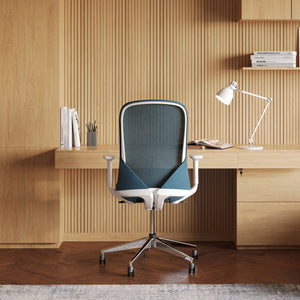
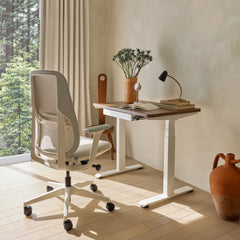
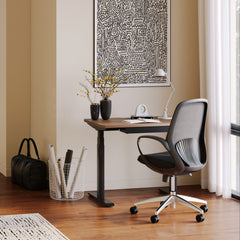
If you have one seat that gets used the most, treat it as your anchor. This is where comfort and support matter most, because small discomfort becomes large over time. Our Urbanica Novo Chair is designed as an ergonomic task chair option for workdays that extend beyond quick laptop sessions.
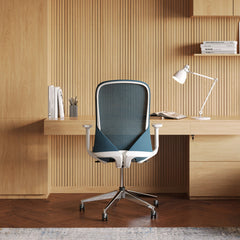
Urban offices change by the hour. Someone who usually works remotely shows up for a day. A colleague needs a quiet corner for a deadline. A secondary ergonomic seat helps you absorb that variability without sacrificing comfort. The Urbanica Onyx Chair is another ergonomic chair option when you want an office-ready seat that can support longer sessions.
If a chair is shared, the fastest path to comfort is a consistent adjustment sequence. Post this near shared desks so people do not ignore the adjustments.
1. Set seat height so feet rest flat and knees are comfortable.
2. Sit back and adjust back support to meet your lower back.
3. Set arm position so shoulders stay relaxed.
4. Check screen height so your eyes naturally land near the top portion of the display.
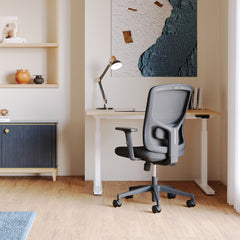
Guest seating should not become a permanent obstacle. The ideal guest chair is easy to move, easy to place, and visually compatible with the office. The Urbanica Muse Chair works well as a flexible chair choice for client conversations, quick huddles, or a secondary seat near a desk.
A desk is the stage for work, which means it shapes both comfort and the look of the room. In urban offices, desks need to support a focused posture while staying visually quiet.
A desk should give enough depth for the essentials without pushing screens uncomfortably close. At the same time, the desk should not be so deep that it shrinks circulation. In a small office, it is often better to choose consistent desk sizes across the room rather than mixing extremes. Consistency makes layout planning simpler, cable management cleaner, and future changes easier.
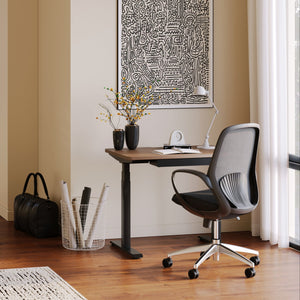
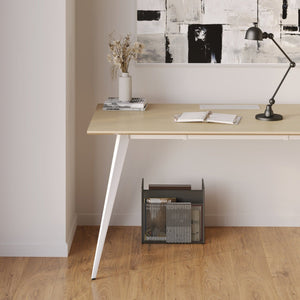
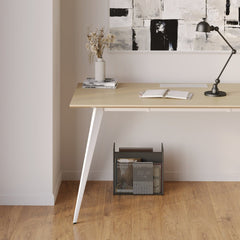
A minimalist desk profile helps compact offices feel less crowded. Our Urbanica Office Desk is built around a modern workstation concept, with a clean look that supports a visually calm workspace.
Cable clutter makes small rooms feel smaller. When cables are visible, the office looks busy, even when the team is calm. A simple cable system protects both appearance and daily efficiency.
Use a single power hub location per desk run, then route cleanly from that point.
Keep chargers off the desktop when possible, so the surface stays open.
Separate “always-on” cables from “sometimes” cables so resets are faster.
A desk can be perfectly sized and still feel wrong if the chair pairing creates crowding. Before you finalize a desk layout, test the chair pull-back clearance with the chairs you plan to use. A compact office should feel like it was planned, not like furniture was placed wherever it happened to fit.
Sit-stand setups can be helpful, but only when they are placed thoughtfully and treated as part of a routine. In small offices, one flexible station often delivers more value than multiple standing desks that become clutter magnets.
Standing can work best for short sessions: calls, quick edits, planning, and reset moments between tasks. The goal is movement variety, not forcing anyone into a single posture.
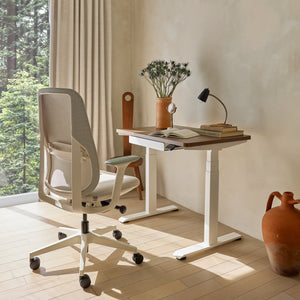
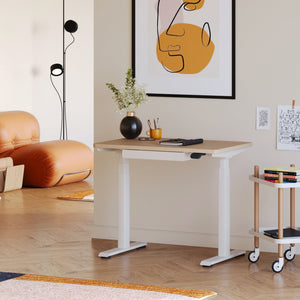
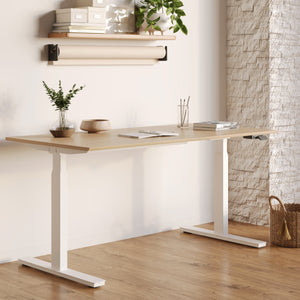
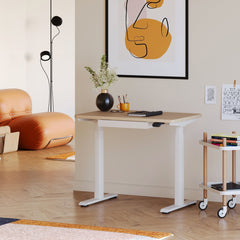
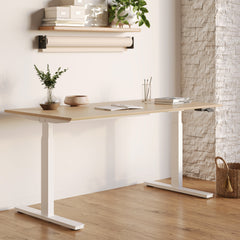
A single shared sit-stand station can serve multiple people across the day if it is easy to access and easy to reset. The Urbanica Standing Desk is designed as a standing desk option for offices that want an adaptable workstation without turning the entire layout upside down.
Put the station near power, but not on the main pass-through lane.
Avoid glare-prone spots near windows unless you can control light with shades.
Keep a small “parking zone” nearby for bags and accessories so the surface stays clear.
A standing desk becomes useless when it turns into a drop zone. The habit that keeps it functional is simple: the surface should clear at the end of each day, and personal items should have a designated home nearby.
Small offices still need collaboration, but the meeting area must match the reality of how teams work today. Urban teams often need quick reviews, laptop-based working sessions, and short check-ins. A compact meeting zone can cover those needs without taking over the room.
Round tables soften movement patterns. People can flow around them more easily, and you avoid sharp corners that block paths. A round meeting point also signals collaboration without forcing a formal boardroom vibe.
The Urbanica Bistro Table is a practical option when you want a compact meeting surface that supports quick discussions, planning sessions, and flexible use in small spaces.
If meetings are mostly laptop-based, prioritize comfortable seating and power access nearby. If meetings are mostly short check-ins, prioritize a placement that is easy to approach and easy to leave without interrupting others.
Use this as a planning lens before buying a new piece. The point is not perfection. The point is to choose furniture that supports how the office behaves during a normal week.
| Workspace need | Best-fit furniture focus | Common urban mistake to avoid | A practical planning cue |
|---|---|---|---|
| Deep focus work | Ergonomic task chair + consistent desk setup | Desks placed on the main traffic lane | Protect a quiet edge of the room for focus |
| Video calls | A defined call pocket with soft surfaces | Calling from the middle of the room | Create one predictable call spot |
| Quick collaboration | Compact meeting surface + easy reset rule | Oversized table that becomes storage | Choose a small footprint and keep it clear |
| Flexible attendance | Shared seating that adjusts quickly | “Nobody’s chair” that no one wants | Use a clear adjustment routine |
In a city office, clutter arrives fast. Packages show up. Samples appear. People bring bags, helmets, and equipment. Storage needs to be designed into the layout, not added as an afterthought.
When floor space is limited, walls become valuable. The trick is to avoid turning wall storage into visual noise.
Keep most storage closed so the eye is not processing dozens of objects.
Use open shelving only for items that are used daily and look tidy.
Concentrate storage into one zone so the rest of the office stays calm.
A reset system works when it is easy. If people need three steps to put something away, it will end up on the nearest flat surface. Build storage around single actions: drop, slide, place.
Desktop: only daily tools and one personal comfort item.
Near-desk storage: charging, notebooks, and work-in-progress items.
Shared storage: supplies, paper backups, and communal equipment.
Hidden storage: bulk items and anything that distracts visually.
When space is tight, style is not a luxury. It is a tool. The right material palette and lighting approach can make the office feel calmer, brighter, and more professional.
Light woods, matte finishes, and consistent metal tones can help the space feel open. If the office already has strong architectural character, keep furniture finishes quiet so the room does not feel busy.
A practical approach is to repeat two or three finishes and keep one accent color consistent across the room. This creates unity without forcing every chair to match every table.
Small offices often place desks near walls, which means walls show up in calls. Keep the background clean, use a single piece of art per wall section, and avoid cluttered shelves behind seating. The office will feel more polished for both in-person and remote conversations.
Urban teams shift. Hiring happens. Roles change. A room that works today can feel cramped in three months if furniture choices are too rigid.
Standardize workstation elements that benefit from consistency, like desk layouts, cable routing, and ergonomic seating logic. Then personalize the spaces that shape identity, like the collaboration zone and guest seating.
Furniture alone does not keep an office functional. Simple habits do.
Keep the main circulation lane clear.
Treat the standing station as a shared tool, not personal storage.
Reset the collaboration surface at the end of each day.
Reserve the call pocket for calls, not overflow work.
A strong urban office layout is less about finding perfect pieces and more about designing a system that can flex. When furniture is chosen for real movement patterns, real sound behavior, and real daily habits, the office stays comfortable even as work changes.
We build our office furniture around that reality: supportive seating where people spend the most time, desks that keep the room visually calm, and collaboration surfaces that encourage teamwork without consuming the floor plan. When those elements work together, a city-sized workspace can feel composed, productive, and ready for whatever the week brings.


You have unlocked free shipping!
You're saving $29 and unlocked free shipping!
Leave a comment