



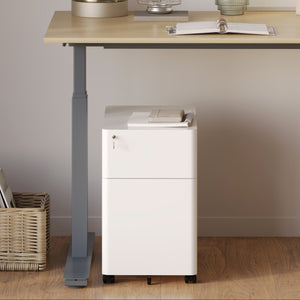







Filing Cabinet Choices for Cleaner Workstation Planning
Cleaner workstation planning starts with filing storage that matches the desk, document volume, security needs, and daily workflow. Explore how cab...
Learn more
Visit quiz page to see how we makes it easy to create an inspiring workplace


Back discomfort at a desk rarely comes from one single thing. It is usually a stack of small mismatches: seat height a little off, feet not grounded, the seat pan pressing behind the knees, armrests forcing a shrug, and a keyboard that sits just far enough away to pull your whole torso forward. At Urbanica, we see a pattern again and again: the fastest relief often comes from fixing the setup you already have before replacing anything.
Pain location is not a diagnosis, but it is a practical clue for what to adjust first.
This commonly points to one of two things: you are not getting consistent lumbar contact, or your pelvis is rolling backward into a slouch and the low back is doing extra support work.
This often means you are sitting with a posterior pelvic tilt, or the seat is too soft in the wrong way and you are sinking into a shape that concentrates pressure.
This frequently shows up when arms are unsupported, the keyboard is too far away, or you are perching near the front of the chair to reach.
This often comes from seat depth and edge pressure behind the knees, or from sitting too low so the hip angle closes and the pelvis tucks under.
Small tweaks work best when you establish a neutral baseline.
Sit back so your pelvis feels balanced on the sit bones, then stack ribs over hips. If you feel like you have to “hold yourself up,” something in the chair setup is not supporting you.
Let arms hang, then bring hands to the keyboard position. If elbows float forward or shoulders rise, adjust arm support and reach before you touch lumbar settings.
Feet should feel planted, not searching. A stable base reduces fidgeting and protects the low back from constant micro-bracing.
Use this in order. Each step influences the next.
1. Set seat height so feet can reach the floor and thighs are supported without cutting into the back of the knees.
2. Add foot support if feet do not rest flat after height is set.
3. Set seat depth by where you sit and by creating a small gap behind knees.
4. Establish lumbar contact that supports the natural curve rather than pushing you forward.
5. Set armrest height and width so shoulders relax and elbows stay near your sides.
6. Set a slight recline and tension so the backrest carries some torso weight while you still work comfortably.
Relief is not always instant, but there are immediate signals you are moving in the right direction.
You should feel more even support across glutes and thighs, with less “pinpoint” tailbone pressure.
Good lumbar contact feels like a steady point of support, not a hard push that forces you to arch or brace.
If you notice less urge to crane forward, your setup is improving.
A practical target is a knee angle around 90 to 110 degrees. If you sit too low, hips close, pelvis tucks, and the low back rounds. If you sit too high, feet float and you grip with hips and low back for stability.
If your best seat height leaves feet slightly unsupported, add a stable platform.
A stack of sturdy books or a solid box often works better than something compressible. Squishy support can feel comfortable but changes height as you shift, which encourages constant re-positioning.
A small change can be enough. If you overcorrect, you may raise one hip or change pelvic balance, which can recreate discomfort.
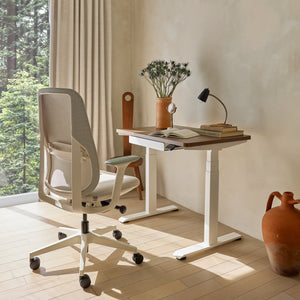
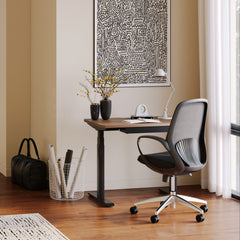
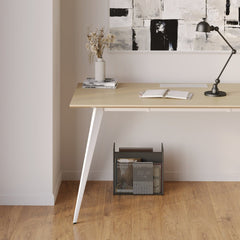
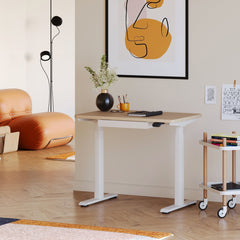
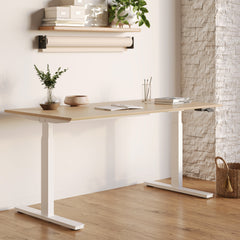
If your desk is too high, you might raise the chair to reach the keyboard and then lose foot support. If it is too low, you might hunch to see the monitor and type. When you are evaluating surface height and leg clearance, it helps to compare options and dimensions like those shown in Urbanica’s desk collection.
Posterior pelvic tilt is the “tucked under” slouch where the tailbone curls forward. It flattens the lumbar curve and shifts work to passive tissues and tired muscles. Many people chase lumbar pillows without realizing the pelvis is the real driver.
Imagine gently dropping the back pockets of your pants toward the seat. This helps you find a neutral pelvis without aggressively arching.
Slide your hips back one inch at a time while keeping ribs stacked over hips. The goal is to sit back into support, not to collapse into the backrest.
Even without a seat tilt lever, you can reduce slouch by sitting fully back, grounding feet, and setting a slight recline so you do not fight gravity with your low back.
Many people put support at beltline level, then feel pushed forward. A better target is the curve above the beltline, where the lumbar spine naturally arcs inward.
Start small. A thick roll can force an arch and create fatigue. You want gentle contact that you can tolerate for a full work block.
Position it so it fills the gap between your low back and the chair, not so low that it hits the sacrum. If it slides, tuck it into a pillowcase or use a thin strap.
A slight recline with appropriate tension reduces compressive load. If tension is too low, you will slump. If it is too high, you will brace to stay upright. Adjust until you can lean back with minimal effort while typing.
When seated back, you want a small gap between the seat edge and the back of your knees. This protects circulation and reduces nerve irritation.
A deep seat often makes people perch, which removes back support and increases low-back load.
Use a thin, firm cushion behind the pelvis rather than a thick pillow behind the mid-back. This keeps you closer to the backrest without forcing the neck forward.
A large cushion behind the upper back pushes the head forward. If you need extra support, keep it low and firm.
Short seats can make you feel unsupported, so you slide forward. Anchor yourself by keeping feet planted and using lumbar contact, then take more frequent microbreaks to reduce fatigue.
Armrests should support forearms while shoulders stay relaxed and down. If you feel your shoulders creeping up, lower the rests or bring your work surface closer.
If armrests force arms wide, the upper back and neck work harder. If they force arms inward, wrists and shoulders can twist. Aim for a natural elbow position close to your sides.
A keyboard too high makes wrists extend and shoulders lift. Lower the chair only if feet can stay grounded, otherwise adjust the surface or use a stable footrest.
Bring keyboard and mouse close enough that elbows remain “home.” The farther the reach, the more the low back and mid-back brace all day.
Many people think upright equals supportive, but rigid upright sitting can increase fatigue. A slight recline can reduce spinal load while still allowing precision work.
Rocking promotes micro-movement, which can reduce stiffness. Locking can help during detailed work. Use whichever lets you breathe easily and keep ribs stacked over hips.
If you recline and your chin juts forward to see the screen, you trade low-back relief for neck strain. Bring the monitor closer and adjust height so eyes meet the top third of the screen.
Plush foam feels pleasant at first, then it lets the pelvis roll backward and concentrates pressure at the tailbone. A supportive seat typically feels more even and consistent over time.
Heat buildup and slippery surfaces can make people shift constantly, clench, or perch. A breathable back or supportive upholstery can help you stay settled without effort.
If a chair feels cozy but you slowly collapse into it, pain may show up later. The goal is comfort that preserves alignment, not comfort that disappears once you sink.
When the keyboard is too far away, you hinge forward from hips or round from the back. Both patterns increase fatigue.
If your elbows drift forward, move input devices closer and ensure you have enough forearm support to avoid hovering.
A low monitor can lead to a forward head posture, which encourages thoracic rounding and changes lumbar shape. Raise the screen as needed and bring it to a comfortable distance.
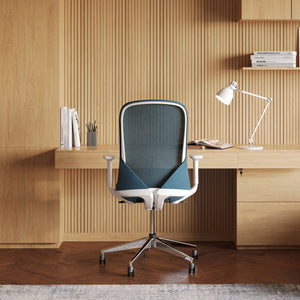
If your chair cannot slide close, you will perch. If armrests hit the desk, you will reach. When you are comparing seat footprints, arm profiles, and overall styles, Urbanica’s office chair collection can help you visualize what fits your room and work surface.
A chair is much easier to tune when it has a stable base, predictable recline mechanics, and a backrest that maintains contact without dumping you backward.
Collapsed foam, a stuck height cylinder, uneven tilt, and wobbly armrests can all create compensations that feel like “my back is the issue.” If the chair cannot hold a stable position, your body will do the stabilizing.
| What you feel | Common chair or setup cause | Quick fix to try first | Replace threshold (practical sign) |
|---|---|---|---|
| Low-back ache after short sitting blocks | Slouching, low lumbar contact, too upright with no support | Slight recline, small lumbar support, pelvis reset | Backrest cannot maintain steady contact |
| Tailbone pressure | Posterior pelvic tilt, overly soft seat, sitting too far back on seat edge | Raise seat slightly, firm support under pelvis, micro-scoot back | Seat foam stays “hammocked” and never rebounds |
| Neck and shoulder tension | Armrests too high, keyboard too far, monitor too low | Lower armrests, bring input devices close, raise monitor | Armrests wobble or force shoulders up no matter what |
| Leg discomfort behind knees | Seat too deep, sitting too low, edge pressure | Create knee gap, adjust height, support behind pelvis | Seat depth cannot be managed and forces perching |
| Mid-back fatigue | Unsupported arms, forward reach, constant hovering | Improve forearm support, reduce reach, slight recline | Chair mechanics encourage collapsing posture |
Low-back discomfort often improves with lumbar contact, recline support, and a seat that keeps the pelvis stable. Tailbone pressure often needs better firmness and a sitting position that avoids pelvis tuck. Mid-back fatigue often improves when arm support and reach are solved.
A chair that lets you sit back with a knee gap is foundational. Without that, lumbar support becomes harder to use correctly.
Look for lumbar that can meet your back without forcing an exaggerated arch.
Armrests that can meet your body reduce bracing through the upper back. A controlled recline supports the torso during longer sessions.
When adjustability is the priority, an ergonomic task chair design can simplify fitting.
The Ergonomic Novo Chair is positioned as an ergonomic seating option with multiple adjustments, which matters when you are tuning seat height, arm position, and back support to your body and desk.
The Ergonomic Onyx Chair is another ergonomic model to consider when you want a chair built around supportive structure rather than a fixed silhouette.
Style choices can still support good sitting, but you need a few basics: a backrest that meets you in the right zone, a seat that does not force you to perch, and arm support that does not pull shoulders into tension.
If you want a chair that feels intentional in a space but still offers a more task-oriented build, the Muse Chair is a product page to review for its adjustment-oriented positioning and intended desk use.
Some chairs are best for shorter sits, mixed-use spaces, or lighter desk sessions. If you are evaluating breathable seating and integrated elements, the Seashell Chair is worth viewing as a reference point for materials and shape.
Sit all the way back, place feet flat, and relax shoulders. Notice where pressure concentrates. If you immediately feel knee-edge pressure, seat depth is a concern. If your shoulders lift to reach armrests, arm fit is off.
Stay in a working posture, hands on input devices. If you gradually slide forward or your ribs flare up, the chair may not be supporting your pelvis and back the way you need.
A few numbers make chair testing far more accurate: your desk height, preferred elbow height while typing, and thigh length for seat depth. Testing becomes less about “does it feel nice” and more about “does it fit my work posture.”
When you are coordinating chair height, desk clearance, and room layout, practical guidance can prevent common fit mistakes. For ordering details, availability questions, and local support information, reference Urbanica’s local office furniture help page.
Instead of long breaks you will not take, use short posture resets. Stand for a few breaths, shift weight, then sit back down with your six-step routine. The goal is to change position often enough that tissues do not fatigue in one shape.
Exhale fully to let ribs soften down, then inhale into the sides of the ribcage. Re-stack ribs over hips and let shoulders drop. This can reduce the “braced” feeling that accumulates during focused work.
Stand, hinge slightly at hips, then sit back down and re-establish foot grounding and pelvis position. This interrupts slouch patterns and often reduces tailbone pressure.
The most back-friendly setup is the one that makes the right posture the easy posture. When the chair supports pelvis stability, the desk supports reach, and the screen supports a neutral head position, your body stops fighting the workspace. That is the standard we aim for at Urbanica: honest fit, adjustable support where it matters, and practical comfort that holds up through the workday without relying on gimmicks.


You have unlocked free shipping!
You're saving $29 and unlocked free shipping!
Leave a comment