



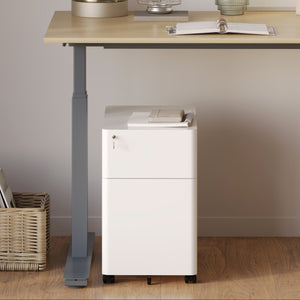






















Filing Cabinet Choices for Cleaner Workstation Planning
Cleaner workstation planning starts with filing storage that matches the desk, document volume, security needs, and daily workflow. Explore how cab...
Learn more
Visit quiz page to see how we makes it easy to create an inspiring workplace


When we design or recommend an office chair, we are never only thinking about the chair itself. We are thinking about the full ecosystem that surrounds it. Accessories turn a single piece of furniture into a flexible tool that can respond to real bodies, real tasks, and real spaces.
Without the right accessories, even a well built chair can feel almost right but not quite there. The seat might be slightly too firm, the lower back may not feel fully supported, or the armrests may not match the way you type, sketch, or use a laptop. Accessories are how we fine tune those details so that a chair supports your work instead of constantly asking your body to compensate.
From our perspective as a furniture brand, the question is not "Which accessory can we add" but "Where does your body need support, stability, or freedom to move that the chair alone cannot fully supply?" Once that is clear, the right accessories start to make sense very quickly.
Most people start with a chair that aims to serve a wide range of users. That is a practical starting point, but it also means no single contour or adjustment can be perfect for everyone. Accessories bridge that gap.
A well chosen lumbar support can align a shorter person and a taller person equally well. A seat cushion can relieve pressure for someone with sensitive hips or a recovering injury. A footrest can allow a more compact user to keep feet supported while maintaining an ideal seat height for the desk. In each case, the chair becomes a platform, while the accessory delivers the personalization.
We design chairs with accessory compatibility in mind. That means thinking carefully about frame shapes, armrest structures, and how upholstery or shells interact with add ons. An accessory should work with the chair, not fight against it. A back cushion should sit naturally within the curve of the backrest. A seat cushion should stay in place instead of sliding. Armrest covers should wrap securely without creating awkward edges.
Balancing aesthetics, ergonomics, and adaptability is a deliberate design decision. When those elements align, accessories can add real value without making the chair feel cluttered or improvised.
To choose accessories that genuinely improve your experience, it helps to think about the chair in zones. Each zone has different demands, and accessories that succeed in one area may not matter in another.
The lower back is where many people feel the consequences of long hours at a desk. Without enough support, the natural curve of the spine flattens and the upper body starts to lean forward. Over time, this can lead to fatigue, neck discomfort, and shoulder strain.
Back and lumbar accessories are designed to support that natural curve, fill gaps between your body and the chair, and gently remind you to avoid collapsing into a slouch.
The seat is the primary load bearing surface. A seat that is too soft can let the pelvis tilt backward, while a seat that is too firm can create sharp pressure points. Here, cushions and covers play two roles: they distribute weight more evenly and they influence how your hips align with your spine.
If the arms hang unsupported, the shoulders and neck end up doing more work than they should. Keyboard and mouse tasks, digital drawing, and long writing sessions all rely on stable forearms. Armrest accessories can adjust height, width, softness, and orientation to better match the way you use your tools.
If feet are not supported, the entire posture chain is affected. People either perch at the front edge of the seat, twist their legs, or cross their knees in ways that add stress. Footrests, floor mats, and base accessories help create a solid foundation so that the rest of the body can relax into a balanced position.
Lumbar accessories are small in size but large in impact. They fill the space between chair and spine where many standard backrests leave a gap. When we talk with customers, we often hear that a simple lumbar cushion was the first accessory that made their chair feel "made for them."
The most useful lumbar supports allow some tuning: the ability to move them higher or lower, or adjust their depth. This lets the user align the thickest part of the support with their own lumbar curve.
For a chair that already incorporates adjustable lower back support, some users may prefer to work with that built in system first. To see an example of that approach, you can look at the built in lumbar adjustment found in this ergonomic chair and consider whether an additional accessory is needed or if the integrated mechanism already provides enough range.
Users who lean toward the screen, feel tired by midday in the lower back, or notice that their chair feels "flat" in the back region usually see the biggest gains from a lumbar accessory. It is also helpful for people who share a chair with someone else, since a movable cushion can be quickly repositioned without altering the entire chair setup.
The top of the lumbar support should generally sit around the beltline area, not in the mid back. Depth should be enough to feel contact, but not so strong that it pushes you forward or feels intrusive. Firmness is personal, but a slightly resilient surface that holds its shape tends to perform better over time than very plush padding.
A seat cushion is one of the easiest ways to change how a chair feels. It can restore comfort to a seat that has gradually lost resilience and can also adjust the way your pelvis angles while sitting.
In our work with customers, we see cushions used for three main reasons:
To relieve tailbone and hip pressure.
To slightly increase seat height without changing the chair mechanism.
To modify the contour, for example by adding a waterfall edge sensation to a flatter seat.
Material choice matters. Breathable foams and layered structures help avoid heat build up, while textured undersides help the cushion stay put.
Standard back heights do not suit every body equally. Taller individuals or people who prefer to sit more upright may feel that their upper back and shoulders are underserved. Backrest extensions and posture add ons offer additional surface area and guidance so that the entire back can share the load.
These accessories are most effective when they match the width and curvature of the existing backrest. A mismatch can create hard edges or pressure points, so it is worth taking measurements or comparing shapes before deciding on a specific product.
Arm movements change throughout the day. Typing at a keyboard, scrolling on a mouse, using a drawing tablet, and holding a notebook all require slightly different arm positions. Multi directional armrest accessories introduce more axes of control so that forearms can remain supported in each posture.
We encourage users to pay attention to how their shoulders feel after long sessions. If there is tightness around the neck or between the shoulder blades, it can be a sign that arm supports are too low, too far apart, or missing altogether. Adjusting the armrests to meet the arms, instead of forcing the arms to reach for the rests, is one of the simplest corrective steps.
Many armrest tops are made of a firm polymer that holds up well in daily use but can feel harsh over long stretches. Soft covers and gel sleeves add a buffer that protects both skin and underlying tissue from constant compression.
Soft covers also extend the life of the original armrest by absorbing wear from clothing, watches, or jewelry. When the cover shows age, it can be replaced, keeping the chair looking cared for.
Not every armrest frame is equally suited to every accessory. The width of the top, the way it attaches to the chair, and the mechanism underneath all matter. If you want to see an example of a frame built with ergonomic support in mind, you can refer to the ergonomic armrest frame shown in this chair as a reference point when assessing whether a given accessory can sit securely on your own chair.
Sculpted shell chairs have a distinctive visual presence and create a sense of being held. For these designs, accessories should respect the existing lines of the shell. Low profile cushions that follow the curve of the seat or slim back pads that echo the back shape are often more successful than bulky additions.
If you are considering accessories for this type of chair, it can be useful to look at an example of a sculpted form like the sculpted seating design featured in this model and imagine how a cushion or lumbar pad would nest within those contours without breaking the visual flow.
Upholstered ergonomic chairs are particularly forgiving when it comes to accessories. Their surfaces are softer, so add ons can integrate visually and physically without creating abrupt transitions.
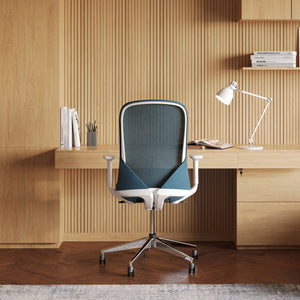
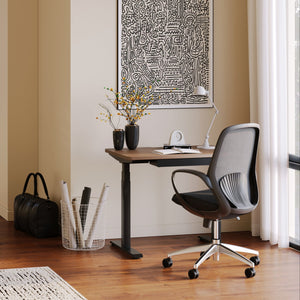
For instance, a chair with supportive foam and shaped stitching can accept a slim lumbar roll or a breathable seat overlay without feeling pieced together. To understand the type of form that pairs well with this layering approach, you can look at the ergonomic seating showcased and consider how accessories could enhance specific zones without overpowering the overall design.
There is a point where adding yet another accessory becomes a sign that the underlying chair no longer matches your needs. If the seat padding is heavily compressed, the mechanism is unreliable, or the frame does not allow for stable accessory mounting, then continuing to layer fixes on top can be frustrating. In such cases, it may be more honest and ultimately more economical to transition to a chair that was designed from the start to support the way you work.
Casters influence how a chair behaves every time you shift position. On hard floors, basic casters can be noisy and may roll too freely. On carpet, they can drag and resist movement. Swapping to casters designed for your specific flooring can make daily tasks feel more effortless and controlled.
When selecting casters, we recommend considering three aspects: floor protection, noise level, and roll resistance. A slightly controlled roll often feels better in focused work than a chair that glides with the slightest touch.
Footrests are not only for people whose feet do not reach the floor. They are a useful tool whenever the seat height must be set high to match the desk or when a user prefers a more open hip angle. A good footrest allows the legs to rest at a gentle downward slope, which can ease strain on the lower back and hips.
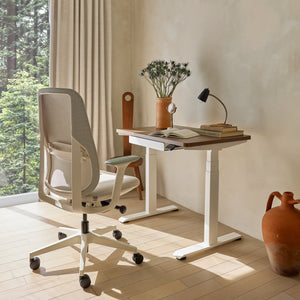
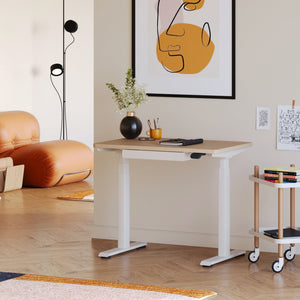
Smaller offices or home setups often require multi purpose furniture and creative layouts. In these environments, accessories that offer height adjustment and small footprints are especially helpful. For example, pairing a chair with a compact, adaptable work surface can make it easier to position both feet and hands comfortably. A useful reference is the compact height-adjustable workstation shown, which illustrates how a smaller scale surface can still support thoughtful ergonomic alignment.
A chair rarely exists in isolation. The desk, monitor, keyboard, and overall room layout all influence how that chair feels. When we help customers adjust their setups, we often see that an accessory that did not seem helpful suddenly becomes effective once the desk height is corrected.
The basic principle is simple: your elbows should sit around keyboard height with shoulders relaxed, your hips should be at or slightly above knee level, and your feet should be supported. Accessories then refine the experience inside this framework.
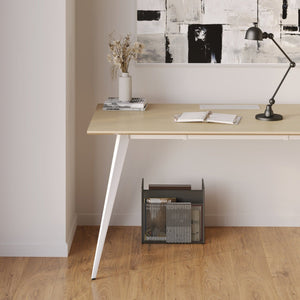
For many people, a traditional seated workstation is still the primary mode of working. In those cases, a desk designed around a predictable seated height provides a clear baseline for placing accessories. You can imagine how your own chair and add ons would align with a setup like the standard seated-height desk configuration displayed, then adjust from there based on your body and tasks.
As more people move between sitting and standing throughout the day, accessories have to work across both modes. Cushions, lumbar pads, and footrests that remain helpful whether you are seated or briefly perched are especially valuable.
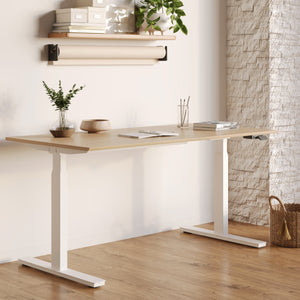
At a taller work surface, posture dynamics change. You might lean more, shift your weight, or use a perching stool. Accessories that encourage small, natural movements and maintain alignment become more important than deep cushioning alone. To picture how chair accessories might interact with a higher work surface, you can look at the adjustable standing-height workstation and consider where your chair, feet, and arms would land in relation to it.
Acoustic comfort is easy to overlook until a noisy chair rolls across a hard floor during a call or deep concentration. Chair mats and floor pads quiet movement and smooth transitions, especially in shared environments or home offices where other people may be nearby.
They also create a predictable rolling surface, which can make it easier to maintain stable posture when you shift closer or farther from the desk.
Some tasks call for a very steady base: editing, drafting, precision mouse work, and certain types of design. For users who find that their chair drifts or swivels too easily during these activities, stability accessories can provide helpful control. They reduce unintentional movement so that you can lean into the task without constant micro adjustments.
We always encourage our customers to think about how they actually move through a workday. If you roll frequently between different surfaces, noise control and floor protection may matter most. If you stay mostly in one place, then micro stability and posture support may be higher priorities. Matching accessories to habits ensures that the upgrades you select are the ones you feel every day.
Chairs work hard. Over time, fabrics experience friction from clothing, spills, and simple daily use. Protective covers and textiles absorb much of that wear. They can be removed, cleaned, and replaced, preserving the underlying upholstery.
This is especially valuable in households with children or pets, or in shared office environments where multiple people use the same chair. A removable cover keeps the chair feeling fresh and easier to maintain.
Some accessories are quiet protectors. Upgraded casters reduce stress on the chair base and suspension. Arm caps shield edges from chips or cracks. Simple reinforcements at key stress points can meaningfully extend the useful life of the chair.
From our perspective, the goal is to keep the chair performing as designed for as long as possible rather than pushing it beyond what its structure can realistically handle.
There are honest limits. If the main mechanism no longer locks securely, if the frame is bent, or if the seat pan feels unstable, no accessory can safely compensate for that. In those cases, using add ons to mask the issue is not something we recommend. It is better to invest in a structurally sound chair and then use accessories to refine comfort rather than to patch fundamental problems.
Comfort and safety at a workstation are not solely the responsibility of the furniture or solely the responsibility of the user. They are shared. As a brand, we commit to designing products that support healthy alignment, clear adjustability, and compatibility with useful accessories. Users contribute by listening to their own bodies, adjusting setups when something feels off, and taking regular breaks.
Authoritative resources provide helpful baselines for safe and sustainable work setups. They translate research and field experience into practical recommendations for chair height, monitor distance, and posture. For readers who want to explore this more deeply, proven ergonomic guidance from OSHA offers a solid foundation for understanding how chair accessories can support healthier working patterns.
At the same time, we respect that no guideline replaces personal feedback. If a purely "correct" posture still feels uncomfortable, that is a sign that small adjustments or different accessories may be needed.
Our customers range from creatives and developers to administrators and remote professionals. Each group sits differently, moves differently, and needs different kinds of support. When we evaluate accessories, we ask how they will perform not just in a showroom moment, but after months and years of daily use.
We look for solutions that respect the realities of long workdays: small shifts in posture, varied temperatures, changing tasks, and shared spaces. Real value comes from accessories that quietly keep working in the background so that you can focus on the work in front of you.
We see a future where chairs and accessories are designed together as flexible systems. Instead of replacing a whole chair when needs change, users will be able to update key elements like support, padding, or mobility through thoughtfully designed add ons. This approach treats the chair as an investment and accessories as tools that keep that investment aligned with evolving bodies and workstyles.
As remote and hybrid work remain part of everyday life, people need comfort in more than one place. Portable lumbar supports, travel friendly cushions, and compact footrests can move between home and office. For teams, this creates consistency: each person can build a personal kit that works on different chairs and at different desks.
We believe the most sustainable approach to office seating is steady, thoughtful improvement. Instead of chasing the newest idea, it is better to identify the one or two areas where your current setup falls short, then choose targeted accessories that truly address those gaps.
Over time, these small, well considered upgrades create a workspace that feels personal, supportive, and honestly comfortable. That is the kind of real value we want every chair accessory to deliver.


You have unlocked free shipping!
You're saving $29 and unlocked free shipping!
Leave a comment