



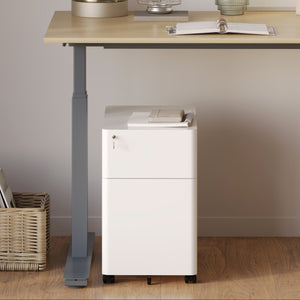






















Filing Cabinet Choices for Cleaner Workstation Planning
Cleaner workstation planning starts with filing storage that matches the desk, document volume, security needs, and daily workflow. Explore how cab...
Learn more
Visit quiz page to see how we makes it easy to create an inspiring workplace


A headrest is not the same thing as neck support, and that distinction is where most discomfort stories begin. When people say a headrest “saved their neck,” they usually mean it helped them rest the weight of the head during recline. When people say it “pushed my head forward,” they usually mean the headrest made contact in the wrong place, at the wrong time, or with the chair set up in a way that forced compensation.
The head weighs enough that your neck and upper back muscles spend all day stabilizing it. A headrest can reduce that muscular work, but only if it supports the right structure.
The most reliable “supportive” contact happens at the occiput, the back of the skull. That allows the head to rest without forcing the chin forward. Mid-neck contact is different. When the headrest presses into the cervical spine instead of the skull, the neck often reacts by tightening, and the jaw tends to drift forward to find balance. People experience this as stiffness, trapezius tension, or a subtle headache that builds over the afternoon.
Neutral posture is not one rigid position. It changes with recline angle.
Upright tasking neutral usually means your ears are roughly stacked over your shoulders, chin level, and your gaze straight ahead. Reclined neutral often means the head is supported slightly behind that point. If your headrest is adjusted to be present during upright typing, it can become intrusive. If it is adjusted to be available during recline, it can become restorative.
A headrest does not “fix” a chair that is not fitting you elsewhere. If the seat is too deep, you slide forward. If you slide forward, your ribcage drifts back. If the ribcage drifts back, your head usually comes forward to keep your eyes on the screen. Then the headrest becomes a hard stop that meets a head that is already chasing the monitor.
At Urbanica, we think about headrests as the last part of the fit conversation, not the first. The chair should support pelvic position, then ribcage stacking, then shoulder relaxation, and only then should the headrest become relevant.
Fixed headrests are consistent but narrow in fit range. Adjustable headrests can work across more body types and reclining habits, but only when you dial in height, depth, and angle in a way that matches how you actually work.
Headrests shine in moments where your neck muscles should not be doing all the work. The goal is not constant contact. The goal is strategic support that gives your neck a break without shifting you into a new problem.
If you never recline, a headrest is often neutral at best. If you recline even a little throughout the day, it can be a meaningful comfort tool.
A practical pattern is a short recline that lasts long enough for your neck to stop bracing, but not so long that you sink into a rounded spine. Think of it as a reset. You lean back, let your upper back meet the chair, and allow the headrest to catch the back of the skull with light contact. Then you return to upright, bringing your head back over your shoulders.
Some workdays include long stretches of listening, reviewing, and thinking rather than active typing. Those are the moments where head support can feel like a relief valve. If the headrest is set correctly, it can reduce the small, constant effort of holding the head in space while you are mentally focused elsewhere.
Taller users often discover that the upper back does not fully connect with the chair without a thoughtful setup. When the backrest is doing its job but the top of the chair ends lower than expected, the neck tends to do extra stabilizing. A properly fitted headrest can make recline feel complete rather than unfinished, especially for longer torsos.
Headrests are most consistently helpful for people who naturally alternate between upright focus and brief recovery.
Frequent leaning back between tasks
Switching from typing to reviewing and back again
Periodic phone calls or meetings where you sit more passively
A headrest works best when it is designed for the chair, mounted correctly, and adjustable enough to match your height and posture. If your chair is built to accept a dedicated headrest, the experience is usually more stable than trying to retrofit a generic option. When someone wants that chair-specific pairing for the Novo, we point them to the Novo Headrest accessory page so they can confirm compatibility and intended use before deciding.
Most headrest problems show up quickly, and the warning signs are consistent. The trick is recognizing them early, then adjusting the setup so the headrest becomes optional support rather than a constant nudge.
The push-forward effect happens when the headrest is positioned too far forward or too low. Instead of meeting the skull during recline, it meets the neck during upright work. Your body adapts by shifting the chin forward to keep your eyes on the screen.
Chin subtly protrudes
Upper trapezius tightens
Shoulders creep upward
Eyes angle slightly downward because the head is no longer stacked
If you feel “compressed” in the front of the neck, or you catch yourself jutting your head forward against the headrest, treat that as a setup issue, not as something you need to tolerate.
When you type, you need your head to float in a balanced position over your shoulders. Many people do best when the headrest is not touching them at all in upright tasking. That does not mean the headrest is useless. It means it should be reserved for recline.
Headrest discomfort is often blamed on firmness, but the bigger factor is shape and contact area. A narrow edge or a poorly placed curve can create a concentrated pressure point. Broad contact at the back of the skull tends to feel stable. Narrow contact on the neck tends to feel irritating.
If you are shorter, the headrest can land too low, meeting the neck instead of the skull. That setup tends to feel like a constant push. Adjustable headrests can solve this, but only when height is the first change you make. If the height range cannot reach the right skull contact, it is often better to use the headrest only during deeper recline or not at all.
A headrest can magnify problems created elsewhere in the chair.
Seat depth too long often triggers sliding forward, then neck craning
Armrests too high often elevate shoulders, then tighten the neck
Lumbar support that is too aggressive can push the ribcage forward, then pull the head forward
When those upstream issues are corrected, headrest use often becomes simpler and more comfortable.
When we help customers troubleshoot headrest comfort, the same sequence works repeatedly. Fit the chair first. Then bring the headrest into the picture as a support tool, not as a posture crutch.
1. Seat height: Set it so your feet feel stable and your thighs feel supported without pressure behind the knees.
2. Seat depth: Slide the seat so you can sit back without the front edge pressing into the backs of your legs.
3. Lumbar position: Adjust until it feels like guidance for your lower back, not a shove that forces you forward.
4. Armrests: Set them so shoulders are relaxed and elbows feel supported, without lifting your shoulders.
Your target is the back of the skull. If the headrest touches the neck in upright posture, raise it. If it cannot reach the skull comfortably, plan to use it only during recline or consider a different setup.
A simple check is to sit upright and see whether the headrest is contacting you. For many people, the best upright setting is a small gap. When you recline, the headrest should meet you naturally.
Angle matters because it decides whether support is cradling the skull or pushing it forward. If you feel your chin being nudged downward or forward, reduce the forward angle.
Upright tasking: Minimal or no headrest contact is often ideal.
Light recline: Headrest makes light contact at the skull.
Deeper recline: Headrest provides steady support without forcing the chin forward.
Headrests are not a universal upgrade. In the wrong context they can encourage habits that make neck strain worse.
If your default posture under stress is to crane toward the screen, a headrest can become a prop that confirms the habit. The safer approach is to address screen distance, monitor height, and chair fit, then reserve the headrest for recline-only breaks.
If your screen is low and close, your head will drift forward to see it clearly. A headrest cannot solve that. It can even add friction by meeting your head while you are still chasing the screen. External keyboard and mouse plus a raised screen position often changes everything, even before you touch headrest settings.
Some roles naturally involve leaning forward for precision. For those users, a headrest is most useful as a recovery tool between work blocks, not as something that touches them during active typing.
If the headrest cannot be adjusted enough to avoid push-forward, or if it lands on the neck, the most honest recommendation is to limit use. Comfort that comes from forced posture is not the kind of comfort that holds up over long days.
A headrest does not live in isolation. It inherits the geometry of the chair under it.
A supportive upper back helps your head reach the headrest without effort. When the upper back is shaped to encourage a stable ribcage position, recline tends to feel aligned. When the upper back is too flat for your body, you may feel like the headrest is “too far back” or “never there.” When we talk about this relationship, we often point people to the Ergonomic Onyx Chair details because it helps illustrate how backrest structure and overall chair geometry influence where the head naturally lands.
A smooth recline keeps your torso and pelvis in a consistent relationship. That consistency makes headrest contact predictable. A limited or abrupt recline can make head support feel inconsistent, which leads people to over-adjust the headrest forward, increasing the chance of push-forward during upright work.
Neck discomfort is often a shoulder issue. If armrests are too high, shoulders elevate and the neck tightens. If armrests are too low, you may lean forward to find support, again pulling the head forward. When shoulders relax, the head often stacks more easily, and headrest use becomes smoother.
If your seat depth encourages sliding forward, the headrest becomes a hard target you keep bumping into. Correcting seat depth and sitting fully back often fixes “headrest feels weird” complaints without changing the headrest at all.
Mesh and upholstered surfaces respond differently under load. That changes how your upper back settles when you recline. If your torso sinks more, headrest contact may arrive sooner. If your torso stays more upright, headrest contact may arrive later. The best approach is adjusting for your body and your recline style, rather than assuming one material will automatically feel better.
We see consistent patterns in how people use chairs. These two archetypes cover most headrest outcomes.
This person does blocks of focused work, then leans back to reset. For them, a headrest is often a high-value comfort tool because it supports a deliberate routine. If the chair is designed for an add-on headrest, pairing the right accessory is usually the cleanest way to get stable fit.
For example, someone who gravitates toward the Muse for its balance of comfort and design might start by reviewing the Muse Chair details, then consider the chair-specific add-on at the Muse Headrest accessory page if they want head support during recline.
A headrest that was built for a chair is more likely to mount securely, match the chair’s lines, and adjust in a range that makes sense for that backrest. It also reduces the risk of awkward contact points created by improvised attachments.
This person types for long stretches and rarely reclines. They often do best when the headrest is set back enough that it does not touch during upright work. When they do use it, it is reserved for breaks, calls, or a brief reset.
Set the headrest so upright posture has a small gap behind the head.
Use a light recline break when you feel neck fatigue building.
Return to upright and re-check that your shoulders feel relaxed and your chin is not creeping forward.
A useful measure is how your body behaves when you are not paying attention. When setup is improving, you notice fewer shoulder shrugs, less jaw tension, and less end-of-day neck holding. You also notice that reclining feels like recovery, not like a posture fight.
| Scenario or work habit | Headrest outcome most likely | Why it trends that way | Safer setup move |
|---|---|---|---|
| Frequent short recline breaks | Helpful | Head support reduces neck muscle load during recovery | Adjust for skull contact in recline |
| Call-heavy day with intermittent typing | Helpful to neutral | More passive sitting benefits from occasional support | Keep upright gap, use during recline |
| Upright typing for long blocks | Neutral to risky | Headrest contact can nudge the head forward | Set depth back so there is no contact upright |
| Laptop-only, screen low | Risky | Forward head posture is driven by screen position | Raise screen, use headrest only when reclining |
| Petite user, headrest lands low | Risky | Neck contact creates pressure and chin jut | Raise headrest, or recline-only use |
| Tall user, upper back not fully supported | Helpful | Headrest can complete the recline support chain | Ensure chair fit first, then fine-tune headrest |
| Gaming or relaxed reading posture | Helpful | Recline is sustained, head support becomes more relevant | Angle headrest to avoid chin poke |
A headrest can feel fine for 30 seconds and irritating after two hours. The goal is testing in a way that reveals whether the headrest encourages good alignment or quietly pushes you into compensation.
Sit upright as if you are typing. If the headrest is touching you, check whether it is touching the skull or the neck. If you feel even a small push forward, that is a red flag. Adjust depth back or raise height.
Recline slightly. Your upper back should stay supported, and the headrest should meet the skull with light contact. If it hits your neck first, raise it. If it feels like it is pushing you, reduce forward angle.
Recline a bit more. The headrest should feel like it is holding, not forcing. If you feel chin poke or throat compression, reduce angle and depth.
Return to upright. Your shoulders should feel relaxed. If they feel tight, look at armrest height and keyboard reach before blaming the headrest.
Desk height, monitor height, and how far your keyboard sits from the edge all influence whether your head stays stacked or creeps forward. If you want a broader view of how chairs, desks, and accessories fit together in our ecosystem, the Urbanica office furniture collection page is a useful hub for browsing categories and comparing setups, even when you are planning from home.
Some chairs are built for all-day ergonomic tuning. Others are built to look great, feel good for shorter sessions, and work beautifully in multipurpose spaces. A headrest only makes sense when the chair is meant to support recline and long duration posture changes.
A chair can have a supportive-looking silhouette but still be intended for lighter, shorter use. If a chair does not have the adjustability to match your body, adding a headrest can create more friction than comfort.
If you sit intermittently, the most important factors are seat comfort, easy movement, and how the chair fits the room. Head support is rarely the limiting factor for that kind of use.
If you want a reliable chair that fits a lot of spaces and can cover daily use without turning into an engineering project, a straightforward model can be the right call. For people who are balancing comfort with simplicity, the Seashell Chair product page is often where they start to see that “supportive enough” can be a feature when the goal is an easy, dependable setup.
Headrest comfort is rarely about finding one perfect position and leaving it there forever. It is more often about using the headrest at the right moments, with the right level of contact.
A headrest does not need to touch you when you are upright and typing. For many bodies, the cleanest setup is a small upright gap and a supportive recline contact. That approach reduces push-forward risk while still delivering real comfort during breaks.
Recline slightly and let your upper back settle into the backrest
Let the headrest meet the back of the skull with light contact
Take a slow exhale and allow shoulders to drop
Return upright and re-stack head over shoulders
Used consistently, this kind of pattern can make a headrest feel like a reset tool instead of a constant presence.
Adjust when you feel push-forward, chin poke, or neck contact. Remove or stop using it during upright work if contact is unavoidable. Upgrade only when the chair and accessory pairing is built for each other and provides the adjustment range you need.
If you are building an ergonomic setup where headrest compatibility is part of the plan from day one, starting with the Ergonomic Novo Chair details can help set expectations around chair fit first, then head support as a secondary layer that is used strategically.


You have unlocked free shipping!
You're saving $29 and unlocked free shipping!
Leave a comment