




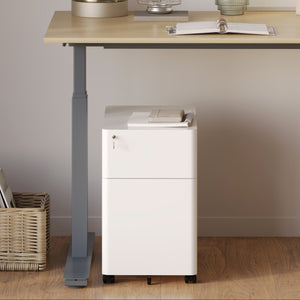






















Filing Cabinet Choices for Cleaner Workstation Planning
Cleaner workstation planning starts with filing storage that matches the desk, document volume, security needs, and daily workflow. Explore how cab...
Learn more
Visit quiz page to see how we makes it easy to create an inspiring workplace


Back pain at a desk rarely comes from one single thing. It usually comes from a mismatch between your body, your chair settings, and how your workstation asks you to reach, twist, or hold yourself still. When you adjust randomly, you often trade one discomfort for another.
Use this symptom map to choose the first knob to turn, then adjust one variable at a time so you can tell what actually helps.
| What you feel while working | Most likely cause in the chair setup | First adjustment to try | What “better” feels like |
|---|---|---|---|
| Low back ache that builds over time | Seat height or pelvic angle is compressing the lumbar area | Seat height, then recline tension | Lower back feels supported without bracing |
| Mid-back tightness or fatigue | Backrest contact is inconsistent, you are holding yourself up | Recline tension and backrest angle | You can lean back slightly without sliding |
| Tailbone soreness | Seat depth or seat angle is loading the back of the pelvis | Seat depth and seat height together | Less pressure at the tailbone, more weight on the sit bones |
| Neck and shoulder tension | Armrests are too high or too wide, or monitor is too low | Armrest height, then monitor height | Shoulders drop naturally, neck feels “longer” |
| One-sided tightness | Asymmetry in armrests, foot support, or mouse reach | Level armrests, center your reach | Left and right sides feel equally loaded |
This often means your pelvis is being pulled into a slumped position, or your seat height is putting too much load through the lumbar spine. Small changes in seat height and recline tension usually make the biggest difference.
This is commonly a seat depth and seat tilt story. If the seat is too deep, you tend to perch forward, then slide, then slouch. That cycle can overload the tailbone.
If your shoulders creep upward, your neck ends up doing extra work. The chair might be fine, but armrests and monitor placement can quietly create strain even when the seat and backrest feel comfortable.
Seat height is the foundation. If it is off, every other adjustment becomes harder to dial in.
A practical target is hips slightly higher than knees, or roughly level, with feet planted and stable. When your hips drop below your knees, many people lose pelvic neutrality and round through the lower back.
If raising the chair causes your feet to lose contact with the floor, do not solve it by tucking one foot under you. That creates asymmetry and often leads to one-sided pain. Instead, use a stable foot support so both feet can share the load.
Sit back, then gently rock your pelvis forward and back a few times. Stop in the middle position where you feel your sit bones supporting you and your lower back lengthening. That is your neutral starting point. Now adjust seat height again, because a neutral pelvis can change how tall the chair needs to be.
If the front edge of the seat presses into the backs of your thighs, you may unconsciously slide forward to relieve pressure. That usually collapses lumbar support. Seat height and seat depth have to cooperate so your thighs are supported without feeling pinned.
Seat depth controls how your pelvis sits relative to your backrest, and it affects circulation behind the knees.
A useful starting point is a small gap between the front edge of the seat and the back of your knee. Too little space can increase pressure and numbness. Too much space can reduce thigh support and make you perch forward.
Smaller frames often need less seat depth to keep the lumbar area supported. Longer femurs often need more depth so the thighs are not under-supported.
When the seat is deep, you may sit forward to avoid knee pressure. Now your back loses contact with the backrest. You respond by slouching, and the pelvis rolls backward. That is the posture that tends to make the lower back feel “compressed.”
A cushion can help, but only when it supports you evenly. Place support at the back of the seat so you bring your pelvis closer to the backrest, and keep the cushion flat so it does not tip you forward or create wobble.
If you suspect the chair format is the wrong match for your body proportions, it can help to compare shapes and seat profiles across a range of options, starting with Urbanica’s office chair collection.
Recline is often misunderstood. A slight recline can reduce spinal load, but only if the tension keeps you supported.
Many people do best with a small recline for typing and reading, not fully upright. If you lock the chair perfectly vertical, you may end up hovering, then slumping. The goal is steady contact, not a posture you must hold.
Lean back slightly and let the backrest carry some of your upper body weight. If the chair drops back too easily, you will brace with your core and neck. If it is too stiff, you will perch forward and lose back contact. Adjust tension until you can recline a little and return smoothly without effort.
Sliding forward is often a paired-adjustment problem. Increase recline support slightly and re-check seat height. If the seat is too low, you may slide to find leverage. If tension is too loose, you may slide because you are trying to stabilize yourself.
Lumbar support should meet your lower back where your natural curve lives. It should not force your ribs forward or jab you.
A repeatable reference is your belt line area. The support should contact the lower back above the pelvis, not high into the mid-back.
A practical test is to place a hand behind your lower back while seated. You want firm contact that fills the space, not so much pressure that it pushes you forward.
First reduce depth or firmness if your chair allows it. If it does not, adjust recline slightly so the backrest meets you more evenly, then re-check seat depth so you are not being forced into the lumbar pad.
Start by sitting fully back in the seat. Many people miss lumbar support because they are perched forward. If needed, a small rolled towel can provide gentle contact at the belt line area. Keep it modest. The goal is guidance, not forcing a shape.
For a concrete example of how a product page describes lumbar support and ergonomic features, review Onyx Chair product details and use that language as a checklist for what your current chair can or cannot do.
Armrests can reduce strain, or they can quietly create it. Back pain often travels upward when your shoulders never get to relax.
Set armrests so your elbows can rest lightly while your shoulders stay relaxed. If you feel your shoulders rising the moment your elbows touch the pads, the armrests are too high.
When you type, your forearms should be supported without bending your wrists upward. If you have to lift your wrists to reach the keyboard, you are likely compensating through the shoulders and neck.
Armrests that are too narrow can push your elbows inward and round your shoulders. Too wide can make you reach out and tense. Aim for a position where your upper arms hang naturally near your sides.
If the armrest forces your hand forward or away from your body, you may rotate through the spine repeatedly. Keep the mouse close, and adjust armrest depth so the forearm can be supported without reaching.
A perfectly adjusted chair cannot compensate for a desk that is too high, too low, or too shallow.
When your hands are on the keyboard, your shoulders should feel heavy and relaxed, not elevated. If the desk is too high, you will shrug. If it is too low, you will hunch and round.
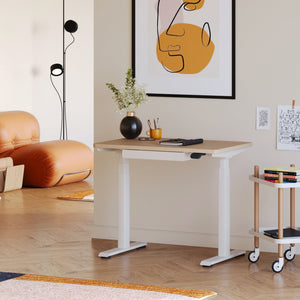
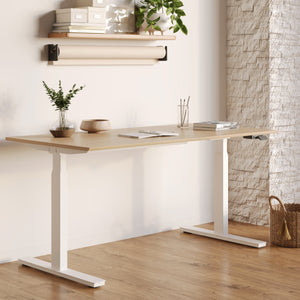
If you want to cross-check desk dimensions and surface height considerations as part of your setup, use Office Desk product information as a reference point for how a desk is presented and what measurements you can compare against.
Set the monitor so your eyes naturally look forward with a neutral neck. If the monitor is too low, your head drifts forward. If it is too far away, you crane. If it is too close, you may lean back and then lose keyboard reach.
Let your eyes lead, then let your chin follow. If your chin is constantly pushing forward to see, something is off in monitor placement.
Keep frequently used items within easy reach so you do not repeatedly twist or lean. A small change in mouse position can fix a surprising amount of one-sided discomfort.
Even an excellent chair setup can feel bad if your body never moves. We think of ergonomics as settings, but sustainable comfort comes from settings plus motion.
Shift between light recline and upright work, change foot position, and stand briefly when you can. The goal is not a perfect posture. The goal is distributing load across tissues so nothing gets overworked.
Try subtle movements that keep you supported:
Small pelvic resets, moving between neutral and a slight forward tilt
Ribcage stacking, gently bringing ribs over pelvis without stiffening
Ankle pumps and heel lifts to reduce stiffness and circulation issues
Instead of holding your stomach in, breathe into the lower ribcage and let the core engage lightly when you reach or type. If you feel your breath getting shallow, that is often a sign you are bracing too hard.
Random tweaks create confusion. A simple sequence helps you find your baseline.
1. Seat height first, feet stable, hips and knees comfortable, pelvis neutral.
2. Seat depth next, behind-the-knee clearance without tailbone pressure.
3. Recline and tilt tension, supported contact with the backrest during work.
4. Lumbar tuning, steady contact without pushing you forward.
5. Armrests, shoulders relaxed, elbows supported, wrists neutral.
6. Monitor and reach, reduce craning and twisting.
7. Confirm with real tasks, type, mouse, read, and take a call to test variability.
Notice where you feel pressure, when you begin to fidget, and whether discomfort is symmetrical. If a change helps immediately but creates new tension later, it probably needs a paired adjustment, usually seat height plus recline tension, or armrests plus desk height.
There are moments when replacing a chair is the responsible choice, and there are moments when pain signals deserve professional attention.
If a chair cannot hold its position, wobbles, drops, or has collapsed cushioning, you cannot tune your way out of it. Instability forces your body to brace.
If the seat height range never matches your leg length, if the seat depth always crowds the knees or leaves you perched, or if the backrest curve fights your spine, replacement becomes less about preference and more about basic fit.
If you have numbness, radiating pain, progressive weakness, or symptoms that worsen regardless of setup, it is appropriate to talk with a qualified clinician. A chair can support healthy positioning, but it cannot diagnose or treat medical conditions.
When replacement is the right call, the best outcome comes from matching features to the problems you actually have.
Seat height range that matches your legs and desk
Seat depth control, or a seat shape that fits your frame
Recline with usable tension control
Lumbar support you can position, or a backrest shape that supports you naturally
Armrests that do not force shoulders up or wrists out of neutral
If you type upright for long stretches, you need stable lumbar contact and armrests that support the forearms without shrugging. If you lean back frequently to read or think, recline support and tension control matter more. If you alternate constantly, you want adjustments that are easy to use so the chair can move with you.
When we talk with customers, we focus on fit and function first, then style. If you want to see how different chair profiles are described without assuming one is right for everyone, these pages can help you compare.
For adjustability and fine-tuning options, see Novo Chair with 9-point adjustment.
For an everyday office chair profile and its stated positioning, see Seashell Chair everyday performance chair.
For a chair page that includes measurements and detail helpful for fit checks, see Muse Chair details and measurements.
Even a well-designed chair can disappoint if it does not fit your space or your daily tasks.
Check the full seat height range, recline control, and how the lumbar feels when you type, not only when you sit still. Confirm armrests do not block your chair from getting close to the desk.
Pay attention to the seat edge, behind-the-knee pressure, tailbone comfort, and whether you keep sliding forward. A chair that feels great for a few minutes can feel very different after sustained work.
Make sure you have clearance for the chair to move, the casters roll as expected on your floor surface, and your desk depth allows the monitor to sit at a comfortable distance without pushing the keyboard too close.
If you want a brand page that helps contextualize office furniture selection and logistics in a practical way, use office furniture shopping support and delivery info as a navigation hub for planning a cohesive setup.
Back comfort improves when your setup is easy to return to after meetings, shared desks, or simply shifting habits.
Seat height, feet stable, pelvis neutral
Seat depth, comfortable behind-the-knee clearance
Recline range, light support during work
Tilt tension, supported float without bracing
Armrests, shoulders relaxed and wrists neutral
Monitor cue, eyes forward and neck neutral
Busy seasons, more calls, more deep-focus typing, and even stress can change how you sit. When discomfort returns, start with the symptom map and follow the sequence again rather than chasing random tweaks.


You have unlocked free shipping!
You're saving $29 and unlocked free shipping!
Leave a comment