



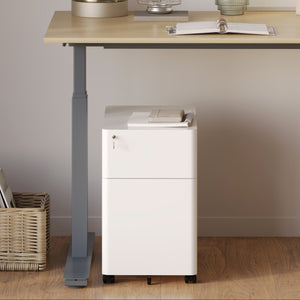






















Filing Cabinet Choices for Cleaner Workstation Planning
Cleaner workstation planning starts with filing storage that matches the desk, document volume, security needs, and daily workflow. Explore how cab...
Learn more
Visit quiz page to see how we makes it easy to create an inspiring workplace


Back pain from desk work rarely comes from a single problem. It usually comes from a mismatch between your body, your chair settings, and the way your desk forces you to sit. When any one of those is off, your spine starts doing extra work that you do not notice until an ache shows up.
From our side of the furniture world, we see the same pattern again and again. People upgrade a chair expecting pain to disappear, but their setup still asks their body to compensate. A new chair can even highlight the mismatch because better support changes how you sit, which can make old habits feel uncomfortable.
A chair works like a base. If your feet cannot settle, your pelvis cannot stay neutral. If your pelvis cannot stay neutral, your lower back has to stabilize you. If your arms are reaching, your upper back and neck take the load. This chain is why two people can sit in the same chair and have completely different outcomes.
Back pain descriptions are often consistent enough to use as clues. The goal is not self-diagnosis. The goal is connecting the sensation to an adjustment or feature that changes the way load moves through your body.
| What you feel while sitting | What it commonly points to | First setup change to try | Chair feature that usually matters most |
|---|---|---|---|
| Low-back ache after settling in | Pelvis tucked under, lumbar contact is missing or misplaced | Raise or lower seat slightly, then move hips fully back into the chair | Lumbar support position and stability |
| Pressure behind knees, feet want to tuck back | Seat too high or seat too deep for your legs | Lower seat until feet are flat, then pull yourself back and check knee clearance | Seat height range and usable seat depth |
| Mid-back tightness, shoulders creep forward | Reaching to keyboard and mouse, armrests not supporting elbows | Bring input devices closer, set armrests to take arm weight | Armrest height and usable arm support |
| Neck tension late in the day | Screen too low, head drifting forward, unsupported recline | Raise screen, sit back, recline slightly with support | Upper-back support and optional head support |
| Numbness or tingling | Pressure points or circulation issues | Change position immediately, reduce pressure behind knees | Seat edge comfort and fit, not firmness alone |
Use this as a fast baseline. If you cannot do these comfortably, it is a strong signal that either your settings are off, your desk height is forcing you into compensation, or the chair does not fit your proportions.
Feet flat on the floor, weight spread across the whole foot, not only heels or toes
Knees comfortable, not jammed upward or dangling
Hips fully back in the seat, not perching on the edge
Lower back supported without feeling like you are being pushed forward
Elbows close to your sides, shoulders relaxed, forearms supported somewhere
Screen positioned so your head does not drift forward to see clearly
We design and curate seating with a simple principle in mind: adjustability only helps if it is practical enough to use. Back pain reduction usually comes from a few core adjustments that create a stable neutral posture, plus the ability to change positions without losing support.
Lumbar support is meant to meet the natural curve of your lower back. When it is too high, it can feel like it is pressing into your ribs. When it is too low, it can feel like it does nothing, which often leads to slumping.
You can sit back fully without feeling like you need to brace your core
You can breathe comfortably without pushing your chest upward
Your pelvis feels balanced, not tipped backward
A common trap is blaming lumbar when the real issue is that you cannot sit all the way back. If your seat depth is too long for your legs, you slide forward to relieve pressure behind your knees. The moment you slide forward, the lumbar support no longer lines up with your lower back. Then the lumbar feels like a bump instead of support.
If we had to pick one place most buyers should start, it is seat height. Not because it is glamorous, but because it determines whether your feet can anchor you. A stable base is what lets the rest of your spine relax into support.
Set the chair so your feet are flat and stable. If you feel pressure behind the knees, lower the seat slightly. If your knees sit much higher than your hips, you may be encouraging a pelvic tuck. A small change in height can change the angle of your pelvis and take stress off the low back.
Aim for a small gap behind the knees so the seat edge does not compress the area. If the seat is too deep, you either perch forward or you round your lower back to stay in contact with the backrest. Both patterns can feed back pain.
Many buyers believe upright is always better. In practice, supported recline can reduce sustained loading because it changes where your body weight goes. The key is support. If recline dumps you backward with no control, you end up bracing with your core, gripping your shoulders, or sliding forward.
A small recline with proper tension can keep your back supported while your arms still reach comfortably. If recline forces you to reach, the desk setup needs adjustment. Recline should feel like it preserves contact, not like it breaks contact.
Armrests are not just comfort. They are load management. When your arms are unsupported, the muscles around your neck and upper back often take over. When armrests are too high, your shoulders shrug. When they are too wide, your arms drift outward and pull your shoulder blades forward.
When your hands rest on the keyboard, your shoulders should stay down and relaxed. If you feel your shoulders creeping up, lower armrests. If you feel like your elbows are flaring outward, the armrest width or desk position may be pushing you into that posture.
Material affects comfort, temperature, and how pressure distributes, but it does not replace fit and adjustability. We encourage buyers to treat material as a preference layer after the fit layer is handled.
If you overheat, you fidget, slide forward, or perch, which can reduce support contact. Breathable backs can help maintain consistent contact because the chair remains comfortable longer.
Soft cushions can feel friendly at first sit, but over time they can let the pelvis sink if the structure underneath does not hold shape. A supportive seat has enough structure to keep the pelvis stable, with enough comfort to avoid pressure points.
Instead of focusing only on mesh or foam, look for information about adjustability, support zones, and how the chair is meant to be used. A chair that supports your work style is usually the chair you will sit in better.
Back pain is often a fit problem disguised as a comfort problem. Fit is not a vanity sizing issue. It is physics. When the seat, backrest, and arm supports match your body proportions, your muscles stop doing the chair’s job.
Start with feet flat. Then check knee comfort. Then check whether you can sit fully back. If you cannot, seat depth is likely the limiter.
A footrest can help if your desk height forces the chair higher than your legs prefer. It is not a fix for a chair that is simply too tall for you. It is a tool to keep feet supported when your arms need the desk higher.
Buyers sometimes overlook seat depth because it is less obvious than lumbar. Yet if seat depth is wrong, almost every other feature becomes harder to use correctly.
Sit fully back, then check for comfortable space behind the knees. If there is no space, you will likely slide forward during the day, which breaks support alignment.
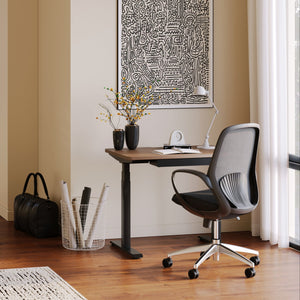
Even the best chair can be undermined by a desk that is too high, too low, or too deep.
Shoulders lift. Neck tightens. Forearms lose support. You end up reaching down into your keyboard and mouse.
You slump to get closer to the work surface. Lumbar collapses. Mid-back rounds.
Headrests are polarizing because they are often misunderstood. A headrest is not a replacement for screen height or posture. It is a support option for specific positions, especially when you recline.
You take frequent calls and naturally recline while listening
You do reading and review work where you lean back to think
You find your neck gets tired even when your screen is set correctly
If the headrest pushes your head forward, it can increase neck strain. If it sits too far back to reach, you might crane your head to find it, which also increases strain. The goal is gentle support when you are already aligned, not forcing alignment.
When a headrest is designed for the chair frame, it is more likely to align with the backrest geometry and recline angle.
For the Novo frame, the Novo Headrest is built as a chair-specific accessory intended to add head and neck support when you want it, without turning the headrest into a separate fit problem.
For the Muse frame, the Muse Chair headrest accessory is described as an add-on designed to complement the chair’s adjustable structure and provide additional support.
We avoid promising that a chair “fixes” back pain. Pain can have many causes, and comfort is personal. What we can do is match chair characteristics to common needs, then encourage smart setup so the chair can do its job.
This pattern often responds to stable lumbar support plus a seat setup that lets you sit fully back. If you tend to perch or slide forward, prioritize the chair that helps you maintain contact without effort.
The Novo Chair is positioned in our lineup as a best-selling ergonomic option, and it is commonly considered by buyers who want an everyday chair built around support and adjustability.
Mid-back fatigue often starts with reach and arm load. When your arms float, your upper back works harder. Chairs that encourage consistent back contact and support during small reclines can help you avoid the slow slide into rounded posture.
The Onyx Chair is presented as an ergonomic chair option, and buyers often evaluate it when they want a modern chair with supportive structure for desk work.
Some buyers feel fine early, then feel worn down as the day goes on. This can happen when the chair encourages one posture, but your work demands many. In those cases, the goal is a chair that makes position changes easy while keeping support contact predictable.
The Muse Chair is an adjustable office chair option in our catalog and is often considered by people who want a blend of functionality and comfort cues.
Not every desk day is eight hours. Some buyers need a dependable chair for shorter sessions, a shared workspace, or a secondary setup. For those needs, simple comfort, breathable support, and sensible fit still matter.
The Seashell Chair is a chair option buyers often explore when they want a supportive everyday seat with a clean look.
Chairs do not need a magical break-in period to become tolerable. What does take time is your body adapting to improved posture and you learning the right settings. The healthiest approach is systematic adjustment, not endurance.
Mild muscle fatigue in areas that are not used to supporting neutral posture
A sense that you are “sitting differently” because you are sitting back fully
Awareness of support contact that you did not feel before
Numbness or tingling
Sharp pain, burning sensations, or pain that increases quickly in one spot
A sense that you cannot sit back without being pushed into an unnatural position
Use this order because each step affects the next:
1. Seat height, so feet are stable and knees are comfortable
2. Seat depth or sitting position, so you can sit fully back
3. Lumbar position, so it meets your lower back naturally
4. Armrests, so your shoulders can relax
5. Recline tension and recline angle, so movement stays supported
If buyers ask us what improves comfort the fastest, the answer is usually not “a new chair.” It is aligning the chair to the desk and screen so the chair can actually support you.
A screen that is too low pulls the head forward. A screen that is too close pulls the shoulders forward. Small changes matter because they change how long you can maintain neutral posture without effort.
A laptop on a desk often forces a choice between looking down or raising the shoulders to type. If you can, separate the screen height from the keyboard height by using a riser plus an external keyboard and mouse.
If your keyboard or mouse sits far away, you leave the backrest to reach. The chair cannot support you if you are not using it. Pull input devices close enough that your elbows stay near your sides. If you need more surface area, consider an adjustable keyboard tray or a shallower desktop depth.
Resting forearms lightly reduces shoulder tension. If your chair armrests cannot align with your desk, consider supporting forearms on the desk edge with a soft pad, as long as it does not create wrist pressure.
Back pain buyers often want certainty. We cannot promise a perfect outcome for every body, but we can build transparency into the shopping experience: clearer fit cues, realistic expectations, and support for decision-making.
Adjustment options that match your needs, especially lumbar, seat height, and arm support
Return and warranty information that helps you feel secure in your decision
Assembly expectations, so the chair is set up correctly from the start
Accessory compatibility, especially if you are considering a headrest
For buyers who want help comparing chairs, understanding ordering details, or exploring the broader workspace system, our online showroom experience is designed to connect product browsing with FAQs and ways to reach our team, without requiring a physical showroom visit.
A good chair supports you, but it does not replace movement. The most sustainable back comfort comes from stable posture plus frequent small changes.
Stand briefly between tasks when you can, even if it is only long enough to reset posture
Alternate between upright work posture and a supported slight recline
Change leg position occasionally while keeping feet supported and hips back
Recline can be helpful when it preserves support contact. The moment recline turns into sliding forward or reaching for the keyboard, it stops being recovery and becomes strain.
New tasks change posture. Video calls often increase recline. Creative work often increases leaning. Writing-heavy work often increases stillness. A quick re-check of seat height, armrests, and screen position can prevent a gradual slide into compensation.


You have unlocked free shipping!
You're saving $29 and unlocked free shipping!
Leave a comment