




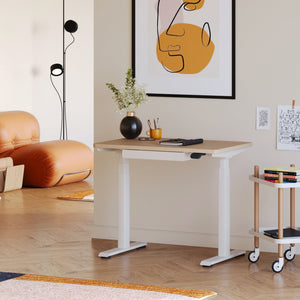
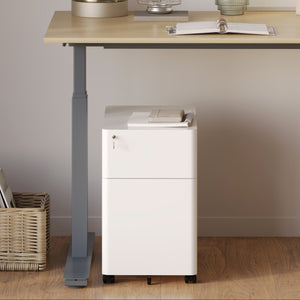










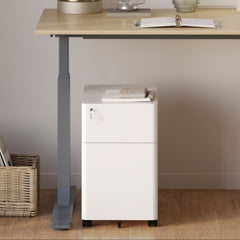



Filing Cabinet Choices for Cleaner Workstation Planning
Cleaner workstation planning starts with filing storage that matches the desk, document volume, security needs, and daily workflow. Explore how cab...
Learn more
Visit quiz page to see how we makes it easy to create an inspiring workplace


Armrests feel like a small detail until they sit below where your forearms naturally want support. When armrests are too low, most people compensate the same way. The shoulders lift to “hold” the arms up, the neck tightens to stabilize that lift, and the wrists start bending to keep hands on the keyboard and mouse. Over time, this becomes less about comfort and more about how your whole upper body is forced to work during routine tasks.
From our perspective as a furniture brand, the goal is not to sell a chair as “perfect for everyone.” The goal is to help you buy with fewer surprises by checking what your body and your workspace actually require. Armrest height is one of the easiest sources of online buying regret because it depends on the relationship between you, the chair, and the desk.
A useful armrest height lets your shoulders stay relaxed while your elbows sit close to your sides. If you notice the tops of your shoulders creeping upward when you type or use the mouse, the armrests are either too low, too far apart, or positioned so far back that you cannot use them where you work.
Sit tall, let your arms hang at your sides, then bend your elbows until your forearms are roughly parallel to the floor. Your shoulders should not rise. If they do, you are already using shoulder muscles to hold the arms up, and low armrests will usually amplify that strain.
When forearms are not supported, hands tend to press down harder on the keyboard edge or desk surface. That can create wrist extension, meaning the wrist bends upward as the fingers reach forward. It can also create wrist compression if the desk edge is hard and the forearms rest on it all day.
A chair can only help if its armrests land near the height of your working forearms, and if they can position under your elbows in the place where your hands actually operate.
Online listings commonly focus on style, materials, and overall dimensions. Those matter, but they do not answer the armrest question. To predict whether armrests will feel too low, three measurements do most of the work.
This is the most helpful number for armrest fit, and it is rarely shown in product listings. It is simply the distance from the top of the seat (where you actually sit) to the underside of your elbow when your shoulders are relaxed.
1. Sit on a firm chair with your feet flat on the floor.
2. Set your posture to what you would use for typing (not slouched, not rigid).
3. Relax your shoulders and bend your elbows around a right angle.
4. Measure from the seat surface straight up to the underside of your elbow.
Write that number down. When a chair lists armrest height relative to the seat, your elbow height needs to fall inside that adjustable range to avoid the “too low” problem.
Many desks are higher than ideal for extended typing. Even if the desk is fixed, the actual work height can change based on a keyboard tray, a thick desk mat, or how high your laptop stand sits.
If your desk is high, you might raise your seat to reach it. That can create a new issue, such as feet losing stable contact with the floor. Armrests may then feel low because you have moved your elbows upward by raising the seat.
Armrests cannot fix a seat height mismatch. If a chair’s seat height does not work with your desk, you end up choosing between stable legs and comfortable arms. Stable feet should win, every time.
A practical rule is to set seat height so your feet are flat and your thighs are supported without pressure behind the knees. Once that is correct, armrests need enough vertical range to meet your elbows where they naturally land.
If you cannot verify armrest height range, you are guessing. The goal is to reduce guessing by using the listing, photos, and a simple set of questions.
Look for these signals, in roughly this order:
Armrest height adjustment range measured from the seat
Armrest type (height only, or multi-directional)
Seat height range
Evidence of a real adjustment mechanism in photos
If a listing does not include armrest height range, it does not automatically mean the chair will fail. It does mean you should treat it as uncertain until you can confirm the range with the seller.
Ask: “What is the armrest height range measured from the top of the seat to the top of the arm pad, at the lowest and highest settings?”
That phrasing avoids confusion between floor measurements and seat measurements.
Product photos sometimes show adjustment buttons, rails, or multi-axis joints. A clear height adjustment mechanism usually appears as a button or lever near the arm post, or a visible track that the arm assembly slides on.
Arm pad thickness can also affect perceived height. A thin pad may feel “lower” in use because it offers less cushion between the forearm and the structure beneath. A thick pad can feel higher and more forgiving, even when the frame height is the same.
Armrest fit is one of the first things you should test after setup. A chair can look excellent and still miss your body and desk geometry. A careful early test helps you decide quickly, while assembly materials are still organized and the chair is still in a “like new” state.
Two people can sit in the same chair and have opposite experiences. Often, that difference is not only height. It is how the armrests move in relation to the body and the desk.
If armrests cannot rise to your elbow height at your correct seat height, they will feel too low no matter what else you do. Height travel is the foundation.
When armrests are too far apart, elbows drift outward to reach them. That outward position can make the shoulders work harder, even if the armrests are not technically low. Many people interpret that shoulder effort as “the armrests do nothing,” which becomes “the armrests are too low.”
Depth movement shifts the pads forward or backward. This matters because many people work closer to the keyboard than the chair’s default armrest position. If the pads sit behind the elbow during typing, you lose support and start hovering again.
Pivot lets the pad angle inward or outward. That can be helpful if your mouse hand naturally sits at a slight angle. Pivot is not essential for everyone, but it can make armrests feel usable across more tasks.
Not every setup benefits from high armrests. Sometimes, armrests that are too high or too bulky create desk collisions, which pushes you away from the desk and forces reaching.
If armrests hit the desk edge, the chair stops short. You end up sitting farther away, reaching forward, and loading the shoulders. In that scenario, raising armrests might actually worsen the problem because it increases the chance of collision.
A common compromise is setting the armrests slightly below desk height so the chair can tuck in close. The desk becomes the primary forearm support, while the armrests provide guidance and help keep elbows near the body when you lean back slightly.
This approach only works if the desk edge is comfortable. If the edge is sharp or hard, forearms may press into it and create discomfort. In that case, a change in desk surface, a softer edge treatment, or a different chair arm shape may be more realistic than forcing a chair to solve a desk issue.
People often shop by overall height, but elbow height varies based on torso length, upper arm length, and shoulder structure. That is why armrest fit can differ dramatically between two people of similar height.
A longer torso can place shoulders higher above the seat, which lifts elbows higher as well. That can create armrest height demands that exceed what some chairs offer.
If you have narrower shoulders, armrests that sit far apart force elbows outward. That outward rotation can make the armrests feel low because your forearms are not resting where the pads are designed to support. If you have broader shoulders, armrests that cannot widen may crowd the arms and encourage awkward angles.
Some chairs position arm posts based on seat width. If the seat is wide and the arms are fixed, it can be harder to align elbows over the pads. When elbows cannot land naturally, even a tall armrest range will not feel supportive.
The most reliable way to avoid buying a chair with armrests that feel too low is to test the chair against your measurements and your workflow, not just your preferences.
1. Measure seated elbow height from the seat surface.
2. Confirm your desk height and the height of your keyboard and mouse.
3. Confirm your preferred seat height range (feet flat, thighs supported).
4. Check whether the chair’s armrest height range is listed from the seat.
5. If the range is not listed, message support with a seat to armrest range question.
6. Look for width and depth adjustment if your work is mouse heavy or you have shoulder tension.
Scan photos for desk clearance risk, especially if your desk is thick or has drawers.
Use a simple table to compare chairs against your needs. If you cannot fill a cell because the listing does not provide the number, treat that as uncertainty and decide whether you are comfortable with it.
| What to compare | Your number or preference | Chair A | Chair B |
|---|---|---|---|
| Desk height (surface) | |||
| Keyboard and mouse height | |||
| Seated elbow height (from seat) | |||
| Seat height range (if listed) | |||
| Armrest height range (from seat) | |||
| Armrest adjustments | height, width, depth, pivot | ||
| Desk clearance risk | low, medium, high | ||
| Return and fit testing confidence | low, medium, high |
This table does not require perfect data. It makes gaps obvious so you can ask the right questions before buying.
Some shoppers need maximum adjustability because they work long hours at a computer or have a desk that is hard to change. Others prioritize a simpler daily chair because their work is lighter, or they use multiple seating areas.
From our brand perspective, a good match is about aligning the chair category with your real use case, then confirming measurements to avoid the low armrest issue.
If armrest height is a known pain point, an ergonomic task chair design often gives you more ways to tune height, width, and position. A product page like the Novo Chair is a practical reference point when comparing how a chair platform is presented for adjustable desk work.
The key is not assuming any chair solves everything. It is verifying that the chair category is built to accommodate a range of elbow heights and desk configurations.
Some chairs are designed to look clean and feel comfortable for mixed use, not necessarily to provide precise forearm support at a fixed desk. If you are comparing a design focused option like the Muse Chair, the smart move is to treat armrests as a comfort feature first, then check whether the geometry fits your desk work expectations.
If your workflow is mostly meetings, reading, or occasional laptop sessions, a simpler armrest approach can still work well. If you do long stretches of keyboard and mouse work, armrest height range becomes more critical.
Even when a chair is positioned as ergonomic, armrest travel and seat height range vary across models. A page like the Onyx Chair can be part of your comparison set, especially if you are filtering for chairs that are meant to support desk posture adjustments. The same rules still apply, confirm elbow height compatibility and desk clearance.
If you want a lighter, simpler chair feel, desk height and desk edge comfort become bigger factors because you may rely on the desk for forearm support. A product like the Seashell Chair fits into that decision space for many shoppers, where the strategy is to ensure the chair tucks in close and supports an upright posture without forcing shoulder elevation.
The honest approach is to match your chair expectations to your daily tasks. A chair that is great for general seating may not be the best tool for intensive typing sessions unless your desk setup is already in a very good ergonomic zone.
If you already have a chair and the armrests feel too low, it is tempting to improvise. The safer approach is to tune the chair and workspace in a specific order, so you do not accidentally trade one discomfort for another.
Start with the base. Stable legs and supported hips reduce the urge to slump or reach.
Set seat height for feet flat and stable.
Set seat depth so the seat supports the thighs without pressure behind the knees.
Set back support so the lower back feels supported in a natural curve.
Adjust armrests last, after the rest of the posture is stable.
If you adjust armrests first, you might raise the seat too high just to reach the pads, which creates foot instability and knee pressure.
If your desk is high, lowering the keyboard and mouse position can be more effective than trying to “raise” armrests beyond their designed travel. Consider solutions like a keyboard tray, lowering the desk surface if it is adjustable, or reducing thick mats that raise the working height.
Also consider how far the keyboard and mouse sit from your body. Even a small change in distance can change whether your elbows can stay near your sides and whether arm support feels usable.
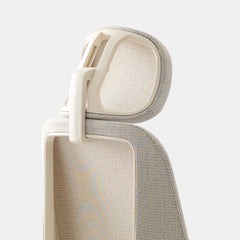
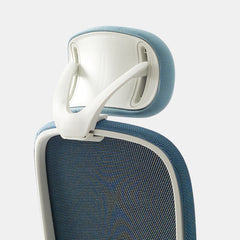
A headrest does not replace forearm support for typing, but it can improve comfort during recline moments, phone calls, or short breaks when you lean back and let the upper body relax.
If you are using a chair designed to accept a compatible accessory, a product page like the Novo Headrest helps you confirm you are looking at the correct add on for that chair line. The same idea applies to a chair specific accessory like the Muse Headrest, where compatibility matters more than trying to force a universal part.
The important boundary is honesty about what headrests do. They can support the head and neck during recline. They cannot fix low armrests during active typing if forearms are still unsupported.
Buying online can still be a confident decision when you treat fit like a system. The chair, the desk, and your body need to align.
When you message support, focus on measurements and adjustments rather than broad comfort claims. The most useful questions are:
What is the armrest height range measured from the top of the seat?
Do the armrests adjust in height only, or also width and depth?
Are there photos or a diagram that show the armrest adjustment mechanism?
This keeps expectations realistic and helps you compare chairs more fairly.
Once the chair is assembled, test in the exact environment where you work:
Type for two minutes with shoulders relaxed.
Mouse for two minutes with elbows close to the body.
Lean back slightly and return to neutral, noticing whether armrests push your shoulders up.
Check whether the chair can tuck close enough to the desk without arm collisions.
If armrests feel low only during certain tasks, the issue might be depth or width positioning, not height alone.
If you prefer to explore styles, features, and accessories in one place, a hub page like explore chairs, desks, accessories, and bundles can be useful for narrowing your shortlist and reaching out with fit questions tied to specific models.
A chair that looks perfect can still create daily strain if armrests land in the wrong zone. The decision becomes much easier when you apply a few clear rules.
Feet stability comes first. A chair must support a stable seated base before armrest tuning matters.
Your seated elbow height must be compatible with the chair’s armrest height range, or the chair will likely feel “too low” during desk work.
Desk clearance must allow the chair to sit close enough that you do not reach forward for hours.
If armrest range cannot be confirmed, treat it as a risk and decide whether your desk setup can compensate.
If your desk forces shoulder elevation today, the most reliable solution is adjusting the desk and keyboard height, not hoping a chair armrest will overcome the mismatch.
If your workflow is keyboard and mouse intensive, prioritize adjustable arm mechanisms over purely aesthetic features.
Some of the biggest improvements are not high tech. They are simple, consistent changes: bringing the mouse closer, lowering the keyboard surface, setting the seat height for stable feet, and using armrests in a way that supports relaxed shoulders rather than forcing a shrug.
When armrests are no longer too low, the whole desk experience tends to feel lighter. Shoulders soften, wrists straighten, and your hands stop doing extra work just to hold position. That is the outcome worth shopping for, and it starts with measurement, honest expectations, and a chair that fits your actual setup.


You have unlocked free shipping!
You're saving $29 and unlocked free shipping!
Leave a comment