















Skip to content
For Teams
Memorial Day Deals Are Here - Upgrade Your Workspace for Less using the code MEMORIALDAY | Free Shipping on Orders $65+
FAQ
need to know

Useful articles

Monitor mount for desks: what to measure before setting up

Monitor mount for desks: what to measure before setting up

Ergonomic arm support mount for monitor or device

Desk footprint measurements that decide whether a monitor arm can sit where you need it

A monitor mount is only as good as the desk it is mounted to. Before looking at arm specs or screen sizes, we measure the desk like a work surface, not like a product listing.

Usable depth versus advertised depth

Measure the desk depth two ways:

1. Front edge to back edge (total depth).

2. Front edge to the first obstruction behind the desk (usable depth).

Obstructions are common. Baseboards, wall trim, a window ledge, a cable tray, or a raised back lip can reduce the space an arm needs to articulate. If the arm’s lower joint cannot swing freely, the monitor ends up too far forward, too far to the side, or stuck at an awkward angle.

Usable width versus your centered work position

“Centered” is not the middle of the desk, it is the middle of your body when you work. Sit where you naturally land, place your keyboard where it usually lives, then mark a centerline straight out from your sternum. Measure left and right from that line to the desk edges and any obstacles. This tells you whether a clamp at the back edge can still allow the monitor to land on your centerline without the arm being maxed out sideways.

Back-edge stability and flex where the clamp will grip

A clamp concentrates force into a small zone. To check whether the desk can handle that zone confidently:

  • Press down at the back edge with one hand and watch for flex.

  • Repeat near a leg, near a support rail, and at the midpoint of the span.

If the midpoint feels springier than the supported areas, plan to clamp closer to a structural support. That choice can do more for day-to-day steadiness than tightening an arm beyond its comfortable range.

Sit-stand desks change the stability test

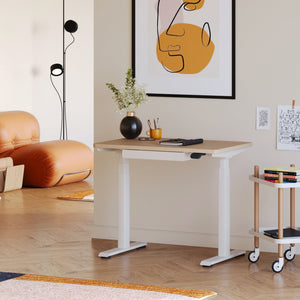
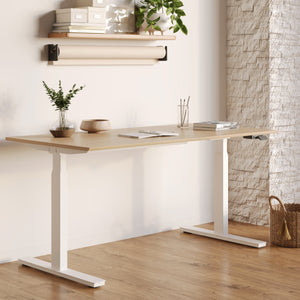
A height-adjustable desk can be stable and still feel different at various heights. The higher the work surface, the more leverage your monitor and arm can exert during typing, standing transitions, and screen adjustments. When we build setups around a height-adjustable option like the Urbanica Standing Desk, we treat the clamp location and cable slack as part of the sit-stand system, not a separate accessory decision.

Desktop thickness, edge profile, and underside clearance determine clamp compatibility

Most monitor mount problems happen at the clamp point, not at the VESA plate. A few quick measurements prevent mismatched hardware, surface damage, and frustrating installs.

Desktop thickness at the exact clamp location

Measure thickness where you actually plan to clamp. Many tops taper, have beveled edges, or include a thicker support layer nearer the back. The clamp’s minimum and maximum thickness range has to match the number you measure, not the number you assume.

If the desk has a rear cable channel or a raised back detail, measure the thickness both at the rear edge and just forward of it. That tells you whether the clamp will land on a flat section or on a shape that reduces contact.

Edge shape and clamp contact area

Look closely at the desk edge profile:

  • Square edges provide the most predictable clamp contact.

  • Rounded or bullnose edges reduce the flat gripping area.

  • Chamfers can create a sloped surface that encourages clamp creep if the pad is small.

If the clamp pad would land partially on a curve, plan to shift the clamp inward to a flatter zone, or choose a mounting approach designed to handle the profile.

Underside clearance map

Use a simple “no-surprises” check under the desk:

  • Measure the vertical clearance from the underside of the desktop to the nearest obstruction.

  • Identify anything that blocks clamp hardware, such as drawers, modesty panels, apron rails, cable trays, or a thick support spine.

A clamp needs room for a plate and a tightening mechanism. Even when the desk looks open from the front, the back edge can be crowded. This is especially true on desks with integrated storage.

Clamp mount versus grommet mount decisions

If the desk has a grommet hole, measure its diameter and placement relative to your centerline. A grommet can be a clean option when the back edge is tight, but only if the hole location allows the monitor to land where your posture needs it. A grommet that is far off-center can force the monitor into a permanent offset.

Surface protection sizing

Measure the flat area available for clamp pads on both top and bottom. This helps prevent denting or pressure marks, especially on finished surfaces. A few millimeters of pad sitting on a curve can create uneven pressure over time.

Monitor and mount payload: VESA pattern, real-world weight, and leverage

A monitor arm is rated for a weight range, but real holding performance is influenced by leverage, accessories, and how far the monitor sits from the pivot.

Confirm VESA pattern before anything else

Most monitors use 75 x 75 mm or 100 x 100 mm VESA patterns. If your monitor’s documentation is unclear, measure the spacing between mounting holes on the back of the display. That single measurement prevents adapter guesswork and avoids installing a mount that does not match the hardware you own.

Measure real-world weight, not just the display itself

For mounting purposes, “monitor weight” should include anything that stays attached:

  • A webcam or camera bar

  • A light bar

  • A VESA shelf or small accessory tray

  • Cable bundles with thick strain relief

Arms react to torque. Extra weight out at the edges or at the top can change how tilt and height settings hold.

Use leverage as the prediction tool

Leverage is simple to measure. With the monitor positioned where you want it, measure the distance from the arm’s pivot point to the monitor’s center of mass, roughly the center of the screen. The farther out that center sits, the more torque the arm must resist.

If your desk depth forces the arm to be extended most of the time, you want an arm that is comfortable holding position in that extended zone, rather than one that only feels stable when it is tucked close to its base.

Curved and ultrawide monitors require a clearance check

Wider screens change collision risks. Measure the monitor width and note any nearby walls, shelves, or side panels. A wide screen can contact a wall sooner during swivel, even when the arm has room to rotate. This is one of the most common reasons users think an arm “does not reach” when the real issue is side clearance.

Dual monitor layouts require centerline planning

If you use two screens, measure total span, not just each panel. Decide whether your body is centered between them or centered on one primary display. Then measure the arm reach needed to place the primary viewing area on your centerline without twisting your torso.

Eye level and viewing distance measurements that keep posture neutral

The goal of a monitor mount is not simply to lift the screen. The goal is to place the screen where your eyes, head, and shoulders can stay relaxed for long sessions.

Seated eye height measurement in a neutral posture

Sit the way you actually work when you are focused, not when you are performing “perfect posture.” Keep feet supported, shoulders relaxed, and chin neutral. Measure from the floor to the center of your eyes. That number is your seated eye height.

Next, measure from the desk surface to your eyes. This helps you translate eye height into monitor height without relying on desk height alone.

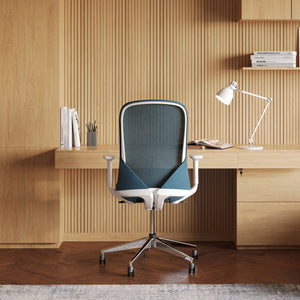
A chair’s adjustment range influences these numbers. When we configure setups around the Urbanica Ergonomic Novo Chair, we treat the chair height and back support as part of the monitor geometry because your head position changes when your back is properly supported.

Standing eye height measurement for sit-stand setups

If you work standing, measure eye height while standing naturally, knees soft, shoulders down, and head neutral. Avoid pushing your chin forward. Many setups fail because they were tuned only for seated work, then forced into a standing position by tilting the screen upward.

A good target is to keep the top portion of the display within a comfortable vertical range of your eye line without craning your neck upward. The exact placement depends on your monitor size and your vision needs, but the measurement provides the guardrails.

Viewing distance measurement that supports clarity and comfort

Measure from the bridge of your nose to the screen at your most common working position. This is your default viewing distance. It determines whether the monitor should sit deeper on the desk, float closer, or be pulled slightly back.

If the desk is shallow, the arm may push the monitor too close, even if the mount “works” mechanically. If you notice you lean back to see clearly, the distance is likely too short. If you lean forward to read, the distance is likely too long or the text scale and brightness need adjustment.

Chair posture influences the “true eye line”

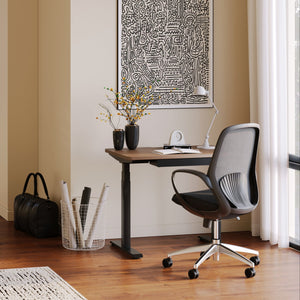
Different chairs influence head and ribcage positioning. If you shift to a chair with a different back contour like the Urbanica Ergonomic Onyx Chair, your head may sit more centered over your spine rather than drifting forward. When forward head posture reduces, the monitor often needs a small adjustment in height or distance to match the new neutral position.

Reach geometry: measurements that keep the screen centered over the work, not over the desk

A monitor arm is most valuable when it supports your workflow zones, not when it simply floats the screen somewhere above the surface.

Map the keyboard and mouse working zone

Measure where your keyboard sits from the front edge of the desk. Then measure where your mouse operates, including the full lateral area of your mouse pad. These zones tell you where your forearms are during work, which influences how far the monitor should be from your face and where it should be centered.

If the monitor is centered over the desk but your keyboard is offset, you will twist your torso or angle your neck. A good arm setup aligns the monitor with your body, not with the furniture.

Determine your primary centerline

Mark your centerline again, then measure how far the monitor needs to slide left or right to align with it. If you frequently switch between writing and mousing, you may prefer the monitor slightly closer to the keyboard center rather than the desk center.

Decide how often you will reposition

If your workday includes frequent shifts, such as moving the monitor aside for sketching, bringing it closer for detailed work, or sharing the screen with someone nearby, you want a mount that moves smoothly and holds position without constant retightening.

This is where a product designed specifically for controlled movement can fit the system well, such as the Urbanica Ergonomic Arm, provided your measurements match its intended range.

Side mounting versus back mounting

Back mounting is common, but side mounting can solve specific constraints. If the desk backs up to a wall with minimal clearance, or if a hutch blocks the rear edge, a side clamp can preserve articulation. Measure side clearance and check whether the arm can still center the monitor without being extended diagonally across the surface.

Room constraints that change mount selection more than most people expect

Desk measurements are only half the story. The room decides whether the arm can swing, rotate, and tilt without collisions.

Wall clearance behind the desk

Measure from the desk’s back edge to the wall. Then consider how far the arm must swing backward during repositioning. Some arm designs need a rear swing radius to move the monitor forward and back smoothly. If you have very little wall gap, prioritize an arm that can articulate forward without requiring a large rear arc.

Shelf and cabinet collision zones

If there is a shelf or cabinet above the desk, measure from the desk surface to the underside of that shelf. Then compare that height to where the monitor would rise during adjustment. Tilt can also introduce collisions, especially when the top corners of the monitor swing upward.

Lighting and camera accessory clearance

If you use a light bar, webcam, or microphone boom, measure the vertical space above the top edge of the monitor and the side clearance where the arm rotates. This prevents accessory collisions that can loosen cables or push the monitor off angle.

Desk selection choices that make monitor mounting easier

If you are selecting a new desk and know you want a monitor mount, treat the desk as a mounting platform, not just a surface.

Proportions that support healthy monitor distance

Desk depth and monitor size need to match. A deeper desk makes it easier to keep the monitor at a comfortable viewing distance without overextending the arm. A shallow desk may force the monitor too close unless the arm allows a compact folded position or a grommet placement that shifts the screen backward.

Underside openness and clamp-friendly rear edges

A desk can look minimalist and still be difficult to clamp to if the underside includes rails that sit too close to the edge. We recommend checking the rear edge for a clean clamp zone and verifying that the underside is open enough to accept mounting hardware.

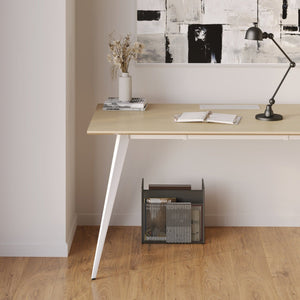
A straightforward reference point for a mount-friendly surface is the Urbanica Office Desk, which is designed as a modern work surface where accessories and organization matter as much as the top itself.

Cable routing measurements that prevent drag, disconnections, and messy movement

Even a perfectly mounted monitor can feel unstable if cables pull during movement.

Measure cable travel through the full range of motion

Move the monitor to the farthest intended positions:

  • Highest position

  • Lowest position

  • Closest position

  • Farthest position

  • Full left and full right swivel

Measure the change in distance between the monitor ports and the desk drop point where cables route down. Add slack so the cables never tug at the extremes. Slack should be controlled with routing, not left as a loose loop that catches on joints.

Port orientation changes bend radius needs

Down-facing ports generally manage cable bend more easily than straight-out ports, but both can be safe with enough room. Check whether the monitor back sits close to a wall when pushed back. If it does, straight-out cables can become a hidden collision point.

Plan a desk drop point that avoids clamp interference

Pick a path where cables can drop without passing under clamp plates or getting pinched between the desk and wall. Measure the gap and confirm the cable can move freely.

A measurement workflow you can repeat across desks, monitors, and rooms

A systematic workflow keeps decisions grounded in real numbers.

Step-by-step measuring checklist

1. Measure total desk depth and usable depth to the first obstruction.

2. Mark your seated centerline and measure usable width left and right.

3. Measure desktop thickness at the intended clamp location.

4. Inspect and measure underside clearance for clamp hardware.

5. Confirm VESA pattern and note any adapters required.

6. Estimate real-world payload, including attached accessories that stay on the monitor.

7. Measure seated eye height and desk-to-eye height.

8. Measure standing eye height if you work standing.

9. Measure default viewing distance from your eyes to the screen.

10. Measure wall, shelf, and side clearance for swivel and tilt.

11. Measure cable travel length across the full motion range.

Measurement-to-decision table for quick validation

Measurement Why it matters for a desk monitor mount Common setup problem when skipped Safer correction
Usable desk depth Determines how far the arm can extend without pushing the screen too close Monitor ends up hovering over the keyboard Reposition clamp, reduce extension, or adjust desk placement
Wall clearance behind desk Controls swing radius and backward articulation Arm hits wall and locks movement Choose a forward-articulating layout and keep the base closer to center
Desktop thickness at clamp point Must match clamp’s safe range Clamp cannot tighten fully or dents the surface Move to a thicker zone or use a compatible mount approach
Edge profile flat area Affects clamp grip and long-term stability Clamp creeps or tilts on a rounded edge Shift inward to a flatter section and use proper surface protection
Underside clearance Ensures clamp plate and knob fit without interference Clamp cannot seat or presses into drawers Relocate mount point or clear the obstruction zone
VESA pattern Determines mechanical compatibility Wrong plate or forced adapter use Confirm pattern and select matching hardware
Real payload with accessories Determines whether tilt and height hold position Slow sag, drifting tilt Reduce leverage, manage accessories, or choose a more appropriate arm class
Seated eye height Sets target screen height for neutral neck posture Looking down or craning up Adjust arm height and chair posture together
Viewing distance Keeps visual comfort consistent Leaning forward or reclining to see Reposition screen depth and adjust text scaling thoughtfully
Cable travel length Prevents drag and disconnections Cables tug at ports during motion Add controlled slack and reroute along the arm


Installation sequence that protects the desk and makes dialing-in easier

Once measurements confirm compatibility, installation becomes a controlled process rather than a trial-and-error session.

Clamp positioning and surface protection

Place the clamp at the planned location and confirm it sits on a flat zone. Add surface protection appropriate for the finish so clamp pressure is distributed. Tighten gradually and evenly. Avoid overtightening as a substitute for fit.

Mounting the monitor and setting neutral motion

Attach the monitor at the VESA plate, then set the monitor height first. After height, set distance, and then adjust tilt. Tilt should fine-tune viewing angle, not compensate for incorrect height or reach.

Cable routing before final tensioning

Route cables along the arm so they do not snag on joints. Verify full range of motion again and confirm there is no cable tug at the extremes.

One-day adjustment habits that keep comfort honest

After a full workday, you will know whether you are raising your shoulders, pushing your chin forward, or leaning in. Use that feedback to make small adjustments. A few millimeters of height or a small pull-back in distance can reduce neck and shoulder load.

Getting support when you want an extra set of eyes on fit, layout, and order details

Some setups are straightforward. Others involve tight rooms, shared work surfaces, or sit-stand movement that makes stability and cable routing more sensitive. When a workspace needs planning support and clear ordering guidance, we point customers to our shipping and order support page so the right desk, chair, and accessory decisions can be made with confidence and without guesswork.

Previous article How to Match a Filing Cabinet with Your Desk for a Cleaner Office Look

Leave a comment

* Required fields

Get 10% off your first order

Find the office furniture that’s designed to match your style, comfort, and needs perfectly. Subscribe

My Office

You have unlocked free shipping!

You're saving $29 and unlocked free shipping!


Your cart is empty.
Start Shopping

Contact Us