


























Filing Cabinet Choices for Cleaner Workstation Planning
Cleaner workstation planning starts with filing storage that matches the desk, document volume, security needs, and daily workflow. Explore how cab...
Learn more
Visit quiz page to see how we makes it easy to create an inspiring workplace


Flexible offices need storage that does more than hold files. They need storage that supports movement, protects order, keeps shared work areas usable, and adapts when teams change how they use the room. That is why the choice between a mobile filing cabinet and fixed storage matters so much. It affects daily workflow, desk comfort, visual clutter, privacy, and how easily a workspace can shift from focused work to collaboration.
A mobile filing cabinet is usually the stronger choice when employees need personal access to active documents, supplies, notebooks, or small work tools throughout the day. Fixed storage is usually stronger when the office needs a stable place for shared supplies, archived materials, equipment, and department records. For most flexible offices, the best answer is not choosing one and rejecting the other. The better strategy is deciding which storage should move with people and which storage should stay with the office.
A well-planned flexible office uses mobility where work changes often and stability where routines are predictable. That balance keeps the workplace organized without making it feel rigid.
A flexible office is not defined only by open space, shared desks, or lightweight furniture. It is defined by how easily people can move between tasks. A team may start the day in quiet individual work, shift into a project meeting, take video calls, then reset the room for another group. Storage either supports that rhythm or interrupts it.
A compact filing cabinet can help in flexible offices because it gives files and essentials a defined place without requiring a permanent storage wall or oversized cabinet. That matters when the same floor area may need to support desks, seating, walkways, and occasional collaboration.
The real storage question is not “How much can we fit?” It is “How quickly can people find, use, secure, and reset what they need?” A large fixed cabinet may hold more, but if it sits far from the work zone, employees may leave active documents on desks instead. A smaller mobile cabinet may hold less, but if it stays close to the person or project using it, the office stays cleaner and more functional.
Storage capacity refers to how much a cabinet, shelf, or storage wall can hold. Storage agility refers to how well that storage adapts to changing work patterns. Flexible offices need both, but not always in the same piece of furniture.
Fixed storage is good for capacity and consistency. It gives shared materials a home. Mobile filing cabinets are good for agility. They support employees who move between desks, rooms, or team zones. When an office prioritizes capacity alone, it may create a room full of cabinets that feels organized at first but becomes difficult to rearrange. When an office prioritizes mobility alone, it may create scattered storage with no clear system.
The strongest layouts combine fixed storage for common resources and mobile filing for daily, person-centered work.
Before choosing between mobile filing and fixed storage, identify who owns the materials. Personal documents, active folders, notebooks, chargers, and daily tools usually benefit from mobile storage. Department records, shared office supplies, printer paper, archived files, and equipment usually belong in fixed storage.
Ownership clarifies placement. If one person uses something often, it should be near that person. If many people use something occasionally, it should be in a predictable shared location. This simple distinction prevents both under-storage and over-storage.
Mobile filing cabinets work especially well in offices where desks are shared, teams rotate, or workstations are not permanently assigned. They let employees keep essentials nearby without claiming an entire desk as their own. That makes them useful for hybrid work, small offices, project-based teams, and multipurpose rooms.
Instead of treating every workstation as a fixed employee territory, a mobile cabinet lets the office assign storage to a person, task, or project. That flexibility helps preserve the purpose of shared desks while still giving employees a place for items that should not remain loose on the work surface.
In a hybrid office, employees may not sit in the same place every day. A designer might use a focus desk in the morning, move to a team table after lunch, then join a client call in a meeting room. A mobile filing cabinet can keep current documents and supplies connected to that work pattern.
Hot-desking also becomes easier when storage is separated from desk ownership. Without personal storage, employees may leave items behind, crowd shared surfaces, or carry too much between locations. With mobile storage, the desk can remain flexible while the employee still has a reliable place for work essentials.
This matters because flexible offices need quick resets. A shared desk should be easy to clear. A project table should not become a permanent file zone. A meeting room should not hold leftover folders from yesterday’s discussion. Mobile storage helps prevent temporary work from becoming permanent clutter.
Flexible workstations function best when the desk surface is not overloaded. Papers, supplies, bags, and devices compete with keyboards, monitors, notebooks, and task lighting. When storage is close but not spread across the desktop, the desk can support clearer thinking and smoother transitions.
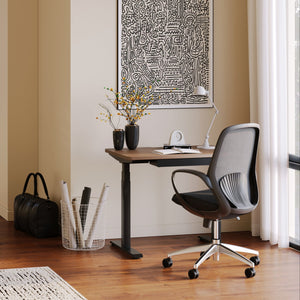
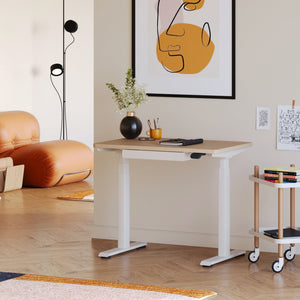
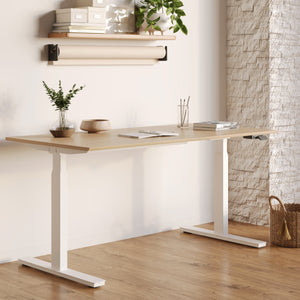
Pairing mobile filing with adjustable office desks can create work zones that respond to different tasks without forcing the room into one fixed arrangement. The desk provides the primary work surface, while the cabinet handles the items that should be accessible but not constantly visible.
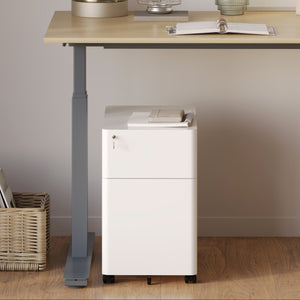
This pairing is especially useful in compact offices. A mobile cabinet can slide beside a desk during focused work, move away during collaboration, or be parked at the edge of a room when floor space is needed. The key is to give mobile storage a planned role rather than letting it drift randomly through the office.
Mobile filing cabinets are practical, but they should not carry the entire office storage burden. They are not ideal for bulky supplies, large archives, shared inventory, or materials that require a controlled central location. Too many mobile units can also make a workplace look busy if there are no parking zones.
The best uses for mobile filing cabinets include:
1. Active personal files
2. Project folders used throughout the week
3. Small office supplies assigned to one person or team
4. Notebooks and reference materials
5. Personal items that should not sit on shared desks
6. Lightweight tech accessories
7. Temporary materials for meetings or project sessions
Mobile filing is strongest when it supports active work. Fixed storage is stronger when it supports office-wide systems.
Fixed storage gives a flexible office structure. While mobile cabinets follow people and projects, fixed storage creates dependable places for materials that should not move. That includes archived documents, printer supplies, shared equipment, mail, HR records, finance files, samples, and general office inventory.
A flexible office still needs stable anchors. Not everything should be mobile. Some items become harder to manage when they move too often. Fixed storage reduces confusion by keeping shared resources in an agreed location.
Fixed storage works best when the access pattern is predictable. If several people need the same supplies, a central cabinet usually makes more sense than distributing those supplies across several mobile units. If records must remain in one location, fixed storage helps protect consistency. If a printer zone needs paper, toner, envelopes, and mailing materials, fixed storage keeps that workflow contained.
This kind of storage is especially useful in administrative areas, operations zones, supply rooms, reception areas, and archive spaces. These parts of the office do not need to move often. They need to stay clear, accessible, and dependable.
Fixed storage can reduce visual noise when placed intentionally. Cabinets along a wall, low credenzas near shared equipment, and organized supply zones can make a workplace feel settled without limiting every part of the room.
The risk comes when fixed storage is added without a plan. Tall cabinets can make a room feel smaller. Storage walls can reduce layout flexibility. Cabinets placed near walkways can create bottlenecks. A fixed cabinet can be useful and still be wrong for the room if it blocks movement or makes future changes difficult.
Fixed storage should serve the office routine without taking over the office layout.
| Decision Factor | Mobile Filing Cabinet | Fixed Storage |
|---|---|---|
| Best use | Personal files, active documents, daily-use items | Shared supplies, archives, department records |
| Flexibility | High, moves with people or work zones | Lower, stays in one assigned location |
| Ownership style | Individual, project-based, or small-team use | Departmental, operational, or company-wide use |
| Space planning | Useful near desks and temporary work areas | Useful along walls, supply areas, and archive zones |
| Access pattern | Frequent and close-at-hand | Predictable, shared, or occasional |
| Visual impact | Compact but needs parking rules | Clean when planned, bulky when overused |
| Security approach | Useful for assigned personal storage | Useful for centralized control |
| Main drawback | Can look scattered without a system | Can restrict layout changes if overbuilt |
A simple decision framework can prevent most storage mistakes:
If one person uses the item daily, mobile storage is usually better.
If a project team uses the item temporarily, mobile or semi-mobile storage usually works well.
If the whole office uses the item occasionally, fixed storage is usually better.
If records must stay in one stable location, fixed storage is usually better.
If the layout changes often, avoid relying too heavily on permanent cabinets.
This framework keeps storage tied to real behavior instead of assumptions. A flexible office should not store everything where it fits. It should store things where they support the work.
Storage affects more than organization. It affects how people sit, reach, move, and concentrate. A cabinet placed too close to a chair can limit movement. A fixed unit placed beside a desk can make people twist awkwardly to reach documents. A mobile cabinet left in a walkway can interrupt circulation.
A flexible office should make daily work feel natural. Storage should be close enough to support the task, but not so close that it crowds the body or the room.
Shared desks work only when surfaces can be reset. If people have nowhere to store papers, notebooks, or small tools, the desk becomes the storage system. That leads to clutter, misplaced materials, and friction between users.
A clean desk does not require an empty workplace. It requires storage that matches the task. Active materials should be nearby. Shared materials should return to common zones. Personal items should not remain on workstations after the user leaves.
A lightweight laptop stand can support a cleaner desk setup by giving the laptop a defined position while leaving more usable surface area for writing, reviewing documents, or switching between tasks.
A good reset habit helps flexible offices stay functional throughout the day:
1. Put active documents back into assigned storage.
2. Clear the main typing and writing surface.
3. Return shared supplies to their zone.
4. Move personal items into a cabinet, drawer, or bag.
5. Check that chair movement and drawer access are not blocked.
6. Leave the workstation ready for the next user.
This routine is simple, but it protects the purpose of flexible furniture. Without reset habits, even the best storage system becomes cluttered.
Storage changes how a room feels. A flexible office can technically have movable furniture, but if cabinets dominate the walls or cast dark corners, the room may still feel heavy. Good storage planning considers visual weight, light, sightlines, and movement.
Cabinets should not make the workplace feel like a back office unless that is the intended function of the zone. Flexible spaces need utility, but they also need openness.
Too much fixed storage can visually anchor a room. Tall units may break sightlines. Dark finishes may make a compact room feel denser. Oversized cabinets may suggest that the layout is permanent, even when the team needs change.
Mobile filing cabinets can reduce that weight because they are smaller and easier to reposition. However, they also need discipline. A room filled with mobile units in different locations can feel just as cluttered as a room lined with fixed cabinets.
The goal is not to hide storage completely. The goal is to make storage feel intentional.
Lighting can soften the practical look of storage areas. A multi-use LED lamp can support a work surface, side area, or storage-adjacent zone where people sort documents, review materials, or reset the desk.
Lighting also helps distinguish between zones. A desk area needs direct task light. A reception or shared storage surface may need softer illumination. A supply area may need clear visibility. When lighting and storage are planned together, the office feels more organized and less improvised.
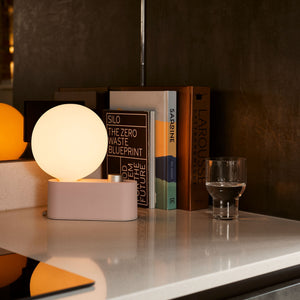
Some storage areas sit near visible parts of the office, such as reception consoles, shared shelves, or side tables. In those spaces, practical organization should still feel connected to the rest of the interior. A recycled glass table lamp can bring a more finished visual element to a storage-adjacent surface without turning the area into decoration only.
The point is balance. Flexible offices need utility, but they should not feel temporary or unfinished. Storage, lighting, desks, and seating should work together as part of the same environment.
Small offices often feel storage pressure first. There may be limited wall space, limited private rooms, and a growing mix of documents, supplies, devices, and personal items. Adding cabinets wherever there is an empty corner may solve the immediate problem, but it can create a more frustrating layout later.
A better approach is to divide storage by zone.
| Storage Zone | What Belongs There | Best Storage Type |
|---|---|---|
| Personal work zone | Daily files, notebooks, small tools | Mobile filing cabinet |
| Team project zone | Active project folders and shared materials | Mobile or low fixed storage |
| Operations zone | Printer supplies, mail, general inventory | Fixed storage |
| Archive zone | Older records and low-frequency documents | Fixed storage |
A growing team should avoid treating every new need as a reason to add another permanent cabinet. Fixed storage can be useful, but too much of it can make the office harder to adapt as staffing, workflows, or room functions change.
Mobile filing cabinets give growing teams more room to adjust. They can support a new project area, help a hybrid employee settle in, or temporarily serve a meeting space. Fixed storage should be reserved for materials that truly need a stable home.
Planning storage alongside modern ergonomic office furniture helps teams think about the whole workplace system rather than choosing cabinets after desks, chairs, and lighting are already in place.
Storage decisions are easier when the office still has breathing room. Once walkways are tight, desks are crowded, and supplies are already scattered, every cabinet placement becomes a compromise.
Early storage planning should ask:
Where do people work most often?
Which items need daily access?
Which materials are shared?
Which records need to stay controlled?
Where can mobile cabinets park without blocking movement?
Which walls should remain open for future layout changes?
These questions keep the office flexible instead of reactive.
A mobile cabinet with wheels is not automatically flexible. A fixed cabinet against a wall is not automatically efficient. Placement determines whether storage improves the office or creates small daily obstacles.
Storage should protect chair movement, drawer access, walkway clearance, and the ability to sit, stand, reach, and turn comfortably.
Mobile cabinets should have clear destinations. A cabinet may sit beside a desk during focused work, under or near a work surface when appropriate, or in a designated parking area when the room changes function. Without planned parking spots, mobile units can end up in walkways, near door swings, or behind chairs.
A mobile cabinet should be easy to access without becoming something people must constantly move around.
Fixed storage works best when it supports a clear circulation path. Cabinets near printers, doors, meeting rooms, and shared desks should be placed so people can open drawers, pass by one another, and retrieve supplies without crowding the area.
This is especially important in flexible offices because movement is part of the workplace model. People shift between desks, team areas, calls, and shared resources. A cabinet that blocks that flow creates daily friction.
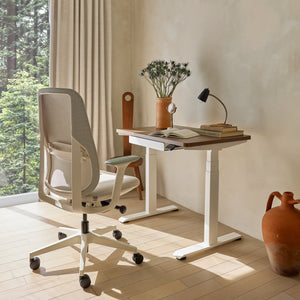
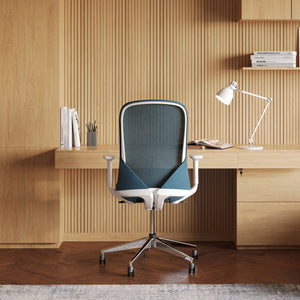
Storage placement should account for how people sit and move near ergonomic office chairs. A chair needs room to roll back, swivel, and reposition. Drawers need room to open. Walkways need enough clearance for people to pass without bumping into storage or seated workers.
A simple comfort test can help:
1. Can someone sit down without maneuvering around a cabinet?
2. Can the chair move back without hitting storage?
3. Can drawers open without blocking the user?
4. Can another person pass behind the chair?
5. Can documents be reached without awkward twisting?
If the answer is no, the storage may be useful but incorrectly placed.
A mobile filing cabinet is usually better when the office needs adaptability, personal access, and daily-use organization. It works well in spaces where people change desks, rooms serve multiple purposes, or project materials need to move between work zones.
Mobile filing is also useful when offices want to reduce permanent furniture along the walls. Instead of filling the perimeter with storage, teams can keep active items closer to the work while leaving the room easier to reconfigure.
If employees rotate through desks or teams rearrange the room often, fixed storage at every workstation may not make sense. Mobile filing supports the person or project rather than tying materials to one desk.
When employees handle active files, personal notes, or daily supplies, nearby storage matters. A mobile filing cabinet can create a personal storage point while still allowing the overall office layout to stay flexible.
Desktop clutter often signals that storage is too far away or poorly matched to the task. If papers and supplies constantly gather on work surfaces, mobile filing may provide the missing link between active work and clean reset habits.
Fixed storage is better when the materials belong to the office rather than one person. It provides structure for supplies, archives, records, and equipment that need a stable home.
A flexible office should not make everything mobile. That can create confusion and unnecessary movement. Some items should stay exactly where people expect them to be.
Printer paper, office inventory, mail supplies, HR records, finance files, and shared equipment are easier to manage in fixed zones. When multiple people need access, one predictable location reduces searching and misplacement.
Archived documents should not move through the office unless there is a clear reason. Fixed storage keeps low-frequency records separate from active work, which helps preserve desk space and reduces clutter.
Reception areas, print stations, supply rooms, and operations corners often benefit from fixed storage because the task stays in one location. The storage should match the workflow. If the workflow is stable, the storage can be stable too.
Mobile filing cabinets are usually better for flexible, employee-centered, daily-use storage. Fixed storage is usually better for shared systems, archives, and predictable operational needs. The strongest flexible offices use both with clear purpose.
If a person or project needs an item often, make the storage mobile. If the whole office needs an item occasionally or predictably, make the storage fixed. That rule keeps storage aligned with movement, ownership, and access.
The best flexible office is not the one with the most cabinets. It is the one where every storage choice supports the workday. Desks stay clear. Chairs move comfortably. Lighting supports useful zones. Shared supplies are easy to find. Personal materials have a place. Rooms can change function without chaos.
A mobile filing cabinet may be the better answer for adaptability, but fixed storage still has an essential role. Together, they create a workspace that feels organized, comfortable, and ready for change.


You have unlocked free shipping!
You're saving $29 and unlocked free shipping!
Leave a comment