










Filing Cabinet Choices for Cleaner Workstation Planning
Cleaner workstation planning starts with filing storage that matches the desk, document volume, security needs, and daily workflow. Explore how cab...
Learn more
Visit quiz page to see how we makes it easy to create an inspiring workplace


Tight floorplans guide many design decisions in contemporary living and working spaces. Compact corners often emerge as the only viable location for a workstation, especially in apartments, shared homes, and micro offices. These conditions require furniture that respects limited dimensions while still offering a functional surface that supports daily productivity. Thoughtful placement allows even the smallest corners to feel intentional rather than improvised.
Corners present unique possibilities because two walls converge to naturally define boundaries. This creates a contained zone that helps reduce visual noise, something many people find helpful when they work, study, or focus on creative tasks. For our brand, designing for corners means approaching furniture with respect for the limitations of modern interiors and making sure that each piece delivers usable workspace without overwhelming the environment.
Small interiors often force a rethinking of circulation patterns. A standard desk might obstruct door pathways, window access, or walking routes. A miniature desk placed in a corner can free the center of a room and create a more open feeling. This approach becomes especially useful when people share a room or repurpose secondary spaces like hallways, loft nooks, or dining corners for work.
Compact desks succeed when they strike the right balance between surface usability and size efficiency. Many small rooms cannot accommodate deep desks, so depths between 14 and 22 inches tend to work well. Widths in the 20 to 36 inch range are also practical for fitting into corners without bumping into adjacent furniture.
Chair clearance is another consideration. Corners reduce lateral movement, so the desk height and legroom should accommodate a comfortable sitting posture. This is one reason our team pays close attention to underframe design, avoiding excess crossbars or bulky structural elements that could interfere with leg placement.
Even in miniature form, ergonomic principles matter. Anyone working with a laptop, monitor, or keyboard deserves an arrangement that protects posture and reduces strain. Corners can create situations where screens sit too close to the eyes or chairs cannot align properly, so a deliberate approach is needed.
To help guide safe workstation habits in smaller areas, readers may refer to recognized ergonomic principles such as the ergonomic workstation criteria for safer posture. Our approach to compact desk design respects these fundamentals, helping users position screens and tools in a way that feels natural despite the limited footprint.
Corners affect light and sound more than many people expect. Two intersecting walls can trap shadows or create uneven lighting. Adjustable desk lamps, reflective surfaces, and soft overhead lighting can help balance illumination. Acoustically, corners often amplify echoes. Adding a rug, fabric chair, or small wall panels can soften the space and support concentration.
Compact desks vary widely in function, format, and purpose. A corner that suits a student might not work for a designer or remote professional. In our collections, every miniature desk format emerges from the understanding that limited rooms deserve solutions that feel intentional, not compromised.
Simple, streamlined desks provide a focused workspace for writing, reading, or laptop tasks. These designs suit corners where visual clarity is more important than storage or technology support. They also complement interiors that prioritize clean lines and subtle styling.
Customers searching for a straightforward and space efficient workstation can explore our streamlined office desk design, which offers a balanced footprint that works well in compact corners while maintaining an uncluttered look.
Vertical workspace strategies work exceptionally well in small corners. Standing desks allow users to shift positions, enhance circulation in tight areas, and reduce the need for deep surfaces. They also allow the workstation to serve multiple people with different height preferences without requiring additional furniture.
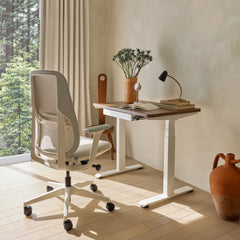
Our height adjustable standing desk option supports this type of setup by offering flexibility within a compact structure that adapts well to corner environments.
Some corners are so narrow that even typical standing desks cannot fit comfortably. These areas benefit from mini standing units designed specifically for tight geometries. By reducing width and depth but preserving the ability to alternate between sitting and standing, these models help users reclaim exceptionally small spaces that might otherwise remain unused.
Our small scale standing desk model is designed with these scenarios in mind, allowing customers to create a functional working corner even in micro sized rooms.
Not every workspace serves a single person. Many professional settings require multi user desk systems that maintain organization without occupying unnecessary room. Corners are natural candidates for these systems because they allow teams to share space while maximizing the overall layout.
When two to six people share a compact room, furniture must help define personal boundaries without adding bulk. Corners create an anchor point that stabilizes traffic and reduces unnecessary movement across the center of the workspace. Our brand designs multi user stations with this in mind, focusing on clarity, balance, and structure.
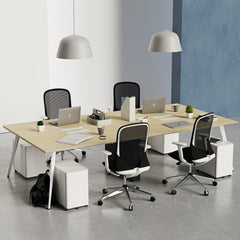
Four person units work well in agency environments, creative studios, or small offices where collaboration and individual tasks coexist. In corner placements, quad systems help maintain order by dividing surfaces evenly while using space efficiently.
Customers interested in this type of layout can consider our compact four person workstation layout, which provides defined work zones while supporting team based activity within a controlled footprint.
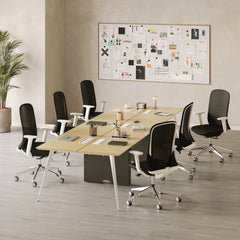
Some teams require higher seating density even in limited spaces. Six seat configurations can help maintain operational flow without expanding beyond the existing room dimensions. Corners give these systems a structural anchor, allowing the workstation to settle naturally along wall lines.
For businesses seeking this setup, our six seat office workstation arrangement offers a cohesive solution that organizes multiple users within a streamlined footprint.
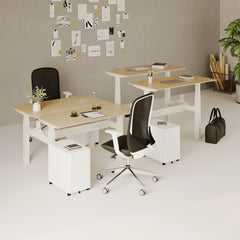
Partners, co workers, or rotating schedules sometimes require a shared station that allows both sitting and standing. In tight corners, a dual format desk prevents the need for two separate workstations, simplifying the entire room.
Our dual user standing desk setup serves this purpose by providing two independent working areas in a single compact unit.
Material integrity is central to performance, especially when a desk is compact. Small surfaces still support essential tools like laptops or monitors, and they must maintain stability despite their reduced footprint. Our selections prioritize long lasting materials that complement the small desk format.
Metal frames, reinforced joints, and stable connections help keep miniature desks from wobbling. Stability is especially important in corners where desks might be pushed slightly against walls. A stable base ensures predictable performance over time, even when surfaces are kept narrow or shallow.
Materials influence both look and function. Laminate surfaces offer durability and consistency, engineered wood provides strength with less weight, and solid wood can bring warmth to a compact corner. Miniature desks benefit from surfaces that resist scratches and maintain their finish even when placed near walls or windows.
Corners can feel closed off if the desk finish is too dark or if the surrounding area is cluttered. Light toned surfaces can make tight corners feel more open, while darker finishes can define the area with a cleaner visual boundary. Texture can also influence perceived depth and balance, especially when paired with wall colors and flooring.
Mini desks succeed when they support organization without adding bulk. Since corner workspaces limit horizontal expansion, storage solutions need to move upward or integrate seamlessly into the desk structure.
Shelves, corner-mounted risers, and small wall storage accessories help maintain order. Vertical organization keeps items accessible without crowding the desk surface. This tactic is especially valuable in small rooms where adding cabinets or freestanding units is not feasible.
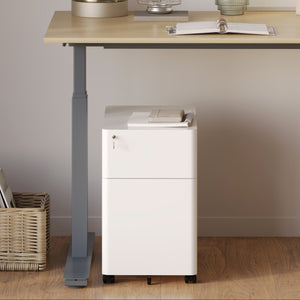
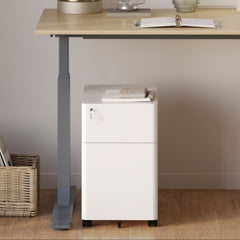
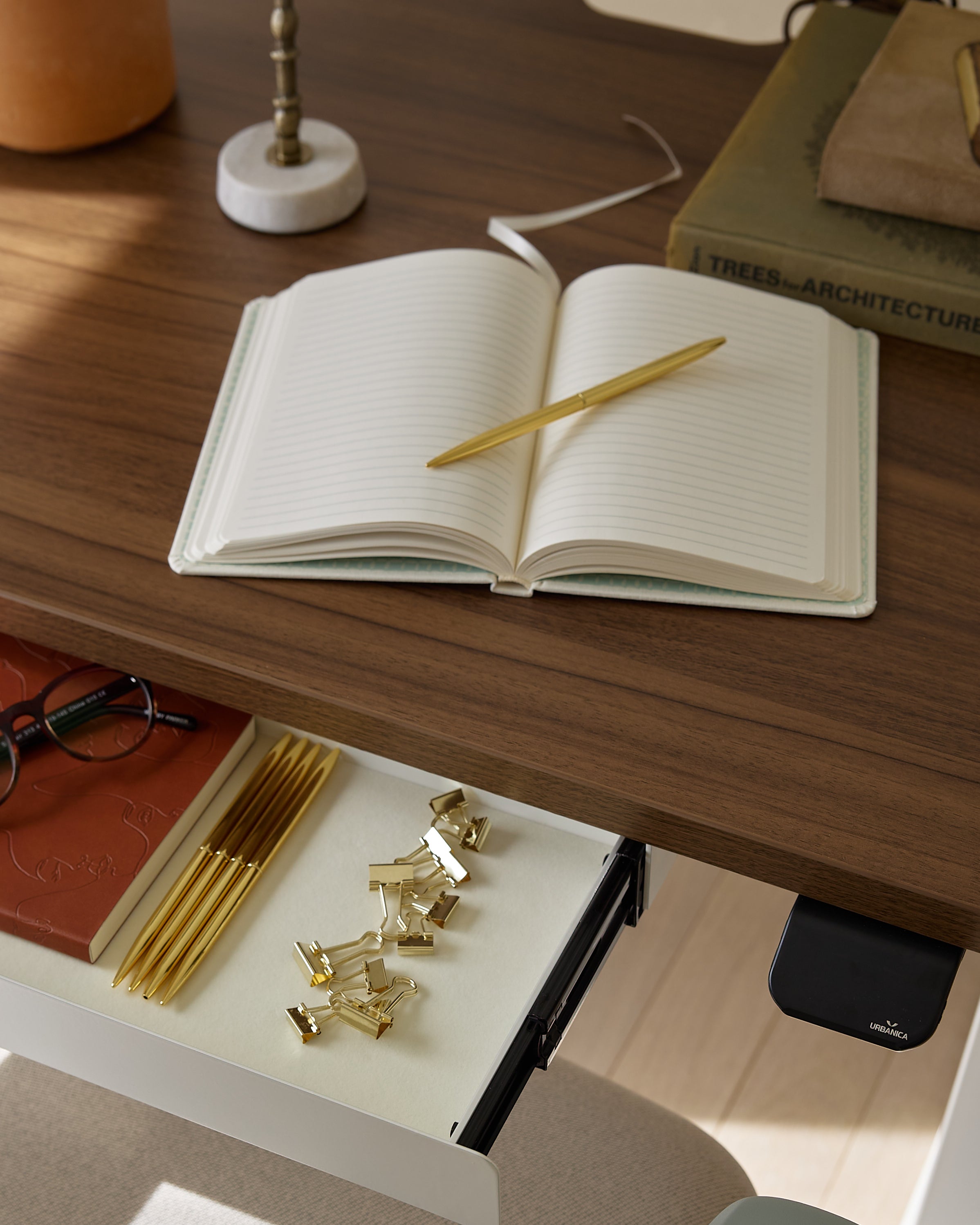
Compact accessories offer functionality without overwhelming the workspace. Under desk drawers can store small items, while clamp on trays create additional surfaces for peripherals or supplies. Cable channels control visual clutter and prevent cords from interfering with workflow on a miniature desk.
Chairs influence how well a corner desk fits into a room. Armless chairs, saddle stools, and slimmer profiles help maintain clear pathways. Seating that slides completely under the desk helps protect room circulation, which is essential when working in tight corners.
Placing a miniature desk into a corner requires careful planning, especially when neighboring furniture, windows, or doors affect the configuration. Our brand encourages users to evaluate the room as a whole before choosing a desk shape or size.
Accurate measurement is the foundation of a successful corner setup. This includes evaluating both wall lengths, diagonal distances, and the location of outlets or switches. Planning ahead prevents issues like limited legroom or blocked access to storage.
Each desk shape interacts differently with corner geometry. Wedge formats fill the entire corner and maximize stability. Rectangular desks fit flush against one wall, leaving more space along the room's adjacent edge. Floating desks provide visual lightness and work well when wall mounting is possible. Selecting the right form ensures the desk both fits and enhances the surrounding environment.
Power outlet access affects how cables route behind the desk. Corners also require thoughtful lighting because shadows can form where two walls meet. Good airflow prevents heat build up, which can occur when electronic devices sit too close to enclosed areas.
Working in a corner can be surprisingly grounding. Miniature desks that fit these spaces encourage users to curate their tools and prioritize efficiency. Over time, this fosters clarity and more intentional work habits.
Corners naturally focus attention forward, reducing visual distractions that come from open rooms. Compact desks reinforce this effect by keeping only essential tools within reach. A clean corner can support consistent productivity and offer a sense of structure even in multipurpose rooms.
Scalability matters even in small areas. Users may expand their setup by adding shelves, adjusting monitor placement, or swapping seating to meet new needs. Mini desks that support modular or incremental changes help customers evolve their space without replacing the core furniture.
Readers looking for creative solutions that complement small interiors can browse our versatile small desk collection to find designs that match different compact corner needs while staying consistent with thoughtful, space-aware furniture principles.


You have unlocked free shipping!
You're saving $29 and unlocked free shipping!
Leave a comment