



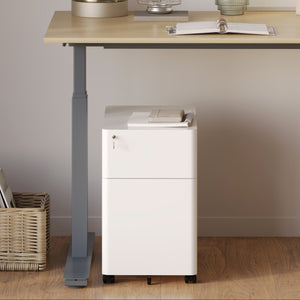

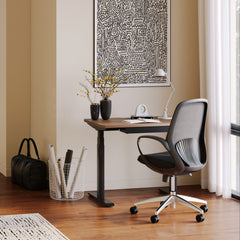
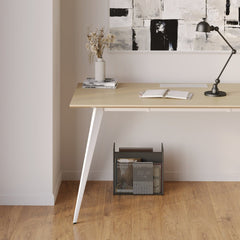
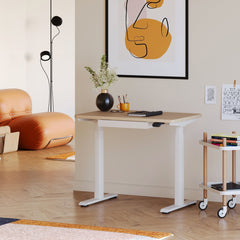

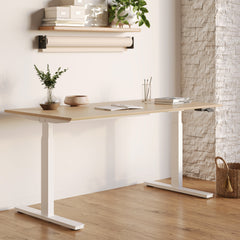

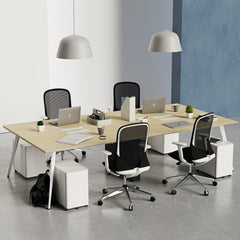
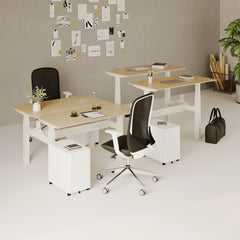
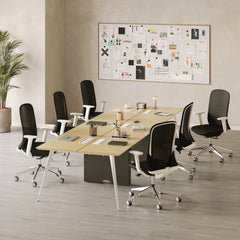


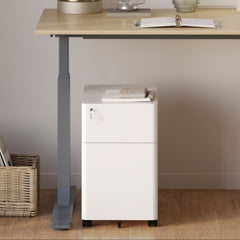


Filing Cabinet Choices for Cleaner Workstation Planning
Cleaner workstation planning starts with filing storage that matches the desk, document volume, security needs, and daily workflow. Explore how cab...
Learn more
Visit quiz page to see how we makes it easy to create an inspiring workplace


A small room can either feel cozy and intentional or tight and overwhelming. The difference rarely comes down to square footage alone. More often, it is about layout. Furniture placement shapes how we move, how we see the space, and how much air and light seem to circulate within it.
The good news is that you do not need to knock down walls to create openness. With thoughtful furniture layouts, strategic spacing, and the right multifunctional pieces, even compact rooms can feel expansive and breathable. The goal is not to remove everything. It is to arrange everything with purpose.
Before choosing where your desk or sofa will sit, consider movement. Flow is the invisible pathway that determines whether a room feels spacious or restricted. When walkways are blocked or crowded, the room instantly feels smaller.
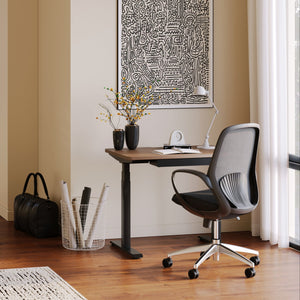
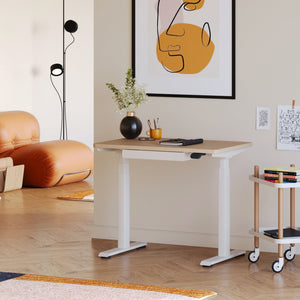
Clear circulation paths allow the eye to travel naturally across the space. Try positioning larger pieces against walls to free up the center. In tighter workspaces, a compact solution like a Mini Standing Desk California can anchor productivity without overwhelming the room. Its streamlined footprint helps maintain open pathways while still offering ergonomic flexibility.
When planning layout, ask:
Can I walk across the room without weaving around obstacles?
Does natural light reach most areas?
Are visual lines interrupted by bulky furniture?
The answers often reveal why a room feels crowded.
When square footage is limited, vertical space becomes your greatest ally. Tall shelving, elevated desks, and upright storage draw the eye upward, creating the illusion of height.
Instead of spreading furniture across the floor, use height to your advantage. This shifts attention away from the room’s footprint.
A visible floor area makes a room feel larger. Furniture with open bases or slim legs allows light to pass underneath, preventing visual heaviness.
Consider:
Desks with clean, open frames
Chairs that do not fully conceal the floor
Floating shelves instead of bulky cabinets
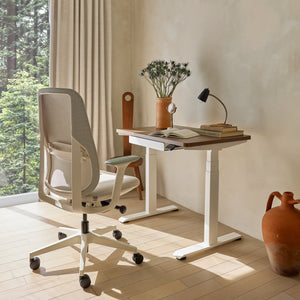
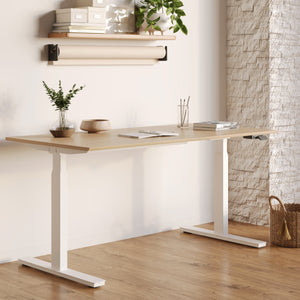
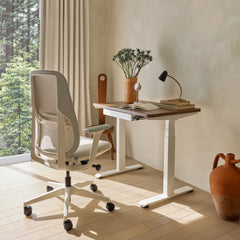
An adjustable height-adjustable standing desk for flexible work maintains a minimal silhouette while offering ergonomic adaptability. Its streamlined structure avoids visual clutter and keeps the workspace feeling open.
Large furniture pieces dominate small rooms. Instead:
Choose proportional desks
Avoid deep shelving units
Limit wide armrests and thick frames
The lighter the visual weight, the larger the room will appear.
Open layouts can feel chaotic when functions overlap. A living area that blends into a workspace without structure can feel cramped. Creating zones gives purpose to each section.
You do not need physical dividers to create separation. Instead:
Rotate desks to face walls
Use rugs to define sitting areas
Align furniture edges to suggest boundaries
A well-proportioned modern executive office desk can act as a visual anchor that separates work from relaxation without closing off the room.
While zoning is helpful, continuity is essential. Keep:
A consistent color palette
Similar wood tones
Coordinated metal finishes
This balance ensures that the room feels cohesive rather than segmented.
Light is one of the strongest tools for making a room feel larger. When furniture blocks windows or interrupts sightlines, natural brightness is reduced.
Keep window areas clear. Position taller items away from light sources. Use reflective surfaces strategically to bounce light across the room.
Research on furniture solutions for compact interiors emphasizes the importance of multi-functional and visually lightweight pieces in maximizing small spaces. Brightness combined with thoughtful furniture design transforms perception.
A well-lit room always feels more expansive than a dim one, regardless of its actual size.
Clutter shrinks rooms visually. Multi-functional furniture reduces the number of pieces needed, which increases open space.
Look for:
Desks with integrated cable management
Seating that supports long work sessions
Adjustable components
Additional side tables for monitors can consume space unnecessarily. Instead, mount screens using an adjustable ergonomic monitor arm to free up valuable desk surface area.
This keeps:
Work surfaces clear
Visual lines uninterrupted
Floor space unobstructed
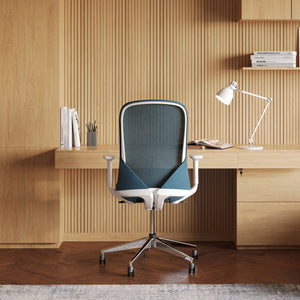
Chairs should provide support without appearing bulky. A supportive ergonomic task chair maintains a clean silhouette while delivering posture support, making it ideal for small offices that need both comfort and compactness.
Multi-functional design is not about squeezing more into a room. It is about needing less.
Trends often favor oversized sofas and expansive desks. In smaller rooms, proportion matters more than popularity.
Measure carefully before purchasing. Leave breathing room around each piece. Ideally, there should be at least a few inches between furniture and walls to prevent a cramped look.
Choosing streamlined silhouettes over heavy ornamentation keeps the room feeling balanced. Simplicity often reads as spaciousness.
Remember that negative space is not empty space. It is visual relief.
|
Layout Strategy |
Why It Works |
Best For |
|
Push furniture against walls |
Opens central floor area |
Living rooms, studios |
|
Float key pieces strategically |
Creates depth and layered perspective |
Bedrooms, multipurpose rooms |
|
Use corner placements |
Maximizes underused areas |
Home offices |
|
Align furniture with sightlines |
Extends visual length of the room |
Narrow spaces |
|
Choose adjustable desk systems |
Adapts to space without permanent footprint |
Compact workspaces |
This table highlights how thoughtful positioning can shift perception without changing square footage.
Excess decor competes for attention. Too many small objects can make surfaces feel crowded.
Instead:
Select one or two statement pieces
Keep desk surfaces clean
Avoid layered clutter
Clear horizontal lines create the illusion of width. Avoid stacking items on desks or layering multiple bulky pieces in one area.
Keep:
Desktop accessories minimal
Shelves evenly spaced
Wall art aligned
Light tones expand perception. Neutral palettes reflect light and reduce visual compression.
If you prefer darker accents:
Balance them with lighter surroundings
Keep darker elements grounded at lower levels
Use consistent shades to avoid fragmentation
Simplicity strengthens spatial clarity.
Mirrors amplify light and extend sightlines. Placing a mirror opposite a window doubles brightness visually. Symmetrical layouts also contribute to spaciousness because they create order.
Balanced furniture placement reduces visual tension. Even spacing between items prevents the room from feeling squeezed.
Perspective matters. When the eye can see from one end of the room to the other without obstruction, the room feels longer. Strategic alignment of desks, chairs, and shelving encourages this effect.
Small adjustments in angle and spacing can dramatically change perception.
Before finalizing your layout, review this simple guide to ensure your space feels open and intentional.
Keep walkways clear and unobstructed
Use vertical storage to free floor space
Choose proportional, streamlined furniture
Maintain consistent color and material tones
Allow natural light to reach every corner
Use multi-functional pieces to reduce clutter
Keep surfaces minimal and organized
Balance visual weight evenly
Anchor the room with compact, adaptable furniture
Leave breathing room around each major piece
When layout decisions prioritize flow, proportion, and light, even the smallest room can feel expansive. The secret is not having less furniture. It is placing the right furniture in the right way.
A room that feels larger is not created by illusion alone. It is shaped by intention.


You have unlocked free shipping!
You're saving $29 and unlocked free shipping!
Leave a comment