






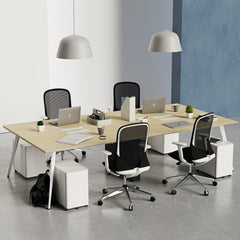
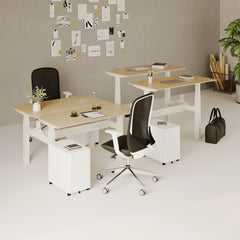
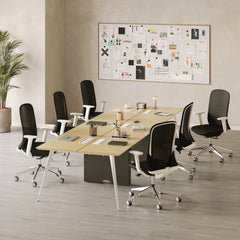


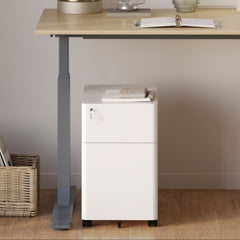


Filing Cabinet Choices for Cleaner Workstation Planning
Cleaner workstation planning starts with filing storage that matches the desk, document volume, security needs, and daily workflow. Explore how cab...
Learn more
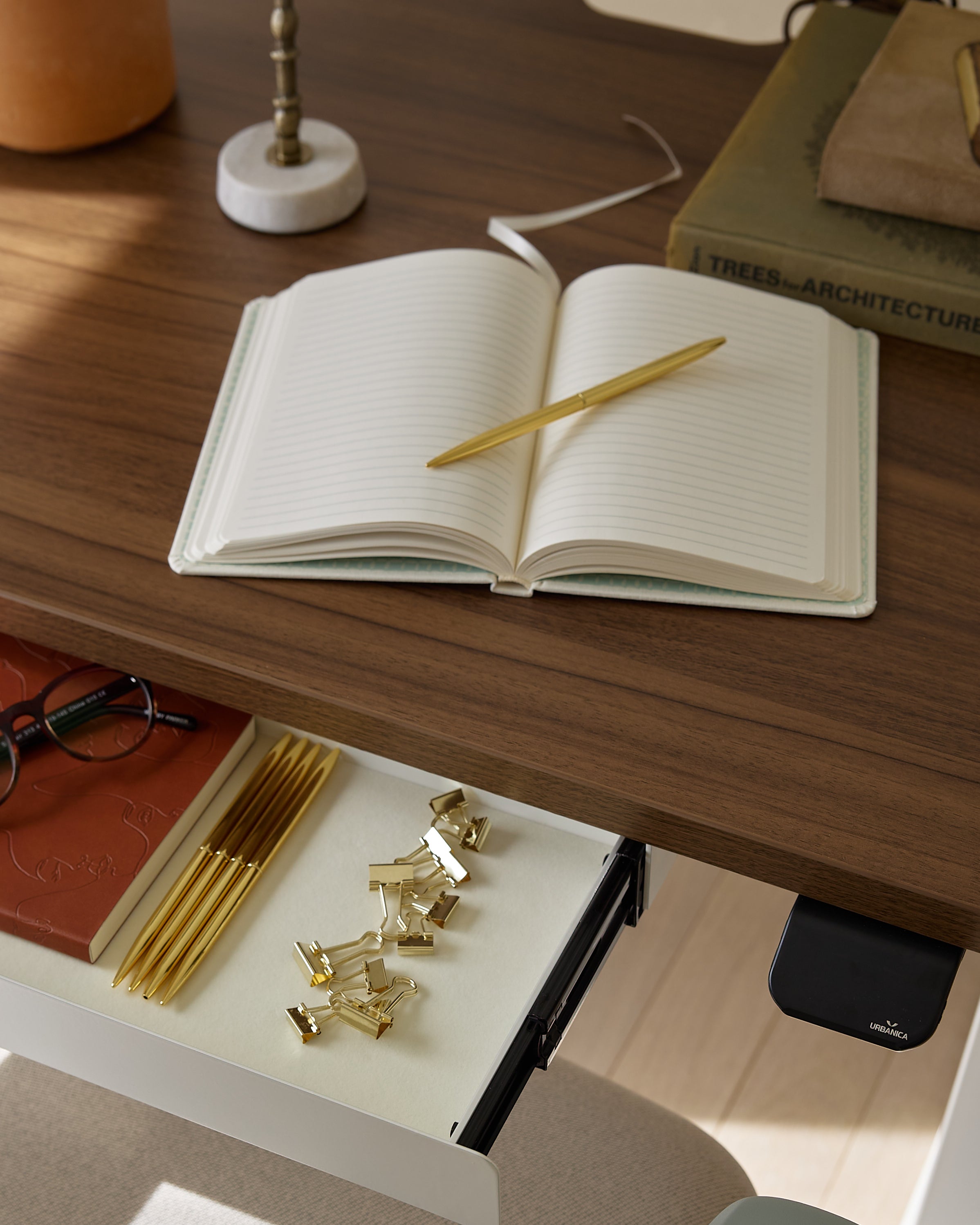
Visit quiz page to see how we makes it easy to create an inspiring workplace


The answer depends less on shape alone and more on what “light work” actually looks like in daily life. For some people, light work means answering emails, reviewing documents, joining a short video call, paying bills, journaling, or spending an hour on a laptop. For others, it starts that way and slowly grows into a longer routine with chargers, notebooks, files, and a second screen. That distinction matters.
A circular bistro table and a rectangular desk support very different rhythms. One is usually better at blending into a home and adapting to multiple uses. The other is better at creating structure, consistency, and support for repeated task-based work. Neither is universally better. The better choice is the one that fits the actual intensity of the work, the size of the room, and the role the furniture needs to play when work is over.
This is why many homeowners end up frustrated when they choose based only on appearance. A table that looks elegant in a breakfast nook may feel limiting after three hours of typing. A desk that feels practical may also make a dining corner or bedroom look heavier than necessary. In homes where space is already being reconsidered, especially during projects focused on adding more usable living space, these smaller furniture decisions often shape how comfortably a room functions day to day.
A circular bistro table often feels easier to live with because it does not impose a strict office identity on the room. The absence of corners softens the footprint. In smaller spaces, that changes how movement feels around the furniture. A round table can sit more naturally in a nook, near a window, beside a kitchen zone, or in a mixed-use room where people walk past regularly.
That matters in homes where one area may need to serve several purposes. A circular table can be used for coffee, reading, casual planning, laptop work, and conversation without making the room feel overly task-driven. It tends to fit into the home as furniture first and a workstation second.
Many people do not need a full office surface for light work. They need a place to sit upright, open a laptop, spread out a small number of items, and focus for a limited window of time. In that setting, a bistro table can feel refreshing rather than restrictive.
It encourages a lighter routine. Instead of anchoring the entire room around work, it allows work to happen within the rhythm of the home. That can be especially helpful for people who work in bursts rather than all day. A short planning session in the morning, a video call in the afternoon, and some reading in the evening may not justify a large dedicated desk.
A circular bistro table usually works best in:
breakfast nooks
kitchen-adjacent corners
small apartment living areas
bedrooms with limited extra floor space
sunrooms and transitional indoor-outdoor spaces
shared rooms where furniture has to stay visually calm
In these spaces, the round table often feels less like a compromise and more like a deliberate design decision.
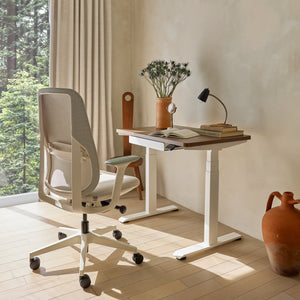
A rectangular desk wins when the work requires separation. One side can hold a laptop. Another can hold paper notes, a lamp, headphones, or a keyboard. That ability to zone the surface becomes valuable very quickly. Even light work gets easier when everything does not have to compete for the same circular perimeter.
A desk also tends to work better for people whose “light work” is gradually expanding. It is common for a casual setup to become a daily one. What starts as occasional laptop use can turn into longer stretches of writing, admin work, scheduling, or project coordination. A rectangular surface gives those habits room to grow.
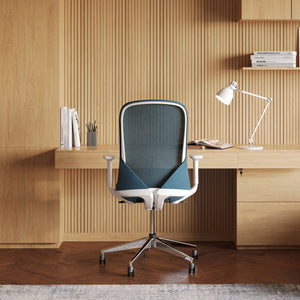
Rectangular desks are also easier to align against a wall, pair with shelving, and organize around predictable edges. That makes them more compatible with accessories and a more permanent setup. If the room needs dedicated lighting, charging access, or a better layout for devices, that practical side becomes important. In homes where a work zone needs stronger outlet planning or safer device support, furniture choices often connect with broader needs such as professional electrical upgrades for interior spaces.
There is also a psychological benefit to a desk. It signals purpose. For some people, that matters as much as the surface itself. Sitting at a desk can make it easier to start focused work, stay organized, and stop treating the task like something temporary. If attention and routine are ongoing challenges, a desk may outperform a more flexible table even when the work is not especially complex.
A lot of light work happens near the center of the home. People answer emails while coffee brews, review schedules between household tasks, or use a laptop for an hour in a breakfast area. In these settings, a circular bistro table often feels more integrated than a desk. It belongs in the language of the room.
That makes it a natural choice for eat-in spaces and open-plan layouts where visual continuity matters. It also pairs more comfortably with the kinds of spaces shaped by thoughtful kitchen renovation planning, where circulation, seating, and daily use all need to coexist without the room feeling crowded or overly specialized.
The equation changes in a spare room, enclosed den, or separate workspace. Once a room is clearly meant to support focused tasks, the benefits of a desk become harder to ignore. The furniture no longer needs to hide its purpose. It needs to do its job well.
This is especially true in detached or semi-separated living areas, where the space itself supports concentration. In setups shaped around garage conversion and ADU living solutions, a rectangular desk often makes more sense because the room can absorb a stronger workstation identity without disrupting the rest of the home.
Rooms that connect to patios, gardens, or bright exterior views often benefit from lighter furniture profiles. A large desk can feel visually abrupt in these areas, while a circular bistro table tends to keep the space more open and residential. That is especially true in homes where interior choices need to feel consistent with outdoor living and landscape design improvements, where softness, openness, and movement between spaces shape the overall experience.
This is where many attractive setups begin to fall apart. A bistro table may look perfect in the room and still feel less supportive over time. The issue is not that round tables are inherently uncomfortable. The issue is proportion. Dining-style tables and work desks are not always built around the same assumptions.
For short sessions, this may not matter much. For repeated daily use, even small differences in height, elbow position, or screen placement can become noticeable. Wrist angle, shoulder tension, and posture usually matter more than aesthetics once the novelty wears off.
A circular bistro table performs much better when paired with a chair that supports upright sitting. This is not the place for a low lounge chair or a seat that encourages slouching. The more intentional the seating, the more successful the setup becomes.
an armless chair that allows easy movement
a supportive dining chair with a firm seat
a chair with a straight back and stable posture
seating that keeps the user close enough to the table without hunching forward
If the work is mostly writing, planning, reading, and laptop-based tasks for limited periods, this can work well. If the work includes long sessions, repetitive typing, or a monitor-heavy setup, a desk usually becomes the safer long-term choice.
One of the strongest arguments for a circular bistro table is what happens when work is done. It tends to reset the room quickly. Once the laptop is removed, the surface goes back to feeling like furniture rather than equipment. That quality matters in bedrooms, dining areas, and living spaces where visual calm is part of the room’s success.
Desks are often praised for storage, but that advantage depends on execution. Without a real place for supplies, paper, chargers, and accessories, a desk can become a permanent holding zone. It may support work better, but it can also make clutter more visible and more acceptable.
That is why surrounding storage matters almost as much as the work surface itself. In rooms where cabinetry or built-ins help absorb overflow, details such as cabinet refacing for updated storage areas can contribute to a cleaner and more cohesive environment without forcing the work surface to carry the entire burden.
A temporary setup is not always truly temporary. Notebooks accumulate. Chargers migrate. A lamp gets added. A basket appears nearby. The chair becomes permanent. Over time, even a beautiful bistro table can develop desk-like habits without desk-like support. The smartest choice is often the one that matches the likely future of the routine, not just the current version of it.
| Criteria | Circular Bistro Table | Rectangular Desk | Better Fit |
|---|---|---|---|
| Small-room footprint | Feels softer and easier to move around | Can feel larger and more directional | Bistro table in tighter shared rooms |
| Visual impact | Blends into home décor more easily | Signals work more clearly | Bistro table for design-led spaces |
| Surface organization | Limited zoning | Easier to separate tasks and objects | Desk for multi-item workflows |
| Ergonomic potential | Depends heavily on chair and session length | Usually more supportive for routine work | Desk for frequent or longer sessions |
| Multi-use flexibility | Excellent for dining, reading, and casual work | More specialized | Bistro table for mixed-use rooms |
| Storage support | Minimal on its own | Better when drawers or add-ons exist | Desk for tools, paper, and accessories |
| Best session length | Short to moderate | Moderate to long | Depends on actual work habits |
| Ability to disappear after use | Strong | Weaker | Bistro table for calmer rooms |
A circular bistro table is often the better choice for people who want their home to feel like a home first. It suits those who work in shorter bursts, prefer a lighter visual footprint, and do not need extensive accessories or storage at arm’s reach. It also works well for renters, apartment dwellers, and homeowners who want one piece to support several everyday activities without looking overly functional.
In smaller homes, the most successful pieces often do more than one job. A table that supports planning in the morning, lunch at midday, and reading in the evening can be more valuable than a desk that excels at only one function. This same space-conscious thinking often shapes decisions across the home, including areas influenced by practical bathroom remodeling ideas, where comfort, movement, and function have to coexist without wasting usable room.
A rectangular desk is usually the stronger choice when the work is already pushing beyond the “light” category or clearly heading in that direction. If the routine includes longer sessions, frequent typing, paperwork, accessories, device charging, or a need for stronger mental structure, the desk supports that reality more honestly.
A beautiful room still has to function. When comfort starts to suffer or clutter starts to spread, visual charm alone is not enough. A desk may feel heavier in the room, but it can create a better daily experience for people who need reliability more than flexibility.
The circular bistro table is better for light work when the work is truly light, the room serves more than one purpose, and the furniture needs to support both usefulness and visual ease. It shines in smaller, softer, more flexible environments where a full office setup would feel too formal or too dominant.
The rectangular desk is better when light work is becoming frequent work, when posture and task support matter more, or when the room can comfortably hold a more dedicated workstation identity.
The smartest choice is not based on trend, shape preference, or what looks best in a single photo. It comes from matching the furniture to the rhythm of the room, the duration of the work, and the kind of home the space is meant to support.


You have unlocked free shipping!
You're saving $29 and unlocked free shipping!
Leave a comment