



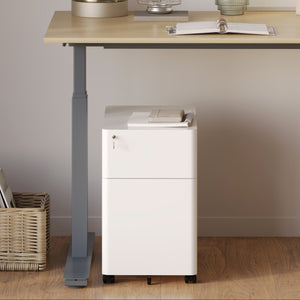






















Filing Cabinet Choices for Cleaner Workstation Planning
Cleaner workstation planning starts with filing storage that matches the desk, document volume, security needs, and daily workflow. Explore how cab...
Learn more
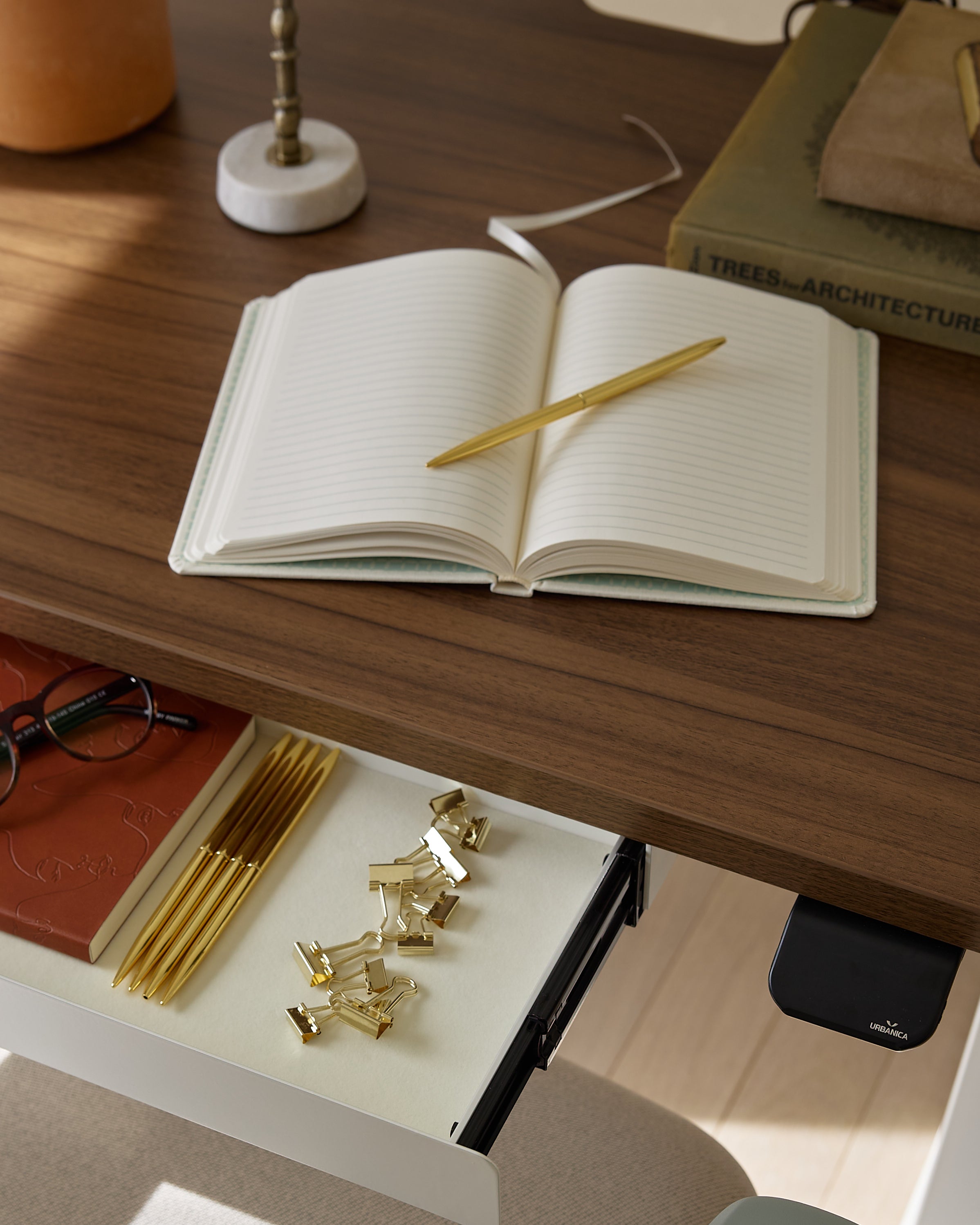
Visit quiz page to see how we makes it easy to create an inspiring workplace


Most people think of furniture as purely functional or decorative—a place to sit, or a surface to work on. Yet, the design of your immediate environment has a profound, scientifically proven effect on your mental state, your energy levels, and your motivation. Your desk, your chair, and the surrounding layout are not passive elements; they are active partners in your cognitive process.
A workspace designed with intention can reduce stress, foster creativity, and sustain motivation. Conversely, a cluttered, uncomfortable, or poorly organized space becomes a constant, subtle drain on your focus. By understanding the link between design and well-being, you can curate an environment that actively supports your mental clarity and drives you toward your goals.
The quality and form of your primary workspace set the tone for your mind. A beautiful, uncluttered piece creates a sense of order and calm that translates directly to mental organization.
This foundational relationship between desk form and mental clarity is perfectly served by a flexible piece like the dynamic workstation, which keeps both your mind and body active and engaged.
Visual clutter is one of the most significant enemies of mental clarity. An overstuffed desk and chaotic shelving force your brain to constantly process irrelevant stimuli, diverting energy away from your actual tasks.
Studies show that an unorganized environment can increase stress and reduce the ability to focus. When your eyes land on several random objects, your brain starts a low-level processing task for each one, leading to cognitive fatigue before your work even begins.
Clear Zones: Keep only the item you are currently using in your primary visual field.
Closed Storage: Utilize drawers and cabinets to hide away accessories and supplies, prioritizing clean lines.
Neutral Palette: Use subdued, natural colors for surfaces and walls to minimize visual distraction.
Humans are deeply affected by natural elements. Furniture placement that optimizes access to daylight and a view of the outdoors is a powerful, passive motivator.
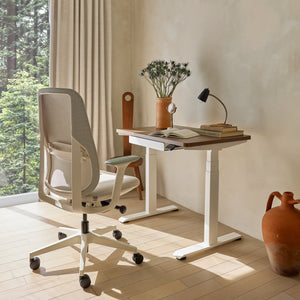
Positioning a desk to face a window, or at least to receive maximum natural light, is a simple way to boost mood and alertness. Natural light regulates circadian rhythms, which are essential for sustained energy.
Alertness: Natural light boosts serotonin, which is linked to motivation and mood.
Eye Health: Reduces eye strain compared to working under artificial lights all day.

Physical discomfort is a primary distraction. If you are constantly shifting in your seat, rubbing your neck, or dealing with lower back pain, your mental energy is being consumed by your physical needs.
Ergonomic furniture is designed to eliminate these physical distractions. When your chair, desk, and monitor are perfectly aligned to support your body, you free up cognitive resources that can be dedicated entirely to your work.
Research into environmental psychology confirms that physical stressors can hinder performance and well-being, reinforcing the need for proper ergonomic tools.
The shapes and materials used in your furniture subtly affect the emotional tone of your workspace. Sharp angles can feel aggressive, while soft curves feel relaxing.
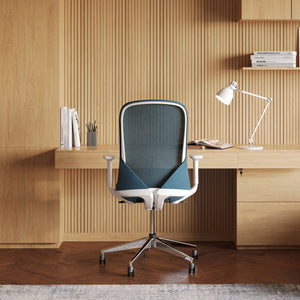
Natural Wood: Conveys warmth, stability, and organic comfort, often promoting a feeling of calm.
Sleek Metal: Suggests efficiency, structure, and precision, encouraging focused, analytical work.
The use of materials in a well-designed Office Desk blends these qualities, offering a functional surface that still feels warm and inviting.
In open floor plans or shared home environments, furniture can be used intentionally to create psychological boundaries that define a zone of focus, crucial for filtering out domestic life.
A desk or shelving unit can act as a visual barrier, signaling a dedicated work zone. This distinction helps the brain transition into work mode and enhances motivation upon entering the space.
This is particularly relevant for collaborative setups. A large piece like a Two Person Desk creates two clearly defined, co-existing zones of focus, allowing for shared presence without shared distraction.
The feeling of control over one's environment is directly tied to motivation and well-being. Modular and adaptable furniture systems give you the power to adjust the space as your needs change.
When furniture can be easily reconfigured—such as a large Four Person Workstation that can be quickly moved or added to—you feel empowered. This sense of control reduces environmental friction and encourages flexibility in your workflow.
Modularity Benefits Checklist
Adaptability: Allows the space to evolve with your projects.
Ownership: Increases a user's sense of ownership and comfort in the space.
Reduced Stress: Eliminates the stress of feeling locked into a rigid, non-functional setup.
A space you genuinely find beautiful is a space you are motivated to use. A visually appealing office encourages regular use, whereas an ugly or drab space fosters avoidance.
Choosing furniture with clean lines, quality finishes, and an intentional aesthetic acts as a constant invitation to work. It turns the mundane act of sitting down to work into a more pleasurable, motivating experience.
Furniture that is too large can make a small room feel oppressive and limiting. Furniture that is too small can feel unstable and inadequate. The correct scale supports a feeling of balance and ease.
A piece of furniture should be proportional to the room and the task. For a compact space, selecting a well-proportioned unit is vital for maintaining an airy, open feeling that supports mental freedom.
Even the smallest spaces can be fully ergonomic. For instance, the specially designed Mini Standing Desk Michigan offers complete sit-stand functionality in a minimal footprint, ensuring the user gets maximum health benefit without suffocating the room.
Furniture design is moving toward dynamic adaptability—the ability to easily change height, position, and function. This future-focused design promotes mental agility by encouraging physical shifts that break up mental fatigue.
Static furniture encourages a static mindset. Dynamic furniture—like height-adjustable systems—promotes flow and active thinking. This physical stimulation is a subtle but effective way to overcome mental blocks.

Your furniture is a silent partner in your daily mental performance. By making intentional choices about visual order, ergonomic support, aesthetic appeal, and dynamic adaptability, you are building an environment that doesn't just hold your belongings—it holds your focus. Choose pieces that respect your need for physical comfort and mental clarity, and watch as your workspace naturally transforms into a powerful catalyst for motivation and achievement.


You have unlocked free shipping!
You're saving $29 and unlocked free shipping!
Leave a comment