



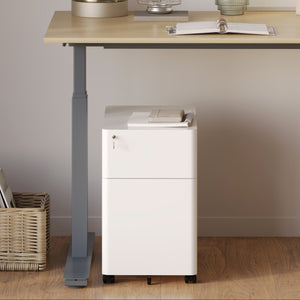






















Filing Cabinet Choices for Cleaner Workstation Planning
Cleaner workstation planning starts with filing storage that matches the desk, document volume, security needs, and daily workflow. Explore how cab...
Learn more
Visit quiz page to see how we makes it easy to create an inspiring workplace


A chair that supports your spine makes alignment feel quieter, not rigid. In our showroom, the easiest way to spot real support is to notice what your body stops doing. When a chair fits, the spine stays close to neutral with less bracing through the low back, less rounding through the mid-back, and less craning through the neck.
Start with a simple stack check:
Ears float over shoulders without you pulling your head back
Ribs rest over the pelvis without flaring up or collapsing down
Pelvis feels grounded on the sit bones instead of rolling onto the tailbone
If any one of those feels hard to maintain, the chair might be pushing you into compensation.
Your body typically compensates in predictable places:
Low back tightening often shows up when the pelvis tucks under because the seat height or depth is off
Mid-back fatigue often shows up when the thoracic area has no place to rest, so you round forward to find contact
Neck tension often shows up when the workstation pulls your head forward, or when recline is unsupported at the head and neck
These are not character flaws or “bad posture.” They are fit signals.
When a chair offers multiple adjustment points, it is easier to position the support zones where your body actually needs them. For a baseline reference of this approach, the Ergonomic Novo Chair is built around a highly adjustable setup intended to help users fine-tune how the backrest, seat, and armrests meet the body.
Sit all the way back, then gently rock your pelvis forward and back a few degrees. You are searching for the middle position where your sit bones feel planted and your low back naturally keeps a small curve.
If your tailbone takes weight or you keep sliding forward, your pelvis is likely tucking under. When that happens, the lumbar curve flattens and your low back muscles often brace to stabilize you.
Try this before blaming your back:
Lower the seat slightly if your feet feel light or unstable
Raise the seat slightly if your knees are too high and hips feel cramped
Recheck whether you can sit back without sliding
Lean back until the backrest meets your low back. Good lumbar support feels like even contact, not a sharp pressure point.
If it fills the curve, you feel steady support spread across the lumbar area
If it jabs the curve, the lumbar area may be too pronounced or hitting too high or too low
If you feel nothing, the lumbar zone may be missing your curve, or the seat depth may be preventing you from sitting back far enough
A supportive chair should reduce the urge to roll your pelvis under to “escape” pressure.
Take five slow breaths while keeping your hands on the keyboard and mouse. If breathing becomes shallow, your ribs are often collapsing, which commonly happens when the chair or workstation encourages slouching.
A quick reset:
Exhale fully and let ribs soften down
Sit back to re-find lumbar contact
Recheck whether you can inhale without lifting shoulders
Let your arms hang for a moment, then return hands to your desk. Shoulders should be able to drop away from your ears without you forcing them down.
Common causes of shoulder elevation:
Armrests are too high and are lifting the shoulders
Desk is too high relative to the seat
Armrests are too wide, which can push elbows out and roll shoulders forward
Look straight ahead. If your chin creeps forward, your neck is working to find the screen. Recline slightly, then return to upright. If recline makes your head fall back and you crane forward to see again, head and neck support might be missing for how you like to work.
A headrest is most useful after pelvis and lumbar checks pass. If the foundation is unstable, head support can mask the real issue. If the foundation is stable but your neck works harder in recline, a dedicated accessory can help. The Novo Headrest is designed as a compatible add-on intended to provide head and neck support for the Novo chair setup.
The lumbar zone should meet the lower curve of your back. Mismatch often feels like:
Too high: pressure pushes into mid-back and ribs, and you may feel pushed into an arch
Too low: the low back feels unsupported and you slump to find contact
Place your hand on your lumbar curve. If the chair’s strongest pressure point lands about a hand-width above or below that zone, the chair may feel fine briefly but becomes tiring as muscles compensate.
Many chairs focus on lumbar support and ignore the mid-back. When the thoracic area floats, you often round forward during typing to find stability. Signs include:
A gradual drift toward the edge of the seat
Shoulder blades that feel like they cannot settle
Breathing that feels smaller later in the day
A supportive backrest lets the mid-back participate without forcing the chest to collapse.
Backrest shape can either allow the shoulder blades to move or make them feel framed in. If you feel pinned near the shoulder blades, you may tense your upper back to “fit” inside the chair.
Different bodies prefer different backrest feels. If you want another reference point while comparing, the Muse Chair offers a distinct chair profile within our lineup, which can be useful when assessing how backrest shape and adjustability affect your ability to keep ribs stacked over pelvis.
Sit back fully, then check the gap between the seat edge and the back of your knee. Two to three fingers is a practical target for many people.
What it tells you:
Too deep: pressure behind knees, reduced comfort, and you often slide forward, which breaks lumbar contact
Too shallow: less thigh support, which can increase pressure on sit bones and trigger frequent shifting
When you cannot sit back, lumbar support cannot reach you. Your body braces, and it can feel like your back is the problem when the seat geometry is the real driver.
Feet should feel planted with a stable tripod, heel plus both forefoot points. When feet feel unstable, the pelvis often tucks under or the spine stiffens to compensate.
Adjust seat height until:
Feet feel planted without toe-gripping
Knees are comfortable and not forced high or dangling low
You can keep pelvis anchored without sliding forward
A supportive recline opens the hip angle while keeping lumbar contact. Recline should feel controlled, and returning to upright should not feel like a sudden pitch forward.
Recline slightly, then return upright. If you slam forward or struggle to return, tilt tension may not match your weight and movement style. A good setup feels predictable, allowing you to shift posture without losing alignment.
If you are comparing how different chairs stabilize pelvis and lumbar support through longer sessions, the Ergonomic Onyx Chair provides another ergonomic-focused option in our collection and can serve as a useful comparison point during your own fit checks.
Rest elbows gently. Armrests should unload the arms without lifting the shoulders. If shoulders rise, lower the armrests or reassess seat height relative to desk height.
If your keyboard sits high and armrests are high, shoulders often hike. If keyboard is low and armrests are low, you may lean forward. The goal is a position where forearms can hover comfortably over the work surface without shrugging.
Armrests set too wide can flare elbows outward, encouraging shoulders to roll forward and the upper back to round. Armrests set too narrow can pull shoulders inward and create a different kind of tension. Adjust width so elbows feel naturally near the torso while hands reach the keyboard without strain.
Use this order so each step supports the next:
1. Set seat height for planted feet
2. Set seat depth so you can sit back fully
3. Find lumbar contact that feels even
4. Confirm breathing and rib position during work posture
5. Set armrest height and width last
The most useful pain check is not intensity, it is location and timing. Below is a practical map you can use to decide what to adjust first.
| Discomfort location | Most common chair-related cause | Simple check that confirms it | First adjustment to try |
|---|---|---|---|
| Low back ache after sitting | Pelvis tucked or sliding forward breaks lumbar contact | Pelvis anchor + seat depth check | Seat height, seat depth, then lumbar contact |
| Mid-back fatigue | Thoracic area floats so you round to find support | Breathing check + shoulder drop | Backrest fit, desk reach, then armrests |
| Neck tightness | Chin juts forward or recline lacks head and neck support | Head position check | Monitor position, armrests, then head support if needed |
| Hip pinching | Hip angle too closed or seat height mismatched | Foot stability check | Seat height and recline behavior |
| Leg pressure or tingling | Seat edge pressure or seat depth too long | Two-to-three fingers check | Seat depth, then seat height |
If pelvis anchoring and lumbar contact are stable and your neck still works harder in recline, a compatible headrest can be a practical add-on. The Muse Headrest is designed to pair with the Muse chair configuration and can help users who prefer occasional supported recline during calls or reading.
If the monitor is too low or too far, the head moves forward. A chair can support the lower spine while the neck still struggles if the screen pulls you into a forward reach.
Practical cues:
If you constantly lean in to read, bring the screen closer
If you look down for long periods, raise the screen so your head stays stacked
Reach is a posture multiplier. When keyboard and mouse are too far, you round forward and lose the rib-over-pelvis stack. Pull them closer until elbows can stay near the torso and shoulders can drop.
Some desks sit higher than ideal. If you raise the chair to match desk height, feet may lose contact and pelvic stability can suffer. A stable foot platform can restore the planted feel that supports neutral pelvis.
Sit back until pelvis feels anchored
Exhale fully and allow ribs to settle
Pull keyboard and mouse into a comfortable reach zone
Let shoulders drop and keep head stacked
Recheck two-to-three fingers behind the knee
This reset is small, but it keeps the chair doing the support instead of your muscles.
Seat comfort is not only about softness. If cushioning compresses too much, pelvis can tilt subtly and lumbar support can stop lining up. If cushioning is too firm, you may perch and shift frequently, which makes posture inconsistent.
If the seat edge presses behind the knee, you tend to scoot forward to escape pressure. Scooting forward is one of the fastest ways to lose lumbar contact.
Breathable materials help comfort, but stability also matters. If a seat surface is too slippery for your movement style, you may slide and re-create the same pelvis and lumbar problems repeatedly.
For another point of comparison in our lineup, the Seashell Chair offers a breathable mesh style with lumbar support as described on its product page, which can help you evaluate how mesh and backrest feel interact with your spine checks.
Run pelvis anchoring and lumbar contact first. If you cannot sit back without sliding, or lumbar contact is either absent or poking, the chair is not matching your body mechanics.
Type or do your normal task posture for a few minutes:
Check whether breathing stays easy
Check whether shoulders stay down
Check whether you can keep ribs over pelvis without effort
This is where many chairs fail, because work posture is different from “sitting still.”
Lean back slightly, return upright, then repeat once:
Lumbar contact should remain supportive
Returning upright should feel controlled
Head position should not drift forward to find the screen
A chair that supports your spine should still support you when you shift.
When you want to evaluate chairs alongside desks and accessories as a cohesive system, our workspace furniture and seating options page is a practical starting point for seeing how we frame office setups within the Urbanica collection, without relying on hype or unrealistic claims.
Most people do not need to repeat every check every time. Choose three that match your pattern:
Low back issues: pelvis anchoring, seat depth, lumbar contact
Mid-back fatigue: breathing quality, shoulder drop, reach zone
Neck tension: head position, monitor placement, armrest height
Once a week, repeat:
Seat height for planted feet
Seat depth behind knees
Lumbar contact pressure quality
Shoulder drop while typing
Head position relative to screen
Small changes add up, especially if you change shoes, switch desks, or alter your work routine.
Spine support should feel stable and repeatable. If you keep sliding forward, cannot find even lumbar contact, or feel neck tension that persists after workstation fixes, treat it as fit information. The safest path is a chair and setup that lets your body relax into neutral, not a setup that requires constant correction.


You have unlocked free shipping!
You're saving $29 and unlocked free shipping!
Leave a comment