










How to Choose a Monitor Stand for Two Monitors and a Laptop Setup

A workstation with two monitors and a laptop can be highly productive, but only when the screens work together instead of competing for space, height, and attention. Many setups look impressive at first glance and still feel tiring after a few hours because the problem is not the number of screens. It is the relationship between those screens, the desk beneath them, and the body using them.
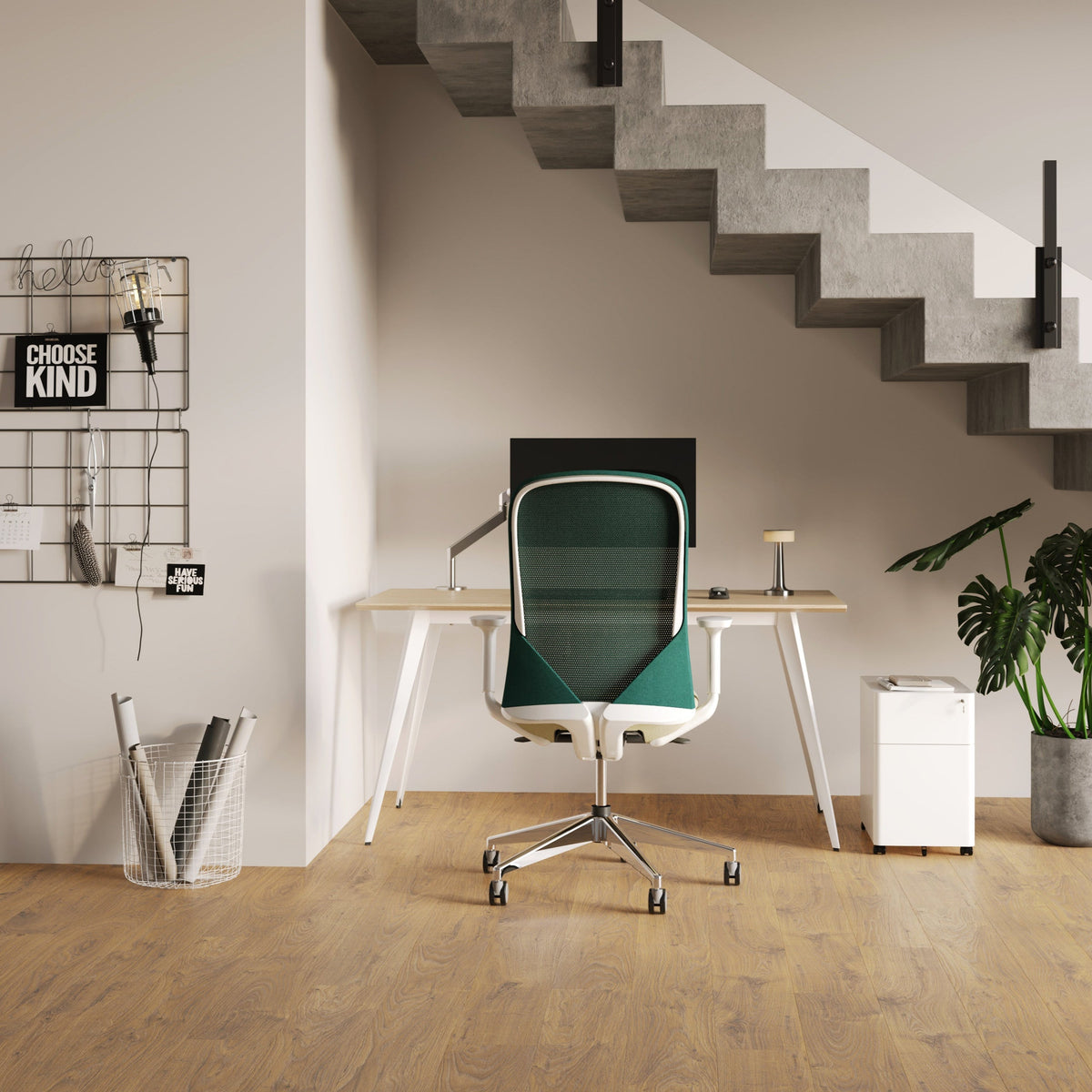
The right monitor stand solves several issues at once. It helps align sightlines, recover usable desk surface, reduce awkward neck movement, and make the laptop feel like part of the workstation rather than an afterthought. That matters even more in a three-screen arrangement, where one poor positioning choice tends to ripple through the rest of the setup. Urbanica’s Ergonomic Arm is presented as a customizable support accessory, which reflects the broader idea that a monitor stand should support real working positions rather than simply hold screens in place.
Why a two-monitor and laptop setup needs a more deliberate support system
A single-screen desk can tolerate compromise. A dual-monitor and laptop desk usually cannot. Once three screens enter the same footprint, small mismatches in height, reach, and angle become much more noticeable during daily use.
Three screens create three separate visual demands
The main monitor is typically where active work happens. The second monitor often handles reference material, email, dashboards, or side-by-side comparison. The laptop may serve as a communication screen, a meeting screen, or a secondary device for cross-platform work. Each role changes how often that screen is viewed and how central it should be.
That is why choosing a stand starts with behavior, not hardware. A setup used for writing and research will not be arranged exactly like one built for financial analysis, design review, or constant video calls.
The real goal is visual flow
A good setup should let the eyes move easily and the head move minimally. The user should not need to crane downward to check the laptop, twist repeatedly to read the second monitor, or give up keyboard space just to make all three displays fit. When the stand is chosen well, the desk feels calmer, cleaner, and easier to use for longer sessions.
Start by defining the job of each screen
Before comparing arm styles or stand formats, decide what each display is actually doing.
Center the screen that carries the most important work
For most people, one monitor should sit directly in front of the body as the primary display. That is where the most detailed work, longest reading sessions, or heaviest concentration usually happens. The second monitor should support it, not compete with it. The laptop should then be placed according to how often it is checked and whether it needs to stay open during the day.
If the laptop is only used occasionally, it can live slightly off to one side. If it is used constantly for meetings, chat, or app-specific work, it should be elevated into a more active viewing position.
Symmetry is helpful only when it matches the workflow
A perfectly symmetrical setup can look tidy, but visual symmetry is not always the most ergonomic answer. Many people work better with one monitor centered, one angled slightly outward, and the laptop placed where it can be glanced at without becoming the focal point. Symmetry helps when both monitors carry equal importance. It helps less when one screen clearly leads and the others support.
Common three-screen layout patterns
Side-by-side monitors with the laptop offset
This works well when the laptop is secondary and does not need constant attention.
One primary monitor, one support monitor, one active laptop
This works well for hybrid work, especially when meetings and communication stay on the laptop while production work stays on the monitors.
Two monitors as the main field with an elevated laptop nearby
This often suits users who need a compact but highly functional arrangement on a desk with limited width.
Desk size and structure decide what will actually fit
Even a well-designed stand can fail if the desk is too shallow, too narrow, or poorly suited to clamping and cable routing.
Desk depth affects comfort more than many buyers expect
Depth determines viewing distance. If the desk is shallow, larger monitors can end up too close to the eyes, and a laptop placed in front can make the working position feel even tighter. A stand can help free some surface area by lifting equipment off the desktop, but it cannot create depth where there is none.
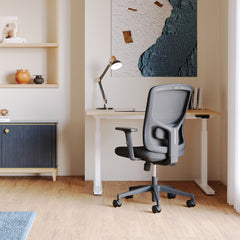
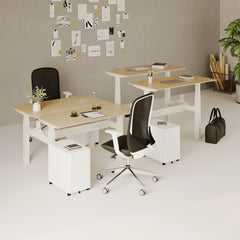
This is why the stand decision should always be tied to the desk itself. Urbanica’s desk collection is built around ergonomic office use, including fixed and adjustable formats, which makes adjustable ergonomic office desks a relevant starting point when planning a multi-screen workstation.
Desk width changes how much rotation is required
A narrow desk compresses everything inward and often forces screens into awkward overlap. A wider desk gives more flexibility, but it still needs intentional placement. Too much spread can be just as tiring as too little space if the second monitor sits beyond comfortable glance range.
Clamp clearance and rear edge access matter
Many monitor arms depend on the desk edge for mounting. That means the back edge must allow enough clearance for the clamp and enough space for cable movement. If the desk sits flush against a wall, or if a back panel blocks access, some stand types become less practical. Freestanding options avoid some of those issues, but they take up more surface area.
The specifications that matter most in a monitor stand
Product pages often emphasize style or compatibility in broad terms, but a dual-monitor and laptop setup calls for more careful matching.
Weight capacity matters more than screen size alone
Two monitors with the same diagonal size can have very different weights. The stand needs to support the actual load, not the assumed load. This becomes more important when adding a laptop tray or any accessory that changes balance across the arm.
Height range determines whether the setup feels natural
If the laptop is actively used, leaving it too low undermines the entire setup. The best arrangement usually brings the laptop closer to the same general eye zone as the monitors, while still keeping the main screen in the dominant position.
Articulation affects how usable the setup is day to day
Tilt, swivel, rotation, and reach all influence comfort. More movement is not automatically better, but the right amount of movement allows the setup to adapt without forcing the user to rearrange everything around it. It also helps when the workstation is shared or used for both solo work and meetings.
Cable routing supports function, not just appearance
A three-screen desk can accumulate power cables, display cables, charging lines, docks, and accessories quickly. Poor cable management can restrict movement, create visual clutter, and make the setup harder to adjust. Urbanica’s accessories collection covers workplace add-ons across categories, so office furniture accessories fit naturally into the conversation around keeping a workstation usable and organized.
Choosing the right stand type for daily use
The best setup is rarely about choosing the most complex hardware. It is about choosing the format that supports the actual work pattern.
When a dual-monitor arm plus separate laptop support makes sense
This is often a smart choice when the laptop is used less often or when future flexibility matters. The monitors can be positioned precisely, while the laptop sits on a riser or separate support nearby. This can also reduce crowding on larger desks where each component has room to breathe.
When an integrated monitor-and-laptop support system is the better fit
A more unified support system often works well on compact desks or in setups where the laptop is part of the workday from start to finish. Coordinated elevation can help maintain a cleaner line of sight and a more coherent layout, especially when space is limited.
When a fixed stand is still the right answer
Not every setup needs constant articulation. If the user works in a stable seated position and rarely changes screen placement, a simpler stand may be more than enough. The tradeoff is that future changes in equipment or working style may require a redesign later.
Ergonomics depend on the chair as much as the stand
A monitor stand cannot correct a poor seating position on its own. Screen height, keyboard position, and chair adjustment work together, and the right result depends on all three.
Chair height changes the correct monitor position
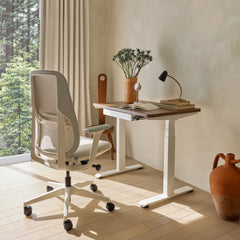
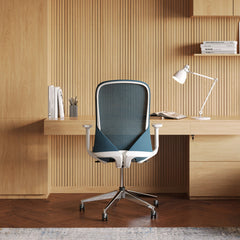
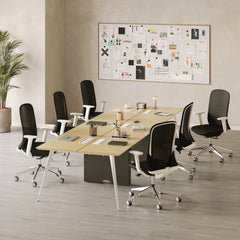
If the seat sits too low or too high, the monitor position that looked right on paper can feel wrong in practice. Back support, arm support, and seat height all affect where the eyes naturally land and where the hands rest. Urbanica’s chair collection is focused on ergonomic office seating, which makes ergonomic office chairs directly relevant when building a workstation around comfort rather than guesswork.
The laptop changes keyboard strategy
Raising the laptop can improve screen visibility, but it also makes the built-in keyboard less practical for long typing sessions. In many cases, once the laptop is elevated into a usable visual position, an external keyboard and mouse become the more sensible pairing. That keeps the wrists and shoulders in a more neutral position and preserves the ergonomic value of the stand.
Lighting can improve or undermine the setup
Many monitor layouts seem correct until glare, screen reflection, or uneven task lighting makes the workspace feel uncomfortable.
Three active screens multiply reflection risks
Each screen introduces another reflective surface and another angle where overhead light, windows, or nearby lamps can interfere. The laptop can be especially problematic because its position often changes more frequently than the monitors.
Task lighting should support work without bouncing into displays
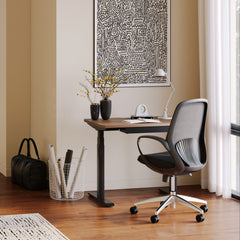
The goal is to illuminate the workspace, not the screens. Thoughtful lighting placement can help reduce visual fatigue around keyboards, notebooks, and desk accessories while keeping direct reflections off the monitors. Urbanica’s Alumina Lamp is described as a multi-use LED table and wall light, which makes it contextually relevant when discussing flexible workstation lighting near a monitor setup.
Decorative lighting still needs to respect the workstation
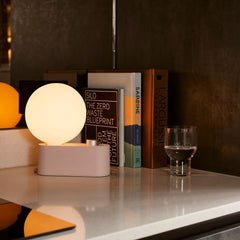
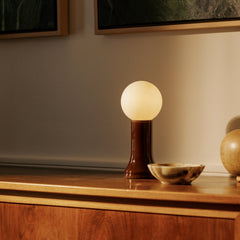
Accent lighting can soften the workspace and make it feel more complete, but it still needs a functional role. A table lamp should not compete with screen visibility or occupy the space that keyboard, docking, or writing tasks need. The Shore Table Lamp is positioned as a recycled glass table lamp, making it more naturally suited to ambient support around the desk rather than direct screen-facing illumination.
Common mistakes that weaken a two-monitor and laptop setup
A strong workstation often comes down to avoiding a handful of predictable errors.
-
Choosing by monitor size instead of verified load capacity
Screen size alone does not confirm whether the stand can support the equipment safely and comfortably. -
Ignoring desk edge access and rear clearance
A clamp system only works well when the desk can actually accommodate it. -
Treating the laptop as an afterthought
If the laptop will be opened every day, its height and location need to be planned from the start. -
Letting cables determine the layout
The arrangement should drive the cable plan, not the other way around. -
Prioritizing appearance over adjustability
A clean look matters, but comfort and usability matter more. -
Overfilling a desk that cannot support three screens well
Sometimes the right solution is to simplify the arrangement rather than force too much hardware into too little space.
A practical way to choose the right monitor stand
The selection process becomes much easier when approached step by step.
| Decision area | What to check | Why it matters |
|---|---|---|
| Desk fit | Width, depth, edge access, wall clearance | Determines which stand types are realistic |
| Screen load | Exact monitor and laptop weight | Prevents mismatch between hardware and support |
| Layout role | Primary monitor, secondary monitor, laptop use | Shapes placement and movement needs |
| Adjustment needs | Static, occasional, or frequent repositioning | Helps avoid overbuying or underbuying |
| Workspace support | Chair, lighting, accessories | Turns a stand into part of a coherent workstation |
Measure first, compare second
Start with the desk. Confirm how much width and depth are truly available after accounting for keyboard space, daily writing space, and any docking hardware.
List the exact equipment being supported
The ideal stand for two lightweight displays and an occasionally used laptop is not the same as the ideal stand for heavier monitors and a laptop that remains active all day.
Decide whether the laptop is primary or secondary
This one choice influences almost everything else. If the laptop is only for occasional reference, it can sit more peripherally. If it is central to meetings, communication, or app-specific work, its elevation and placement become critical.
Build for the full workspace, not the stand alone
A monitor support system works best when it is part of a complete desk environment. That broader approach matters in shared offices, home offices, and project spaces alike. Urbanica’s Los Angeles page is centered on ergonomic and modern office furniture solutions, so ergonomic and modern office furniture solutions align naturally with the idea of planning the whole workstation rather than selecting one isolated item.
What the best finished setup should feel like
A well-built two-monitor and laptop setup should feel open, balanced, and easy to use for hours at a time. The screens should support the work without dominating the desk. The laptop should feel intentionally placed rather than squeezed in. The chair, desk, lighting, and accessories should all support the same outcome: clear sightlines, better posture, and less daily friction.
That is ultimately how to choose the right monitor stand. Not by chasing the busiest setup or the most complicated hardware, but by building a workstation where every screen has a role, every adjustment has a purpose, and the whole arrangement feels easier to use the longer the day goes on.
Related Articles
-
 How Filing Cabinet Storage Supports Office Desk Must Haves
-
 Filing Cabinet Ideas for Better Office Furniture Accessories
-
 Best File Cabinet for Home Office Storage That Feels Easy
-
 Better Multiple Monitor Desk Setup Starts With One Stand
-
 Make Laptop and 2 Monitor Setup Work With Better Stands
-
 Why Dual Monitor Comfort Needs a Monitor and Laptop Stand


