



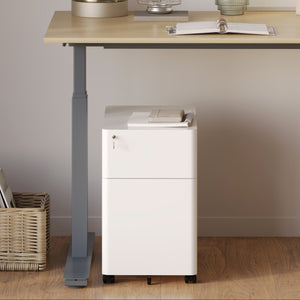






















Filing Cabinet Choices for Cleaner Workstation Planning
Cleaner workstation planning starts with filing storage that matches the desk, document volume, security needs, and daily workflow. Explore how cab...
Learn more
Visit quiz page to see how we makes it easy to create an inspiring workplace


A monitor stand can improve desk ergonomics, but only when it solves the right problem. Raising a screen is helpful if the display sits too low, but better posture depends on more than vertical height alone. Screen distance, desk depth, chair support, arm position, lighting, and daily work habits all influence whether a workstation feels balanced or tiring over time.
That is why choosing a monitor stand should begin with the way the body actually works at a desk. When the monitor sits in a more natural position, the head stays more neutral, the shoulders relax more easily, and the eyes do not need to strain against poor placement or glare. When the stand is wrong for the desk or the work style, discomfort often remains, even if the setup looks cleaner.
The strongest ergonomic setups are usually not the most complicated. They are the ones where the monitor support matches the screen, the desk, and the person using it. A well-chosen stand creates a better line of sight, frees usable desk space, and supports a workstation that feels easier to use through normal daily tasks.
Monitor position affects the body in ways that are easy to miss at first. Many people notice neck tension, shoulder tightness, or visual fatigue without connecting those issues to the location of the screen. A monitor that is too low often encourages the head to drift forward. A monitor that is too high can create an upward chin angle that strains the neck in a different way. Even a small mismatch becomes more noticeable when repeated for hours at a time.
People tend to follow the monitor with their head and eyes. If the display is poorly placed, the body adjusts around it. That often means a rounded upper back, lifted shoulders, or a habit of leaning forward. Over time, the workstation starts shaping posture instead of supporting it.
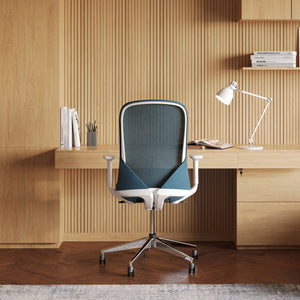
This is also why a monitor stand should never be treated as an isolated fix. The screen may be central, but the body responds as a chain. If the monitor height improves while the seat height or back support remains poor, the result may still feel incomplete. A more supportive setup often begins with seating that allows the spine and shoulders to settle naturally, which is why monitor placement works best when paired with ergonomic office chairs.
A common mistake is assuming the highest possible screen position is always best. In reality, the ideal height depends on the person’s seated posture, visual comfort, and how they use the monitor throughout the day. The goal is usually to place the display where the eyes can look slightly downward in a relaxed way, rather than forcing the neck to bend too far up or down.
For many workstations, that means the monitor should sit high enough to avoid slouching, but not so high that the chin lifts. The right stand supports a neutral gaze and steady sightline, not an exaggerated correction.
The shape and style of a stand matter less than whether it actually fits the workstation. A monitor stand should be chosen after assessing desk dimensions, screen size, seated eye level, and available working space. That process leads to a better outcome than choosing a stand for visual appeal alone.
Before selecting any support, it helps to sit in a normal working posture and notice where the eyes naturally rest. That simple reference point makes it easier to judge whether the monitor needs a small lift, significant height adjustment, or a more flexible positioning solution.
If the chair is not set correctly, the measurement can be misleading. Seat height, back support, and arm position all influence where the head settles. This is one reason ergonomic decisions are most effective when made as a coordinated system instead of as disconnected upgrades.
A stand can place the screen at a better level, but if the desk is too shallow, the monitor may still feel too close. That can increase eye strain and force extra head movement, especially with larger displays. Desk depth also influences where the keyboard and mouse can sit, which affects shoulder position and elbow comfort.
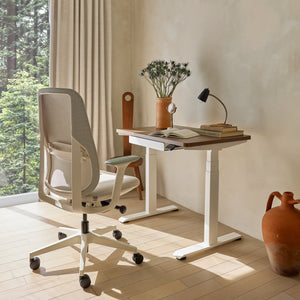
This is why monitor support should be considered alongside the size and function of the work surface. A well-proportioned desk creates more flexibility for viewing distance, accessory placement, and overall posture, especially when planning a broader setup around adjustable ergonomic office desks.
A larger display on a shallow desk can make the screen feel visually overwhelming. A smaller display on a deeper surface may encourage a different placement strategy. In both cases, the right stand helps only when it works with the desk rather than fighting against it.
A stand also needs to match the practical demands of the monitor itself. A heavy display or wide base can affect stability, usable surface area, and the type of support that makes sense. Some users mainly need a simple riser. Others need a support system that clears the desk more effectively or allows more exact positioning.
The most useful choice is often the one that solves the physical constraint in front of the user, not the one that seems most impressive on paper.
Not every monitor stand serves the same purpose. Some are best for simple elevation. Others are designed for movement, reach, or desk-space efficiency. The right choice depends on how often the screen position needs to change and what kind of ergonomic issue the setup is trying to solve.
A fixed stand or riser is often enough when the monitor stays in one place and only needs moderate elevation. This type of support can create a cleaner desktop, add storage space underneath, and improve screen height without introducing unnecessary complexity.
That makes fixed stands useful for single-monitor workstations where posture is already close to correct and the user wants a more refined final adjustment. They are often best when simplicity and visual order matter as much as function.
Some setups need more movement than a fixed riser can provide. A screen may need to move higher, lower, closer, farther back, or slightly off-center depending on the task. Shared desks, hybrid workstations, and sit-to-stand routines often benefit from this kind of flexibility.
In those cases, a more dynamic support option such as the Ergonomic Arm can make more sense because it allows the monitor position to respond to the user rather than forcing the user to adapt to one fixed screen location.
An adjustable arm tends to be more valuable when:
the desk is used by more than one person
the monitor position changes between focused work and collaborative tasks
the setup includes both a laptop and a larger display
desk surface space feels limited and needs to be opened up
There are workstations where the issue is broader than screen elevation. Cable clutter, cramped accessory placement, and poor organization can all interfere with posture. A crowded desktop can push the keyboard too far forward, reduce mouse space, or make the monitor sit where it fits rather than where it should.
In those cases, improving the overall layout with office furniture accessories may be just as important as choosing the stand itself. Better ergonomics often come from giving each essential tool enough room to function properly.
The most effective monitor stand is not always the one with the most features. It is the one that fits the user’s real routine. Someone writing, designing, analyzing spreadsheets, taking video calls, or switching between devices all day may need very different forms of support.
People who spend hours reading, writing, or focusing on a primary screen often benefit from a setup that feels calm and stable. Small movements or visual wobble can become distracting during deep work. For these users, the monitor should be centered well, placed at a comfortable distance, and supported in a way that encourages consistent posture.
A stable riser or carefully adjusted arm can both work well here, as long as the setup supports a relaxed gaze and keeps the display in a predictable position.
One of the most common ergonomic problems appears in mixed-device setups. The main monitor may be placed well, while the laptop sits too low beside it. That creates repeated neck flexion as the user shifts attention between two different screen heights.
In these cases, monitor support should be chosen with the full workflow in mind. Clearance under the display, side positioning, and the ability to rebalance the desk all matter. The best result is not just a higher monitor. It is a workstation where each screen can be used without constant strain.
A home office may serve multiple family members. A workspace may need to shift between focused solo work and meetings. A desk may also support handwriting, sketching, or device charging in addition to screen-based tasks. All of that changes what “better ergonomics” actually means.
When a workstation needs to adapt often, a more flexible stand solution usually performs better than a fixed one. The goal is to make adjustment easy enough that the user will actually do it, instead of settling into poor positions because the setup is too inconvenient to change.
Desk ergonomics is not only about muscles and joints. Visual comfort plays a major role in how people position themselves at a workstation. If the screen is hard to see because of glare, reflections, or harsh contrast, the body tends to compensate by leaning, twisting, or tilting.
Even a well-positioned monitor can become uncomfortable if it faces strong reflections or sits in poor lighting. Users often respond by angling the display awkwardly, shifting their torso, or leaning forward to read more clearly. That can turn a reasonable desk setup into a tiring one.
The purpose of better lighting is not decoration alone. It is to support visibility in a way that reduces unnecessary strain and helps the monitor feel easier to use during long work sessions.
A thoughtfully placed light source can help reduce harsh contrast between the screen and the surrounding workspace. This is especially useful in darker rooms or during late-day work, when a bright display in an otherwise dim setting can feel visually fatiguing.
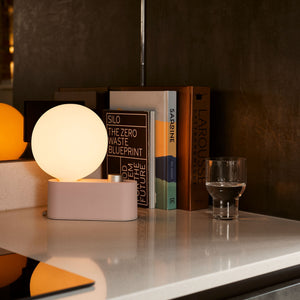
A product such as the Alumina Lamp fits naturally into this kind of setup because desk lighting works best when it complements the monitor rather than competing with it.
Task lighting should support the workspace without creating direct reflections on the screen or harsh shadows over the keyboard. The goal is to make the desk easier to use, not to introduce another source of visual friction.
Some workstations benefit from a less direct layer of light that softens the room and balances the brightness of the monitor. That can make evening work feel less stark and help the desk area feel more settled.
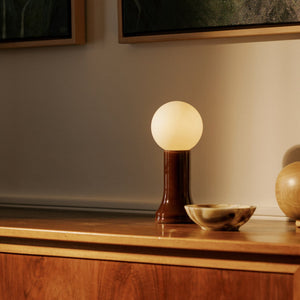
A piece like the Shore recycled glass table lamp can contribute to that environment when the aim is to create a workspace that feels visually comfortable as well as organized.
A monitor stand may be well made and still fail to improve desk ergonomics if it is chosen for the wrong reason. Many problems come from small decision errors rather than from the product category itself.
A stand that looks clean or sculptural may still place the monitor too high, too low, or too close. Ergonomic value comes from alignment, not style alone. The most attractive setup is not automatically the one that feels best after a full workday.
Some users overcorrect by placing the screen too high in an effort to sit taller. That can lead to an upward gaze angle and a different kind of neck discomfort. Better monitor placement is about natural visual access, not maximum elevation.
A monitor stand cannot compensate for poor input-device placement. If the keyboard sits too far away or the mouse position encourages reaching, shoulder and arm strain can remain even after the screen is improved. Good ergonomics depends on how the whole desk functions together.
Workstations change. Monitors are upgraded, desks are rearranged, and routines evolve. A stand that works for today’s screen may not suit tomorrow’s setup if it leaves no room for adjustment or expansion. A practical choice is one that supports comfort now while remaining useful as needs shift.
Choosing well becomes easier when the decision is reduced to a clear set of real-world checks. The goal is not to buy the most advanced option. The goal is to choose the simplest solution that genuinely improves posture, comfort, and workflow.
1. Sit in a normal working posture and note your natural eye level.
2. Measure how much usable desk depth you actually have.
3. Consider the size and general weight of the monitor.
4. Decide whether the screen position needs to change often or stay mostly fixed.
5. Check how much space is needed for the keyboard, mouse, notebook, or other tools.
6. Look at the room lighting and identify whether glare is affecting the way you sit.
7. Choose the support style that solves the actual problem without adding unnecessary complication.
| Setup type | Best suited for | Main ergonomic benefit | Main limitation |
|---|---|---|---|
| Fixed riser | Stable single-monitor setups | Improves height simply and cleanly | Limited movement |
| Adjustable arm | Flexible or shared workstations | Allows more precise screen placement | Requires more setup consideration |
| Layout-focused accessory approach | Crowded or multifunction desks | Improves overall desktop flow | May not solve height needs by itself |
A monitor stand should help the screen feel easier to use, but the broader goal is a desk that supports healthier habits throughout the day. For some people, that means a simple riser. For others, it means rethinking the desk, seating, lighting, and accessories together.
That broader view is often the most useful when shaping a workspace around ergonomic and modern office furniture, because comfort usually lasts longer when the setup is treated as a connected environment rather than a collection of separate items.
The right monitor stand is the one that makes daily work feel more natural. It should support a comfortable line of sight, fit the dimensions of the desk, and suit the way the workstation is actually used. It should also work with the chair, keyboard, lighting, and surrounding layout instead of trying to compensate for them.
When those elements align, the monitor becomes easier to view, the desk becomes easier to use, and posture improvements feel more sustainable. That is the real purpose of choosing a monitor stand for better desk ergonomics.


You have unlocked free shipping!
You're saving $29 and unlocked free shipping!
Leave a comment