






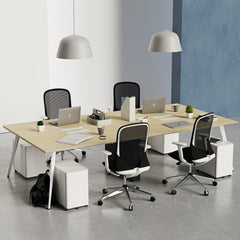
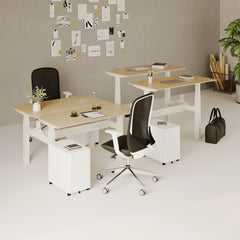
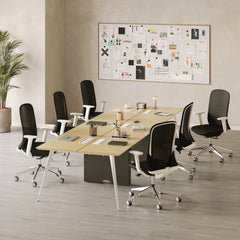




Filing Cabinet Choices for Cleaner Workstation Planning
Cleaner workstation planning starts with filing storage that matches the desk, document volume, security needs, and daily workflow. Explore how cab...
Learn more
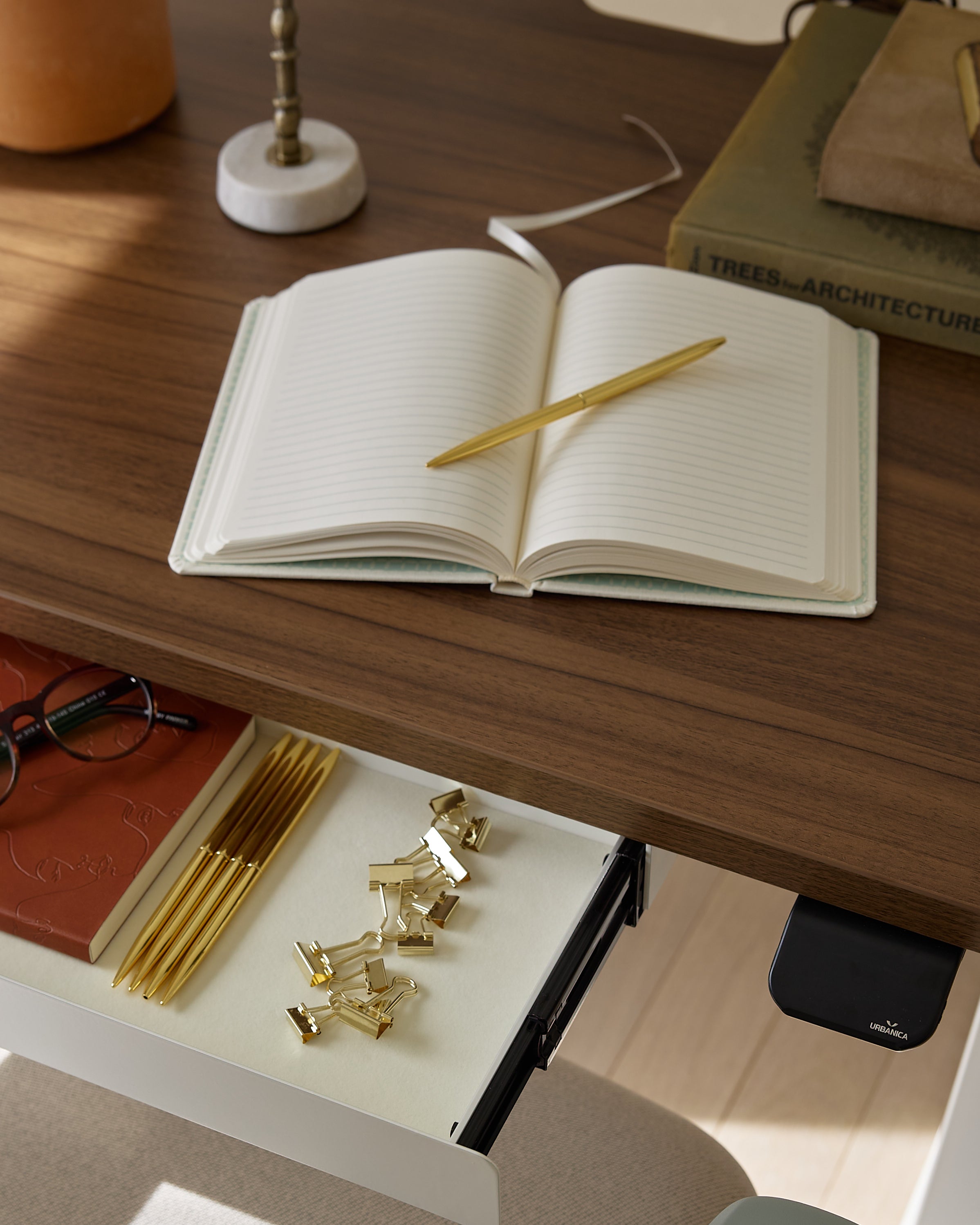
Visit quiz page to see how we makes it easy to create an inspiring workplace


A filing cabinet is often treated like a simple storage purchase, but the right one can quietly improve the entire rhythm of a workday. Paperwork stays findable. Chargers stop disappearing. Small essentials no longer drift across the desk. Instead of becoming a place where loose items gather, a well-chosen filing cabinet gives every category a reliable home.
Modern workspaces rarely store paper alone. A home office might hold tax folders, client documents, laptop cables, wireless earbuds, notebooks, pens, keys, mail, and personal records within the same few feet. A studio desk might need room for project briefs, sketchbooks, adapters, hard drives, and small tools. A shared workspace may require secure storage for documents and everyday supplies without making the room feel crowded.
The best filing cabinet is not always the largest one. It is the cabinet that fits the way work actually happens. Size, drawer layout, placement, locking features, mobility, and visual style all matter because each one affects how easily paperwork, tech accessories, and daily essentials move in and out of use.
A filing cabinet works best when it reflects the natural movement of the workday. Some items need to be reached several times before lunch. Others only matter at tax time, during a client review, or when a warranty is needed. When all of those items are treated the same, storage becomes frustrating.
A desk drawer stuffed with receipts, power cords, headphones, old mail, and pens is not really organized. It is just hidden clutter. A filing cabinet prevents that only when its drawers are assigned clear roles.
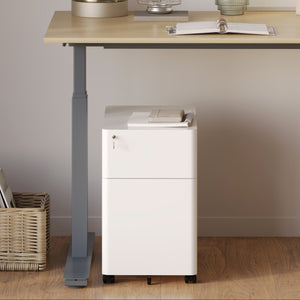
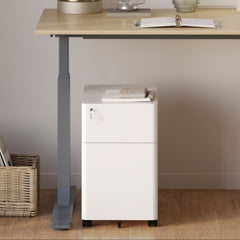
For compact work areas, a compact locking filing cabinet can help keep papers, small essentials, and sensitive items close to the desk without spreading storage across the room.
Active paperwork includes documents that still require action. This can include bills to pay, forms to sign, client notes, project briefs, school documents, insurance letters, printed schedules, receipts to scan, or mail that has not yet been processed.
These papers should not be buried in long-term archives. They need a place that is visible enough to remember, but contained enough to avoid cluttering the desktop. A filing cabinet drawer can serve as a controlled action zone when it is clearly labeled and reviewed regularly.
Laptop chargers, phone cables, USB hubs, adapters, external drives, earbuds, card readers, and small device accessories are easy to lose because they are often stored as loose items. When tech accessories share a drawer with paper, they can bend folders, tangle together, or disappear under stacks.
A better approach is to create a protected tech zone inside the cabinet. Small pouches, drawer trays, cable wraps, and labeled containers keep accessories accessible without turning the drawer into a mixed pile.
Daily essentials are the small items that support work but quickly create visual clutter. Pens, sticky notes, reading glasses, keys, stamps, a planner, spare notepads, and personal items need a reachable home.
A filing cabinet can reduce desktop noise by giving these items a shallow drawer or organized tray. The goal is not to hide everything. The goal is to make the desk surface available for actual work.
Many people choose filing cabinets based on how much they think they might store someday. That often leads to overbuying, underusing, or filling drawers with undefined categories. A more reliable method begins with the amount of paperwork that truly needs to stay near the workstation.
Light paperwork usually means most records are digital, but some physical documents still matter. This might include tax folders, warranties, home records, medical paperwork, receipts, personal identification copies, and occasional printed forms.
For this kind of setup, a small cabinet with simple drawer assignments can be enough. One zone can hold active and reference papers, while another holds daily essentials or tech accessories. The key is restraint. A light-paperwork setup should not become a catchall for every loose object in the room.
Moderate paperwork appears in many households and small offices. Freelancers, consultants, teachers, designers, managers, and hybrid workers often need to keep both current and reference documents nearby.
A strong system separates paperwork into three categories:
1. Active documents for items requiring action soon
2. Reference files for documents that need to be kept and retrieved
3. Pending papers for items waiting on signatures, scans, responses, or review
This structure prevents the most common filing problem: mixing urgent paperwork with long-term records. When active documents have their own place, they are less likely to disappear into archived files.
Heavy paperwork may include business records, client files, legal documents, HR forms, real estate documents, financial statements, healthcare records, or ongoing project archives. For these needs, the cabinet should be evaluated by usable interior space, drawer stability, file orientation, and ease of labeling.
A larger cabinet only helps if the contents remain easy to scan. If the drawers are too deep, too full, or poorly labeled, more capacity simply creates a bigger search problem.
Before choosing a cabinet, gather paperwork from the desk, shelves, bags, boxes, and loose piles. Remove duplicates, outdated papers, envelopes that no longer matter, and items ready for shredding. Then group the remaining papers into active, reference, and archive categories.
This quick audit gives a more honest picture of storage needs. It also helps determine whether the cabinet should sit near the desk for daily use or farther away for occasional access.
Drawer layout matters as much as cabinet size. A filing cabinet with the wrong drawer mix can make organization harder, even if it technically has enough space. Paperwork, tech accessories, and daily essentials each need different kinds of storage.
Shallow drawers are useful for pens, sticky notes, earbuds, stamps, paper clips, spare keys, chargers, microfiber cloths, small notebooks, and business cards. Because these items are small, they need dividers more than depth.
Without trays or inserts, shallow drawers can still become messy. A few simple compartments can turn one drawer into a reliable daily-access station.
A file drawer should help users find a document quickly. Vertical filing is often more practical than stacking because labels remain visible. Hanging folders, tabbed dividers, color cues, and clear folder names all reduce search time.
When reviewing a cabinet, it is important to consider whether the drawer supports the kind of folders being used. Exterior dimensions alone do not always explain how practical the interior will feel.
Tech accessories should not be pressed under heavy folders or left loose near sharp paper edges. Chargers, adapters, power banks, external drives, and headphones benefit from soft pouches or small bins.
For laptop-based workstations, a slim laptop stand can be part of a cleaner desktop setup, while nearby cabinet storage keeps related accessories organized when they are not in use.
Daily charging items should be the easiest to retrieve. A laptop charger, phone cable, earbuds case, and power bank should not be mixed with travel adapters or rarely used cords.
Occasional-use tech, such as HDMI adapters, USB hubs, card readers, or presentation tools, can live in a separate pouch or drawer zone. This keeps the everyday workflow faster and protects less-used accessories from being misplaced.
A filing cabinet can be well designed and still feel wrong if it sits in the wrong place. Placement affects legroom, chair movement, drawer access, lighting, and how often the cabinet actually gets used.
Under-desk filing cabinets can be useful in tight rooms, apartment offices, and compact workstations. The tradeoff is clearance. A cabinet that steals legroom or blocks natural chair movement will become irritating over time.
Before placing a cabinet under a desk, check knee space, chair depth, drawer opening direction, and foot position. Storage should not make sitting feel cramped.
A cabinet beside the desk is often the most practical option for active paperwork and daily supplies. It allows documents, chargers, and small essentials to stay close without occupying the main work surface.
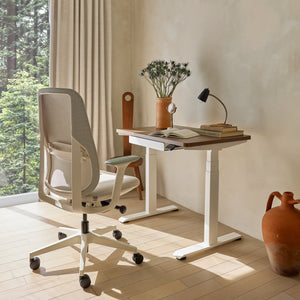
This placement works especially well when paired with ergonomic office desks that leave enough room for storage, movement, and essential work tools.
Not every document needs to be within arm’s reach. Older files, backup paper, extra folders, rarely used manuals, and long-term records can sit behind the desk or along a wall.
This keeps the primary work zone focused on current tasks while still preserving access to documents that need to remain organized.
A simple chair path test can prevent daily frustration. Sit at the desk, roll back, turn naturally, open the cabinet, reach for a folder, retrieve a charger, and close the drawer.
If the cabinet causes twisting, bumping, blocked knees, or repeated standing for routine items, the placement needs adjustment. A filing cabinet should reduce friction, not add another obstacle.
Different filing cabinets solve different storage problems. Choosing one becomes easier when the main need is clear.
| Filing Cabinet Type | Best Fit | Strongest Use Case | Possible Drawback | Smart Drawer Strategy |
|---|---|---|---|---|
| Compact two-drawer cabinet | Small home offices and hybrid workstations | Active files plus daily essentials | Limited archive capacity | One paper zone, one essentials zone |
| Mobile pedestal cabinet | Flexible desk-side storage | Paperwork, chargers, notebooks, personal items | Can become cluttered without inserts | Top utility drawer, lower file drawer |
| Three-drawer cabinet | Mixed storage needs | Separate paper, tech, and supplies | Needs disciplined labeling | Assign one category per drawer |
| Lateral filing cabinet | Higher paper volume | Wide document visibility | Requires more floor or wall space | Active files in front, archives behind |
| Locking cabinet | Shared spaces or sensitive records | Private documents and small valuables | Security depends on use and placement | Reserve locked space for sensitive items |
A compact cabinet is often the right choice when the workstation is small and the storage categories are clear. It can handle active files, personal records, small office supplies, and everyday tech without overwhelming the room.
The key is to avoid using compact storage as a miniature junk drawer. Each drawer needs a role.
A larger filing cabinet is useful when there are multiple paper categories that need separation. Client files, household records, tax documents, project archives, and business paperwork should not all be forced into one broad section.
The larger the cabinet, the more important labels become. Storage capacity should be matched with organization discipline.
A filing cabinet is touched often, opened often, and sometimes used as a secondary surface. Practical details shape whether it remains useful over time.
Metal cabinets can suit high-frequency work areas and practical office environments. Wood or wood-look finishes may feel more natural in home offices, living rooms, bedrooms, or creative spaces where storage stays visible.
The right choice depends on where the cabinet sits, how often it is used, and how it coordinates with the surrounding furniture.
Locking storage is useful for personal documents, checks, identification copies, financial records, work papers, backup drives, and small valuables. It is not necessary for every item, but it is valuable when sensitive materials share space with everyday supplies.
A locked drawer also creates a clear boundary. It tells everyone using the workspace that certain items should not be mixed, borrowed, or casually moved.
A mobile cabinet can be repositioned when cleaning, changing desk layouts, accessing outlets, or adjusting a compact room. Mobility is especially useful when one space serves multiple roles, such as a guest room, dining area, or shared office.
Wheels should not be viewed only as a convenience. In smaller rooms, the ability to shift storage can make the entire layout feel more flexible.
A cabinet top can support a tray, printer, lamp, inbox, small plant, or catchall. Problems begin when the surface has no defined role.
An undefined cabinet top usually becomes a drop zone for mail, empty cups, loose papers, and random accessories. Assigning one purpose keeps the cabinet from creating the clutter it was meant to solve.
Lighting plays a practical role in storage. Poor lighting makes it harder to read folder tabs, find small cables, locate receipts, or check the contents of a drawer.
A cabinet beside a desk benefits from lighting that makes the drawer interior easy to see. When labels are visible and small items are easy to identify, filing feels less like a chore.
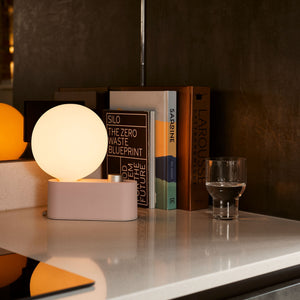
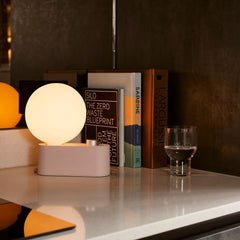
For focused desk areas, an Alumina LED lamp can support a more intentional work zone where storage, reading, and everyday tasks happen close together.
Many home offices sit in rooms that serve more than one purpose. A filing cabinet may be visible from a sofa, bed, dining table, or entryway. In these spaces, lighting helps storage feel integrated rather than purely functional.
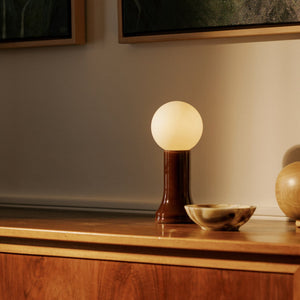
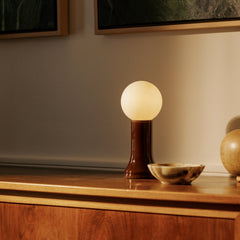
A Shore recycled glass table lamp can pair naturally with a visible office corner when the goal is to soften the workspace while keeping essential storage nearby.
Open each drawer and notice where shadows fall. A lamp that looks good on the desk may still leave the cabinet interior dim. The best placement allows labels, folder tabs, and small accessories to be seen without moving the lamp or leaning awkwardly.
A filing cabinet should not be chosen in isolation. It interacts with the desk, chair, lighting, wall space, walking path, and the daily habits of the person using the room.
A cabinet works best when it supports the full workstation. The desk holds active work. The chair supports posture and movement. Lighting improves visibility. The cabinet keeps documents and accessories from spreading.
For a more cohesive setup, workspace furniture planning can help frame storage as part of the complete office environment rather than a separate afterthought.
Frequently used drawers should sit within comfortable reach. If daily items require bending too often, twisting from the chair, or standing repeatedly, the layout becomes inefficient.
Important items should be placed where the body naturally reaches. Less-used files can sit lower, farther back, or away from the desk.
A filing cabinet placed beside a desk should work with the chair, not against it. Drawer handles, cabinet depth, chair arms, wheel movement, and swivel space all influence comfort.
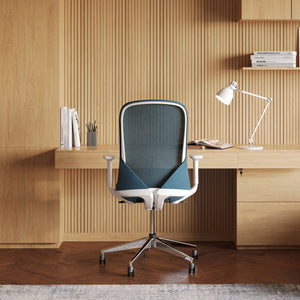
Pairing storage with ergonomic office chairs supports a smoother work zone where the user can sit, turn, reach, file, and return to work without awkward movement.
Color, finish, shape, handle design, and placement influence how the cabinet feels in the room. A filing cabinet does not need to disappear, but it should look intentional.
When storage visually connects with the desk, chair, and lighting, the workspace feels calmer. That matters in home offices where work furniture is part of daily living space.
The best filing cabinet can still become cluttered without a system. Organization should be created before the drawers are full, not after frustration sets in.
Use five clear zones to organize paperwork, tech accessories, and daily essentials:
1. Immediate-action paperwork: bills, forms, outgoing mail, documents awaiting signatures, papers to scan
2. Reference files: contracts, warranties, insurance papers, tax records, policies, business records
3. Tech accessories: chargers, adapters, USB hubs, headphones, external drives, cable kits
4. Daily essentials: planner, pens, keys, glasses, sticky notes, notebooks, personal items
5. Archive or remove: old papers to scan, shred, relocate, or discard
This structure makes the cabinet easier to maintain because each item has a category before it enters the drawer.
Labels should describe how items are used. “Pay this month,” “Sign and return,” “Client records,” “Laptop charging,” and “Tax documents” are stronger than vague labels like “miscellaneous” or “office stuff.”
Behavior-based labels reduce hesitation. The label tells the user what belongs there and what action may be needed.
Every workspace needs a temporary holding area for unresolved paperwork. The mistake is creating several of them. A pile on the desk, a pile in the kitchen, a pile in a drawer, and a pile in a tote bag create confusion.
One clearly labeled pending section inside the cabinet keeps active paper contained until it can be processed.
Small items move easily. Pens roll behind folders. Cables slip under notebooks. Earbuds disappear beneath papers. Drawer inserts create boundaries that keep small essentials in place.
Even a simple tray can make a filing cabinet feel more intentional and easier to maintain.
A filing cabinet should make work easier. When it creates more searching, bending, clutter, or confusion, the issue is usually not the cabinet alone. It is how the cabinet was chosen or used.
A large cabinet may feel like a safe choice, but extra space can invite vague categories. If the system is unclear, more drawers simply create more places to lose things.
Choose capacity based on real paper volume and actual work habits.
Exterior measurements do not always explain how files, pouches, folders, or accessories will sit inside. Check how documents will be stored and whether small tech items need trays or cases.
A cabinet should fit the contents, not force the contents to adapt awkwardly.
Private records, checks, financial documents, and backup drives should not float in the same drawer as sticky notes and spare pens. Sensitive items need a protected, clearly defined zone.
This makes retrieval easier and helps prevent accidental handling or misplacement.
A cabinet top should have one role. If it becomes a landing pad for everything, the cabinet will add clutter instead of reducing it.
A tray, lamp, inbox, or printer can work well. Random piles should not become the default.
The right filing cabinet brings order to the items that interrupt focus most often: loose paperwork, missing chargers, scattered daily essentials, and small objects with no home. It does not need to be oversized or complicated. It needs to match the way the workstation is used.
A strong choice begins with honest questions. How much paperwork needs to stay nearby? Which documents are active? Which tech accessories are used every day? What small essentials keep landing on the desk? Where can the cabinet sit without blocking the chair or crowding the room?
When those answers guide the decision, the filing cabinet becomes more than office storage. It becomes part of a smoother workspace system, one that keeps documents protected, technology organized, essentials accessible, and the desk ready for focused work.


You have unlocked free shipping!
You're saving $29 and unlocked free shipping!
Leave a comment