



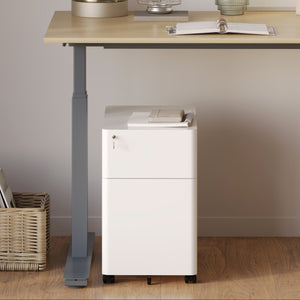






















Filing Cabinet Choices for Cleaner Workstation Planning
Cleaner workstation planning starts with filing storage that matches the desk, document volume, security needs, and daily workflow. Explore how cab...
Learn more
Visit quiz page to see how we makes it easy to create an inspiring workplace


A flexible home works best when one piece of furniture can carry more than one responsibility without making the room feel compromised. That is exactly where a bistro table shines. Its scale is smaller than a traditional dining table, its shape is usually easier to place in compact rooms, and its visual presence feels lighter than a full desk setup. When planned carefully, a bistro table can support focused work during the day and comfortable meals later on, all while preserving a calm, residential atmosphere.
The goal is not to force one table to do everything. The goal is to build a setup that supports the way people actually live now. Many homes need a place for email, calls, light laptop work, coffee, lunch, dinner, and occasional conversation without dedicating separate square footage to each activity. A well-chosen Bistro Table for office and home fits that need because the category itself is positioned around compact, collaborative use rather than a single narrow purpose.
A traditional desk often announces itself as work furniture first. That can be useful in a dedicated office, but in a dining nook, studio apartment, or open-plan room, it can also make the entire space feel permanently on duty. A bistro table softens that effect. It reads as part of daily living, which makes the room feel more natural once the laptop is closed.
One reason this format works so well is visual and physical efficiency. Round or compact tables are easier to walk around, easier to place near windows or corners, and less likely to dominate a room than a large rectangular desk. They leave more negative space around them, which matters in smaller homes where circulation has to remain easy and the furniture cannot feel crowded.
The strongest flexible interiors reduce the friction between one activity and the next. When a table can shift from work mode to dining mode without a full rearrangement, it supports a smoother daily rhythm. That matters because the success of a multi-use setup is not measured only by how it looks in photos. It is measured by whether it makes everyday routines easier, calmer, and more sustainable.
A bistro table only works as a dual-purpose surface when its dimensions support both tasks honestly. Too small, and it feels crowded the moment a laptop, notebook, and cup are on it. Too large, and it starts to defeat the purpose of choosing a flexible compact piece in the first place.
Think first about the kind of work being done at the table. For many people, that means a laptop, a notebook, a phone, and perhaps a glass of water or a small light source. That is very different from a workflow that requires monitor arms, reference papers, multiple devices, or specialized equipment. A bistro table is usually best for laptop-first work, reading, writing, planning, and short meetings.
The evening use case deserves the same attention. There should be enough room for place settings, serving dishes for simple meals, and comfortable elbow movement. A flexible setup fails when the workday footprint consumes the entire surface and leaves no easy path back to dining.
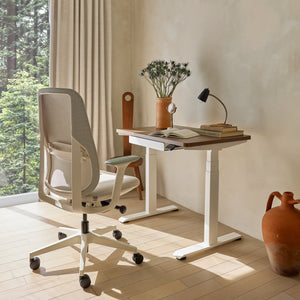
A flexible arrangement should never pretend to be something it is not. If the household needs a larger daily workstation, a broader desk category will often make more sense. Urbanica’s adjustable ergonomic office desks are presented as desks for different spaces, which makes that collection more suitable for users whose work needs extend well beyond what a compact bistro table can support.
| Need or habit | Bistro table usually works well | Larger desk may be better |
|---|---|---|
| Laptop-based work | Yes | Sometimes |
| Frequent paperwork spread | Limited | Yes |
| Daily dining at same surface | Yes | Sometimes |
| Two-monitor setup | Rarely ideal | Yes |
| Small apartment footprint | Yes | Depends |
| Visually light room layout | Yes | Sometimes |
This kind of comparison matters because flexibility is not about squeezing every possible task into one object. It is about choosing the right range of tasks for that object.
Even a well-sized table will underperform if the seating is wrong. In a work-and-dining setup, the chair has to negotiate between support and restraint. It needs enough comfort for real concentration, but it also needs to look appropriate around a dining surface and avoid overwhelming the room.
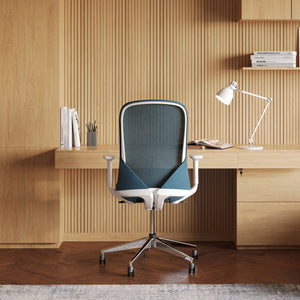
The most useful seating for this kind of arrangement usually has a balanced profile. It should let the user sit comfortably for longer stretches, tuck under the table without difficulty, and still contribute to a cohesive room aesthetic. Urbanica’s ergonomic office chairs are clearly positioned around support-focused seating, which makes that collection relevant for anyone prioritizing posture and all-day comfort within a smaller footprint.
A chair that is too bulky can make a compact table feel cramped. A chair that is too low or too upright can make longer work sessions uncomfortable. The right pairing usually has these traits:
1. A seat height that aligns naturally with the tabletop
2. A back profile that supports the body without visually overpowering the setup
3. A form that can tuck in cleanly when the table is being used for meals
4. Enough comfort for the length of time the table is actually used for work
In some homes, two matching chairs create the cleanest visual line. In others, one more supportive primary chair and one lighter secondary chair produce a better result. That can be especially effective when one person uses the table for daily work and the second seat is mainly for meals or guests. The key is not strict symmetry. The key is making sure each chair supports the role it is expected to play.
Lighting is often the difference between a dual-purpose setup that feels deliberate and one that feels improvised. Overhead light alone rarely handles both work and dining well. It can flatten the space during the day and feel too harsh in the evening.
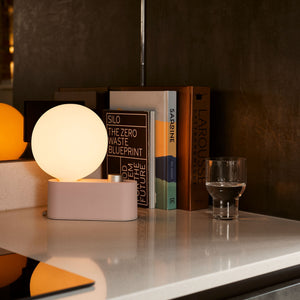
For daytime use, focused light is useful for reading, writing, and reducing eye strain in darker corners. A piece such as the Alumina multi-use LED table and wall light is relevant here because the product is specifically presented as a multi-use LED light for table or wall applications, which aligns naturally with a flexible setup that needs adaptable illumination.
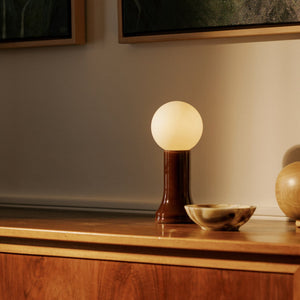
Evening meals benefit from softer, warmer light that makes the table feel welcoming rather than task-driven. The Shore recycled glass table lamp fits that role semantically because it is a table lamp described around recycled glass and modern lighting, which suits a conversation about visual warmth and texture in a compact multi-use area.
A strong flexible setup often uses a simple two-layer approach:
A directed source helps with work, reading, note-taking, and visual clarity.
A softer nearby lamp or ambient source helps the same area transition into dinner, conversation, or evening relaxation.
That combination keeps the table from feeling locked into one purpose.
Compact surfaces have very little tolerance for unnecessary objects. On a large desk, clutter can spread without immediately destroying function. On a bistro table, every extra item affects both usability and mood. That is why accessories need to be selected with more discipline.
Useful accessories are often simple. They help work happen more comfortably, but they do not insist on staying visible once the workday is over. A few examples include cable control, a slim tray for loose items, a laptop riser that can be removed quickly, or a compact nearby storage piece.
Urbanica’s modern office accessories category is aligned with this part of the discussion because it covers accessories as a broader support layer rather than a single decorative item.
A dual-purpose table works best when only a few things remain on it full-time. That might be one lamp, one tray, or one small object that gives the setup character without consuming real working or dining space. If too many items stay in place permanently, the table stops being flexible and starts becoming a storage surface.
If a work surface cannot become meal-ready in about a minute of normal tidying, the setup probably needs refinement. That does not mean perfection. It means the system is simple enough that switching modes feels natural rather than irritating.
Furniture selection matters, but placement often has just as much influence on whether the room feels resolved. A bistro table should feel anchored in its spot, not parked there temporarily.
Near a window, the table often benefits from daylight, stronger visual energy, and a more pleasant atmosphere for work. This placement can be especially effective for laptop users who want natural light without dedicating an entire room to a desk. The tradeoff is glare, which should be considered when positioning the chair and task light.
In smaller homes, placing the table toward a corner can free up the room and create a clear zone for both work and meals. This works best when there is still enough space to pull out chairs comfortably and the surrounding walls do not make the area feel boxed in.
In living rooms or combined living-dining areas, the table often benefits from a rug, nearby lamp, artwork, or shelving relationship that gives it context. These visual cues help define the table as part of a complete environment rather than an extra object floating in the middle of the room.
Urbanica’s page on modern and ergonomic office furniture ideas is useful in this context because it frames office furniture around modern ergonomic solutions, which can translate well into a home that wants work functionality without losing design coherence.
A beautiful setup can still fail if it does not support repeatable habits. Flexible furniture works best when the daily routine around it is simple and realistic.
Set out only the items needed for the first block of work. That usually means the laptop, one notebook, one drink, and the light source that supports the task. Bringing out every accessory at once tends to create clutter too early in the day.
Many flexible setups do not fail all at once. They fail slowly through accumulation. Cups stay put. Papers spread. Chargers remain visible. Bags land nearby and never move. A short midday reset helps keep the table recognizable as a shared-use surface instead of letting it turn into a permanent workstation.
If the setup is working properly, the evening shift should be easy. Work items go into a nearby tray or storage spot, lighting becomes warmer, and the table regains enough open surface for a meal. That is a more sustainable approach than relying on constant deep cleaning or elaborate daily rearranging.
Some of the most common problems are not dramatic. They are subtle design and habit choices that slowly undermine the room.
A supportive chair is valuable, but if it dominates the table visually or physically, it can make the whole setup feel awkward and too office-oriented.
When cables, notebooks, devices, and work accessories are always in view, the table loses its identity as a place for meals and conversation. A flexible setup should make both roles feel legitimate.
If the same harsh light is used all day and all evening, the room never fully changes gears. Layered lighting solves more than an aesthetic issue. It improves comfort and usability.
The best flexible interiors are planned around repeated behaviors, not just individual objects. That means asking practical questions: How often is the table cleared? Where do work items go at night? Can the chairs tuck in easily? Does the surface still feel comfortable for a meal after a long workday?
The strongest spaces are not the ones designed for one perfect moment. They are the ones that continue to work as habits evolve. Work routines shift. Hosting patterns change. Some weeks require more laptop time, while others require a calmer dining area and less visible equipment.
A bistro table-centered setup succeeds when it can absorb those changes without feeling strained. That comes from balanced scale, supportive seating, thoughtful lighting, disciplined accessories, and a layout that treats the table as a real part of the home rather than a temporary workaround. When those elements are working together, one table can do far more than save space. It can make the room feel more capable, more cohesive, and far easier to live with every day.


You have unlocked free shipping!
You're saving $29 and unlocked free shipping!
Leave a comment