










Better Seating Around Executive Conference Tables Today
Better seating around executive conference tables starts with more than attractive chairs. It requires the right balance of ergonomic support...
Learn more
Visit quiz page to see how we makes it easy to create an inspiring workplace


Long discussions test a meeting room in ways quick check-ins never do. A chair that feels acceptable for ten minutes can become distracting after an extended planning session, client review, leadership discussion, hiring panel, or project debrief. The longer people sit, listen, speak, take notes, turn toward screens, and shift between active and reflective postures, the more every seating detail matters.
A conference chair is not just a visual part of the room. It affects posture, focus, patience, participation, and how professional the space feels to everyone who enters it. The right chair helps people stay present without constantly adjusting their position. The wrong chair slowly turns attention away from the discussion and toward the body: stiff backs, tired shoulders, compressed legs, warm materials, awkward armrests, or noisy movement.
That is why conference chairs built for long discussions deserve careful consideration before a meeting room is finalized. Long conversations need seating that supports the body, fits the table, moves appropriately, looks intentional, and works with the surrounding office environment. The most effective conference rooms are not designed around appearance alone. They are designed around how people actually sit, collaborate, and make decisions over time.
Seat design is one of the first details people notice during a long discussion, even if they do not consciously name it. When the seat is poorly shaped, the body starts compensating. People perch forward, lean sideways, cross and uncross their legs, or shift repeatedly. These small movements may seem harmless, but they slowly interrupt focus.
A strong conference chair begins with seat geometry that supports natural sitting. It should allow people to settle into the chair without feeling trapped, compressed, or unsupported.
Comfort is often mistaken for softness. In a meeting room, overly soft seating can become a problem because the body sinks too far into the cushion. When that happens, the pelvis tilts, the lower back loses support, and the user may start rounding forward. A chair can feel plush at first and still perform poorly across a long discussion.
A cushion that is too firm creates a different issue. Pressure can build around the hips and thighs, encouraging constant shifting. Balanced cushion density matters because it gives the body enough support to stay stable without creating hard pressure points.
For long discussions, the best seating experience usually comes from a cushion that holds its shape, supports the seated user evenly, and does not collapse under extended use. The goal is not lounge-level softness. The goal is steady comfort that allows the discussion to remain the center of attention.
Seat depth determines whether people can actually use the backrest. If the seat is too deep, shorter users may sit forward so their feet remain grounded, leaving the back unsupported. If the seat is too shallow, taller users may feel that the thighs are not adequately supported.
A well-proportioned conference chair allows the user to sit back naturally while keeping the feet stable and the knees comfortably positioned. This matters during long discussions because posture changes throughout the meeting. People lean forward to speak, sit back to listen, and turn slightly toward presenters or other participants. Seat depth should support those movements without forcing the body into one rigid position.
Seat width affects both comfort and room planning. A chair should offer enough room for different body types, but the room should not be packed with more chairs than the table and floor plan can realistically support. A crowded meeting room often creates friction before the conversation even begins.
People need space for elbows, notebooks, laptops, water bottles, and natural movement. When chairs are too close together, participants may feel physically restricted. That restriction can reduce comfort and subtly limit participation, especially in discussions that require open thinking, problem-solving, or sensitive decision-making.
The front edge of a seat matters more than many people realize. A sharp or overly rigid seat edge can place pressure behind the knees, especially when people sit for longer periods. A softened or waterfall-style edge helps reduce that pressure and encourages better circulation.
This detail is especially useful in conference settings because participants are often sitting with feet planted, laptops open, or notebooks in front of them. A smoother seat edge allows the lower body to remain more relaxed, which supports better overall comfort through the full discussion.
Long conversations require active attention. Participants listen, respond, evaluate, and make decisions. Back support plays a major role in whether people can stay mentally engaged without fighting physical fatigue.
A conference chair does not need to feel like an oversized executive recliner. It does need to support the spine in a way that encourages upright, comfortable sitting.
The lower back is one of the most important support zones in any chair used for long discussions. Without proper lumbar support, the spine tends to round forward. Over time, that can lead to discomfort and tired posture.
In a meeting, posture is rarely static. A person may lean forward while making a point, then sit back while listening to feedback. A supportive backrest should make it easy to return to an upright position without strain. This helps the person stay present instead of gradually sliding into a collapsed posture.
Lumbar support also affects confidence and presence. Someone sitting upright is more likely to appear engaged, alert, and ready to contribute. Seating that encourages better posture can subtly improve the overall energy of the room.
Some movement is helpful during long discussions. The body is not meant to remain completely still for hours. A backrest with gentle flex can allow small posture adjustments that reduce stiffness.
However, conference seating should not encourage excessive reclining. Deep recline mechanisms can feel too casual for formal rooms and may create inconsistent sightlines around the table. The ideal conference chair allows controlled movement while preserving a professional seated posture.
Conference rooms often become warm during long sessions. Multiple people, laptops, presentation screens, and closed doors can change the feel of the room quickly. Seating materials play a role in comfort when air circulation is limited.
Breathable back materials can help reduce the trapped heat that builds up during extended sitting. This does not replace good room ventilation, but it can make seating feel more comfortable over time. When participants are less distracted by temperature discomfort, the discussion has a better chance of staying productive.
Back height influences both comfort and the room’s appearance. Tall chair backs may create a more formal or executive impression, but they can also make a room feel heavy or crowded. Lower backs can look cleaner and more modern, but they must still provide enough support for long discussions.
The right choice depends on the room’s purpose. A boardroom may call for a more substantial chair profile, while a collaborative meeting room may benefit from a lighter silhouette. The key is to choose a back height that supports the user without overwhelming the space.
A conference chair can be comfortable on its own and still perform poorly if it does not fit the table. Chair-to-table compatibility affects posture, movement, device use, and the ability to enter and exit the room easily.
The relationship between chair and table should be planned as one system, not as separate purchases.
People should be able to pull in close enough to the table without bumping their knees or feeling blocked by the table structure. Poor clearance forces users to sit too far back, reach forward, or twist their posture. Over time, this can create shoulder, neck, and back discomfort.
A good conference setup allows the chair to slide naturally under or near the table edge while keeping the user’s arms, legs, and torso in a comfortable working position. This is especially important when people are reviewing documents, typing notes, or participating in hybrid calls.
Table shape affects the rhythm of discussion. A round table can create more equal sightlines because no single person is positioned at the obvious head of the table. This can be useful for collaborative discussions, interviews, brainstorming, and smaller decision-making sessions.
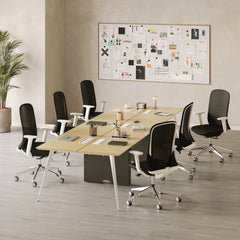
A 48-inch round meeting surface works best when paired with seating that respects the table’s proportions. Chairs should not crowd the edge or make movement difficult. The goal is a setting where participants can see each other clearly, reach the surface comfortably, and remain physically relaxed throughout the conversation.
The underside of the table matters. Table legs, aprons, crossbars, and pedestal bases all influence how chairs fit. If arms collide with the tabletop or knees hit the base, the chair will feel awkward no matter how supportive it is.
Before selecting conference seating, consider how the chair interacts with the table from multiple angles. Can it pull in close enough? Do the arms clear the table edge? Can users turn slightly without hitting the base? These details are easy to overlook, but they shape the everyday experience of the room.
Armrests can be helpful or restrictive depending on the room layout, table height, and meeting style. Their value depends on proportion.
A well-positioned armrest supports the forearms and reduces shoulder fatigue. A poorly positioned one can push shoulders upward, block table access, or prevent the chair from fitting cleanly into the room.
Fixed armrests can provide welcome support during long discussions where people spend significant time listening, reviewing information, or waiting to speak. They give the upper body a place to rest and can help reduce tension in the shoulders.
The armrest height must feel natural. If the arms sit too high, the shoulders may lift. If they sit too low, the arms may hang without support. Good armrest design helps the user stay relaxed without interfering with the table.
Armless conference chairs can work well in tighter rooms or multipurpose spaces where flexibility matters. They are easier to pull close to a table, easier to move, and often better for rooms that need to fit different meeting formats.
Armless seating can also reduce visual clutter. In smaller rooms, a lighter chair profile may help the space feel more open and less crowded. The tradeoff is that users lose forearm support, so the decision should reflect how long meetings typically last and how the room is used.
Modern meetings often include laptops, notebooks, phones, printed materials, and shared screens. Armrests become part of that workspace equation. If they push the chair too far from the table, users may hunch forward to type or write. If they are too wide, they may reduce personal space around the table.
The best armrest choice supports the meeting behavior that actually happens in the room. A room used mostly for presentations may benefit from supportive arms. A room used for workshops or laptop-heavy collaboration may need slimmer arms or armless seating.
Movement is part of meeting behavior. People shift, turn, reach, roll back, lean in, and reposition themselves. The chair should allow necessary movement without creating distraction.
A chair that squeaks, wobbles, rolls too freely, or scrapes loudly can interrupt the tone of a serious discussion.
The right base depends on the flooring. Casters can be useful when participants need to move slightly, turn toward a screen, or pull back from the table. They may not be ideal on every hard surface if they create too much movement.
Glides can provide a more grounded feel. They may work well in rooms where stability and quietness matter more than mobility. The choice should reflect the floor material, room size, and meeting style.
Long discussions often involve animated moments. People turn toward speakers, lean in during debate, reach for documents, or shift toward a display. A stable chair helps those movements feel controlled.
Wobble or uneven support can make a chair feel less trustworthy. Stability is especially important in client-facing spaces, leadership rooms, and any setting where the room’s details contribute to confidence.
Sound becomes more noticeable in enclosed meeting rooms. Chair legs scraping, casters clicking, frames creaking, or repeated shifting can break concentration. These sounds may seem minor, but they become part of the room’s atmosphere.
Quiet seating supports smoother conversation. It lets people move naturally without drawing attention away from the speaker or the decision at hand.
Conference chairs must work physically and visually. They are part of the first impression of the room, and they influence how the space feels before anyone begins speaking.
Material, color, silhouette, and finish should support a clear professional tone without making the room feel stiff or impersonal.
Meeting chairs are used by many people throughout the week. Employees, clients, vendors, candidates, and guests may all use the same seating. Materials should be chosen with repeated use in mind.
Breathable backs can support comfort. Durable seat materials can help the room maintain a polished appearance. Easy-to-maintain surfaces are practical for spaces where coffee, pens, laptops, and daily traffic are common.
Neutral chair colors often work well in conference rooms because they support focus without competing with screens, wall finishes, or table materials. Black, gray, and muted tones can feel professional and flexible across different design styles.
Color should also account for the wider office environment. A chair that looks refined in isolation may feel out of place if it clashes with the table, flooring, lighting, or surrounding work areas.
Meeting rooms should feel connected to the rest of the workplace. When seating, desks, tables, and accessories share a similar design language, the office feels more intentional.
This is where design-first workspace furniture becomes relevant to the broader planning conversation. A conference chair does not exist alone. It contributes to a larger environment shaped by ergonomic needs, modern work habits, and a clean visual standard.
Long discussions now often involve screens. People review shared documents, join video calls, compare dashboards, edit plans, and take digital notes. A chair can support the body well, but poor device positioning can still pull people into uncomfortable posture.
Chair comfort and screen posture should be considered together.
Laptops naturally place the screen low. During long meetings, this can cause people to bend the neck, round the shoulders, and lean toward the table. Even a supportive chair cannot fully solve that problem if the screen remains too low for extended use.
A better setup encourages people to keep the head more upright and the shoulders more relaxed. This is especially useful during hybrid discussions where participants are looking between their laptop, other people in the room, and a larger display.
A laptop stand for better screen height can support a more comfortable viewing angle during laptop-based work. The chair still matters, but the device setup helps determine whether users can actually maintain a healthier seated posture.
The goal is simple: reduce the need to hunch. When the screen is easier to see, users are less likely to collapse forward for long periods.
Many conference rooms include a main display. Participants may look at the screen, then back to the speaker, then down at notes. Chair design should allow subtle turning and repositioning without strain.
Swivel or controlled movement can be useful when the room relies heavily on shared screens. The seating should help people follow the conversation visually without twisting awkwardly for long stretches.
Not every long discussion begins and ends in the formal conference room. Many decisions move into team areas, shared desks, project zones, or smaller breakout spaces. Seating decisions should support the way conversations actually flow through the office.
Boardrooms need seating that feels composed, supportive, and visually aligned. Participants may be meeting with leadership, clients, partners, or interview candidates. The chairs should communicate professionalism while supporting extended attention.
In these rooms, consistency matters. Mismatched or uncomfortable seating can weaken the impression of the space and distract from the purpose of the meeting.
Team meeting rooms often require more flexibility than formal boardrooms. People may brainstorm, review project materials, sketch ideas, or move between table discussion and whiteboard work. Chairs should allow movement while still providing enough support for longer sessions.
The seating should match the room’s rhythm. A planning room benefits from chairs that feel active, responsive, and easy to reposition.
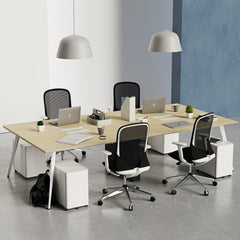
Long discussions frequently continue after the scheduled meeting ends. A few team members may move to a shared desk to refine next steps, compare notes, or turn decisions into tasks. A six-person workstation for larger teams fits naturally into this broader collaboration pattern because it supports multiple people working from a shared surface.
Conference seating sets the standard for comfort during the meeting, but the surrounding workspace should carry that standard forward.
A comfortable chair cannot fully support a discussion if the room around it is distracting. Long conversations often require focus, discretion, and a sense of separation from surrounding activity.
The seating experience improves when the environment supports the same level of attention.
Open offices can create visual noise. Movement in the background, nearby conversations, and constant activity can make it harder for people to stay focused. Visual boundaries help define where the discussion is happening.
Even partial separation can make a meeting zone feel more intentional. It signals that the conversation deserves attention, without necessarily closing the space completely.
Some discussions involve confidential information, performance reviews, budgets, client details, or strategic decisions. Sound control matters in these situations. Chairs do not solve acoustics on their own, but the surrounding layout can support a better experience.
Soft materials, thoughtful spacing, and defined zones can reduce distractions and help people speak more comfortably.
In offices where discussions happen outside enclosed rooms, modular panels that define workspace can help create clearer zones for focus and collaboration. This supports the same purpose as good conference seating: helping people remain engaged in the conversation instead of distracted by the environment.
A well-defined discussion area makes long conversations feel less improvised and more purposeful.
Some long discussions need smaller follow-ups. After a formal meeting, two or three people may need to clarify a decision, review a detail, or align on next steps. These conversations do not always require the main conference room.
Breakout areas give the office more flexibility and reduce pressure on primary meeting spaces.
A conference room can support the main discussion, but smaller settings often support the work that follows. Informal follow-ups may happen over coffee, beside a shared work area, or in a compact meeting corner.
These spaces should still feel comfortable and intentional. If people are expected to continue thinking and collaborating, the furniture should support that behavior.
A compact bistro table for informal work moments can support smaller conversations that do not need a full conference setup. These areas are useful for quick debriefs, coffee breaks, short working conversations, or casual alignment after a larger meeting.
The point is not to replace the conference room. It is to create a more complete meeting ecosystem where each type of discussion has an appropriate place.
| Conference Chair Detail | Why It Matters in Long Discussions | What to Look For |
|---|---|---|
| Cushion density | Helps reduce pressure and constant shifting | Balanced support that holds its shape |
| Seat depth | Allows users to reach the backrest naturally | Depth that supports thighs without forcing posture |
| Seat width | Affects comfort and spacing around the table | Enough room for different users without overcrowding |
| Lumbar support | Helps maintain upright posture | Lower-back support that works across posture changes |
| Backrest breathability | Supports comfort in enclosed rooms | Materials that do not trap excessive heat |
| Armrest design | Influences shoulders, table access, and note-taking | Proper height, slim arms, or armless flexibility |
| Base style | Affects movement, stability, and noise | Casters or glides suited to the floor |
| Visual profile | Shapes the room’s professional tone | A clean silhouette aligned with the workspace |
| Table compatibility | Determines whether the chair functions well | Good clearance for knees, arms, and pull-in space |
Before choosing conference seating, evaluate the chair in the context of the full room. A strong choice should support the body, the meeting format, and the surrounding workspace.
Confirm that the chair feels supportive for extended sitting, not only quick use.
Check whether users can sit back naturally and still keep their feet grounded.
Look for cushion support that does not feel overly soft or overly rigid.
Make sure the backrest supports upright listening and slight posture changes.
Review whether armrests fit under or near the table without blocking access.
Match casters or glides to the floor surface and desired level of movement.
Leave enough space between chairs for elbows, laptops, and natural shifting.
Consider breathable materials for enclosed or frequently used rooms.
Choose a chair profile that fits the room’s professional tone.
Plan surrounding spaces for conversations that continue after the main meeting.
Conference chair details matter because long discussions place steady demands on the body and the room. People need support while listening, flexibility while speaking, stability while turning, and comfort while reviewing information. A chair that ignores those realities may look acceptable in an empty room, but it becomes a problem once the conversation stretches longer.
The most effective meeting spaces treat the chair as part of a complete environment. Seat geometry, back support, armrest design, table fit, device posture, acoustics, privacy, and breakout areas all influence how well people stay engaged. When those details work together, the room feels calmer, more professional, and more capable of supporting meaningful decisions.
A well-chosen conference chair does not call attention to itself. It quietly helps people remain focused on the discussion, the people around the table, and the work that needs to move forward.


You have unlocked free shipping!
You're saving $29 and unlocked free shipping!
Leave a comment