



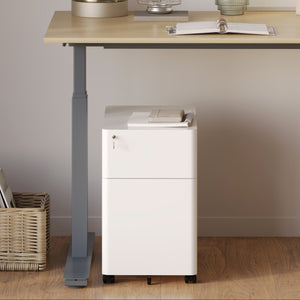






















Filing Cabinet Choices for Cleaner Workstation Planning
Cleaner workstation planning starts with filing storage that matches the desk, document volume, security needs, and daily workflow. Explore how cab...
Learn more
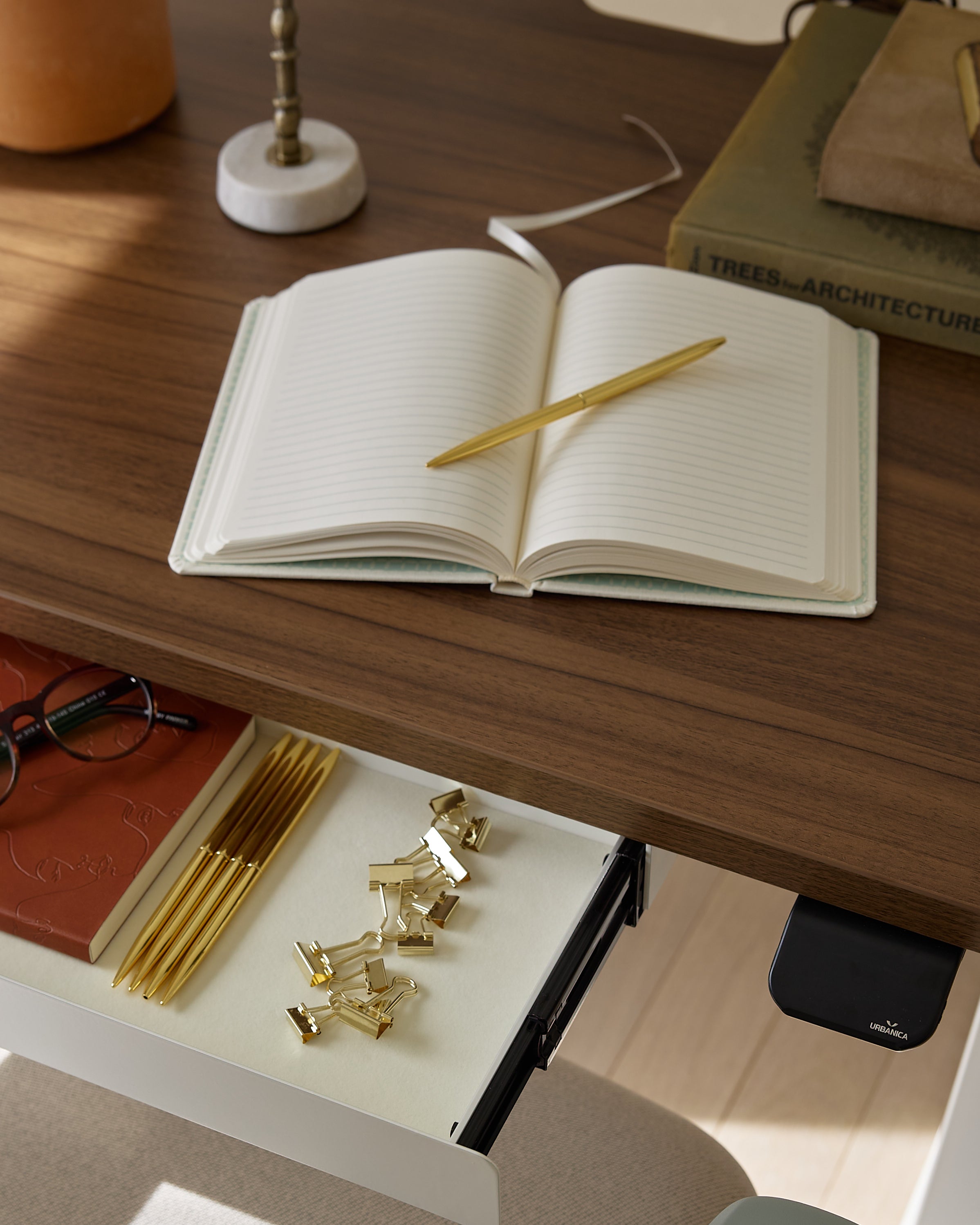
Visit quiz page to see how we makes it easy to create an inspiring workplace


For most people, daily flow is less about dramatic breakthroughs and more about a steady rhythm of small, uninterrupted actions. Open a document, answer a message, review a file, join a call, capture a quick note, shift to another task. When a workstation supports this rhythm, the day feels smoother. When it does not, the day feels scattered, even if the workload is the same.
At our brand, we design powered office desks with that rhythm in mind. We look at how often people move, which tools they use, how frequently they switch tasks, and where small moments of friction appear. Too-low monitors, cluttered cables, limited outlets, or a surface that is fixed at the wrong height all chip away at attention. Over time, these micro-frictions add up to tension, fatigue, and a sense that the day is harder than it needs to be.
Powered office desks help solve this not by adding complexity, but by making the workstation easier to live with. Height adjustment, integrated power, and clean cable pathways give people more control over how they sit, stand, reach, and move throughout the day. That control is what transforms a desk from a passive surface into an active tool for daily flow.
Human bodies are not designed to stay in one rigid position for long periods. Static postures increase pressure on joints and soft tissues, which leads to discomfort and eventual distraction. When discomfort grows, the mind shifts away from the task and toward the body.
Small posture changes can reset this cycle. Rising to stand, slightly adjusting elbow height, or altering screen distance can all relieve pressure and restore comfort. Powered office desks make those shifts simple, so the user does not need to choose between comfort and momentum.
The value of movement-friendly setups is well recognized in occupational health. Guidance such as ergonomic recommendations from OSHA further supports the idea that posture, reach, and equipment setup have a real impact on physical comfort and, by extension, daily performance.
A desk that is too high, too low, or crowded with cables forces the user to work around it. Shoulders creep upward to meet the keyboard, wrists bend to reach the mouse, and knees bump into frames or cable bundles. Each of these adjustments uses attention that should be directed toward the work itself.
Over time, this creates subtle resistance. People hesitate to change position because it feels like work. They avoid switching tasks because it means reconfiguring their space. They tolerate discomfort until the only real option is a full break, which interrupts flow entirely. Powered office desks remove much of this resistance by allowing the user to change the environment quickly instead of constantly compensating for it.
Height adjustment is often described as a comfort feature, but in practice it is a flow feature. It allows the desk to follow the different phases of the day instead of locking the user into a single posture.
Most professionals move between several modes of work: focused deep work, quick administrative tasks, collaborative calls, and planning or review. Each mode benefits from a slightly different posture and eye line.
During deep work, many people prefer a position where the screen is at a comfortable height and the forearms rest level with the surface. Planning sessions and brainstorming benefit from a more open stance that comes naturally when standing. Short tasks like answering messages or signing documents can feel easier at an intermediate height.
An electric height-adjustable desk gives users the freedom to shift between these modes without interrupting their train of thought. The movement becomes part of the workflow instead of a break from it.
Once someone finds a few heights that feel right for different tasks, they tend to repeat them. Memory controls on powered desks support this by allowing those preferences to be stored instead of rediscovered each time. Over days and weeks, a personal pattern emerges. Morning focus might happen in a seated position, midday catch-ups while standing, and late-afternoon planning at a slightly higher perch.
This consistency is important for daily flow. Instead of fidgeting to find the right setup, the user taps a button and returns to a familiar posture. The body knows what to expect, and the mind can move directly into the task.
Even within one height setting, tiny adjustments can make a difference. A few centimeters higher or lower can relieve pressure in the shoulders or lower back. Electric adjustment encourages people to make these small changes because they are effortless. The desk moves to meet the body, not the other way around.
Over the course of a full workday, these micro-adjustments help prevent the slow build-up of discomfort that often leads to distraction, irritability, or premature exhaustion.
Modern workflows rely on multiple devices: laptops, monitors, tablets, phones, headsets, and more. Each device comes with its own charger or cable. Without a plan, the result is visual clutter and practical inconvenience.
Powered office desks are designed to calm that chaos. Integrated access to outlets and cable pathways helps transform a tangle of cords into a quiet, stable background.
When outlets are within easy reach, charging becomes a simple habit instead of a constant concern. Devices can stay connected without stretching cords across walkways or reaching under the desk to plug things in. This lowers the mental load of “battery management” and reduces interruptions from low-power alerts.
A tidy, powered surface also encourages stable tool placement. If a monitor, laptop, or lamp has a defined position where power is always available, it is less likely to drift into awkward or intrusive locations on the desk.
Cables are a small detail, but they strongly influence how a workspace feels. Loose cords pull at devices, catch on knees, and create visual noise that makes the area look and feel unsettled. Guided cable routes and discreet management features keep these distractions under control.
A product such as a powered desk with integrated cable organization shows how function and visual calm can support each other. When cables are hidden or neatly directed, the desktop becomes easier to navigate, which supports uninterrupted transitions between tasks.
The difference between a powered and non-powered setup becomes clearer when viewed across multiple aspects of daily use:
| Aspect | Typical Non-Powered Desk | Powered Office Desk Setup |
|---|---|---|
| Device charging | Separate strips and adapters | Power available at or near the work surface |
| Cable visibility | Exposed cords along floor and top | Routed through channels and grommets |
| Reconfiguration effort | Unplug and reroute multiple cords | Adjust devices while keeping cables organized |
| Visual impression | Busy and fragmented | Calm and intentionally arranged |
| Impact on flow | Frequent small interruptions | Fewer obstacles when switching between tasks |
A calmer visual field and a predictable charging layout both contribute to a sense of stability. People tend to think more clearly when their environment requires fewer small decisions.
A powered desk can only do so much if the chair does not support it. The desk sets the stage for movement, while the chair shapes how the body experiences that movement. When these two elements are designed to work together, daily flow improves significantly.
The relationship between seat height, desk height, and back support determines how easy it is to maintain a neutral posture. If the desk is raised for standing work, the chair should accommodate a slightly higher sitting position when the user returns to the seat. Armrests should align comfortably with the desk surface, and the backrest should support the spine without forcing the shoulders forward.
These details sound small, but they decide whether a sit-stand pattern feels natural or awkward. When the chair and desk cooperate, transitions become normal parts of the day instead of interruptions.
Different people need different types of chairs, especially in shared offices or multi-purpose spaces. A curated ergonomic office seating collection allows teams and individuals to choose the right support for their tasks and bodies, while still maintaining a consistent design language around the powered desks.
This ecosystem mindset views seating and desks as complementary instruments in one environment rather than separate purchases.
Certain chair features align especially well with powered office desks:
When a desk moves, the angles between the user’s hips, knees, and spine shift. Chairs that allow fine adjustment of lumbar support and backrest tilt make it easier to maintain a supportive posture at each desk height.
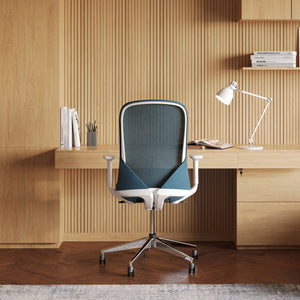
A chair like the Onyx ergonomic office chair is an example of how focused back support can help users stay aligned during long work sessions.
Armrests should adapt to different desk positions so that shoulders and wrists remain relaxed. Height, width, and angle adjustments all contribute to comfortable contact points at various desk heights.
For many users, a model such as the Novo ergonomic task chair brings together these supportive features in a way that works well alongside a powered desk.
Not every workspace can accommodate large desks, and not every task requires one. Compact powered desks offer a flexible way to support movement and flow in smaller rooms, shared environments, and hybrid arrangements.
Small powered desks are particularly effective as secondary stations. They can host a laptop, notepad, or tablet without occupying the footprint of a full workstation. Because they are powered, users still have access to charging and height adjustment, which preserves the movement benefits of larger desks.
Compact options are also easier to position creatively. They can live near windows, in corners, or beside larger tables, giving people multiple places to work within the same space.
Creating dedicated zones for specific activities helps reduce decision fatigue. One spot might be used for reading and strategy, another for calls, and another for hands-on tasks. Moving between these zones provides a mental reset while keeping work progressing.
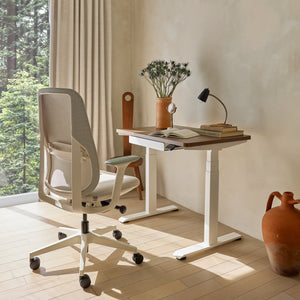
A product like a small electric standing desk fits naturally into this idea. It supports standing work in a small footprint, making it ideal for quick focus sessions or light laptop use in spaces that cannot support a full-size setup.
Good daily flow is not limited to large offices. In apartments, shared rooms, and compact home offices, smart placement of a compact powered desk can open up new working patterns. Users can rotate between seated and standing positions without rearranging furniture, and they can change the feel of the room simply by pivoting between zones.
This flexibility is especially valuable for people who share spaces with others or who balance professional work with household responsibilities in the same rooms.
Powered office desks share common elements, but their dimensions, configurations, and design lines differ. Selecting the right one involves understanding how you work, how much equipment you use, and how your space behaves during a typical day.
Several characteristics have a direct impact on daily experience:
Height range: How well the desk supports both seated and standing positions for your body.
Surface size: Whether there is enough room for your primary tools without encouraging clutter.
Stability: How solid the desk feels at various heights, which influences confidence when typing, writing, or drawing.
Power layout: Where outlets or grommets are located, which shapes your cable routes and device positions.
These features should be evaluated together rather than in isolation, so the final choice feels balanced and practical.
Different tasks demand different allocations of surface area. Designers, engineers, and analysts may need room for multiple screens and reference materials. Writers and consultants might prioritize a clean, open surface with space for a notebook beside a laptop. In smaller rooms, depth becomes just as important as width.
Exploring a range of modern office desks helps clarify what combinations of dimensions and layouts meet these needs while fitting comfortably into the intended room.
Daily flow depends on trust in the furniture. If a desk feels unstable, or if its surface scratches easily, users tend to handle it more cautiously and may avoid certain positions or tasks. Powered desks designed for regular use keep their feel over time, so each adjustment and work session feels consistent.
Surface finish also matters more than people expect. A finish that is pleasant to touch, easy to clean, and visually calm makes it easier to relax into the work and remain there.
Furniture does not create good workdays on its own. It creates the conditions in which good workdays are more likely. Powered office desks are especially effective when they are treated as part of a deliberate set of rituals.
Simple actions like adjusting the desk to a particular height at the start of the day can signal the brain that it is time to focus. Shifting to a different position at the end of the day can signal closure. These physical cues help define boundaries, which are increasingly important in hybrid and home-based work.
Small, repeatable routines reinforce flow. For example:
Raising the desk before important calls to support a more open, confident posture.
Lowering it slightly for deep writing or analysis to reduce shoulder tension.
Taking thirty seconds between tasks to adjust height, clear a small area on the surface, and reset breathing.
These micro-routines keep the user in active dialogue with their workspace, rather than passively enduring discomfort.
Workstyles change over time as roles evolve, responsibilities shift, and life circumstances unfold. A powered office desk acknowledges that reality by making adaptation easier. Instead of replacing furniture each time a small change is needed, users can adjust how they interact with the existing pieces.
From our perspective as designers and makers, the goal is not to create something flashy, but something calm, reliable, and responsive enough to stay useful across many chapters of work. When a desk quietly supports movement, organization, and focus, it becomes a partner in daily flow, not just a surface in the room.


You have unlocked free shipping!
You're saving $29 and unlocked free shipping!
Leave a comment