



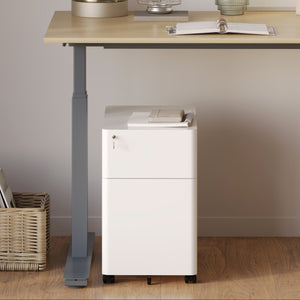






















Filing Cabinet Choices for Cleaner Workstation Planning
Cleaner workstation planning starts with filing storage that matches the desk, document volume, security needs, and daily workflow. Explore how cab...
Learn more
Visit quiz page to see how we makes it easy to create an inspiring workplace

The rise of the hybrid model—seamlessly blending office time with remote work—has redefined the professional workspace. We now need areas that are flexible, highly functional, and aesthetically pleasing, often within limited square footage and a tight budget. The common mistake is assuming that sophisticated, ergonomic design requires a massive investment. In truth, smart design is about maximizing the utility and quality of key foundational pieces, not about sheer volume of expenditure.
Building an effective hybrid workspace on a budget requires shifting your focus from purchasing many mediocre items to strategically selecting a few high-impact, multi-functional pieces. By prioritizing longevity, ergonomics, and clean aesthetics, you create an environment that supports productivity for years without incurring the hidden costs of cheap, disposable furniture. This guide details the intentional design strategies that deliver premium function without the premium price tag.

The core principle is longevity. When you invest in a durable, multi-functional piece, you avoid the costly cycle of replacement, making the higher initial outlay the financially prudent choice in the long run.
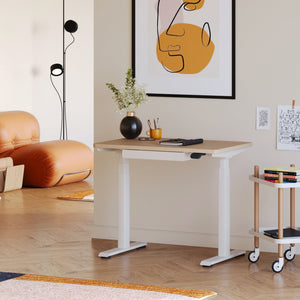
The foundation of this budget-smart philosophy is the desk—a versatile sit-stand dynamic desk that serves as both a high-performance workstation and a stylish home element, proving its value in every setting.
When budgeting, allocate the majority of funds to the two pieces that directly affect your physical health and performance: the chair and the desk. These are the tools that generate revenue and prevent health issues.
Sacrifice decorative accessories or bulky storage units first. Instead, ensure your foundational items offer commercial-grade durability and complete ergonomic adjustability. The resulting clarity and performance will far outweigh the aesthetic contribution of minor pieces.
For hybrid work, the desk must perform multiple roles: a quiet space for deep work, a presentation surface, and often, a dedicated video conferencing backdrop.
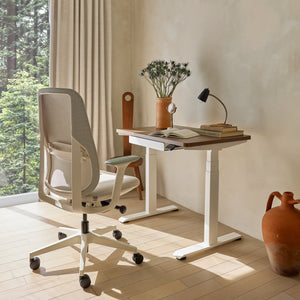
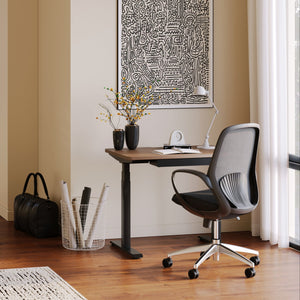
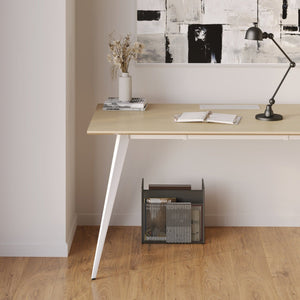
Choose a desk with clean lines and a durable surface, such as a sturdy Office Desk, that can seamlessly integrate into a living space when not in use. Look for integrated cable management to maintain visual appeal and decluttering drawers to keep the surface clear.
The ergonomic chair is the single most important budget allocation for long-term health. Cutting corners here leads directly to medical costs and lost productivity.
Focus on a chair that meets essential ergonomic standards, offering adjustable lumbar support, adjustable armrests, and a quality tilt mechanism. This ensures the chair adapts to your body, not the other way around.
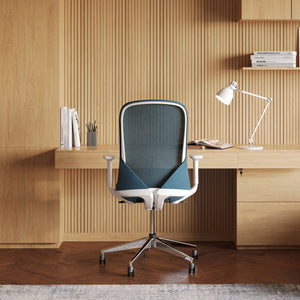
Look for a highly adaptable premium adjustable chair. Industry resources confirm the necessity of these features for mitigating musculoskeletal disorders and stress, validating the investment.
To keep the budget low, avoid buying matching lateral file cabinets. Instead, focus on affordable, high-impact vertical organization that maximizes wall space.
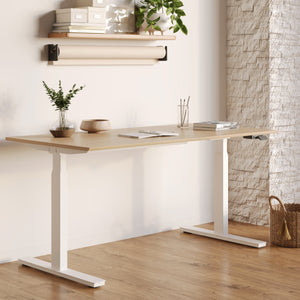
Use inexpensive, wall-mounted shelving units or slender, vertical storage systems that draw the eye upward and keep the floor footprint clear. Use uniform bins and boxes to conceal clutter within the shelves, maintaining the aesthetic appeal.
☐ Uniform Bins: Use consistent color/material to hide miscellaneous supplies. ☐ Vertical File Holders: Contain active documents in an accessible, yet tidy, manner. ☐ Floating Shelves: Provide aesthetic display space without consuming floor space.

Avoid expensive, custom-built lighting systems. Instead, create a layered, effective lighting environment using budget-friendly, focused task lighting.
Ambient Light: Utilize existing room lighting (soft ceiling fixtures).
Task Light: Invest in a single, high-quality, adjustable desk lamp to reduce eye strain and focus light directly on the work area.
Aesthetic Light: Use a small, inexpensive floor lamp in the corner to provide warm backlighting for video calls.
If your hybrid model requires a shared workspace (e.g., with a partner or co-worker), buying a single, integrated solution is cheaper than buying two separate setups.
A single, purpose-built shared standing desk maximizes space efficiency while often costing less than two separate, individual desks. Crucially, look for systems that allow independent adjustment on each side to maintain individual ergonomic support.
A minimalist approach is inherently budget-friendly. By requiring fewer accessories and focusing on clean lines, you save money while achieving a high-end, uncluttered look that promotes focus.
Limit decorative items to one or two grounding objects. Use a muted color palette (whites, grays, woods) which naturally creates a sense of calm and visual space, mimicking high-end design without complex or costly elements.
In major metropolitan areas, finding commercial-grade ergonomic furniture at competitive prices is possible by focusing on local expertise and quality-focused suppliers.
In regions like Southern California, professionals must demand high performance. Sourcing a top-tier Los Angeles Ergonomic Chair ensures you get a high-quality, durable piece that meets specific market expectations for long-term comfort and style, securing the investment's value.
Ensure your initial investment allows for future flexibility. Buying modular pieces means you can expand your system incrementally as budget allows, avoiding the need to replace entire setups.
Initial Phase (Must-Haves): Quality adjustable chair and primary desk surface.
Second Phase (Function): Monitor arm and integrated cable management accessories.
Third Phase (Aesthetics/Storage): Vertical shelving and high-quality task lighting.
While initial costs for a quality ergonomic chair must be budgeted carefully, the financial return from preventing health-related time off and maximizing continuous productivity quickly justifies the expense, making it the most cost-effective long-term choice.

Building a powerful, aesthetically pleasing hybrid workspace on a budget is entirely achievable by adopting a strategic, quality-first approach. By prioritizing health and function in your core furniture choices and using smart organizational techniques, you successfully pivot away from disposable, chaotic setups. This intentional investment yields a workspace that not only looks professional but actively supports your health and productivity for the long haul, proving that smart design is always the best budget strategy.


You have unlocked free shipping!
You're saving $29 and unlocked free shipping!
Leave a comment