



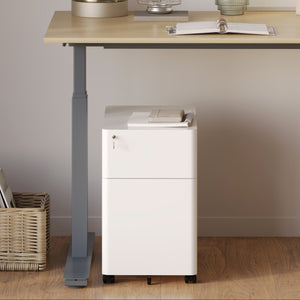






















Filing Cabinet Choices for Cleaner Workstation Planning
Cleaner workstation planning starts with filing storage that matches the desk, document volume, security needs, and daily workflow. Explore how cab...
Learn more
Visit quiz page to see how we makes it easy to create an inspiring workplace


Back discomfort at a desk is rarely “just a bad back.” In our experience designing and building workspaces at Urbanica, most day-to-day sitting pain comes from a mismatch between three things: how your chair supports you, how your desk and screen are positioned, and how long you stay in one position. The good news is that the most effective fixes are usually simple and measurable. They focus on fit, contact points, and small adjustments that reduce strain without forcing you into stiff posture.
If you have numbness, shooting pain that travels down the leg, progressive weakness, loss of bowel or bladder control, or pain that is severe at night, it is worth getting medical guidance. Ergonomics can support comfort, but it should not replace clinical care when red flags are present.
Most people try to “sit up straight” when their back hurts. The intention is good, but the strategy often fails because it treats posture as a willpower task instead of a support task. If the pelvis tips backward, your low back rounds and your mid-back slumps. If you force upright without support, ribs flare, shoulders tense, and the low back starts working overtime.
A good office chair for back problems does one job consistently: it helps you keep a neutral, supported position without muscular bracing.
Low-back ache near the beltline often tracks with slumping, feet not grounded, or lumbar support that is missing or set in the wrong spot.
Mid-back stiffness often shows up when the keyboard is too far away or the screen is too low, so you round forward.
Neck and upper-back tension often reflects armrest height issues, shoulder shrugging, or reaching to the mouse.
A well-built chair cannot overcome a desk that forces you to reach, shrug, or twist all day. At the same time, a great desk setup cannot fix a chair that does not fit your legs, hips, and back. The goal is to line up the basics first, then refine.
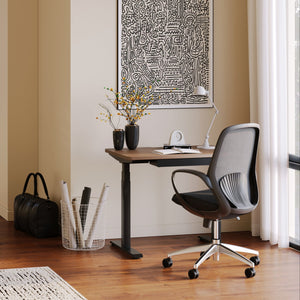
When you want a broad view of shapes and support styles before narrowing down, start by browsing Urbanica office chair lineup.
This pattern often appears when your pelvis slides forward and your low back rounds. The chair may feel “comfortable” for a few minutes, then the low back starts to complain because the spine is being held in end-range flexion.
Common triggers
Seat too deep, so you perch forward
Lumbar support too low or too aggressive
Feet not fully supported
Asymmetry at a desk is sneaky. A slightly higher armrest on one side, a mouse placed far out, or crossing one leg can lead to a subtle rotation in the pelvis for hours.
Common triggers
Mouse reach that pulls one shoulder forward
One foot tucked under the chair
Leaning into one armrest
When you round forward to see the screen or reach the keyboard, the thoracic spine gets stuck in a flexed position. Many people interpret this as “bad posture,” but it is really a reach problem.
Common triggers
Keyboard too far away
Screen too low
Armrests too low, so the chest collapses
Neutral does not mean perfectly upright. It means your pelvis is not dumped backward or cranked forward, and your ribcage is stacked over your pelvis without you holding your breath.
Try this sequence:
1. Sit all the way back so your pelvis is supported by the backrest.
2. Place both feet flat so you can feel the floor under the heels and forefoot.
3. Exhale gently and let the ribs settle down.
4. Let the backrest do some work for you instead of holding yourself up.
Full-foot grounding stabilizes the pelvis.
Consistent lumbar contact supports the natural curve without shoving you into an exaggerated arch.
If you “fix your posture” and suddenly feel rib flare, tight hip flexors, clenched glutes, or a pinchy low back, your lumbar support or upright effort may be too intense. Back comfort improves when support reduces effort, not when effort replaces support.
Lumbar support should help you maintain your natural curve during computer work. It should feel like contact, not pressure. If lumbar support is in the wrong place, it can push you into an awkward shape and create more discomfort.
Move lumbar support so it meets the beltline area, not the mid-back. If your chair has adjustable lumbar depth, start low and increase gradually.
A small recline can help you sit back into support. Once you feel contact, return to a comfortable working angle while keeping that contact.
Place a small towel roll at the beltline and see if your comfort improves. If it does, you have confirmed that lumbar contact is a missing piece.
When you want to see how a product page describes sizing and core details for an ergonomic chair, reference Novo Chair details and measurements.
If the seat is too high, pressure builds under the thighs and your pelvis often tucks backward. That rounding can irritate the low back over time. If the seat is too low, hips close and slumping becomes the path of least resistance.
Aim for full-foot contact, including the heels. If your feet hover or you only touch on toes, the chair is too high or the desk is too tall for your current chair height.
Many people feel best when knees are comfortably open, not jammed high and not locked straight. Use comfort as your guide rather than forcing a perfect angle.
If lowering the chair makes the desk too high for your arms, test a stable footrest substitute (a sturdy box works better than a soft object). This lets you keep feet grounded without sacrificing arm comfort.
A seat that is too deep encourages you to slide forward and perch. That breaks lumbar contact and loads the spine. A seat that is too shallow may leave thighs unsupported and increase pressure on the sit bones.
Aim for a small gap behind the knees so the seat edge is not pressing into the back of the legs. If the seat edge crowds the knees, you will almost certainly drift forward over time.
Sit back first, then adjust everything else.
If your chair allows, adjust seat depth so your thighs are supported without forcing you forward.
Pair this with a gentle recline so the backrest supports you instead of chasing you.
If you are comparing mesh feel, sizing, and adjustment points on another ergonomic option, look at Onyx Chair materials and sizing details.
Armrests too high lift the shoulders and create constant upper trap tension.
Armrests too low let the chest collapse, rounding the mid-back and pulling the head forward.
A useful cue is whether you can drop your shoulders and breathe comfortably without feeling like your arms are hanging.
If your forearms float in midair, your shoulders will hold the load. Pulling input devices closer is often more effective than any posture reminder.
If you switch between typing, mousing, and note-taking, you may need small adjustments across the day. Stability is great, but fixed settings should still support your workflow.
Static posture is the quiet enemy. Even a supportive chair will feel uncomfortable if you never change angles. Small posture variation helps reduce sustained pressure and muscle fatigue.
A slight recline that lets you keep eyes on the screen and hands on the keyboard without reaching.
A deeper lean for short breaks that lets your back rest against the chair and encourages a fuller breath.
For a chair page that emphasizes its adjustable structure and lists materials and dimensions, review Muse Chair materials and measurements.
Mesh can feel cooler and may reduce heat buildup, while a cushioned seat may soften pressure points. Neither is automatically better for back problems. The key is whether the seat keeps you stable without encouraging sliding.
A very stiff backrest can feel like constant pressure. A very flexible backrest can feel unstable and encourage bracing. Many people do best with a backrest that supports, but still allows small movement.
Before you shop, identify one deal-breaker sensation you want to avoid:
Sliding forward
Seat edge pressure behind the knees
Lumbar pushing too hard
Shoulder shrugging
Then test chairs against that one sensation first. Comfort improves faster when the biggest irritant is removed.
1. Seat height range that allows full-foot grounding
2. Seat depth fit so thighs are supported without forcing you forward
3. Lumbar support placement that matches your beltline area
4. Armrest adjustability to reduce shoulder tension
5. Recline and tilt control that supports small movement
| Chair feature | Often helps with | First adjustment to try |
|---|---|---|
| Adjustable lumbar position | Low-back fatigue from slumping | Set lumbar height to beltline, then reduce intensity |
| Seat height range | Pelvic tuck, foot dangling, thigh pressure | Lower until feet are fully grounded |
| Seat depth adjustment | Sliding forward, loss of back contact | Create a small gap behind knees |
| Adjustable armrests | Neck and upper-back tension | Lower until shoulders soften, then bring keyboard closer |
| Recline + tilt tension | Stiffness from static posture | Set a gentle working recline you can maintain |
| Stable base + smooth movement | Bracing and constant micro-tension | Increase tilt tension until movement feels controlled |
If your desk is too high, shoulders rise to reach the keyboard, ribs flare, and the low back often compensates. This can feel like “tight low back,” but the root cause is usually upstream at the shoulders and ribs.
Pull the keyboard and mouse close enough that elbows can stay near your sides. This reduces reaching and twisting.
Many people feel better when the top third of the screen is near eye level. If you use a laptop, consider raising it and using an external keyboard and mouse to avoid hunching.
If lowering the chair fixes your feet but breaks your arm position, the desk height needs attention too.
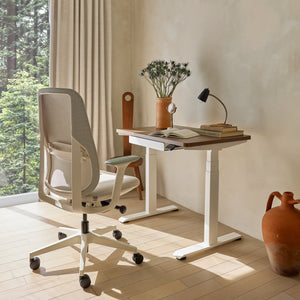
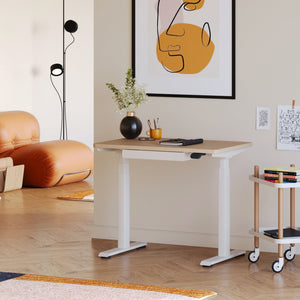
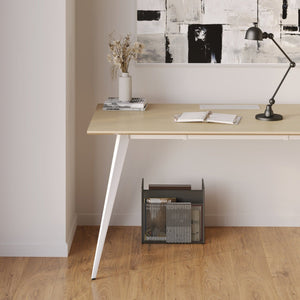
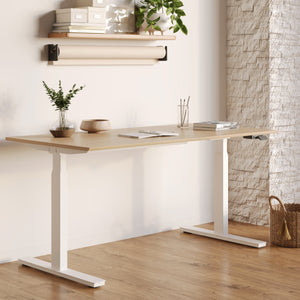
When desk size and surface options are part of the solution, explore Urbanica desks and standing desks collection.
Even excellent ergonomics cannot make eight hours of immobility feel good. The goal is consistency, not perfection. Small changes, repeated often, protect the back better than one dramatic “perfect posture” attempt.
Sit back so the backrest supports the pelvis and mid-back
Plant both feet fully on the floor or a stable footrest
Check that the seat edge is not pressing behind the knees
Confirm gentle lumbar contact at the beltline
Lower armrests until shoulders soften
Bring keyboard and mouse close enough to avoid reaching
Set a comfortable working recline you can maintain
Take short movement breaks when stiffness begins, not after it becomes sharp pain
Rotate between three supported positions:
Neutral upright with full back contact
Slight recline for typing and focused work
Forward perch briefly when you need precision or a different angle
The point is not to find one posture forever. The point is to avoid being stuck.
A chair that looks great but does not fit you becomes a reminder to “deal with it,” and discomfort follows. A chair that fits but feels visually out of place gets swapped out for a dining chair, and the cycle repeats. The sweet spot is design you enjoy and support you can feel.
Integrated armrests can feel clean and stable. They can also reduce your ability to fine-tune shoulder height. If your discomfort is mostly shoulder and neck tension, you may prefer adjustable armrests. If your discomfort is more about general sitting fatigue and you want a streamlined silhouette, an integrated style can work well if the seat height and depth fit you.
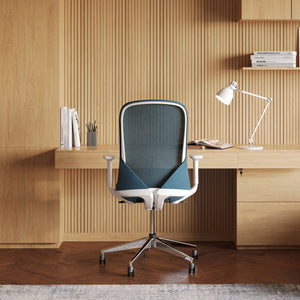
For an example of a chair described with breathable mesh fabric and tonal integrated armrests, see Seashell Chair breathable mesh and integrated armrests.
1. Sit all the way back and check whether lumbar contact feels natural.
2. Plant feet and notice whether your low back can relax.
3. Place hands where your keyboard would be and see if shoulders rise.
4. Lean back slightly and confirm you can still see the screen without craning.
5. Shift gently side to side and check for pressure points at the seat edge or tailbone.
A chair can feel fine while sitting still, then fail during real work. Test it with:
Typing for a few minutes
Mousing with the elbow near your side
Leaning back for a call or reading posture
Sometimes the best fix is not a new chair. It is advice on setup, compatibility, or how to combine seating and desks so the system fits your body and your space. For help-oriented details, contact pathways, and common questions on delivery and setup, use office setup support and delivery FAQs.
Back problems at a desk often improve when you stop chasing perfect posture and start building consistent support. The most reliable upgrades are the least glamorous ones: feet grounded, seat depth that prevents sliding, lumbar contact in the right spot, arms supported without shrugging, and a desk setup that keeps everything within easy reach. When those fundamentals are in place, the chair stops being something you fight, and it becomes something that quietly helps you work with less strain.


You have unlocked free shipping!
You're saving $29 and unlocked free shipping!
Leave a comment