



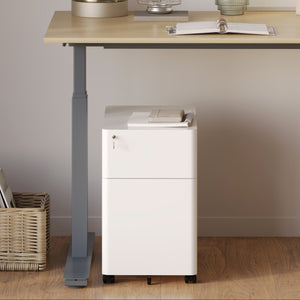






















Filing Cabinet Choices for Cleaner Workstation Planning
Cleaner workstation planning starts with filing storage that matches the desk, document volume, security needs, and daily workflow. Explore how cab...
Learn more
Visit quiz page to see how we makes it easy to create an inspiring workplace


Decision fatigue does not always come from big choices. Often, it builds quietly through small, repeated decisions made throughout the day. Your workspace plays a major role in this mental drain. When furniture forces constant adjustments, cluttered layouts, or uncomfortable posture, your brain stays busy solving problems it should not have to. Thoughtful furniture choices can remove those distractions and create a workspace that supports focus, clarity, and calm.
Every object in your workspace communicates something to your brain. Furniture that fits poorly or lacks function demands attention. You notice discomfort, clutter, or inefficiency, even if only subconsciously. Over time, this drains energy that could be spent on meaningful work.
A well-planned setup anchored by a thoughtfully sized Office Table Los Angeles helps reduce micro-decisions by keeping tools accessible, posture neutral, and visual noise to a minimum. When furniture supports routine rather than interrupting it, your brain can focus on tasks instead of troubleshooting the environment.
Furniture that encourages movement without requiring effort prevents constant mental recalibration.
A desk that adapts to your body allows natural posture changes during the day.
Encourages circulation
Reduces stiffness
Minimizes posture-related distractions
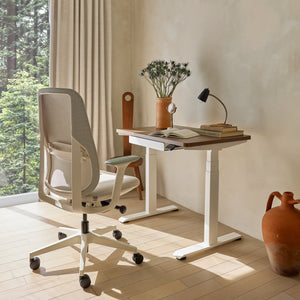
A well-designed standing desk supports smooth transitions between sitting and standing, reducing the need to think about comfort adjustments.
Your brain processes everything in your field of view. Excess furniture, mismatched surfaces, or cramped layouts increase cognitive effort.
A stable, proportionate office desk creates a consistent visual anchor.
Clear surface edges
Balanced proportions
Neutral tones
When furniture feels visually calm, the brain spends less energy filtering distractions.
Research on workspace design highlights how constant environmental adjustments increase mental strain. According to findings discussed in studies on office furniture decision-making, environments that reduce choice overload improve sustained attention and task completion.
Furniture should quietly guide behavior rather than demand choices.
Minor discomfort often leads to repeated adjustments throughout the day.
Unsupported arms cause tension and frequent repositioning.
Stabilizes shoulders
Encourages relaxed posture
Reduces fidgeting
Adding ergonomic arm support removes the need to constantly search for a comfortable position.
A chair that feels fine for 20 minutes but uncomfortable after two hours becomes a source of distraction. Comfort that fades requires attention.
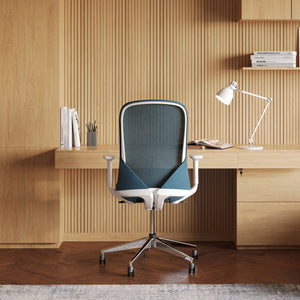
A supportive ergonomic chair maintains consistency throughout long work sessions, allowing your focus to stay on tasks instead of posture correction.
|
Furniture Feature |
Mental Impact |
Physical Benefit |
Long-Term Value |
|
Adjustable desk |
Fewer posture decisions |
Improved circulation |
High |
|
Stable work surface |
Reduced visual clutter |
Better organization |
High |
|
Arm support |
Less fidgeting |
Shoulder relief |
Medium |
|
Supportive chair |
Consistent comfort |
Spinal alignment |
High |
When furniture has a clear purpose, you make fewer decisions during the day.
Well-designed layouts reduce the need to rearrange or rethink.
One primary work surface
Consistent storage zones
Predictable seating position
This structure allows habits to form without conscious effort.
Decision fatigue accumulates slowly. Furniture that removes friction supports mental clarity over months and years. When your environment stays consistent, your energy can be spent creatively rather than defensively.
The right furniture setup becomes invisible in the best way. It supports you quietly, without asking questions or demanding choices.
Mental fatigue often comes from switching contexts too frequently. When furniture does not support a predictable workflow, your brain must constantly adjust. You shift items, reposition yourself, or rethink where things belong. Each adjustment may seem minor, but together they drain focus.
Furniture that stays consistent helps your brain settle into patterns. When your chair supports the same posture every day and your desk layout remains stable, your mind stops checking in on physical comfort. This predictability allows you to enter work faster and stay there longer without interruption.
Over time, a stable setup trains your brain to associate the space with focus instead of friction.
Many people tolerate furniture that is almost right. A desk that is slightly too low or a chair that feels fine at first but fades after an hour might not seem like a problem. However, these compromises quietly increase decision fatigue.
Every moment of discomfort triggers a choice:
Should I shift my position?
Should I stand up?
Should I take a break even if I am focused?
Furniture that truly fits removes these questions. Instead of reacting to discomfort, your attention stays on work. Over weeks and months, this difference becomes noticeable in both productivity and mental clarity.
Your workspace should act like a buffer between you and daily stress. Furniture plays a central role in that protection. When pieces are chosen intentionally, they reduce the number of decisions required to get through the day.
An energy-protective workspace:
Encourages natural posture without reminders
Keeps essential tools within reach
Feels visually calm and organized
Supports long work sessions without discomfort
This kind of setup does not demand attention. Instead, it gives energy back by staying out of the way.
Instead of asking what looks good, ask what removes effort.
Does my desk support natural posture?
Is my seating comfortable for hours, not minutes?
Are tools easy to reach without rearranging?
Does my layout feel predictable and calm?
Am I adjusting my space less throughout the day?
When furniture reduces decisions, it protects your mental energy. A workspace that supports clarity allows you to focus on what matters most.


You have unlocked free shipping!
You're saving $29 and unlocked free shipping!
Leave a comment