



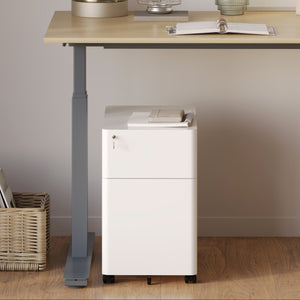






















Filing Cabinet Choices for Cleaner Workstation Planning
Cleaner workstation planning starts with filing storage that matches the desk, document volume, security needs, and daily workflow. Explore how cab...
Learn more
Visit quiz page to see how we makes it easy to create an inspiring workplace


Every day begins with a series of small decisions. What to work on first. Which email to answer. What task deserves attention next. These choices may seem minor, but they slowly drain mental energy. By the afternoon, even simple decisions begin to feel difficult.
What many people overlook is how their environment contributes to this mental fatigue. A cluttered desk demands constant micro-decisions. Poor furniture placement requires constant adjustments. An uncomfortable chair pulls attention away from important work.
Furniture design can simplify these decisions. When a workspace is thoughtfully arranged and ergonomically structured, it removes unnecessary choices from your day. The result is a clearer mind and more sustained focus.
Decision fatigue is the gradual decline in decision-making ability after long periods of cognitive effort. When your workspace demands constant adjustments, your brain quietly spends energy managing the environment instead of focusing on work.
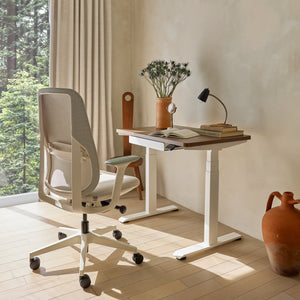
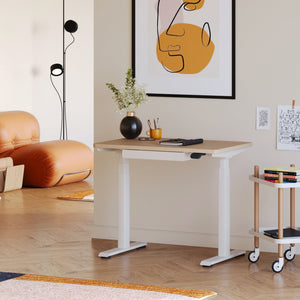
A streamlined setup anchored by a compact Small Standing Desk Los Angeles solution helps eliminate unnecessary friction. With a defined workspace footprint, fewer layout decisions arise throughout the day.
A simplified workspace reduces the need to constantly decide:
Where to place documents
How to reposition your chair
Where to move your monitor
How to adjust your posture
The fewer environmental choices you face, the more energy remains for meaningful work.
Furniture that cannot adjust forces you to adapt constantly. That adaptation becomes another decision.
Examples include:
Leaning forward to read the screen
Raising shoulders to type
Shifting repeatedly in your chair
An adjustable standing desk simplifies posture changes. Instead of debating whether to stand or stretch, you simply adjust the desk and continue working.
Benefits include:
Reduced back strain
Better circulation
Renewed mental alertness
A stable office desk ensures that your tools remain consistently positioned. Stability removes the need for repeated adjustments.
When furniture works predictably, your brain can focus on tasks rather than managing the workspace.
Every object on a desk competes for attention. Even when you ignore clutter, your brain still processes it.
Keeping your desk layout simple helps eliminate unnecessary choices.
Best practices include:
Keeping only essential tools visible
Aligning accessories neatly
Maintaining consistent spacing
When your workspace is visually calm, the mind follows. Fewer visual interruptions allow deeper concentration and quicker decision-making.
Clarity in design leads to clarity in thinking.
Studies on the psychology of space show that orderly environments reduce stress and support cognitive performance. When a workspace feels balanced and predictable, the brain processes information more efficiently.
A well-organized desk provides subtle psychological reassurance. It signals readiness and control.
Disorganized spaces, on the other hand, create mental friction that slowly drains focus.
Screen position affects both posture and mental energy. When screens sit too low or too far away, the body compensates.
A mounted monitor arm lifts screens and frees valuable desk space.
Advantages include:
Improved viewing angles
Cleaner surfaces
Better neck alignment
Your primary screen should remain directly in front of you. Off-center monitors create subtle discomfort and require constant adjustment.
When screens are positioned correctly, attention stays on the task rather than the setup.
An uncomfortable chair requires constant shifting. That movement interrupts concentration and increases decision fatigue.
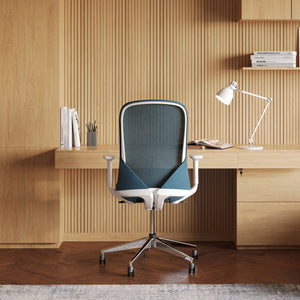
A supportive ergonomic office chair keeps the spine aligned and reduces the need to constantly adjust posture.
Proper seating allows:
Longer focus sessions
Reduced muscle tension
Fewer physical distractions
Comfort does not reduce productivity. It preserves mental energy.
|
Workspace Factor |
Without Structure |
With Structured Furniture |
|
Desk surface |
Constant rearranging |
Consistent layout |
|
Monitor placement |
Frequent adjustment |
Stable alignment |
|
Seating posture |
Repeated shifting |
Supported posture |
|
Movement breaks |
Unplanned interruptions |
Natural transitions |
|
Visual environment |
Cluttered distractions |
Clear focus |
This comparison highlights how furniture design influences mental workload.
Predictable environments reduce decision fatigue because the brain does not need to constantly evaluate surroundings.
Keep your workspace arrangement consistent each day.
Place tools in the same position
Maintain a clean desk surface
Align accessories consistently
Too many choices, slow thinking. Simplifying your environment speeds decision-making.
A workspace designed with intention removes distractions before they begin.
When your workspace reduces decision fatigue, the benefits extend beyond productivity.
Over time:
Mental clarity improves
Stress decreases
Focus deepens
Work quality increases
Small environmental improvements accumulate into major performance gains.
Furniture design quietly shapes how effectively you think.
One of the most powerful ways to reduce decision fatigue is to remove decisions entirely. When furniture is designed to guide posture and workflow automatically, you no longer need to think about adjustments throughout the day.
For example:
A properly aligned desk keeps tools within reach
Ergonomic seating encourages upright posture naturally
Elevated monitors prevent constant neck adjustments
When these elements are built into the design, your workspace quietly supports better habits.
Your desk should have a consistent layout that becomes automatic.
Keep:
Keyboard centered
Monitor at eye level
Chair aligned with desk
When everything has a fixed place, your brain stops evaluating the environment and shifts fully into task mode.
Many people waste the first minutes of every work session adjusting chairs, moving notebooks, or repositioning screens.
A thoughtfully arranged workspace eliminates this routine. Instead of preparing the environment each day, you begin working immediately.
Over weeks and months, these small efficiencies protect valuable mental energy.
Before starting your next workday, review this checklist to ensure your environment supports mental clarity.
Keep desk surfaces organized
Position monitor at eye level
Maintain consistent layout daily
Choose adjustable furniture
Keep frequently used tools within reach
Remove unnecessary décor
Use ergonomic seating
Alternate between sitting and standing
Maintain clear visual space
Reassess workspace regularly
Decision fatigue is not just about workload. It is about environment. When furniture choices simplify your workspace, they protect your mental energy.
A clear space supports clear thinking. And clear thinking leads to better decisions every day.


You have unlocked free shipping!
You're saving $29 and unlocked free shipping!
Leave a comment