


























Filing Cabinet Choices for Cleaner Workstation Planning
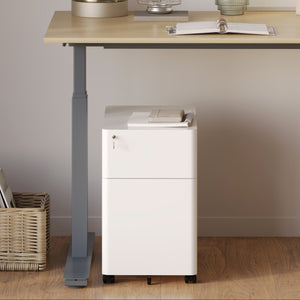
Cleaner workstation planning starts with filing storage that matches the desk, document volume, security needs, and daily workflow. Explore how cab...
Learn more
Visit quiz page to see how we makes it easy to create an inspiring workplace


Pain at your desk rarely means something is wrong with your body. More often, it means something is wrong with how your chair and desk are set up. Neck tension, sore shoulders, aching wrists, and lower back pain are usually signals that your workspace is forcing your body into positions it cannot sustain comfortably.
The good news is that relief does not require a full office makeover. Simple adjustments to your chair height, desk level, and screen placement can dramatically reduce discomfort. When furniture is aligned with your body, pain often fades faster than expected.
Desk pain develops faster than most people realize. The human body is designed to move, yet desk work often locks us into one position for hours. When a chair sits too low, the spine rounds. When a desk is too high, shoulders lift and tighten. Over time, these small misalignments create strain.
Poor posture becomes habitual because the furniture encourages it. People adapt by leaning forward, twisting slightly, or resting weight unevenly. These compensations may feel harmless at first, but they add up quickly.
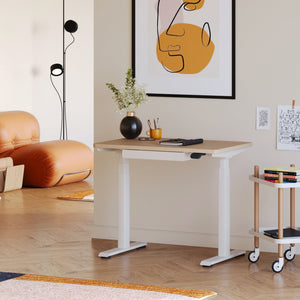
A setup that includes a Mini Standing Desk Los Angeles shows how properly scaled furniture can support posture rather than fight it. When the desk and chair fit the body, alignment improves without conscious effort.
Your chair is the foundation of your posture. If it is wrong, everything above it suffers.
Feet should rest flat on the floor with knees slightly lower than hips.
Adjust seat height so thighs are parallel to the floor
Sit back fully to support the lower spine
Keep hips centered on the seat
Avoid sitting on the edge of the chair
Maintain even weight distribution
A well-adjusted chair allows the spine to maintain its natural curves instead of collapsing forward.
Desk height determines where your arms and shoulders sit throughout the day.
Arms should rest comfortably without lifting the shoulders.
Elbows bent around ninety degrees
Forearms parallel to the desk surface
Wrists neutral while typing
Shoulders relaxed, not raised
Desk height aligned with seated position
A properly proportioned office desk allows the arms to rest naturally, reducing tension that leads to neck and shoulder pain.

Pain often comes from staying in one position too long. Sitting compresses the spine, while standing without support strains the legs and lower back. The solution is not choosing one over the other but alternating between both.
Changing posture resets muscle tension and improves circulation. Short standing intervals reduce stiffness without causing fatigue. Movement also helps maintain better posture throughout the day.
Furniture that supports posture change encourages healthier habits naturally.
Static posture is one of the biggest contributors to desk-related pain.
Smooth transitions matter just as much as the positions themselves.
Reduces lower back compression
Improves circulation
Encourages posture resets
Decreases muscle fatigue
Supports long-term comfort
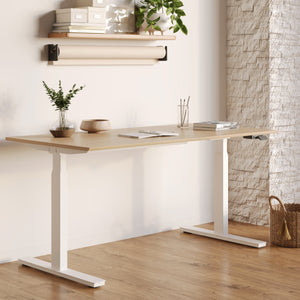
A thoughtfully designed standing desk allows posture changes without disrupting workflow, making movement part of the workday instead of an interruption.
Screen height is often overlooked, yet it plays a major role in neck and upper back discomfort. When screens sit too low, the head tilts forward. This adds strain to the neck and shoulders that compounds over time.
The top of the screen should align close to eye level. Viewing distance should allow clear visibility without leaning forward. Adjustments should support neutral head position rather than forcing correction.
Guidance from good posture guidance reinforces the importance of screen alignment as part of a complete ergonomic setup.
|
Problem |
Cause |
Adjustment |
|
Neck pain |
Screen too low |
Raise monitor |
|
Shoulder tension |
Desk too high |
Lower surface |
|
Wrist pain |
Improper angle |
Adjust arm height |
|
Lower back pain |
Poor seat support |
Adjust chair depth |
|
Fatigue |
Static posture |
Alternate positions |
Accessories help fine-tune posture without changing furniture.
Tools should move with you, not lock you in place.
Adjustable arm support for screens
Clear desk surfaces for relaxed movement
Flexible positioning for input devices
Stable seating support
Clean alignment between chair and desk
An ergonomic arm allows screens to move with your posture, while a supportive ergonomic chair maintains alignment without stiffness.
Pain relief is not about one perfect adjustment. It is about maintaining supportive positions consistently throughout the day. Furniture that fits the body makes consistency easier.
When adjustments are intuitive, posture improves automatically. Over time, muscles adapt to healthier alignment and pain reduces naturally. Ignoring setup issues allows discomfort to return quickly.
Furniture is not just a surface. It is a support system that works every hour you sit or stand.

Pain relief should not feel like a daily battle. When furniture is adjusted correctly, comfort becomes the default state.
Adjust chair height first
Align desk with arm position
Keep screens at eye level
Alternate between sitting and standing
Use accessories that support movement
When your chair and desk work together, pain fades and productivity improves. Small adjustments can change how your body feels every day.


You have unlocked free shipping!
You're saving $29 and unlocked free shipping!
Leave a comment