

























Filing Cabinet Choices for Cleaner Workstation Planning
Cleaner workstation planning starts with filing storage that matches the desk, document volume, security needs, and daily workflow. Explore how cab...
Learn more
Visit quiz page to see how we makes it easy to create an inspiring workplace


A filing cabinet may seem like a simple office addition, but the wrong one can make a workspace feel cramped, cluttered, or harder to use. The right one does more than hold documents. It supports daily workflow, protects important paperwork, keeps the desk clear, and helps the room feel more intentional.
Even in offices that rely heavily on digital tools, physical documents still matter. Contracts, tax records, invoices, signed forms, warranties, leases, business registrations, manuals, and personal records often need a secure and organized place to live. When those papers are left in desk drawers, stacked on shelves, or mixed into random storage bins, finding the right document becomes slower than it should be.
A good filing cabinet works quietly in the background. It should match the way the office functions, not simply fill an empty corner. Before adding one to your workspace, it is worth checking document volume, drawer configuration, file compatibility, placement, privacy needs, material quality, and how the cabinet fits with the rest of the office furniture.
The best filing cabinet choice begins with the paperwork itself. Many people shop by cabinet size first, then realize later that the drawers do not match their actual filing habits. A more useful approach is to sort the documents before choosing the storage.
Active files are the documents you reach for often. These may include open client folders, current invoices, project paperwork, vendor forms, employee documents, or contracts that are still being reviewed. They should be easy to access from your main work area because they support daily decisions and tasks.
Long-term records are different. Tax files, old contracts, closed project folders, warranties, property documents, and historical financial records may need to be stored carefully, but they do not always need to sit within arm’s reach. These can often live in lower drawers, wall-side cabinets, or less central office zones.
This distinction affects the cabinet you choose. If most files are active, a desk-side cabinet with smooth drawer access may be better than a larger cabinet across the room. If most files are archival, capacity and labeling may matter more than immediate reach.
A filing cabinet should not be packed to its limit on the first day. Overfilled drawers are harder to open, labels become difficult to see, and documents are more likely to bend or tear. Leave room for future paperwork, especially if the office handles ongoing invoices, client records, receipts, compliance documents, or project files.
A simple pre-purchase file audit can help:
1. Count the folders currently in use.
2. Separate active, financial, legal, reference, and archive documents.
3. Estimate which categories grow each month.
4. Identify documents that can be digitized or discarded safely.
5. Leave extra drawer space for future records.
This step prevents the filing cabinet from becoming another short-term clutter solution. It turns the purchase into part of a longer office organization system.
A filing cabinet needs to fit the documents and folders you already use. A cabinet may look right in the room, but if it does not support your filing format, daily use becomes frustrating.
Most offices use letter-size folders, but some documents require legal-size storage. Legal paperwork, contracts, real estate files, and certain business records may need longer folders. Before buying, check whether your existing files are letter size, legal size, or a mix of both.
Drawer width, internal rails, and depth all matter. Some cabinets are designed for hanging folders, while others are more general storage drawers. If you rely on hanging files, make sure the drawer is meant to support them properly.
The inside of the drawer is just as important as the outside design. Files should slide smoothly, labels should be readable, and folders should be easy to remove without bending. A drawer that opens only partially may make back files harder to reach. A drawer that is too shallow may force folders to sit awkwardly.
Before adding a cabinet to the office, check:
| Feature to Check | Why It Matters | What to Avoid |
|---|---|---|
| Folder compatibility | Keeps files upright and organized | Drawers that do not support your folder size |
| Drawer extension | Makes back files easier to reach | Drawers that open too narrowly |
| Label visibility | Speeds up document retrieval | Overfilled or poorly spaced folders |
| Interior structure | Supports hanging files or supplies | Loose, unstable file placement |
| Drawer depth | Protects documents from bending | Shallow drawers for large records |
The cabinet should make filing feel easy enough to maintain. If it takes too much effort to put papers away, clutter usually returns to the desk.
A filing cabinet does not only occupy the space listed on a product page. It also needs room for the drawer to open, the chair to move, and the user to reach files comfortably. This is where many office layouts go wrong.
Cabinet width tells you how much floor space the unit takes when closed. Drawer clearance tells you whether it can actually be used. A cabinet that fits under a desk or beside a workstation may still block movement once the drawer is open.
Measure the cabinet depth, then add the drawer extension space. Also check nearby chair legs, desk supports, wall corners, doors, and walking paths. If the filing cabinet sits near a shared walkway, the drawer should not create a hazard during normal use.
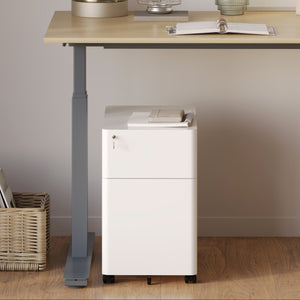
A compact filing cabinet with a drawer lock can be a practical option for offices that need accessible document storage without introducing a bulky footprint, especially when clearance and drawer access are planned before placement.
Under-desk, beside-desk, and wall-side placement each serve different needs. Under-desk filing works well for personal documents or compact workstations. Beside-desk filing is useful for active records that are opened throughout the day. Wall-side filing may be better for archived paperwork, shared records, or documents that do not need constant attention.
A helpful test is to sit at your desk and imagine retrieving a file. Can you open the drawer without moving too much? Does your chair hit the cabinet? Can you return the folder easily after use? The best filing cabinet location should support the natural rhythm of work, not interrupt it.
A filing cabinet is most useful when it works with the desk, not against it. The desk is where documents are reviewed, signed, sorted, and acted on. The cabinet is where those documents should return when the task is complete.
A cluttered desk often means the storage nearby is not doing its job. Papers stay on the surface because the filing location is too far away, too full, or too inconvenient. When cabinet placement is planned around the desk, paperwork has a clearer path from active use back into storage.
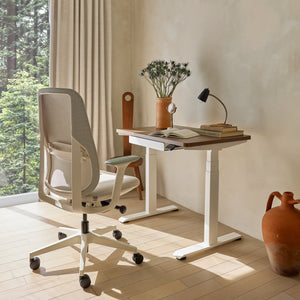
The cabinet decision becomes stronger when it is considered alongside adjustable office desk options that define the main work surface, legroom, and movement area. A desk and cabinet should feel like parts of the same workstation, not two separate pieces competing for space.
A lower cabinet can sit beside a desk without dominating the room. It may also provide a temporary landing spot for a folder, notebook, or small office item. Still, the top should not become a dumping ground. If every surface becomes storage, the cabinet is not solving the underlying organization issue.
Taller cabinets can provide more capacity, but they also change the visual weight of the room. In smaller offices, bulky vertical storage can make the space feel tighter. For compact workstations, a lower or mobile cabinet may create a more open feel while still keeping essential files close.
Drawer count should reflect how documents are used, not just how much storage seems appealing. More drawers are helpful only when each drawer has a clear purpose.
| Cabinet Type | Best For | Main Advantage | Key Check |
|---|---|---|---|
| Single-drawer cabinet | Minimal personal paperwork | Small footprint | Limited growth space |
| Two-drawer cabinet | Home offices and small teams | Balanced storage | File size compatibility |
| Three-drawer cabinet | Mixed documents and supplies | More organization zones | Stability and clearance |
| Mobile pedestal | Flexible desk-side storage | Easy repositioning | Wheel locks and floor surface |
| Lateral cabinet | Larger file collections | Wider file visibility | Wall space and drawer clearance |
A single-drawer cabinet may suit a streamlined home office. A two-drawer cabinet often works well for business paperwork and personal records. A three-drawer cabinet can separate active documents, archived files, and office supplies. The best choice depends on whether the cabinet will serve one person, a team, or a shared office zone.
Not every drawer needs to hold files. Many offices need a place for labels, envelopes, notebooks, chargers, pens, printer paper, and small tools. A cabinet with both file storage and utility storage can make the desk easier to maintain.
The key is to assign each drawer a job. For example, the top drawer may hold daily supplies, the middle drawer may hold active files, and the bottom drawer may hold heavier archive folders. This structure prevents the cabinet from becoming a catch-all for unrelated items.
Security does not always mean advanced protection. Sometimes, it simply means keeping personal or business documents out of casual view. A lockable drawer can be useful in shared offices, home workspaces, client-facing rooms, and hybrid environments where others may pass through the space.
Documents such as contracts, financial statements, employee records, personal IDs, leases, insurance papers, and business registration forms should not sit openly on a desk. A cabinet with a lock can help separate sensitive records from general office materials.
It is important to be realistic. A standard locking filing cabinet can support everyday privacy, but it should not be treated as a replacement for specialized secure storage when documents require higher protection. Irreplaceable or highly sensitive paperwork may need additional safeguards, such as controlled access, digital backups, or fire-resistant storage.
Before storing sensitive documents, ask who needs access, how often the files will be opened, and whether the records are personal, legal, financial, or operational. If several people need access, decide how keys will be managed. If documents are rarely used but important, consider whether they should be stored separately from daily files.
A filing cabinet is most effective when privacy expectations are clear from the beginning.
Paper is heavier than it looks. As drawers fill, weak slides, unstable frames, and poor weight distribution become noticeable. Build quality matters because a filing cabinet is opened, closed, pulled, and loaded repeatedly.
A drawer that sticks or resists movement makes people less likely to file documents properly. Smooth slides help the drawer open predictably, even when folders are inside. Check whether the drawer opens far enough to reach the back files and whether the handle feels comfortable to use.
Drawer movement should feel steady, not loose or uneven. If the cabinet is mobile, the wheels should roll cleanly and stay stable when the drawer opens. On hard flooring, wheel locks or stable feet can help prevent unwanted movement.
A filing cabinet can become top-heavy if upper drawers are overloaded. Store heavier files in lower drawers when possible, and avoid opening multiple loaded drawers at the same time. If the cabinet sits on carpet, uneven floors, or transitions between surfaces, confirm that it remains level.
Build quality is not only about durability. It also affects confidence. A cabinet that feels stable encourages regular use, while a cabinet that wobbles or tips forward can make daily filing feel inconvenient or unsafe.
A filing cabinet affects posture, movement, and desk organization. If files are too far away, users twist, lean, or create piles instead of filing documents immediately. If the cabinet blocks the chair, the workstation becomes cramped.
The most frequently used files should sit in the easiest-to-reach drawer. Less frequently used records can sit lower or farther away. This simple decision can reduce unnecessary movement during the workday.
A slim laptop stand for desk organization can help keep the work surface more structured while the filing cabinet handles lower-level document storage. Together, vertical desk organization and proper file storage can reduce the habit of spreading papers, devices, and accessories across the same surface.
A cabinet may fit beside a desk but still interfere with seating. Chair arms, casters, desk legs, and open drawers all share the same movement zone. Before final placement, test whether the chair can roll, turn, and pull back without striking the cabinet.
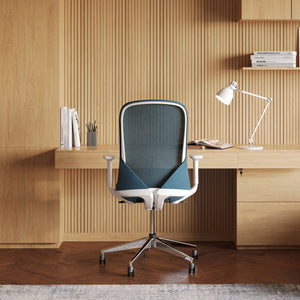
A filing setup should leave comfortable movement around an ergonomic office chair collection, especially in compact workstations where drawers and seating overlap. The chair, desk, and cabinet should function as a coordinated triangle: work happens at the desk, movement happens from the chair, and documents return to the cabinet.
Lighting is often overlooked when choosing a filing cabinet. Yet dim storage areas make labels harder to read, increase sorting mistakes, and make filing feel more tedious than necessary.
Cabinets placed under desks, near corners, or beside tall furniture may fall into shadow. Overhead lighting alone does not always illuminate open drawers clearly. If you need to lean forward or pull folders out just to read labels, the filing area may need better light.
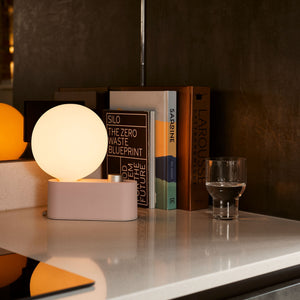
An Alumina table and wall light can fit into a workstation plan where visibility matters near both the desk surface and nearby storage. The goal is not to overcomplicate the setup, but to make everyday tasks easier to complete.
A filing zone can look purely functional if it includes only drawers, paper, and office tools. Lighting can make the area feel more finished, especially in home offices, private offices, or client-facing spaces.
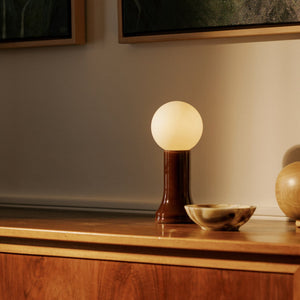
A Shore recycled glass table lamp can add visual warmth near a storage-heavy corner while still supporting the office’s practical needs. The cabinet should feel integrated into the room, not like an afterthought placed there only to hide paperwork.
Filing cabinet materials affect durability, cleaning, appearance, and how the cabinet blends with the rest of the office. The right choice depends on how heavily the cabinet will be used and what kind of visual tone the workspace needs.
| Material | Practical Strength | Visual Character | Best Fit |
|---|---|---|---|
| Metal | Durable and easy to clean | Simple, utilitarian, modern | High-use offices and shared spaces |
| Wood or veneer | Warmer and more furniture-like | Residential or executive feel | Private offices and home workspaces |
| Laminate | Versatile and adaptable | Clean and understated | Small offices and flexible setups |
| Mixed material | Balanced look and function | Modern and layered | Coordinated office layouts |
A material that works well in a busy shared office may feel too industrial for a home workspace. A cabinet with a warmer finish may suit a private office, while a cleaner neutral finish may work better in a minimalist desk zone.
The cabinet does not need to match every piece exactly, but it should coordinate with the desk, chair, lighting, flooring, and accessories. White finishes can brighten a room. Black can create contrast. Gray can feel flexible. Wood tones add warmth. Soft neutral finishes often work well in calm, modern office layouts.
A filing cabinet becomes more visually successful when it looks like part of the workspace plan. That sense of order supports the same purpose as the cabinet itself: less clutter, more clarity, and a smoother workday.
A filing cabinet should serve current needs while leaving room for the office to grow. Paperwork often increases gradually. By the time the drawer feels full, the filing system may already be harder to maintain.
New clients, tax years, vendor files, employee forms, equipment warranties, and project documents can all add to storage needs. Choosing a cabinet with some extra capacity helps prevent overflow piles from returning to the desk or floor.
This does not mean buying the largest cabinet possible. It means choosing the right capacity for the office’s realistic growth. A compact office may need a smaller cabinet with strict categories. A growing business may need more drawer separation. A shared workspace may need clear ownership rules so files do not become mixed.
A filing cabinet without a labeling system eventually becomes hidden clutter. Clear labels make documents easier to file, retrieve, and review.
Useful filing categories include:
1. Active work: current projects, open invoices, live client documents.
2. Financial records: receipts, statements, tax forms, payment confirmations.
3. Legal and business records: contracts, leases, licenses, corporate papers.
4. Reference materials: manuals, warranties, vendor information, policies.
5. Archive files: completed projects, past years, inactive documents.
Folder names should be clear and consistent. Date ranges help with records that accumulate over time. Color coding can help, but it should support the system rather than replace clear labeling.
Different offices need different filing strategies. A home office, private office, shared team workspace, and compact studio each place different demands on storage.
In smaller rooms, every furniture choice affects circulation. A cabinet that is too deep may block a walkway. A tall cabinet may make the room feel crowded. A poorly placed cabinet may interfere with the chair or desk.
Teams comparing modern ergonomic workspace furnishings often need storage that works together with desks, chairs, and accessories as part of a complete office layout. A filing cabinet should support that larger system by keeping documents organized without reducing comfort or movement.
In shared offices, the cabinet needs rules as much as it needs drawers. Decide which drawers are personal, which are shared, and which are reserved for archive files. Sensitive records should have defined access. Active folders should have a clear return location.
Hybrid teams may also need filing systems that are easy for occasional office users to understand. Simple labels, separate active and archive sections, and consistent folder naming can prevent confusion when multiple people rely on the same cabinet.
A filing cabinet should solve a specific office problem. When the purpose is unclear, the cabinet can quickly become another place where clutter hides.
Style matters, especially in a well-designed office, but appearance should not come before function. A beautiful cabinet with too little capacity or the wrong drawer format will not support the office for long. Before choosing a finish or silhouette, confirm the cabinet can hold the right files, open comfortably, and fit the actual room.
The cabinet must fit more than the final floor plan. It also needs to pass through doorways, hallways, elevators, stairways, or tight corners. If assembly is required, there should be enough room to put it together safely and position it correctly.
Practical setup details may not be exciting, but they protect the purchase from becoming inconvenient before it is even in place.
A filing cabinet should have a defined purpose. If one drawer holds contracts, loose cables, snacks, old notebooks, printer paper, and random mail, the system will fail. Assign each drawer a category before using it. Store unrelated items elsewhere or separate them clearly.
The best office storage habits are simple enough to repeat. When every drawer has a job, the cabinet becomes easier to maintain.
A filing cabinet earns its place in the office when it makes work easier to manage. It should hold the right documents, fit the available space, protect everyday privacy, coordinate with the desk zone, and support a cleaner daily routine.
Before adding one to the office, check the full picture: document volume, file size, drawer access, lock needs, chair movement, lighting, material, finish, and future growth. Each detail affects whether the cabinet becomes a reliable part of the workspace or just another piece of furniture taking up room.
A well-chosen filing cabinet gives paperwork a clear home. It helps the desk stay open, makes important records easier to find, and gives the office a more organized rhythm. When storage, seating, lighting, and work surfaces support each other, the entire workspace becomes easier to use and easier to maintain.


You have unlocked free shipping!
You're saving $29 and unlocked free shipping!
Leave a comment