



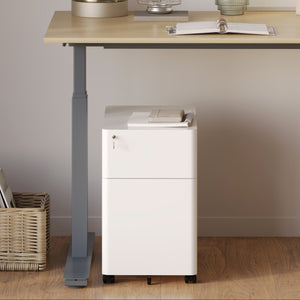






















Filing Cabinet Choices for Cleaner Workstation Planning
Cleaner workstation planning starts with filing storage that matches the desk, document volume, security needs, and daily workflow. Explore how cab...
Learn more
Visit quiz page to see how we makes it easy to create an inspiring workplace


Back pain during computer work often looks like one problem, but it usually comes from a small combination of mismatches between your body, your chair, and your work habits.
Low back fatigue often shows up when the pelvis is not supported well. If the seat is too high, too low, or too deep, the pelvis can tip and the lumbar area ends up doing extra work to keep you upright.
Mid-back burning is commonly tied to reaching. A keyboard that is too high or too far away can cause the upper back to round and the shoulder blades to drift forward.
One-sided tightness is often the sneaky one. It can come from crossing one leg, leaning toward the mouse, or having one armrest set higher than the other.
Hip tightness that feels like back pain is very common. When the seat depth pushes into the backs of your knees, you naturally slide forward and lose backrest contact. The result can feel like a lumbar problem even though the trigger is the seat-to-leg fit.
A chair does not “fix” bodies. What it can do is remove the daily mechanical irritations that keep your back feeling like it is constantly bracing.
If a chair is going to help, it must pass a quick fit test. These are simple checks that do not require perfect posture. They simply confirm that the chair can meet you where your body is.
Sit down and place both feet flat. You should not be tip-toeing, and you should not feel your thighs being forced upward. If the chair is too high, you slide forward to find the floor and your back loses support. If it is too low, the hips can flex more than necessary and the pelvis may tilt.
Slide your hips back until your back meets the backrest. You want a small gap behind the knees so the seat does not press into soft tissue. Too little gap can create pressure and make you perch. Too much gap can mean the seat is too short to support your thighs, which can also increase fatigue.
The lumbar support should meet the curve of your lower back near your belt line. If the chair hits higher, it can push your ribcage forward and create tension. If it hits too low, you lose the “stacked” feeling and the lower back ends up supporting you alone.
Rest your forearms lightly. Your shoulders should not creep upward. If you feel like you are shrugging, the armrests are too high. If you feel like you are hanging off the edge of the desk, they are too low or too far away.
A common experience is this: the chair feels supportive for a few minutes, then discomfort builds. That often means the chair is creating pressure in the wrong place, even if it is technically supporting you.
A very prominent lumbar curve can feel “good” at first, then irritate the muscles that are trying to relax.
A soft seat can feel comfortable, then allow the pelvis to sink unevenly, which changes spinal alignment over time.
A seat edge that presses into the backs of the knees can create subtle circulation discomfort that makes you fidget and perch.
The goal is not aggressive support. The goal is support that lets you settle into a stable position, then move through small variations without losing alignment.
If you sit for long stretches, your back needs two things at the same time: a reliable contact point and the freedom to change pressure distribution.
A perfectly “firm” lumbar support placed in the wrong spot is still the wrong support. Getting lumbar contact in the belt-line area is usually the fastest way to reduce the constant bracing feeling that shows up in the lower back.
Some people do better with a gentler curve that supports without pushing. Others need a more noticeable curve because their lumbar area tends to collapse. The right chair lets you find a support level that feels present but not intrusive.
Seat design is often underestimated. When the seat does not fit your legs and hips, the spine pays for it.
If you are taller, have longer thighs, or share a chair between users, the ability to fine-tune seat depth can be the difference between sitting back comfortably and perching forward all day.
Cushioning can be comfortable, but too much softness can allow uneven sinking. A seat that balances cushion with stable support tends to help your pelvis stay level, which helps your back feel less “worked” by the end of the day.
Back pain often increases when the body stays rigid. Recline is not just a comfort feature. It is a way to distribute load across your back and reduce static muscle work.
Many people feel better when they can sit slightly reclined while typing, rather than perfectly upright. The key is that the recline must feel supported, not like you are falling backward.
A recline that is too loose encourages collapse. A recline that is too tight encourages stiffness. The right tension makes it easy to lean back a little and return to neutral without effort.
Shoulder tension is a common pathway into back pain. When the arms have no support, the upper body often stabilizes by tightening the shoulders and upper back.
If armrests are too low, you reach and shrug. If they are too high, you elevate the shoulders and compress the neck area. A balanced armrest height lets the shoulders stay down and the upper back stay broad.
If the armrests do not meet your natural forearm position, you often compensate by leaning toward the mouse or keyboard. Those small angles repeated every day can create one-sided discomfort that shows up as “mysterious” low back tightness.
There is no universal best chair for every back. The more reliable approach is matching a chair’s behavior to the way you work and the way discomfort tends to show up.
Fast discomfort often points to seat height, seat depth, or lumbar placement. If you cannot sit back comfortably, the lumbar support cannot do its job.
If you feel okay early and then suffer later, you may be working too rigidly, or your recline and arm support may not be reducing muscle load. It can also be a sign that you are staying in one position too long.
Small imbalances matter. One armrest higher than the other, one foot tucked back, or a monitor slightly off-center can cause the torso to twist. The chair should allow symmetrical setup and encourage centered sitting.
If you like the idea of dialing in your fit and you want a chair that supports iterative tuning, a high-adjustability ergonomic chair can be a strong match. The key is not having more controls for the sake of controls. The key is having controls that help you find stable lumbar contact and comfortable seat depth.
For that approach, the Ergonomic Novo Chair is a practical reference point in our lineup for people who want to focus on fit, adjustment, and consistent day-to-day support.
Some people prefer a chair that feels supportive quickly with fewer adjustments to think about. That is not “less ergonomic.” It is simply a different route to comfort, especially for users who want the chair to feel intuitive.
The Muse Chair is a useful option to consider when you want a supportive feel without treating setup like a project.
If you sit long hours and you want a more structured feel, stability becomes the theme. A chair that holds you consistently can reduce the urge to perch or slide forward. That matters because perching is one of the fastest ways to turn a normal workday into a sore-back day.
The Ergonomic Onyx Chair is a straightforward example for shoppers who want that structured, supportive direction in an ergonomic chair.
Changing chair settings in the wrong order can feel like a chase. One adjustment changes how another adjustment behaves. A reliable sequence keeps the chair working with your body, not against it.
Start with feet flat. Adjust height until you feel balanced. If you feel pressure under the thighs near the seat edge, the chair may be too high. If you feel your hips sinking and your knees rising, it may be too low.
Slide your hips all the way back. Confirm the 2 to 3 finger gap behind the knees. This step often changes back comfort more than people expect, because it determines whether your back can rest while you work.
Move lumbar support until it meets the belt-line curve. The feeling should be “supported,” not “pushed.” If you feel you are being forced into a curve, back off slightly or adjust recline to distribute pressure.
Aim for a working posture where you can lean back slightly and still reach the keyboard comfortably. If the recline is too loose, you collapse and your back works harder. If too tight, you stay rigid and fatigue builds.
Adjust armrest height to keep shoulders relaxed. Then confirm that armrests do not force your elbows outward or inward. Your forearms should rest naturally, lightly.
These are not medical claims. They are ergonomic troubleshooting patterns we see often in everyday desk setups.
Often caused by sitting too upright without recline, or by a seat that tips the pelvis backward. Try a small recline, then re-check lumbar contact. Confirm you are sitting back, not perching.
Often caused by a seat that is too low or too deep. Raise the seat slightly if your hips feel jammed, and reduce seat depth so you can sit back while keeping a knee gap.
Often caused by keyboard reach or armrests that are not supporting the forearms. Bring the keyboard closer, keep elbows near your sides, and raise armrests enough to reduce shoulder load.
Often caused by shrugging due to low arm support or a monitor that is too low. Adjust armrests so shoulders relax, and bring the top of the screen closer to eye level so the head does not drift forward.
1. Feet flat, weight even on both hips
2. Knees comfortable and not forced high or low
3. Seat depth leaves 2 to 3 fingers behind knees
4. Hips sit all the way back, backrest contact is consistent
5. Lumbar support meets the belt line, feels supportive not pushy
6. Recline allows a slight supported lean while typing
7. Shoulders stay down, elbows near 90 degrees
8. Armrests support forearms without forcing arms outward
9. Keyboard close enough that elbows stay near ribs
10. Monitor centered so you are not twisting or leaning
A headrest is most useful when you recline. It supports the head and neck during breaks, reading, calls, or moments when you lean back to reduce spinal load. It is not meant to hold your head forward while you type upright.
When a headrest is used incorrectly, it can push the head forward. That forward-head position can increase neck tension, which often turns into upper back tightness.
The headrest should cradle the back of the skull when you recline. If it only hits the neck, it may encourage the chin to jut.
If you feel you must press your head into the headrest while upright, the headrest is probably too far forward.
The safest way to add a headrest is to use one that is designed for the chair model, so fit and alignment stay consistent.
For a Novo chair setup, the Novo Headrest accessory keeps the head and neck support aligned with the chair’s backrest design.
For a Muse chair setup, the Muse Headrest accessory provides a compatible head and neck support option built for that chair model.
When discomfort is persistent, it helps to isolate variables. This is a practical way to identify what is actually driving your pain pattern.
Use the setup sequence above. Take notes on what changes. If your discomfort shifts noticeably, the chair setup was likely a major driver.
Bring keyboard and mouse closer. Center the monitor. Raise the screen if needed. If discomfort improves only after these changes, the desk environment was likely the bigger issue.
This often means the desk or keyboard surface is too high relative to your seated position, or your armrests are too low to support your forearms.
If wrist posture is extreme, your shoulders and back compensate to stabilize your hands.
This encourages forward head posture, which can trigger neck and upper back tension that later feels like general back pain.
Sitting on the edge of the seat instead of sitting back
Crossing one leg for hours
Twisting toward the mouse or phone
Staying rigid upright all day without using recline
Skipping movement breaks completely
A strong ergonomic chair can reduce irritation, but it cannot replace movement and balanced use of your workstation.
If pain is severe, persistent, or accompanied by symptoms like numbness, tingling, weakness, or pain that radiates down the leg, it is wise to consult a qualified healthcare professional. Ergonomic changes can support comfort, but they are not medical treatment.
Neutral spine does not mean stiff. It means the ribcage is balanced over the pelvis so your muscles are not fighting gravity all day. When that stack is missing, one area usually overworks to keep you upright.
You feel contact at the backrest, your shoulders can relax, and you can breathe without lifting your chest or tensing your neck.
One spot, usually the lower back, feels like it must hold you up. Or the upper back and neck feel tight as the day goes on.
For many people, a slight recline while typing feels more sustainable than sitting perfectly upright. If the chair supports that recline, you can keep hands at the keyboard and reduce static load on the lumbar area.
For typing: try a small lean back that still lets elbows stay near your sides.
For reading and calls: use a deeper recline and let the backrest carry more of your torso weight.
A practical pattern is to spend most time sitting, some time moving, and a small amount of time standing or stretching lightly. Movement can be brief and simple, like standing up, walking a few steps, or changing tasks for a moment. The point is reducing static load, not chasing a perfect routine.
If the chair does not meet the lumbar area, you lose the “stacked” support and the lower back often braces to keep you upright.
A deep seat can push into the backs of the knees. Many people respond by sliding forward, which removes back support and increases fatigue.
If the chair does not offer stable recline, your back muscles may work constantly to hold your posture.
Not every chair is meant to be a primary task chair. If a chair is chosen mainly for style, it is safest to use it for shorter work sessions, and to apply setup guardrails that reduce strain.
The Seashell Chair is a style-forward seating option. For desk time, keep sessions shorter, avoid perching by sitting back as much as the chair allows, and make sure the desk setup does not force you to reach forward.
The table below helps translate common body and work patterns into the chair adjustments that matter most. It is not a diagnosis tool. It is a practical way to prioritize what to look for and what to adjust first.
| Body or work pattern | Common discomfort pattern | Most important chair focus | Setup cue that usually helps |
|---|---|---|---|
| Long legs or tall user | Perching, hamstring tension, low back fatigue | Seat depth and seat height range | Reduce seat depth until knee gap appears, then raise height so feet stay flat |
| Shorter legs or petite user | Feet dangling, pressure under thighs, sliding forward | Seat height and stable lumbar contact | Lower seat so feet rest flat, then bring lumbar to belt line |
| Hip tightness dominant | Low back feels tight after sitting | Seat depth and hip-friendly seat feel | Keep knee gap, avoid deep seat pressure, use slight recline |
| Upper-back fatigue dominant | Mid-back burning, shoulder tension | Arm support and reach distance | Raise armrests to relax shoulders, bring keyboard closer |
| Long uninterrupted sitting | Stiffness later in the day | Recline support and posture range | Use supported recline during work, change position intentionally |
| One-sided work habits (mouse reach, phone use) | One-sided low back or hip tightness | Symmetry and armrest alignment | Center monitor, level armrests, keep both feet grounded |
When reviewing chair information online, the most useful details are usually practical and measurable.
Dimensions that indicate whether the seat depth and height will suit your body
Adjustment options that affect lumbar placement, seat depth, recline behavior, and arm support
Material notes that help you anticipate feel and breathability
Assembly and care information that clarifies ownership expectations
Less useful are vague comfort claims with no context. Back pain tends to respond best to fit and setup, not slogans.
When shoppers want more confidence, it helps to use a curated environment that focuses on office seating and workspace decision-making, rather than browsing randomly. Our guided office furniture browsing experience is designed to support more intentional selection with clear context around office furniture and workspace needs, while keeping expectations grounded in real-world use.
Confirm seat height, knee gap, and lumbar contact. Do not chase perfection immediately. The goal is stable support that feels natural.
If something feels off, adjust one setting and keep it for a while. Multiple changes at once make it hard to know what helped.
A chair becomes more valuable when it supports a small range of healthy positions. Use slight recline during focused work, sit more upright for tasks that need precision, and take brief movement breaks to reset.
From our perspective as a furniture brand, the most trustworthy path to comfort is not promising a miracle chair. It is building a system that makes good posture easier and poor posture harder.
The chair should fit your body and offer lumbar contact you can maintain.
The desk setup should reduce reaching and shrugging.
Movement should break up long static holds so your muscles are not forced to brace.
As you settle into a better setup, your body can change how it feels in the chair. Small re-checks keep the setup aligned with your real usage.
Confirm seat depth gap still feels right
Confirm armrests still allow relaxed shoulders
Confirm monitor and keyboard distance still keep you centered
Confirm recline still feels supportive, not restrictive
If discomfort persists, the next step is often a small adjustment or environment tweak, not a dramatic change.
Re-check seat height and seat depth first
Improve reach and monitor positioning next
Add a compatible accessory when it supports your actual work posture
Seek professional guidance if symptoms are persistent or concerning
Comfort is a relationship between your chair and your day. When the chair supports your body proportions, encourages small posture changes, and reduces the need to brace, back pain often becomes less frequent and less intense over time.


You have unlocked free shipping!
You're saving $29 and unlocked free shipping!
Leave a comment