



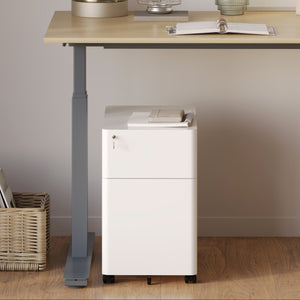






















Filing Cabinet Choices for Cleaner Workstation Planning
Cleaner workstation planning starts with filing storage that matches the desk, document volume, security needs, and daily workflow. Explore how cab...
Learn more

Visit quiz page to see how we makes it easy to create an inspiring workplace


At Urbanica, we design around a simple reality: work now happens across multiple screens, devices, and modes. A single laptop charger on the floor is no longer enough. People move between video calls, deep work, quick notes on a tablet, and phone-based communication, often in the same hour. That rhythm depends on power that is close, reliable, and effortless to reach.
When outlets sit behind a cabinet or near the floor, every device change becomes a small interruption. Users pause, bend, reach, trace cables, and shuffle furniture. None of these actions add value, yet they repeat several times throughout the day. Over time, those micro-frictions drain focus and make the workspace feel more stressful than supportive.
Desktop outlets change that dynamic. When power is integrated into the desk itself or attached thoughtfully at the edge, charging becomes a background action. A user can connect a device while staying in a comfortable posture and without losing their train of thought. For us, this is the standard: a workspace where power access is designed to disappear into the flow of daily work.
Most workspaces now host more than one screen and more than one type of device. A typical setup might include:
A laptop as the main computer
One or two external monitors
A phone that charges beside the keyboard
Wireless headphones or earbuds
A tablet for sketching, reading, or note taking
Each device brings its own power needs, and most need to be available constantly. When every cable has to reach a wall outlet, the desk quickly becomes a web of cords along the floor, behind furniture, and across the back edge of the surface. Desktop outlets let users create shorter, more intentional routes, so the environment stays both powerful and peaceful.
From a physical perspective, repeatedly reaching under a desk is not a trivial movement. It often involves twisting the spine, bending the neck, and loading the knees and hips. For someone who plugs and unplugs devices multiple times per day, this pattern can become a consistent source of discomfort.
When we plan a desk, we look at power the same way we look at monitor height or chair adjustment. It is part of an ergonomic experience. If a user must leave their optimal posture just to charge a phone, the workspace is not doing its job. Bringing outlets closer to the point of use is a straightforward way to reduce that strain.
Focus thrives in environments where tools are simple and predictable. When power is always one easy reach away, people are more likely to stay in flow. They can connect a device without pausing their thought process, rearrange their setup when needed, and trust that the desk will keep up.
For our team, this is not about adding more technology for its own sake. It is about editing friction out of the everyday experience, so the desk feels like a partner in the work, not another problem to manage.
Not every workspace needs the same kind of desktop outlet. A quiet home office, a shared studio, and a corporate benching system each benefit from different approaches. When we look at options, we group them into clear categories so users can select the combination that fits their habits, constraints, and environment.
Integrated units are built into the surface of the desk itself. A carefully cut opening houses the module so that it sits flush with the top. This approach is ideal for people who value a clean, architectural look and want the outlet to feel like a natural part of the furniture.
When we design around this option, we think about where the user's hands typically rest, how often collaborators will share the desk, and whether the surface is used for writing or drawing. The goal is to provide power in a position that feels central and convenient without crowding the primary work area.
You can see how this looks in practice through our approach to flush-mounted power access, where the outlet blends into the plane of the desk while remaining simple to reach.
Clamp-on outlets attach to the edge of the desktop using a tension mechanism. They are strong enough for daily use, yet can be repositioned when the layout changes. This flexibility makes them a favorite for renters, growing teams, and anyone who regularly updates their workspace.
We reach for this style when a user:
Needs power near a specific edge, such as beside the keyboard
Prefers not to drill or cut into their desk
Expects to move the desk to a different room or office later
Because clamp-on units sit at the perimeter of the surface, they work well alongside monitor arms, cable channels, and laptop stands without crowding the center of the desk. A product like an adjustable clamp-on power hub offers that kind of versatility while preserving a clean edge profile.
Under desk outlets mount to the underside of the surface or to support rails. They keep power close, but out of direct sight. This solution is especially effective in high cable density environments where multiple monitors, speakers, and peripherals remain plugged in at all times.
We use under desk power when:
Visual minimalism is important
Devices rarely move, but cables need organization
The user wants to avoid cords hanging loosely from the edge
Paired with good cable management, under desk units provide a stable backbone for the entire system of devices, making the desktop itself feel lighter and more open.
In flexible environments such as meeting rooms or open studios, portable desktop power blocks offer adaptable access. They can be placed at the center of the table during a session, then stored or relocated afterward. This helps teams maintain a clean surface when power is not actively in use, while still giving everyone a place to connect during collaborative work.
Portable solutions also support people who prefer to move between rooms with a laptop and a small set of essentials. Rather than relying on whatever outlets happen to be near a wall, they can bring a stable power point with them.
Desktop outlets are only half of the story. For power to feel effortless, cables must be guided, supported, and given a clear path. Without structure, even the best outlet design can result in tangled cords and accidental disconnections.
Horizontal trays mounted beneath the surface create a dedicated channel for power strips, adapters, and excess cable length. They keep everything elevated, away from feet and storage, and prevent cords from sagging toward the floor.
We rely on solutions like an under-desk cable tray system when we want to pull visual weight away from the edges of the desk and consolidate multiple cables into a single, organized route. This gives the workspace a calmer profile and makes maintenance simpler.
Sit stand desks introduce a unique challenge. As the surface moves, cables must travel with it. If they are not supported, they can snag, pull, or gradually loosen from their ports. A structured vertical path from desk to floor prevents these problems.
We often specify a vertical cable spine organizer to create that path. It groups cables into a single, flexible column that bends smoothly as the desk moves, protecting the connections and keeping the space around the user clear.
Beyond appearance, structured cable management extends the life of cables by reducing stress points and sharp bends. It also makes troubleshooting easier. When each cable follows a predictable route, users spend less time hunting for the right line or tracing it through a tangle behind furniture.
For us, a well designed power layout is quiet both visually and mentally. Users should look at their desk and immediately understand where everything goes and how it works.
The desk itself strongly influences which outlet strategy will feel natural. Dimensions, leg placement, and intended use all guide our choices. We design outlet plans that respect the character of the furniture rather than fighting against it.
Fixed height desks remain a reliable choice in many offices and homes. Their stability allows for permanent or semi-permanent power solutions that can be carefully tailored to the user.
For this type of furniture, we often pair under desk power bars with either in desk modules or edge mounted units, depending on the user's habits. The goal is to keep the top surface clear while ensuring an accessible point for dynamic devices like phones or tablets.
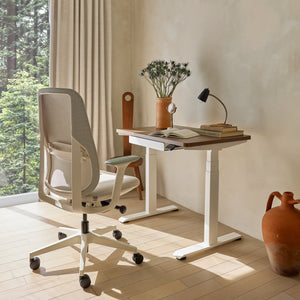
You can see how we approach this in a traditional office desk layout, where leg placement, storage, and cable routing all work together to support daily tasks.
Height adjustable desks introduce movement into the equation, which changes how we think about power. Every cable connection must be able to travel the full range of motion without tension. That means careful planning from the wall outlet, through the vertical channel, to the desktop unit.
We often combine a central under desk hub with an integrated or clamp-on outlet where the user most frequently reaches for power. The aim is to create a smooth, reliable path that feels consistent whether the desk is at sitting height or standing height.
Our approach to an electric standing desk configuration reflects this thinking, giving the user a stable foundation for movement without sacrificing access.
Smaller rooms and compact desks require more careful curation. Every element must justify its footprint. In these settings, we lean toward slim, efficient power units that can handle the user's essentials without overwhelming the surface.
Lightweight clamp-on units, small in desk modules, or a single discreet outlet bar may be enough. The key is to keep the layout simple, avoid overlapping cable routes, and preserve as much clear working space as possible.
A piece such as a compact standing desk solution shows how a smaller footprint can still support a modern, device rich workflow with a thoughtful power plan.
A heavy data entry role, a creative workstation with audio gear, and a minimal laptop focused setup all have different expectations for power. Rather than applying a one size fits all solution, we look carefully at what stays plugged in, what rotates often, and what is used only occasionally. This analysis helps us determine how many accessible outlets are genuinely necessary and where they should sit.
Power is not just a matter of convenience. Poorly planned setups can contribute to strain, clutter, and avoidable risk. We treat ergonomics and safety as a shared responsibility between our designs and the way people use them.
Organizations that focus on occupational safety provide useful principles for building healthier workstations. These include recommendations on posture, reach, and movement that translate directly into power placement choices.
For more structured insight, many teams consult resources such as ergonomic guidance for safer workstations when planning their spaces. We align our furniture decisions with those principles to support the broader wellbeing of users.
If someone has to twist or bend every time they connect a device, that movement becomes part of their work pattern. By placing outlets within a comfortable reach zone and at an appropriate height, we help reduce the frequency and intensity of those motions.
We often recommend that users test different positions with a mock cable before committing to a mounting point. If reaching for that position feels natural during normal work, it is likely a good candidate for permanent installation.
Most workspaces draw modest power, but devices do generate heat and rely on stable connections. Protecting adapters from crowding, allowing some airflow, and avoiding overloaded strips are practical, grounded practices that we encourage. When selecting a desktop outlet, users should consider how many devices they realistically intend to plug in simultaneously and match the solution to that need rather than overspecifying.
Unmanaged cables along the floor can create tripping hazards, catch on chair casters, or become flattened under furniture. From our perspective, any cable that touches the floor should do so along a deliberate, protected route. Vertical channels, under desk trays, and clear pathways between furniture pieces form a simple but effective safety net.
Thoughtful planning at the beginning of a workspace project pays off every day afterward. Instead of adding power as an afterthought, we encourage users to think about outlets as part of the core layout, alongside monitor placement and seating.
We start by listing everything that will live on or near the desk:
Primary computer and displays
Docking station, if used
Peripherals such as speakers, lamps, and chargers
Occasionally used devices such as external drives
Once this picture is clear, it becomes much easier to decide where power should originate and which devices deserve the most accessible outlets. Permanent items often connect to under desk units, while frequently swapped items receive priority at the surface.
The path from building outlet to desktop outlet is just as important as the outlet itself. We work with users to identify where wall outlets sit relative to the desk, how far cables need to travel, and where vertical supports or legs might interfere with routing.
A good layout typically keeps the wall connection behind or slightly to the side of the desk, follows an organized vertical path upward, and terminates at a surface unit in the user's natural reach zone. This structure keeps the floor clear and reduces the chance of a cable crossing a walkway.
Cutting into a desk surface or attaching hardware should always be done carefully and intentionally. We recommend measuring multiple times, using appropriate tools, and testing placement with temporary fixtures when possible. For users who prefer to keep the surface untouched, clamp-on and under desk options provide a practical alternative that still delivers accessible power.
Work patterns change. New devices appear. Teams grow or shift roles. A power layout that felt perfect two years ago may no longer fit. That is why we favor solutions that allow a reasonable amount of adjustment without requiring a full rebuild.
We encourage users to review their setup periodically, remove unused cables, and confirm that outlets still align with their most common habits. A small adjustment to the position of a unit can restore a feeling of effortlessness that may have faded as the workspace evolved.
Access to power at the desk will continue to matter as work itself continues to change. People may adopt new devices or switch between home and office more often, but the need to plug in easily will remain constant.
From our perspective, the best desktop outlet strategy is one that respects the present while staying open to what might come next. That means:
Choosing configurations that can support a realistic range of devices
Leaving enough flexibility to adjust positions and cable routes
Prioritizing comfort, clarity, and safety over complexity
We believe a well designed workspace gives people confidence. When someone sits down at a desk and knows instinctively where to connect, how cables move, and what the furniture will support, they are free to focus on the work that actually matters. Thoughtful desktop outlet options are a quiet but powerful part of that experience, turning everyday access to power into something that feels simple, reliable, and genuinely effortless.


You have unlocked free shipping!
You're saving $29 and unlocked free shipping!
Leave a comment