






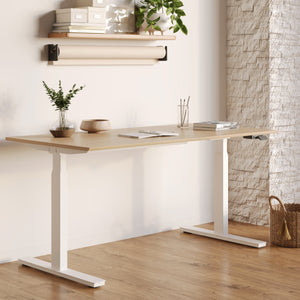
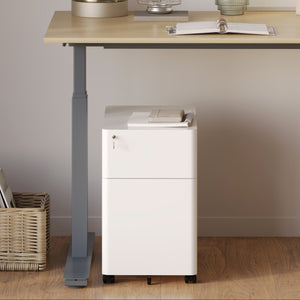






















Filing Cabinet Choices for Cleaner Workstation Planning
Cleaner workstation planning starts with filing storage that matches the desk, document volume, security needs, and daily workflow. Explore how cab...
Learn more

Visit quiz page to see how we makes it easy to create an inspiring workplace


A desk power outlet with USB-C can make a workspace feel more organized, more usable, and easier to live with every day. It can also become a source of frustration when the wrong one is chosen for the desk, the devices, or the way the workstation is actually used. That is why the best buying decision rarely comes down to appearances alone. A clean-looking unit may still be inconvenient if the ports are awkwardly placed, the outlet mix does not suit your devices, or the installation style conflicts with the desk itself.
The smarter approach is to think about desk power as part of the working surface, not as a minor accessory. The outlet needs to fit the habits of the person using it, the devices that stay within reach, and the physical layout of the desk. Some people need simple charging access for phones and accessories. Others need a better balance of AC outlets and USB ports for a more complex setup. In many cases, the right choice depends just as much on desk design and cable behavior as it does on the power unit.
A well-planned workstation often starts with the desk itself. Buyers comparing power options across different furniture styles can see how these accessories fit into broader workspace planning by browsing an ergonomic desk collection. That wider view helps put the power decision in context, especially when the goal is a desk that feels intentional rather than patched together.
A desk is no longer just a place for a monitor and a laptop charger. Many workstations now support phones, tablets, wireless earbuds, desk lamps, speakers, battery packs, and small accessories that all compete for power. Even a relatively simple home office can end up with more charging needs than nearby wall outlets can handle comfortably.
This shift has made desk-mounted or desk-integrated power much more relevant. Instead of reaching under a desk or tracing cables back to the wall, users can keep power access close to where devices are actually used. That can reduce clutter, shorten charging routines, and help the desk feel more functional during a normal workday.
When power is easier to access, people are more likely to use it consistently and more neatly. A phone gets plugged in instead of left to die. A laptop charger stays within reach instead of hanging off the edge. Small accessories can charge without trailing wires across the floor.
That convenience affects more than comfort. It also affects the visual order of the workstation. Cleaner cable routing often starts with better outlet placement. If power is close to the surface, it becomes easier to manage cords in a way that supports focus and keeps the desk from looking overloaded.
USB-C matters, but the connector alone does not guarantee the right experience. Buyers still need to think about how many AC outlets they need, whether older USB-A devices are still part of the setup, how the module mounts to the desk, and whether the placement will remain practical once the desk is fully in use.
A desk power unit should solve real problems, not just add more ports. That is why the most reliable buying decisions come from evaluating daily use first and specifications second.
USB-C has become a familiar presence in modern electronics, but buyers often assume every USB-C port serves the same purpose. That assumption can lead to disappointment. A USB-C port may be useful for convenient charging access without necessarily replacing every dedicated charger on the desk.
What matters most is how the outlet fits the intended use. For some workstations, USB-C is primarily about keeping phones, tablets, and smaller devices easy to charge throughout the day. For others, it may also play a role in supporting more demanding devices, depending on the specific power setup and expectations.
Before comparing models, it helps to look at the devices that actually live on the desk. A phone and wireless earbuds create a very different power profile from a workstation that includes a laptop brick, monitor accessories, and several small peripherals. The buying decision becomes clearer when device needs are grouped by real use rather than by broad assumptions.
A practical way to think about it is to separate devices into three categories:
1. Devices that need frequent top-up charging, such as phones and earbuds
2. Devices that stay plugged in often, such as lamps or accessories
3. Devices with dedicated power needs, such as laptops or larger hardware
This approach helps reveal whether the desk outlet is mainly a convenience layer, a central access point, or part of a larger cable and power strategy.
For buyers who want a more permanent and visually integrated setup, a built-in desk power module can make more sense than an attached add-on. This type of solution suits workstations where clean surface planning and predictable cable paths matter just as much as access to outlets.
It is easy to focus on USB ports, especially when the title feature is USB-C. Still, many important desk devices continue to rely on AC power. Laptop chargers, monitor power adapters, task lighting, and some productivity accessories still need standard outlets. A desk power unit that looks modern but skimps on AC access may not serve the workstation well once everything is connected.
That is why the best port configuration is usually balanced rather than extreme. A strong mix supports both newer charging habits and the devices that continue to depend on wall-style power.
One of the most common mistakes is counting every device that might ever need power instead of the ones that are used at the same time. A better method is to ask what stays connected during a normal work session. That gives a much more honest picture of how many outlets and ports are actually necessary.
Here is a useful planning checklist:
Count the devices that are on the desk every day
Separate AC-powered items from USB-powered items
Identify which devices need to stay within arm’s reach
Leave room for one extra connection for flexibility
Check whether larger plugs will block neighboring outlets
This method keeps the decision grounded in real desk behavior instead of wishful thinking.
Some setups need power access without committing to a permanent desk modification. In those cases, a clamp-on desk power module can be a practical choice because it adds reachable ports at the desk edge while keeping installation relatively straightforward. That kind of setup often works well for changing workstations, evolving layouts, or desks that are not intended for built-in modifications.
The same outlet configuration can feel very different depending on how it is installed. Clamp-on units usually offer easier repositioning and visible edge access. Built-in options tend to create a more integrated appearance and a stronger sense of permanence. Neither approach is automatically better. The right choice depends on the desk, the room, and the expectations for the workspace.
Clamp-on models are especially useful when the workstation may change over time. This can include home offices that are still being refined, multipurpose rooms, or users who want convenient access without altering the desktop. Because the power sits near the edge, it often stays easy to reach during the workday.
Built-in units tend to make more sense when the desk is part of a longer-term setup and the goal is a more refined appearance. They can reduce the visual presence of added accessories and support a cleaner relationship between power access and cable management.
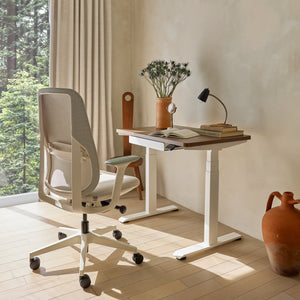
The desk itself matters more than many buyers expect. Edge thickness, underside clearance, and the way the surface is used all affect whether a power accessory will feel stable and logical once installed. This becomes even more important with adjustable desks, where movement changes cable behavior and access patterns. A height-adjustable standing desk often benefits from especially careful planning because outlet position, cable slack, and reach all influence daily convenience.
A desk power unit can look impressive on paper and still feel awkward in use if the placement forces extra reaching or creates cable crossings. Power placed too far back can become inconvenient. Power placed where cables interfere with keyboard space or monitor arms can make the surface feel crowded.
The most comfortable setups usually keep power close enough to access naturally without taking over valuable work area. That balance matters more than many people realize.
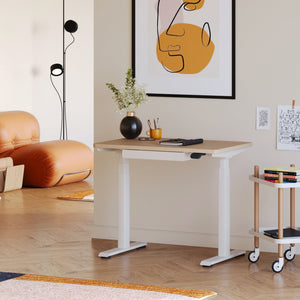
Compact workstations leave less room for charging sprawl, oversized adapters, and extra cable loops. On a small surface, even a minor placement mistake becomes more noticeable. That is why a compact adjustable desk for small spaces often benefits from especially thoughtful power planning. When space is limited, the desk power outlet needs to support function without overwhelming the work zone.
Adjustable desks can improve comfort, but they also create movement that cables must accommodate. A desk outlet should fit into that movement rather than fight it. Poor cable routing can create tension points, visual clutter, or awkward loops that distract from an otherwise clean setup.
A desk power accessory is handled often, viewed often, and expected to work quietly in the background. That makes physical quality especially important. Stable mounting, a well-finished housing, and sensible spacing all contribute to a better experience over time.
Weak build quality often shows up in familiar ways. Units may feel loose, cords may sit awkwardly, plugs may compete for space, or the installation may never feel fully secure. These issues do not always appear in a product description, but they strongly affect everyday satisfaction.
The most trustworthy buying decisions come from checking practical factors rather than assuming every modern-looking unit performs equally well. Buyers do not need unrealistic promises. They need a power solution that fits the desk, supports normal use, and feels dependable in daily life.
| Buying factor | What to evaluate | Why it matters |
|---|---|---|
| USB-C role | Whether it supports your actual charging habits | Prevents mismatched expectations |
| AC outlet layout | Number and spacing of outlets | Improves real-world plug usability |
| Installation style | Clamp-on or built-in design | Affects permanence and access |
| Cable path | Reach, routing, and movement | Helps reduce clutter and strain |
| Desk compatibility | Surface layout and edge fit | Prevents awkward installation |
| Overall build quality | Stability, finish, and practical design | Supports consistent long-term use |
A single-user desk usually works best when the outlet provides enough access without dominating the surface. The goal is not maximum complexity. The goal is easy charging, sensible outlet access, and a desk that remains comfortable to use throughout the day.
Once two people are using the same desk zone, power becomes a coordination issue as well as a convenience issue. A two-user standing workstation changes the meaning of good power placement because access has to work across more than one position. In shared environments, outlet reach, cable crossing, and physical separation matter more than simply adding extra sockets.
In professional settings, desk power should support the workspace without making it feel cluttered or improvised. Clean integration, disciplined cable paths, and sensible placement contribute to a more polished environment for both staff and visitors.
Desk power is not an isolated decision. It affects how the desk looks, how cables move, and how devices are used throughout the day. When selected alongside the broader workstation, the result is usually more coherent and easier to live with over time.
For teams planning wider workspace improvements, it helps to think in terms of consistency, usability, and how each element supports the others. Exploring modern office furniture for growing teams can be useful in that context because desk power tends to work best when it is considered alongside desks, layout needs, and overall office function.
The strongest desk power choices are rarely the ones that promise the most. They are the ones that fit the desk honestly, support the devices actually in use, and make the workstation feel easier to manage from morning to evening. USB-C is an important part of that decision, but it should be evaluated alongside AC access, installation style, cable routing, and desk compatibility.
When those factors are considered together, the result is a setup that feels cleaner, calmer, and more capable without relying on exaggerated expectations. A desk power outlet with USB-C should help the workspace work better in real life. That is the standard worth buying for.


You have unlocked free shipping!
You're saving $29 and unlocked free shipping!
Leave a comment