






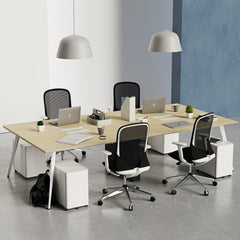
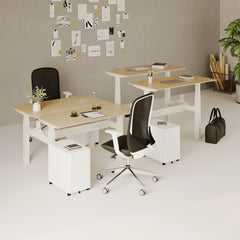
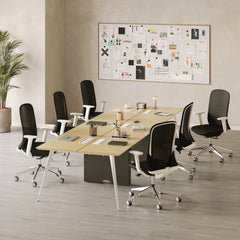




How to Pair Executive Conference Tables With Better Chairs
Pairing executive conference tables with better chairs requires more than matching styles. This post explains how to balance table shape, cha...
Learn more
Visit quiz page to see how we makes it easy to create an inspiring workplace


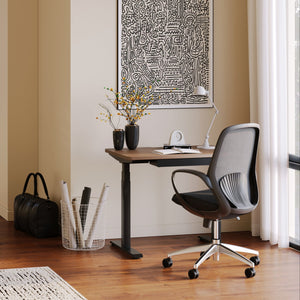
A desk lamp can make a workspace feel sharper, calmer, and easier to use, but only when it is placed with intention. A bright lamp in the wrong position can create hand shadows, monitor glare, harsh contrast, tangled cords, and a desk surface that feels more crowded than organized. Better lighting starts with understanding how the lamp interacts with your hands, screen, documents, power access, and the open surface area you need to work comfortably.
Good desk lamp placement is not about finding one perfect spot that works for every setup. A person who writes by hand needs a different lighting angle than someone working between two monitors. A compact apartment desk needs different cord control than a larger office workstation. A lamp used for evening reading may need warmer, softer placement than one used for precise daytime tasks.
The goal is simple: place the lamp where it supports the work without competing with the workspace. That means the light should fall where your attention goes, the base should stay out of your active work zone, and the cord should not cut across the surface. A lamp such as the Alumina Lamp can work well in setups where lighting needs to feel useful, minimal, and visually considered, but the placement still determines how clean and comfortable the desk feels.
The best lamp position is shaped by daily habits. Before deciding where the lamp should sit, look at the tasks that happen most often at the desk. Do you write notes beside a laptop? Do you use a monitor all day? Do you read printed documents in the evening? Do you sketch, plan, charge devices, or take video calls from the same surface?
A clean desk setup supports these behaviors instead of fighting them. The lamp should not be treated as a decorative object that simply fills an empty corner. It should be positioned as part of the working system: chair, screen, keyboard, paper, storage, power, and light.
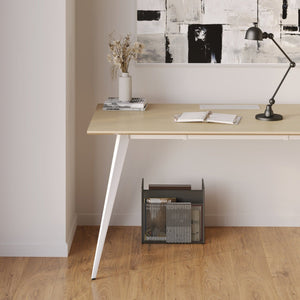
For handwriting, note-taking, sketching, and paper review, the classic rule is still useful: place the lamp opposite your dominant hand. If you write with your right hand, place the lamp on the left side of the desk. If you write with your left hand, place it on the right side.
This works because the light crosses the paper before your hand blocks it. When the lamp sits on the same side as your writing hand, your hand and pen can cast a shadow over the exact area you are trying to see. That small obstruction may not seem important at first, but over time it can make writing, reading, and reviewing documents feel less comfortable.
The lamp should usually sit slightly forward of the page rather than far behind it. A side-front angle sends light across the work surface without shining directly into your eyes. For notebooks, printed forms, planners, and sketchpads, this placement creates a clearer view and makes the desk feel more intentional.
The dominant-hand rule becomes less important when the screen is the primary focus. For laptop and monitor work, preventing glare often matters more than reducing hand shadows. A lamp placed directly beside, behind, or in front of a screen can reflect off the display and create eye strain.
A screen-focused desk usually benefits from the lamp sitting to one side of the display, angled downward toward the keyboard, notes, or open desk surface. The bulb or LED source should stay outside your direct line of sight. If you can see the light source while looking at the screen, the lamp may be too high, too far forward, or pointed at the wrong angle.
This is especially important for glossy laptop screens, dark-mode work, and dual-monitor setups. A small reflection can feel distracting when repeated across a full workday.
Many desks support more than one type of task. In that case, the lamp should be placed according to the most sensitive issue first.
1. Prevent direct glare on the screen.
2. Keep the light source out of your eyes.
3. Reduce hand shadows on paper.
4. Keep the lamp base outside the keyboard and mouse zone.
5. Route the cord away from the main work surface.
This order helps avoid the most common mistake: choosing a lamp position that looks balanced but performs poorly. A desk can look symmetrical and still feel uncomfortable if the light is reflecting into the screen or blocking the mouse path.
A cleaner desk setup comes from matching lamp placement to the task zone. The task zone is the area where your active work happens, such as the notebook area, keyboard area, drawing area, or reading area. Once you identify that zone, the lamp can be positioned to support it without taking over the entire surface.
For writing and paper review, the lamp should sit opposite your dominant hand and slightly in front of the document. The light should travel across the page at an angle, not straight down from above. This reduces hard shadows from your hand, wrist, pen, and head.
If the lamp sits too far behind the paper, your upper body may cast a shadow over the work. If it sits too close to the page, the brightness can feel concentrated in one spot. A good placement gives the page an even wash of light while leaving enough room for your notebook, planner, or documents.
Reading requires a similar but slightly softer approach. The lamp can sit to the side or rear side of the reading material as long as the beam lands on the page and not in your eyes. For long reading sessions, softer angled light often feels better than a tight beam aimed directly at the center of the page.
Laptop setups need careful lamp placement because the screen and keyboard are close together. A lamp that lights the keyboard may also reflect on the screen if it is angled too high or too directly toward the display.
Place the lamp to the side of the laptop, with the head angled down toward the desk surface. The beam should land on the keyboard, mouse area, or notes beside the laptop rather than on the screen itself. If the laptop sits low, the display may catch more reflection. Raising the screen with a Laptop Stand can create better visual alignment and open more space for the lamp to light the surface without crowding the keyboard.
A raised laptop also helps separate screen height from desk lighting. When the display is lifted, the lamp can stay lower and more focused on the work surface, which often makes glare easier to control.
Creative tasks require more precision. Drawing, model review, material selection, crafting, and layout work depend on seeing edges, texture, and color clearly. In these setups, the lamp should sit forward and to the side, angled toward the detail area.
For sketching, some shadow can help reveal texture and dimension. For color review, heavy shadows may distort how materials appear. That means creative workers may need to adjust the lamp angle more often than someone using the desk only for typing.
A flexible placement strategy works best. Keep the lamp close enough to adjust, but not so close that the base blocks tools, paper, or samples. If the work surface changes from laptop use to drawing, the lamp should be easy to redirect without rearranging the whole desk.
| Work Style | Best Lamp Position | Beam Direction | Main Problem Solved |
|---|---|---|---|
| Handwriting | Opposite dominant hand | Across the page | Hand shadows |
| Laptop work | Side of screen | Down toward surface | Screen glare |
| Dual monitors | Outside monitor edge | Down and inward | Reflections |
| Reading | Side-front or rear-side | Softly across page | Eye fatigue |
| Sketching | Forward-side placement | Focused on task area | Detail visibility |
| Video calls | Side-front, diffused | Away from lens glare | Harsh face shadows |
Placement is not only about left or right. Height and distance determine whether the light feels balanced, harsh, weak, or visually calm. A lamp in the correct side position can still perform poorly if it is too close, too far away, too low, or pointed into the eyes.
When a lamp is too close to the work surface, it can create a bright hot spot surrounded by darker areas. This makes the desk feel uneven. Your eyes move between bright paper, darker keyboard areas, and glowing screens, which can become tiring.
A close lamp can also create hard shadows. The sharper the angle and the closer the light source, the more defined the shadows tend to feel. This can be useful for very specific detail work, but it is usually uncomfortable for everyday writing, reading, and computer tasks.
Instead of increasing brightness, move the lamp slightly outward or upward. A small adjustment can spread the light more evenly and make the surface feel cleaner.
A lamp pushed to the back edge of the desk may brighten the wall more than the task surface. This often happens when people place the lamp behind the monitor or in the far corner simply to get it out of the way.
The result is a workspace that looks lit but still feels dim where the work actually happens. People often compensate by raising the brightness, which can create glare without improving task visibility. A better solution is to bring the lamp within comfortable reach and angle the head toward the active zone.
A practical test is simple: if you cannot adjust the lamp without leaning awkwardly, it is probably too far away. If the base blocks your keyboard, mouse, notebook, or mug, it is too close.
A taller lamp generally spreads light across a broader area. This can work well for desks used for multiple tasks or for people who want a softer general glow across the surface. A lower lamp creates a tighter, more focused pool of light, which can be helpful for reading, writing, or detail work.
The key is keeping the visible light source out of your direct line of sight. If the lamp head is high enough that the bulb or LED shines toward your eyes, the placement may feel harsh even when the desk itself is well lit. If the lamp is too low, it may crowd the surface or create strong shadows.
Adjustable lamps offer the most flexibility, but even a fixed lamp can work well when its height, shade, and distance match the task zone.
Screen glare often gets blamed on lamp brightness, but the real issue is usually angle. A lamp can be soft and still cause glare if it reflects directly off the display. A brighter lamp can feel comfortable if it is placed outside the reflection path and aimed properly.
A monitor acts like a reflective surface, especially when the room is dark or the screen has a glossy finish. If the lamp sits behind you, beside the screen, or in front of the display at the wrong angle, the light can bounce back toward your eyes.
This is common with lamps placed directly behind laptops. The glow may look attractive in photos, but it can create a halo around the screen and reduce visual comfort. A lamp aimed at the display can also flatten contrast, making text and details harder to read.
Dark mode can make reflections more noticeable because the darker screen surface behaves more like a mirror. In this case, even a small lamp reflection can become distracting.
For computer-heavy desks, place the lamp about 45 degrees from the screen plane. The lamp should sit to one side, slightly forward or beside the screen, with the beam angled down across the surface. The goal is to light the desk, not the display.
This method works because it moves the light source outside the most direct reflection path. It also keeps the work surface bright enough to reduce the contrast between the screen and the surrounding desk.
The exact angle may change depending on screen finish, monitor height, daylight, and room lighting. A small desk may need a tighter angle, while a deeper desk may allow the lamp to sit farther out. The principle remains the same: keep the beam low, controlled, and pointed away from the screen.
Dual-monitor setups require extra care because there are more reflective surfaces. Avoid placing the lamp between two monitors unless the light source is low, shielded, and aimed only at the desk surface. In many cases, the lamp works better outside the outer edge of the monitor array.
Try the lamp on the far left or far right of the monitors and check both screens from your normal seated position. The best side is the one that produces fewer reflections while still lighting the keyboard, notebook, or mouse area.
For symmetrical monitor setups, lower brightness and a downward angle often work better than a bright lamp placed high above the desk. The lamp should support the screen environment, not compete with it.
A lamp can be perfectly placed for lighting and still make the desk feel messy if the cord runs across the surface. Cord direction should be considered before the final lamp position is chosen. This is especially important for clean desk setups where the goal is visual calm and easy movement.
Cords interrupt the open plane of a desk. Even one visible cable can make the surface feel less organized, especially when it crosses in front of the keyboard, loops near the mouse, or runs beside notebooks and chargers.
A cord can also affect how the desk functions. It may catch on a mouse, limit where you place documents, or make it harder to wipe down the surface. When the lamp cord becomes part of the active work zone, the desk feels less clean even if everything else is organized.
The best cord path is usually toward the back corner or side edge closest to power. The lamp should be placed so the cord can leave the surface quickly and discreetly.
When power access is inconvenient, people often place the lamp near the nearest wall outlet rather than where the light works best. That can lead to poor angles, awkward cords, and unnecessary surface clutter.
Desk-level power access can help keep the lamp in a more intentional position. An In-Desk Power Module supports a cleaner setup by bringing power access into the desk surface, which can reduce the need for cords to travel across the work area. This is especially useful when the lamp, laptop, and daily charging needs all compete for nearby outlets.
The lamp should still be placed according to light direction first, but accessible power makes it easier to maintain that position without creating cord clutter.
Not every workspace needs or allows built-in power. Temporary offices, shared desks, rental spaces, and frequently rearranged workstations may benefit from a less permanent option. A Clamp-On Power Outlet can support accessible charging along the desk edge while keeping the main surface clearer.
For lamp placement, clamp-on power is often best along the rear edge or side edge of the desk. This keeps the power source close enough for the lamp cord but away from the active work area. It can also help group charging cords in one controlled zone rather than letting them spread across the surface.
The cleanest setup is not always the one with the fewest objects. It is the one where every object has a deliberate place and every cord has a clear path.
Route the lamp cord toward a rear or side edge.
Keep cords away from the mouse path.
Avoid running cables across the front of the desk.
Leave enough slack to adjust the lamp without creating loops.
Group lamp and device charging cords where they will not interrupt work.
Recheck cord placement after moving monitors, laptops, or storage items.
Small desks can be very effective when every item earns its place. A lamp is essential for comfort, but it can also become one of the largest objects on the surface. The placement needs to protect the center work zone while still delivering useful light.
For compact desks, the back-left or back-right corner is often the most practical lamp location. The right corner depends on hand dominance, screen placement, and outlet access. The lamp should sit far enough back to preserve the keyboard and writing area, but not so far back that it only lights the wall.
Angling the lamp inward from a rear corner can create good coverage without sacrificing the center of the desk. This works especially well for laptop setups, apartment desks, dorm workstations, and hybrid work areas where the same surface may be used for several activities.
The main work zone should remain open. That zone usually includes the keyboard, mouse, notebook, and any item used constantly throughout the day. If the lamp base occupies that zone, the desk will feel crowded no matter how tidy it looks.
Sometimes the lamp is not the real problem. Papers, folders, loose notebooks, mail, and office supplies can block light and cast unnecessary shadows. A correct lamp position can seem ineffective when the surface is overloaded.
Before moving the lamp again, clear the area around the beam path. Move stacked papers away from the light. Keep tall objects out of the space between the lamp and the task zone. Store documents in a way that protects the desk surface for active work.
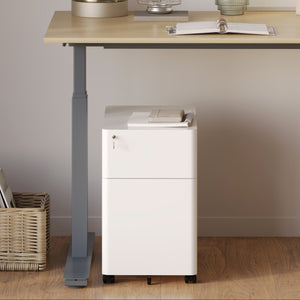
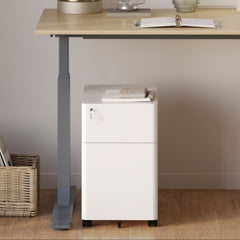
A lockable filing cabinet can support this kind of organization by giving papers and office items a dedicated place away from the desktop. When the surface is clearer, the lamp has a cleaner path to the work area and the entire setup feels calmer.
A large lamp base can overwhelm a small desk. It may block the mouse, reduce writing space, or make the setup feel visually heavy. A narrow base, corner placement, or edge-based power strategy can help protect the usable area.
The lamp does not need to be the visual center of the desk. In many clean setups, it works best as a quiet support element positioned along the rear or side edge. The more compact the desk, the more important it becomes to keep the lamp base outside the active work zone.
A desk lamp should not be expected to light the entire room. Its main job is to clarify the work surface. When the room around the desk is too dark, even a well-placed lamp can feel harsh because the contrast between the bright desk and dark surroundings becomes too strong.
Layered lighting creates a more comfortable environment. Natural light, room lighting, and task lighting should support one another instead of competing.
A single desk lamp is best for focused illumination. It helps with reading, typing, writing, and detail tasks. Ambient room light softens the surrounding area so your eyes are not constantly shifting between a bright desk and a dark room.
When the desk lamp is the only light source, people often increase its brightness too much. This can create glare, sharper shadows, and visual fatigue. A better approach is to keep the lamp focused on the task and use softer room lighting to balance the overall environment.
The cleaner the lighting balance, the cleaner the desk often feels. Harsh contrast can make even an organized workspace feel visually tense.
A window can improve a workspace, but it can also complicate lamp placement. Direct sunlight may create glare on screens, while changing daylight can leave parts of the desk in shadow. The desk lamp should fill those shadowed areas rather than compete with the window.
When possible, place the screen perpendicular to strong daylight. This helps reduce reflections. Then use the desk lamp on the side that needs support as the natural light changes. Morning, afternoon, and evening conditions may all require small adjustments.
The lamp does not always need to stay in one exact position. A good placement gives you flexibility without forcing a full desk reset.
Many desks are not hidden in separate offices. They sit in bedrooms, living rooms, studios, and open-plan spaces. In these areas, the lamp needs to support work while also blending into the surrounding room.
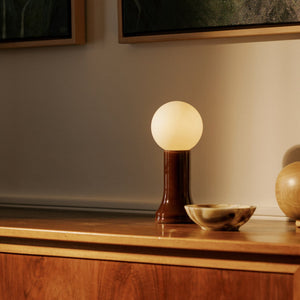
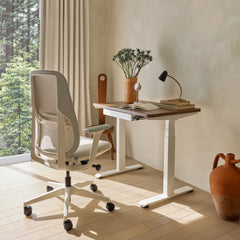
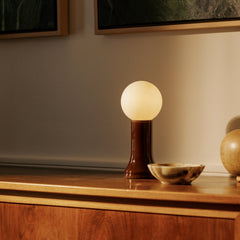
A decorative table lamp can soften the look of a workspace when the desk is visible after work hours. The Shore recycled glass table lamp fits naturally into this kind of conversation because it is connected to table lighting with a material-focused design presence. For a desk that also functions as part of a living area, this type of lighting approach can make the surface feel less like a workstation after the day is done.
Placement still matters. A decorative lamp should not sit where it blocks the task zone, reflects on the screen, or forces cords across the surface. Style and function work best when the lamp has a practical lighting role.
Brightness and color temperature are useful controls, but they cannot fix poor placement on their own. A bright lamp aimed at the screen will still cause glare. A warm lamp placed too far away may still leave the work surface dim. A cool lamp placed too close may feel harsh.
Placement should come first. Settings should refine the result.
Warm light often feels comfortable for evening reading, journaling, relaxed planning, or lower-intensity work. It can make a desk feel calmer, especially when the rest of the room has softer lighting.
Neutral light is often a balanced option for general work. It supports typing, reading, and everyday tasks without feeling too yellow or too stark.
Cool light can feel crisp for detail-oriented work, but it may become uncomfortable if the lamp is too bright or poorly angled. A cooler lamp aimed into the eyes or toward a screen can feel sharper than necessary.
The best choice depends on the task, time of day, and room conditions. The lamp should support focus without making the desk feel clinical or visually loud.
During the day, the lamp may only need to fill shadows. In the evening, it may need to provide more of the desk’s usable light. If the monitor is bright and the room is dim, the lamp can help reduce contrast by softly lighting the surrounding surface.
Adjust brightness in relation to the screen. A very bright screen with a very dark desk can feel tiring. A very bright lamp next to a dim screen can also create imbalance. The goal is not maximum brightness. The goal is comfortable contrast.
If glare appears, dimming may help, but angle should be checked first. A lamp pointed at the display will often cause problems even at lower brightness.
When the light feels wrong, start with the smallest adjustment. First change the lamp head angle. Then adjust brightness. Then change distance. Move the lamp base only when those smaller changes do not solve the issue.
This approach protects the clean desk setup. Constantly moving the lamp base can disrupt cables, shift accessories, and create clutter. A stable layout with small lighting adjustments is easier to maintain over time.
Many lighting problems come from small placement mistakes that are easy to correct. Fixing them can improve both comfort and desk appearance without replacing the entire setup.
A centered lamp may look balanced, but it often interrupts the main work zone. The center of the desk usually belongs to the keyboard, notebook, reading material, or active task. When the lamp sits there, it competes with the work.
Better placement follows function. Put the lamp where the light needs to come from, not where the desk looks symmetrical.
A lamp behind the laptop can create a distracting glow around the screen. It may also reflect on the display, especially in darker rooms. This position often looks tidy at first, but it can reduce visual comfort during actual work.
Move the lamp to the side and angle it downward. The beam should land on the desk surface, not the screen.
A cord running across the desk makes the surface feel unfinished. It can interfere with the mouse, papers, and daily movement. Even if the lamp itself is well chosen, the cord can make the setup look cluttered.
Route cords along the back or side edge. Use nearby power access when possible. Keep the front edge of the desk clear.
More brightness is not always the answer. If the lamp is too close, too high, or pointed toward the screen, increasing brightness may worsen glare and shadows.
Reposition first. Then fine-tune the brightness. Comfortable lighting usually comes from correct direction, balanced distance, and appropriate intensity working together.
Desk lamp placement is affected by the full workspace. Desk depth, monitor height, outlet location, storage, chair position, and surrounding furniture all influence where the lamp can work well.
A thoughtful workspace gives lighting, storage, and power room to function together. Choosing ergonomic and modern office furniture can support a more cohesive environment where the desk surface, seating, storage, and accessories work as one system rather than separate pieces.
When the larger layout is considered, lamp placement becomes easier to maintain because the desk is not fighting against poor reach, awkward outlets, or cluttered surfaces.
A strong desk lamp setup should pass both a lighting test and a clutter test. The surface should be easy to see, easy to use, and easy to reset at the end of the day.
1. Place the lamp opposite your writing hand when paper work is common.
2. Move the lamp outside the screen’s direct reflection path.
3. Keep the light source out of your direct eye line.
4. Angle the beam down and across the work surface.
5. Keep the lamp base outside the keyboard and mouse zone.
6. Route the cord toward a rear or side edge.
7. Adjust the lamp head before increasing brightness.
8. Clear papers and objects that cast unnecessary shadows.
9. Match brightness to the room and screen conditions.
10. Recheck the setup during both daylight and evening use.
A desk lamp can feel perfect in the morning and uncomfortable by evening. Test the placement through a full workday before deciding it is finished.
In the morning, check whether daylight creates screen glare or deep shadows. At midday, notice whether the lamp is still needed or whether it should be dimmed or redirected. In the evening, check whether the desk feels too bright compared with the room.
Also pay attention to physical interruptions. Did the lamp base get in the way? Did the cord cross the mouse path? Did papers block the light? Did the lamp need constant adjustment? These small observations reveal whether the placement supports the desk or adds friction.
The best setup often comes from small refinements rather than a full rearrangement. A few inches of movement, a lower lamp angle, or a cleaner cord path can change how the entire desk feels.
A well-placed desk lamp improves more than brightness. It reduces visual noise, protects the active work zone, limits screen glare, and helps the surface stay organized. The lamp should support the way the desk is used, not simply occupy an empty spot.
The most effective placement comes from aligning several details at once: hand dominance, screen position, lamp height, beam direction, cord routing, storage, room light, and desk size. When those elements work together, the desk feels easier to use and easier to maintain.
Better lighting does not require overcomplication. It requires a lamp placed where the work happens, angled away from distractions, and supported by a clean surface around it. With the right placement, a desk can feel brighter, calmer, and more intentional every time work begins.


You have unlocked free shipping!
You're saving $29 and unlocked free shipping!
Leave a comment