










Table Lamp Buying Guide: What to Look For Beyond Just Style
Choosing a table lamp takes more than finding the right style. This buying guide explains how to evaluate lamp height, shade type, brightness...
Learn more
Visit quiz page to see how we makes it easy to create an inspiring workplace


A desk lamp should make work feel clearer, calmer, and easier to settle into. When the lamp is too bright, poorly placed, mismatched with the room, or surrounded by clutter, the same workspace can start to feel sharp, cold, and visually tiring. The problem is rarely the lamp alone. Harshness usually comes from how the light interacts with the desk surface, screen angle, wall color, storage, cords, nearby windows, and the way the space is used throughout the day.
A well-designed workspace does not need to feel dim to feel comfortable. It also does not need a bright spotlight to feel productive. The goal is balance: enough task lighting to read, write, type, sketch, or sort paperwork without glare, hard shadows, or visual noise. Small adjustments to placement, bulb tone, shade direction, and desk organization can soften the entire work zone without sacrificing focus.
A common desk lamp mistake is asking one lamp to do the job of an entire room. When a single lamp is the only meaningful light source, it creates a concentrated pool of brightness on the desk while the surrounding walls, shelves, floor, and corners remain much darker. That contrast can make the workspace feel more intense than it actually is.
A lamp that lights only a small portion of the desk can make every surrounding surface feel shadowy by comparison. Your eyes constantly adjust between the bright work area, the darker room, and the glow of a screen. That repeated adjustment can make the workspace feel strained, especially during longer work sessions.
This is why a desk can look pleasant in daylight but feel severe at night. During the day, natural light fills in the background. At night, the desk lamp may become the only visual anchor in the room, making shadows look deeper and edges feel harder.
A more comfortable setup uses the desk lamp as task lighting, not total-room lighting. Ambient light can come from a ceiling fixture, wall light, floor lamp, or nearby table lamp. A secondary lamp placed away from the desk can soften the room’s perimeter so the task lamp does not feel like a spotlight.
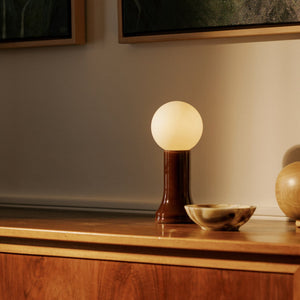
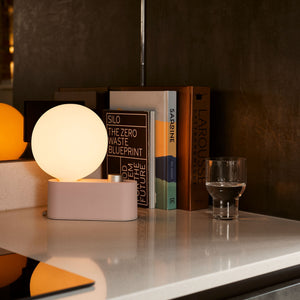
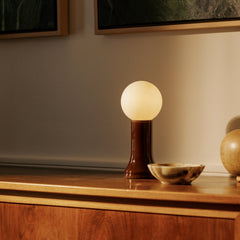
For example, a nearby mouth-blown recycled glass table lamp can support a softer background glow in the room while the desk lamp focuses on the work surface. That separation helps the desk feel intentional rather than overexposed.
Color temperature has a powerful effect on how a workspace feels. A lamp can be positioned well and still feel wrong if the light tone does not suit the room or the task. Very cool light can make a workspace feel clinical. Very warm light can feel cozy but may not provide enough clarity for detailed work.
Cooler light often feels crisp and alert, which can be useful for short periods of detail-heavy work. The mistake happens when cool light dominates the entire desk setup, especially in a home office with warm wood, soft textiles, or neutral walls. The contrast between the cold beam and the warmer room can make the desk feel disconnected from the rest of the space.
Cool light can also exaggerate the appearance of papers, white desktops, metal accessories, and screen reflections. Instead of feeling clean, the setup may start to feel stark.
Warm light usually feels more relaxed, especially in the evening. It can make a workspace feel less severe, but if it is too dim or too amber, it may not support reading, writing, or organizing documents. The result is a desk that feels pleasant at first but becomes tiring when visual detail matters.
The best choice often sits between mood and clarity. A soft-neutral lamp tone can support everyday computer work, note-taking, and reading without making the desk feel cold.
| Light Tone | Workspace Feel | Strongest Use Case | Mistake That Makes It Harsh |
|---|---|---|---|
| Warm white | Relaxed and soft | Reading, evening work, low-pressure tasks | Too dim for detailed paperwork |
| Soft neutral | Balanced and clear | Everyday desk work and laptop use | Still harsh if aimed at the eyes or screen |
| Cool white | Crisp and alert | Detail-focused tasks | Can feel sterile when used as the only light |
| Mixed tones | Uneven and distracting | Rarely ideal unless intentional | Makes the desk feel visually patchy |
A desk lamp should help the eyes see the work surface. When it points toward a laptop, monitor, tablet, or glossy accessory, it creates glare instead of clarity. Glare often feels brighter and more uncomfortable than the lamp’s actual output because it reflects directly into the eyes.
A lamp may look fine from across the room but feel harsh when seated at the desk. The working position matters most. From that angle, the bulb, shade opening, or bright beam may appear reflected on the screen. Even a small reflection can make reading text more difficult and cause the user to squint or shift posture.
Glossy screens, polished desktops, framed photos, glass accessories, and metallic objects can all bounce light back toward the face. The solution is often not a weaker lamp. It is a better angle.
Laptop placement plays a major role in glare. A low laptop often tilts upward, which can catch light from the desk lamp or overhead fixture. Raising the screen can improve the relationship between eye level, lamp angle, and screen reflection.
A laptop stand for better screen height can support a more comfortable visual line, especially when paired with a lamp placed to the side rather than behind the screen. The lamp should illuminate the desk surface, not the display.
Use the desk the way it is normally used before adjusting the lamp:
1. Sit in the working position.
2. Turn the lamp on at its usual setting.
3. Look for reflected bulbs, bright streaks, or washed-out screen areas.
4. Move the lamp slightly to the side or angle the shade downward.
5. Recheck the monitor, keyboard area, and paper surface.
Small changes often reduce glare more effectively than replacing the lamp.
A lamp that sits too close to the desktop can make one small area overly bright while leaving the rest of the workspace underlit. This creates hot spots, hard shadows, and visual imbalance. The desk feels harsher because the light is concentrated rather than distributed.
When the beam lands too tightly, white paper can look glaring. A notebook, planner, or document may appear bright in the center and dim around the edges. The eyes then work harder to move across the surface.
This can also happen with desk mats, light-colored desktops, and pale keyboards. The lamp is not necessarily too strong. It may simply be too close, too low, or too narrowly aimed.
A close lamp creates sharper shadows behind pens, mugs, monitor bases, books, and stacked papers. Those shadows add visual texture to the desk, making the surface feel busier than it is. Even a tidy workspace can feel cluttered when every object casts a dramatic shadow.
Raising the lamp, widening the beam, or shifting it slightly outward can help the light spread more evenly. The goal is to illuminate the active work zone without turning nearby objects into shadow makers.
The eye should notice the work, not the bulb. When the bulb is visible from the seated position, a desk lamp can feel harsh even when the overall brightness is moderate. Shade design and direction are central to visual comfort.
A narrow shade can provide focused task lighting, but it may create a hard beam if placed too close. A translucent shade can diffuse light, but it may also glow brightly if the bulb is too visible. An open shade may look sculptural, but it can become uncomfortable if it sits near eye level.
Good lamp placement respects the shade. The opening should generally direct light toward the desk surface, not toward the eyes, screen, or surrounding reflective surfaces.
Some lamps are designed to work in more than one setting, which can be helpful for flexible rooms. A lamp used near a desk still needs careful placement so it supports the work zone without competing with the screen or filling the visual field with exposed brightness.
An Alumina Lamp for desk or wall use fits naturally into this kind of planning because the page presents it as a lamp that can function on a desk or as a wall sconce. The important workspace principle remains the same: the lamp’s position should control the light before the light controls the room.
Lighting comfort is not only about bulbs and shades. A desk covered in cords, chargers, adapters, and power strips can feel harsher because every object catches light and casts a small shadow. The result is visual noise.
Direct light makes cable clutter more noticeable. A dark cord crossing a pale desktop creates a strong line. A charger block creates a shadow. A power strip under the monitor creates a busy edge. When these items sit inside the lamp’s brightest zone, the desk feels less calm.
This is especially common when the lamp is placed only where the nearest outlet allows. The user may end up with awkward cord routes, a lamp base crowding the keyboard, and chargers piled near the work surface.
When power access is better organized, the lamp can be placed where the light works best rather than where the plug happens to reach. A desk power module with AC and USB ports can help keep power access closer to the work area while reducing the need for loose adapters across the desktop.
For desks where a built-in approach is not the right fit, a clamp-on desk power module can provide a cleaner edge-mounted option. The lighting benefit is indirect but important: fewer cords in the beam means fewer distractions in the visual field.
A workspace can feel harsh even when no single light source is extreme. The issue may be competition. Overhead lighting, daylight, monitor glow, task lighting, and accent lamps can all pull the eye in different directions.
If the overhead light is bright, the monitor is brighter, and the desk lamp adds another concentrated beam, the eyes do not get a stable visual environment. This can make the desk feel visually noisy. The user may adjust one light, then another, without solving the underlying imbalance.
A better approach is to decide what each source should do. Ambient light should make the room readable. The monitor should be bright enough for the room, not brighter than necessary. The desk lamp should support the active task area.
A balanced desk setup usually follows a simple hierarchy:
1. Set the room’s ambient light first.
2. Adjust the screen brightness so it feels natural in the room.
3. Add the desk lamp only where task clarity is needed.
4. Dim or remove competing light sources.
5. Check the final setup from the seated position.
This order prevents the common habit of adding more brightness to fix discomfort. Often, the workspace needs better distribution, not more light.
The surface under the lamp changes how the light behaves. Glossy, glass, white, and metal surfaces can reflect brightness upward. Matte, textured, or darker surfaces may absorb more light and feel softer.
A white desktop can look clean and modern, but under a direct lamp, it may reflect more light than expected. Glass tops, metallic trays, glossy organizers, and acrylic accessories can create bright flashes or reflected edges.
This does not mean reflective surfaces should be avoided completely. It means the lamp angle should account for them. A lamp aimed straight down at a glossy surface may feel more intense than the same lamp aimed slightly across the work zone.
Before changing the lamp, try moving reflective items out of the brightest part of the beam. A desk mat can reduce glare in the active work zone. A metal pen cup can be moved away from the lamp. A glossy tray can sit outside the direct light path.
These small changes help the lamp feel smoother because the surrounding surfaces stop amplifying the beam.
Adding brightness to a cluttered desk rarely makes the workspace feel better. It usually makes clutter more visible. Papers, supplies, cables, and accessories interrupt the beam before it reaches the actual task area.
The active work zone is the part of the desk where work actually happens. It may be the keyboard and mouse area, a notebook, a reading surface, or a sketch pad. The lamp should support that zone first.
When stacks of paper or unused supplies sit inside the lamp’s beam, they create shadows and visual interruptions. The desk then feels harsher because the light is revealing disorder rather than supporting focus.
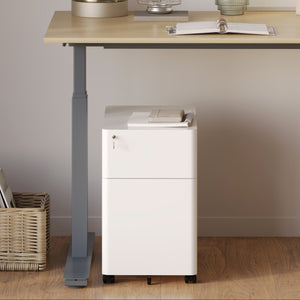
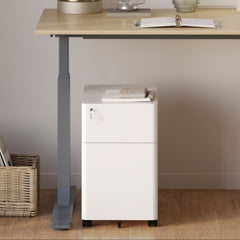
Keeping papers and supplies outside the brightest part of the desk can make the same lamp feel calmer. A locking filing cabinet with rolling wheels fits this principle because it gives paperwork and small office items a place to live away from the lit work zone.
The point is not to hide everything. It is to give the lamp a cleaner surface to illuminate. When the work zone is clear, task lighting feels more intentional and less chaotic.
A lamp setup that works in one room may feel harsh in another. Desk lighting depends on room size, natural light, wall color, desk depth, window direction, and the tasks being performed.
A desk facing a window may have strong daytime glare and low evening contrast. A wall-facing desk may feel darker and more dependent on artificial light. A side-window desk may change throughout the day as sunlight moves across the room.
The lamp should respond to those conditions. Near a bright window, the priority may be controlling glare and balancing screen brightness. In a darker corner, the priority may be softening contrast around the desk with background light.
Desk depth affects how far the lamp can sit from the work surface. Monitor height affects glare. Storage placement affects shadows. Even the distance between the desk and wall can change how light reflects around the space.
Choosing modern workspace furniture selected for local homes and offices supports a more complete approach to the work environment because furniture, accessories, and lighting all shape how comfortable the desk feels. A lamp performs better when the surrounding setup gives it room to work properly.
Lamp placement should match how the person works. A writing-heavy setup needs different light placement than a laptop-heavy setup. A right-handed user may need a different lamp position than a left-handed user.
For right-handed writing, a lamp placed on the left often reduces the shadow cast by the hand. For left-handed writing, the reverse may be more comfortable. This is not a rigid rule because desk layout, screen position, and lamp shape matter, but it is a useful starting point.
Reading requires a broader spread across the page. Sketching may need carefully controlled shadows. Video calls need light that does not create dramatic side glare or underlighting. Laptop work needs glare control more than paper illumination.
A lamp may look balanced in a styled desk photo but feel wrong in daily use. The best test is practical: sit down, work for a few minutes, and notice where shadows fall. If the hand blocks the light, the lamp is on the wrong side. If the screen reflects the bulb, the lamp angle needs adjustment. If the desk looks bright but the keyboard area feels dim, the beam is landing in the wrong place.
When a desk feels dim or uncomfortable, many people reach for a brighter bulb. Sometimes that helps. Often, it makes the harshness worse because the original problem was not a lack of brightness.
A brighter bulb aimed at the screen creates brighter glare. A brighter bulb placed too close creates a stronger hot spot. A brighter bulb above a cluttered desk creates sharper shadows. If the lamp is poorly positioned, more output simply exaggerates the mistake.
Before increasing brightness, adjust the lamp height, angle, distance, and relationship to the screen. Check whether the surrounding room is too dark. Remove reflective objects from the beam. Clear the active work zone. These changes often improve comfort without intensifying the light.
A comfortable desk lamp setup is less about maximum brightness and more about controlled placement. The light should land where the task happens, spread enough to avoid harsh contrast, and stay out of the eyes and screen.
When the light lands correctly, the workspace feels clearer without feeling sharper. The lamp becomes part of the room’s rhythm rather than a bright object fighting for attention.
A harsh workspace is usually the result of several small lighting mistakes working together. A single lamp may be too close, the bulb may be too cool, the screen may be reflecting light, the desktop may be glossy, and cords may be sitting in the beam. Fixing one issue helps, but the biggest improvement comes from seeing the desk as a complete visual field.
The most reliable lighting test happens from the chair. Sit where work actually happens and look for the following:
Is the bulb visible from the working position?
Does the screen reflect the lamp?
Is one part of the desk much brighter than the rest?
Do cords, papers, or accessories cast distracting shadows?
Does the room around the desk feel too dark?
Does the light tone feel colder or warmer than the rest of the space?
These questions keep the focus on real use rather than appearance alone.
The best desk lamp setup supports concentration without making the workspace feel severe. It gives enough light for the task, keeps glare away from the screen, respects the surface below it, and works with the rest of the room rather than overpowering it.
A calmer desk does not always need a new lamp. Sometimes it needs a better angle, a cleaner power setup, a raised screen, a less reflective surface, or fewer objects in the light path. When those details work together, the workspace feels easier on the eyes, more balanced, and more comfortable for the work that happens there.


You have unlocked free shipping!
You're saving $29 and unlocked free shipping!
Leave a comment