



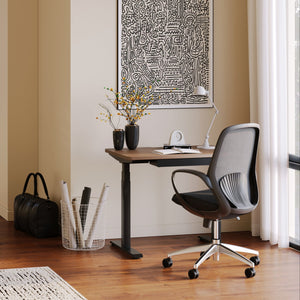
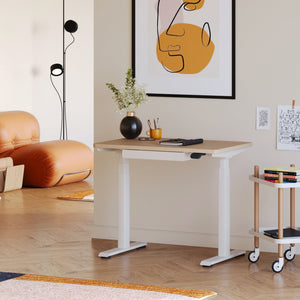
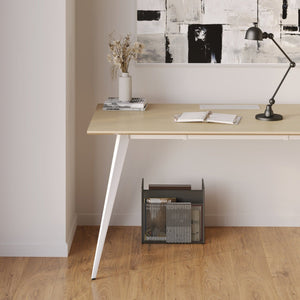
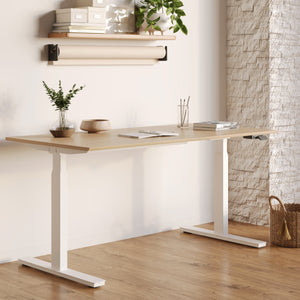
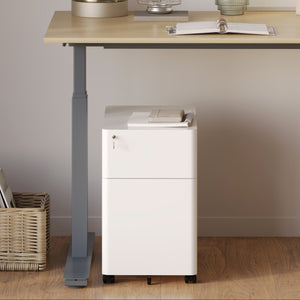






















Filing Cabinet Choices for Cleaner Workstation Planning
Cleaner workstation planning starts with filing storage that matches the desk, document volume, security needs, and daily workflow. Explore how cab...
Learn more
Visit quiz page to see how we makes it easy to create an inspiring workplace


A two-monitor and laptop setup is not just a bigger version of a single-screen workspace. It is a system with three competing needs that the desk must support at the same time: stable displays, a comfortable input zone, and a clean path for power and cables. When one of those fails, the whole setup feels cramped, shaky, or messy no matter how nice the desk looks.
At Urbanica, we think the safest way to buy is to plan the workstation like you are planning a small room. The desk becomes the anchor that everything attaches to: monitor stands or arms, laptop placement, docking, lighting, audio, and cable routing. The checklist below is designed to keep expectations realistic and decisions grounded in what you will actually do every day at the desk.
This layout needs the most surface planning because the laptop is both a display and a device you interact with. It tends to require extra width for a laptop zone and extra depth so the monitors do not get pushed too close.
This layout can feel the cleanest because the laptop can live off to the side or under the desk, but it needs an intentional plan for docking access, airflow, and where cables run.
This is common for writing, coding, design review, and research. The vertical monitor reduces width pressure, but it can increase the demand for a stable monitor mount because tall screens amplify wobble.
A desk can look large on paper, then feel small once you place two monitor stands and a laptop on it. “Usable surface” is what remains after you account for:
Monitor base footprints or the clamp footprint of monitor arms
A comfortable keyboard and mouse runway where your forearms can rest
A small buffer behind the monitors for cables so screens are not shoved forward
If you are browsing styles and sizes, it helps to start with a set of proven shapes and footprints rather than trying to guess from a single product photo. Urbanica’s Urbanica office desks collection is a practical place to compare formats before you narrow into specific features.
Depth is the dimension that most often gets underestimated in dual-monitor setups. When screens are too close, people tend to lean forward, crane the neck, or push the keyboard to the edge. None of those habits feel good over a long week.
A safer approach is to treat monitor placement like a fixed requirement, then fit the desk around it. You want monitors far enough back that you can keep a neutral head position and relaxed shoulders. If the desk is shallow, the only way to create distance is to push the keyboard closer to the edge, which often creates wrist pressure and reduces stability for typing.
Monitor arms can reclaim depth because the screens can float back instead of sitting on large stands. The tradeoff is that arms concentrate force at a clamp or grommet point. That makes desk rigidity and back-edge clearance more important. If you plan to use arms, reserve a clean back strip where the clamp can grip securely and where cables can route downward without fighting objects along the edge.
Standard stands often consume more depth than expected. Two stands plus a laptop can push everything forward, especially if the monitors have rear-facing ports that require bend room for cables. If you expect to keep monitors on their included stands, choose depth with enough margin that you are not forced into awkward keyboard placement.
If the laptop is open as a screen, it is easy to end up looking down all day. A safe plan is to either raise the laptop so the top of the screen is closer to eye line, or shift the laptop into a secondary role where it is used for reference rather than the primary focus. If the laptop is closed and docked, the desk should still support reachable docking access without forcing cables to cross the main input zone.
Width is less about “how wide can I go” and more about building zones that keep your hands and eyes working together. When width is too tight, the keyboard shifts off-center, the mouse gets cramped, and the laptop ends up perched in a spot that steals space from the main work.
1. Primary input zone: keyboard and mouse, centered to your main monitor
2. Display zone: monitor footprints or arm bases, plus the laptop position
3. Utility zone: charging, notepad, small accessories that should not invade the input area
This approach prevents the common mistake of treating the desk as a single flat surface where everything fights for the same area.
Even when the desk is “wide enough,” you can still feel strain if the keyboard is not centered to the monitor you use most. A practical check is to sit as if you are working, then make sure your shoulders are square to your main screen and your mouse has room to travel without lifting your elbow or twisting your torso.
Many setups grow over time. A webcam, mic arm, lamp, or monitor arms all compete for the back edge. If you want flexibility, plan a “no clutter” strip at the back of the desk so you can mount accessories without rearranging your entire surface.
The biggest frustration in multi-screen workstations is wobble. Weight capacity numbers can be misleading because they do not describe how the desk behaves under real forces like typing, leaning, or the leverage created by monitor arms.
Place both hands where your keyboard would sit and apply firm downward pressure, then type-like taps. If the desk flexes or bounces, you will feel it amplified in your monitors.
Gently push the desk side to side. Even minor sway can become noticeable when you have tall monitors mounted on arms.
Lean lightly on a front corner the way you might when reaching for something. A stable desk should not rack or twist.
A rigid frame, strong joinery, and a top that feels secure matter more than marketing language. Crossbar placement can help rigidity, but it should not force your knees into an awkward zone. For many people, a fixed workstation style desk is the simplest route to stability because there is no moving mechanism to amplify vibration. If that matches your workflow, our Office Desk is an example of a straightforward, grounded format designed around daily workstation use.
A sit-stand setup can be a great fit when you want posture variety, but it needs a more careful plan for stability and cable slack. The goal is not to chase perfection. The goal is to avoid the predictable pain points that make sit-stand feel fussy.
A safe approach is to check that the desk can support a neutral elbow angle for both sitting and standing, based on your chair height and the shoes you normally wear. If you are unsure, prioritize a desk that allows you to fine-tune, then set a few preferred heights that feel natural.
Any small wobble becomes more noticeable when the desk is higher. Dual monitors make that more obvious, especially on arms. If you are standing and typing with energy, a desk that is only “okay” at seated height can feel shaky at standing height.
Sit-stand desks need service loops so cables can move without pulling. The most dependable method is to anchor power and data under the desk, then let a controlled bundle travel down to the floor outlet with enough slack to move safely.
If you are considering a sit-stand format in our line, the Urbanica Standing Desk is a relevant reference point for thinking through height travel, monitor stability priorities, and how you will route cables as the desk moves.
Monitor mounting is where many dual-screen setups either become effortless or become a constant annoyance. The desk you choose needs to support your mounting plan without forcing compromises.
Two single arms offer independent positioning and can make it easier to center the main screen precisely. A dual arm can simplify cable bundling and reduce clamp clutter, but it can limit how far apart monitors can spread. The best choice depends on whether you prioritize symmetry, flexibility, or minimizing hardware on the desktop.
Clamps generally need a back edge with enough overhang to grip securely. Grommet mounting requires a compatible hole location and enough space below the surface for the mount hardware. Either way, the desk must provide a stable load point because the mount concentrates force.
If the laptop is open, plan for elevation and for a placement that does not force a neck tilt. If the laptop is closed and docked, plan where the dock lives, where the laptop stores, and how you will access ports when you need them. A clean setup is not about hiding everything. It is about making sure the “touch points” are convenient.
Cable management is not a cosmetic add-on. It is how you prevent distraction, make troubleshooting easier, and keep the floor clear for chair movement.
A practical, realistic approach is to separate lanes:
Power lane for monitor power, laptop power, and the main surge protector
Data lane for display cables and USB connections
Peripheral lane for anything you frequently unplug, like external drives
This structure reduces tangles and makes it easier to swap one device without disturbing everything else.
Pick one side of the desk as the “drop side” that goes to the outlet. Keep that drop away from chair wheels. The goal is one controlled bundle to the wall, not a web across the floor.
For under-desk containment that keeps bricks, slack, and adapters off the floor, the Under-Desk Cable Management accessory is designed to hold the bulky items that otherwise sprawl. For the vertical path from desktop to floor, the Spine Cable Management accessory helps guide the bundle so it looks intentional and moves predictably.
Label both ends of key cables, leave a little spare capacity for the next device, and keep frequently swapped cables separate from always-on cables. That way, a simple change does not undo the whole system.
Dual monitors plus a laptop usually means a dock, power bricks, and at least a few peripherals. These are the items that make a desk feel cluttered if you do not plan for them.
Some people prefer a dock on the desktop for easy access, while others want it under the desk for a cleaner surface. Both can work. The key is ensuring cables can reach monitors without crossing the keyboard zone and without creating tension at ports.
Mounting a power strip under the desk can free space, but it must be positioned so your knees never hit it and so you can still reach the switch when needed. Leave airflow around power bricks. The goal is safe organization, not cramming.
A monitor light bar, mic arm, webcam, lamp, and speakers all compete for edge space and desktop real estate. If you plan to add any of these, reserve clamp zones and keep your primary input area uncluttered.
Different workflows put pressure on different parts of the desk. Use the table below to translate “what you do” into “what the desk must do well.”
| Setup pattern | What matters most | Desk traits to prioritize | Common risk if ignored |
|---|---|---|---|
| Two monitors on stands plus laptop open | Depth and surface zoning | Deeper surface, clear utility zone | Monitors too close, keyboard pushed to edge |
| Two monitors on arms plus laptop docked | Rigidity at clamp points | Stable frame, back-edge clearance | Screen shake and clamp limitations |
| One vertical monitor plus one horizontal plus laptop open | Stability and alignment | Solid top feel, flexible mounting options | Wobble amplified by tall screen |
| Sit-stand with two monitors plus laptop | Cable slack and stability at height | Stable base, planned service loops | Tugged cables, noticeable wobble while standing |
| Shared workstation style use | Repeatable layout | Defined zones, accessible power routing | Tangled cables, inconsistent ergonomics |
Some desks are personal. Others serve a team. If you are equipping a shared space, standardization matters more than personal preference.
A shared setup benefits from repeatable docking and a disciplined cable plan. Keep the cable paths predictable and the port access obvious. The goal is a workstation that resets easily, not a desk that requires constant adjustment.
If you need multiple people working side by side with defined boundaries, it can be cleaner to use a purpose-built solution instead of improvising with separate desks. Our Quad Workstation Desk is an example of a layout designed for shared environments where consistent spacing and cable planning matter.
A good workstation plan includes the room, not just the desk.
Check doorways, stair turns, elevators, and tight corners. In the room, check where outlets are and how baseboards affect the desk sitting flush to the wall. Even a small gap can change where cables land and how monitors fit.
If you are coordinating delivery, access constraints, or local logistics, use a dedicated support page so expectations are clear. Urbanica maintains delivery and support details for local office buyers that can help you plan the practical side of getting a workstation into place.
Use this as the final filter before you commit. It is intentionally systematic so you can compare options without relying on hype.
Confirm desk depth after accounting for monitor stands or arm placement
Confirm desk width supports three zones: input, display, utility
Reserve a back-edge strip for clamps or cable routing if you plan mounts
Check under-desk knee clearance where you naturally sit and shift
Identify where the laptop will live when open and when docked
Perform the front-edge press test for typing bounce
Perform the lateral sway test for monitor movement
Consider monitor arm leverage, not just monitor weight
Verify the desk does not force awkward leg positions due to frame elements
Choose a “power core” location under the desk for bricks and surge protection
Separate power and data lanes to reduce tangles
Commit to a single drop side to the wall outlet
Add service loops if the desk will move or if you frequently reconfigure devices
Leave margin for a larger monitor size later
Keep at least one clamp zone open for a future accessory
Plan extra capacity in your cable containment so one added device does not break the system


You have unlocked free shipping!
You're saving $29 and unlocked free shipping!
Leave a comment