



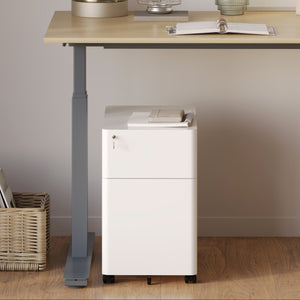

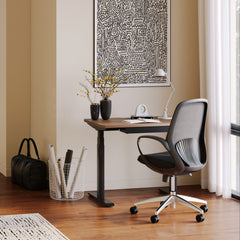
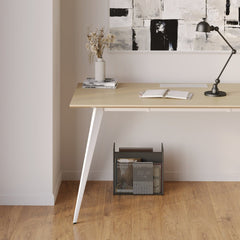
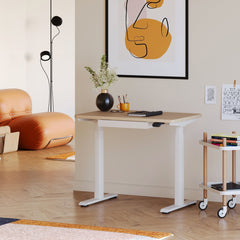

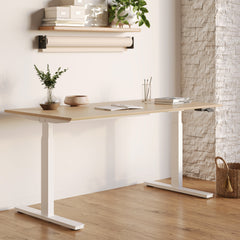

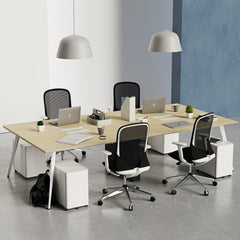
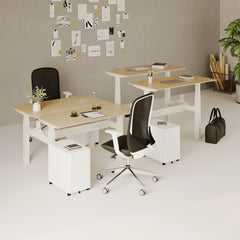
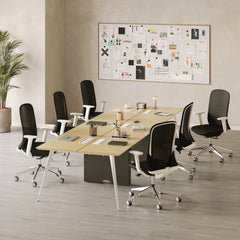


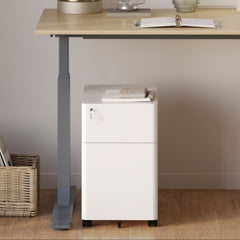


Filing Cabinet Choices for Cleaner Workstation Planning
Cleaner workstation planning starts with filing storage that matches the desk, document volume, security needs, and daily workflow. Explore how cab...
Learn more
Visit quiz page to see how we makes it easy to create an inspiring workplace


Home office back pain tends to feel more personal than office discomfort because the environment is more variable. The chair might be a dining chair one day and a cushy lounge seat the next. The floor might be carpet that lets your chair sink and tilt. The desk might be a kitchen counter that forces raised shoulders, or a coffee table that pulls you into a deep forward hunch. None of that is a character flaw or “bad posture.” It is physics and repetition.
At Urbanica, we think the most useful approach is practical: identify what is loading your spine, reduce the load with a few high-impact adjustments, then choose seating and a workstation that support movement instead of demanding constant bracing.
Good posture is not a statue. The spine likes variety. When your chair lacks support, your body finds stability by tightening. When your desk height is off, you reach and round without noticing. When your screen is low, your upper back does the work your monitor should be doing.
Pain within 10 to 30 minutes often points to pressure points or missing support, like a seat pan that is too deep, a backrest that does not meet your lumbar curve, or armrests that force shoulder tension.
Pain after 60 to 120 minutes often points to fatigue from holding one position too long, even if that position looks decent at first.
Sit all the way back in your chair. Put both feet flat. Exhale, then gently grow taller through the crown of your head without lifting your shoulders. If you can feel your pelvis stable and your ribcage stacked without clenching your stomach or shrugging your shoulders, you are close to a neutral starting point. If you cannot, your chair or desk is pushing you into compensation.
If you are exploring options, start broad and compare shapes, support styles, and adjustability across an office chair lineup that is designed for workspaces, not occasional sitting.
Back pain from desk chairs is rarely a mystery condition. It is usually one of a few repeat patterns that change the way your spine carries load.
When the pelvis rolls backward, the low back flattens and the upper back rounds. This posture is common in soft seats and low chairs. Your back muscles then work overtime to keep you upright.
Neutral is a balanced point where your sitting bones feel evenly loaded. You are not tipping forward into an exaggerated arch, and you are not slumping onto the tailbone. The easiest way to find it is to rock gently forward and back, then settle in the middle where breathing feels easiest.
A slightly reclined backrest can reduce spinal compression for many people because it shares load between the seat and backrest. The key is support plus control. If the recline is too loose, you collapse. If the recline is locked too upright, you fatigue.
The goal is supported micro-movement: small changes in angle and pressure throughout the day that keep tissues from getting irritated.
A seat that is too high can create dangling feet, reduced stability, and increased low back tension. A seat that is too low can close the hip angle and encourage slumping.
Armrests that are too high cue shoulder shrugging, which often shows up later as neck tension and upper back fatigue. Armrests that are too low or absent can lead to leaning and reaching, which drags the ribcage forward and increases spinal load.
Below is a practical way to match what you feel to what usually causes it in a home setup. Pain can have many contributors, so treat this as a starting point for safe adjustments, not a diagnosis.
| What you feel at home | Common setup cause | Chair fix that is usually safe | Desk or habit fix that usually helps |
|---|---|---|---|
| Tailbone pressure or “sitting on bone” discomfort | Slumping onto the back of the pelvis, seat too hard, or backrest not meeting lumbar curve | Raise seat slightly if low, add gentle lumbar support so you sit on sitting bones, not tailbone | Stand briefly every 30 to 60 minutes, avoid perching on chair edge |
| Dull low back ache after an hour or two | Pelvis drifting backward, backrest too upright or not supportive, or feet not stable | Adjust lumbar height, add slight recline with supportive tension, ensure feet are planted | Bring keyboard and mouse closer, reduce forward reach |
| Mid-back burning and rounded shoulders | Screen too low, arm support missing, or desk too high leading to shrugging | Set armrests so shoulders can relax, sit fully back so backrest supports you | Raise screen height, keep elbows near sides |
| Neck tightness and headaches | Forward head posture from low monitor or laptop-only setup | Use backrest support and armrests to reduce forward lean | Lift screen, increase viewing distance, take short “look far” breaks |
| Hip pinching or sciatic-style irritation | Seat too deep, pressure behind knees, or uneven sitting from crossing legs | Reduce seat depth, keep a small gap behind knees, level pelvis | Stop sitting on one leg, use a footrest if needed for stability |
If you have numbness, progressive weakness, pain after a fall, unexplained night pain, or symptoms that rapidly worsen, a chair adjustment is not the right next step. In those cases, it is safer to consult a qualified clinician.
Most people tweak the wrong control first. The safest and most reliable sequence is to set the base, then the support, then the fine-tuning.
Start with both feet flat and weight evenly distributed. Your knees should feel comfortable, not jammed up and not dangling. If the desk is high and forces you to raise the seat, add foot support so your feet still feel grounded.
Can you lift one foot slightly and set it down without your pelvis shifting? If not, you are unstable.
Can you relax your shoulders while your elbows stay near your sides? If not, the desk height or armrests need attention.
If the seat is too deep, it presses into the back of the knees. That can encourage sliding forward and slumping, and it can also irritate sensitive tissues for some bodies. Aim for comfortable clearance behind the knees.
Sit fully back and check the space between the seat edge and the back of your knee. A small gap is usually more comfortable than contact pressure. If you cannot achieve it, you will often do better with a chair designed for adjustability.
Lumbar support should meet your low back where your natural curve lives. If it pushes too hard, it can tip your ribcage forward and create a tense arch. If it is too low, it misses the curve and encourages slumping.
If you feel like you have to brace your core to tolerate the support, it is probably too aggressive or placed too high.
A slight recline can reduce load, especially during reading, calls, or thinking work. Use enough tension that the chair meets you, not so little that you fall back.
Armrests should allow your shoulders to stay down and your elbows to rest lightly. They are not meant to carry your body weight.
If you want a reference point for how multi-point adjustability is presented in a work chair, the Novo Chair product details are a helpful example of how we outline a chair’s intended function without asking you to guess.
A supportive chair can still fail you if the desk forces you into reach and hunch. Many home offices are built around whatever surface exists, so these fixes focus on controlling distance and height using simple choices.
When the desk is too high, your shoulders lift. When the desk is too low, you fold forward. The most useful target is this: elbows can rest near your sides while you type, with shoulders relaxed and wrists neutral.
If the desk is high, you may raise the chair, then add foot support so your feet remain stable.
If the desk is low, you may need a seat cushion that raises you slightly, but be careful: thick cushions often change seat depth and can make slumping easier.
A low screen pulls your head and ribcage forward. Raising the screen reduces the urge to fold through the upper back. If you work on a laptop, a laptop stand plus an external keyboard and mouse is often the most comfortable path, even in small spaces.
When your mouse sits far away, you reach and rotate slightly, often for hours. That creates uneven pressure through the hips and low back. Pull the mouse closer, and keep the keyboard close enough that your elbows stay near your torso.
Shallow desks tend to force you forward. A deeper surface lets you position the screen at a comfortable distance and keeps your forearms supported without perching.
If your workspace is being rebuilt or upgraded, the Office Desk dimensions and options can help you think in terms of surface size, layout, and practical spacing, rather than chasing a trend.
The best chair is the one that supports how you actually work. Back pain often comes from a mismatch between chair behavior and work behavior.
If your day is heavy on typing and focused work, you benefit from stability that prevents sliding and a backrest that supports micro-movement. You want the chair to make “neutral” feel natural, not like a performance.
You can shift slightly, inhale deeply, and keep your sitting bones evenly loaded without scooting forward.
Many people sit more reclined during calls, then return to typing. A chair that supports a controlled recline can help you avoid the end-of-day low back ache that comes from collapsing backward and then snapping upright repeatedly.
If you bounce between emails, sketching, reading, and short tasks, the chair should be easy to adjust quickly. When controls are awkward, you stop adjusting, and your body pays the price.
In small rooms, the pain trigger is often not the chair’s width, but whether the chair can tuck in, whether armrests collide with the desk, and whether you can rotate without twisting your spine against the room layout.
No single chair fits everyone, so we think in archetypes. The goal is to match the chair’s behavior to your body and work pattern.
This archetype suits people who notice small fit issues and want to adjust seat depth, recline behavior, and support positions as they refine their setup. It also suits shared home offices where more than one body uses the same chair.
Set one variable per day. If you change everything at once, you cannot tell what helped.
Some bodies feel better when the chair offers a more immediately supportive, comfortable feel that reduces bracing. The risk is softness without structure, so look for comfort that does not encourage sliding forward.
If you are comparing this style, the Onyx Chair product details show how we describe comfort-focused seating in a way that is still work-oriented.
Not every home needs a highly technical chair. If you sit in shorter blocks or your office doubles as a living space, a simpler chair can still be back-friendly when paired with a smart desk setup and consistent habits.
The Seashell Chair product details are a good reference for an everyday performance style that fits many home layouts.
In many homes, the chair is visible all day. When people dislike how a chair looks, they move it away from the desk, then end up working from a couch. A chair that fits your style can keep you working where your back is better supported.
The Muse Chair product details reflect this balance between workspace function and a look that belongs in real rooms.
Back pain often improves when the load pattern changes, even before a chair upgrade. These steps are meant to be simple, safe, and realistic for a home schedule.
A small towel roll can be more effective than random cushions because it is firm enough to support without collapsing.
Place the roll at the level of your belt line, then adjust up or down by small amounts. If you feel pushed forward away from the backrest, the roll is too thick or too high.
Thick, soft cushions often raise you and change the seat depth. That can increase pressure behind the knees and encourage slumping. If you add a cushion, keep it modest and stable, and re-check seat depth clearance afterward.
A “perfect schedule” is not required. What matters is interrupting one position before it becomes irritation.
1. Foot and ankle wake-up (60 seconds): Press feet into the floor, then lift heels and toes slowly to feel stable contact.
2. Seated pelvic rocks (60 seconds): Gently rock pelvis forward and back, then settle in the middle where breathing is easiest.
3. Chest opener at the desk (90 seconds): Interlace fingers behind your back or hold the chair sides, lift the chest gently without forcing the neck.
4. Thoracic extension (90 seconds): Place hands behind head, lean back slightly over the chair’s upper backrest, keep ribs from flaring.
5. Hip flexor reset (2 minutes): Stand, step one foot back, bend front knee slightly, keep torso tall, feel a gentle stretch at the front of the hip.
6. Hamstring glide (90 seconds): Place heel on a low surface, hinge at the hips with a long back, stop before you feel nerve tension.
7. Neck decompression (60 seconds): Chin tuck slightly, then tilt ear toward shoulder gently, no forcing.
8. Return to neutral (60 seconds): Sit, feet grounded, shoulders relaxed, exhale, and start again with a lighter grip on the keyboard and mouse.
A chair and desk can be set perfectly on day one and feel different on day seven. That is normal. Your body changes, your workload changes, and your habits drift.
Re-check foot stability and seat height.
Re-check seat depth clearance.
Re-check whether your shoulders stay relaxed while typing.
Re-check screen height after you change laptop position, lighting, or desk accessories.
If you change seat height, do not change lumbar position the same day. Small changes are easier to evaluate and less likely to create new irritation.
A better setup often feels quieter, not dramatic. You shift less out of discomfort. You breathe more easily. You can lean back briefly without feeling like you lost your position. You stand up at the end of a work block with less stiffness.
If you cannot achieve stable feet, comfortable seat depth, and supportive back contact with reasonable adjustments, the chair may simply be the wrong match for your body and desk. Also consider replacement if pressure points persist despite good desk height and reduced forward reach.
When you are already dealing with discomfort, the buying process should feel straightforward. It helps to know where to find clear answers about delivery, availability, and how to get guidance without guessing.
If you want that clarity in one place, our delivery FAQs and shipping details page lays out how we approach getting workspace essentials to customers and how to reach our team for help choosing pieces that fit the way you work at home.
Back-friendly seating is not a single feature. It is a system: stable base, supportive back contact, reduced reaching, and regular movement. When those pieces work together, your chair supports you instead of negotiating with you.
At Urbanica, we design furniture for real homes, real schedules, and real bodies. The goal is a workspace where you can focus, adjust easily, and finish the day feeling more like yourself than like a folded-up version of yourself.


You have unlocked free shipping!
You're saving $29 and unlocked free shipping!
Leave a comment