



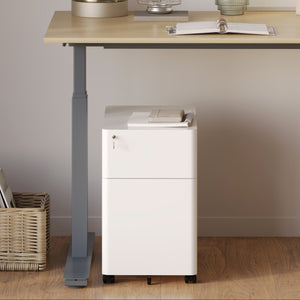

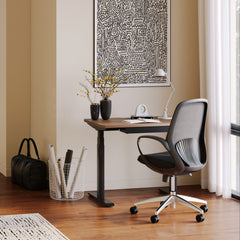


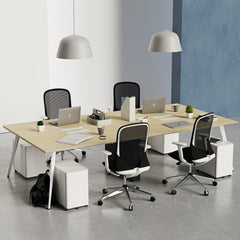
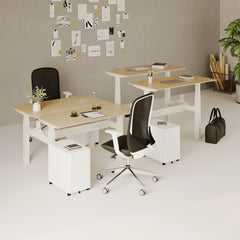
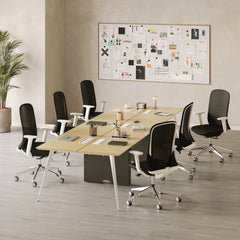


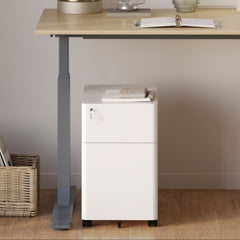


Filing Cabinet Choices for Cleaner Workstation Planning
Cleaner workstation planning starts with filing storage that matches the desk, document volume, security needs, and daily workflow. Explore how cab...
Learn more
Visit quiz page to see how we makes it easy to create an inspiring workplace


A desk chair that feels fine during a short reading sprint can start to feel distracting during a longer block of note-taking, typing, or problem sets. The difference is not toughness or willpower. It is how long your body stays in one position, and how quickly small discomforts become big ones when focus is the priority.
Short sessions reward simplicity. You can often get away with fewer adjustments because you are changing positions more naturally. Longer sessions punish small fit issues. Seat depth that is slightly off can press behind the knees. A backrest that does not support your natural curve can make you slump forward. Armrests at the wrong height can creep your shoulders up without you noticing until your neck feels tight.
Tailbone discomfort often points to seat shape, seat padding feel, and how your pelvis is positioned. If the seat is too deep, many students slide forward to reach the desk. That takes your lower back out of a supported position and shifts weight into the tailbone area.
Upper-back tension often comes from a mismatch between your chair posture and your screen height. When the screen is too low, you lean forward and down. Even a supportive chair cannot fully offset a setup that constantly asks your neck to angle forward.
Numb feet can happen when a seat is too high for your leg length, or when the seat edge presses into the back of the thighs. This is one of the fastest signs that seat height and seat depth need to match your body, not just the desk.
Sit at your current desk and do three quick checks.
First, place your feet flat. If you can only rest toes on the floor, you will want a chair with a height range that can go lower, or plan for a stable foot support solution.
Second, slide close enough that your elbows can bend naturally as you type or write. If you cannot get close because your chair arms hit the desk, you will either need adjustable arms or a chair profile that stays out of the way.
Third, look at your screen. If you are using a laptop and your neck angles down, the chair is not the only variable that matters. This is a setup issue, and it affects which chair features feel “helpful” versus “not enough.”
Seat height is the foundation for studying posture. When your feet are flat and stable, your legs do not fight your chair. When your legs are supported, your pelvis can sit more naturally. When your pelvis is stable, your back support does its job.
A practical way to think about seat height is the feet-flat rule. You should be able to place both feet on the floor without sliding forward or tucking one foot under the chair to feel “balanced.” If you catch yourself doing that, the chair may be too high, or your desk may be pushing you into an awkward position.
A tall desk can force you to raise the seat, which can lift your feet off the ground. In that case, the solution is not always a different chair. Sometimes the safest fix is to support your feet so your legs are not hanging. This keeps your posture honest and reduces the tendency to slump.
Seat depth is how far the seat extends from the backrest to the front edge. Many students never think about it until they experience pressure behind the knees or feel like they cannot use the backrest without losing contact with the desk.
If the seat is too deep, the front edge can press behind the knees. You may slide forward to relieve the pressure. That reduces back support and shifts your posture into a “perch,” which often creates fatigue during long sessions.
If the seat is too shallow, you may feel like your thighs are not supported. You can end up perched on the edge, which increases pressure in the hips and lower back over time. For longer study blocks, thigh support matters because it reduces the urge to constantly reposition.
Look for a seat edge that does not feel sharply defined when you sit. The goal is a stable seat that supports without creating a hard pressure line under your thighs. This is especially important when you are still and focused, which is exactly what studying requires.
Photos can help you evaluate proportions even without relying on claims. Look at how thick the seat appears, how rounded the front edge is, and whether the backrest shape encourages upright sitting rather than forcing you into a recline.
Studying shifts between reading, typing, and reviewing. The best back support for studying is not a single posture. It is the ability to stay supported across those modes without feeling like you are constantly “fixing” your position.
Passive lumbar support is a natural curve in the backrest that encourages your lower back to stay in a neutral position. It can be enough if your desk height, screen height, and seat depth are already close to ideal for you.
Adjustable lumbar can help when you are between sizes, when you share a chair with someone else, or when you notice your comfort changes as the day goes on. The point is not to chase perfection. It is to avoid being forced into a curve that does not match your body.
Recline is not just for relaxing. Small recline changes can reduce pressure on the spine and allow micro-movements that help you stay comfortable during longer sessions.
For typing and writing, you want stability. If the chair reclines too easily, you may feel like you are constantly correcting. That can distract you and fatigue your core.
For reading and reviewing, a slight recline can reduce forward head posture. If the chair reclines but does not support the upper back well, your neck may still take the workload. That is why backrest shape and head position matter.
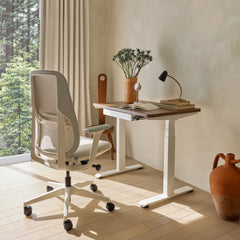
When students ask us what “ergonomic” should mean for studying, we focus on support and adjustability that helps you stay consistent for longer blocks without needing constant posture resets. The Novo Chair is a useful reference point for buyers who want a chair designed around longer desk sessions, because it represents the kind of seating approach that prioritizes sustained support over short-term comfort.
Armrests can reduce shoulder load when they fit properly. They can also create strain when they are too high, too low, or positioned in a way that blocks you from sitting close to your desk.
If your shoulders feel raised while typing, or your neck feels tight after a session, armrests may be pushing your arms upward. That can create tension even if the chair feels supportive otherwise.
If your wrists feel like they are carrying your forearm weight, or you rest your elbows on the desk edge to compensate, your arms may not be supported in a way that reduces load.
Studying often happens at compact desks. If the armrests force your elbows outward, you can end up typing with flared arms. That can shift tension into shoulders and upper back.
If you cannot slide in under the desk comfortably, you may lean forward. This posture creates a chain reaction: shoulders round, neck angles forward, and lower back loses contact with the backrest. Adjustable arms or a slimmer arm profile can make the setup work better.
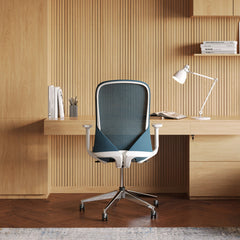
Some buyers want a straightforward chair that supports daily studying without feeling bulky. The Onyx Chair works well as a reference point for a simpler ergonomic profile, especially if you are trying to balance support, space, and a clean look in a study area.
Room temperature, airflow, and long sitting sessions can make a chair feel dramatically different across the day. Mesh can feel cooler and less clingy in warm environments. Cushioned seats can feel softer at first contact. Neither is automatically better for studying. The best choice depends on how your body responds over time and how much you move during sessions.
Some students sit deep into the chair, using the backrest consistently. Others perch on the edge, especially when leaning over books or handwriting. These habits change how seat materials feel.
Perch sitters tend to compress the front edge more and may feel pressure sooner if the seat edge is firm. Deep sitters rely more on backrest and seat depth, and may notice discomfort if the seat lacks support under the thighs.
Studying includes coffee, snacks, lint, and daily wear. Consider how a material will look and feel after regular use, not just on day one. A chair that is easy to wipe and maintain is a practical win, especially in dorms or shared spaces.
If you know you will not deep clean often, choose materials that do not punish you for that. This is not about “perfect maintenance.” It is about choosing something that will still feel good and look acceptable with normal life happening around it.
The way your chair interacts with your floor affects daily comfort more than many people expect. On carpet, rolling can feel heavy. On hardwood, rolling can feel too free if the chair moves when you shift.
If your chair drags on carpet or scratches floors, a mat can protect the surface and make movement predictable. That predictability helps you stay focused, especially if you reposition often during studying.
If a chair feels wobbly when you shift, you will unconsciously brace yourself. That can create fatigue in your core and legs. A stable base supports micro-movements without making you feel like you are balancing.
If you share a room or study in an apartment, noise matters. Squeaks, rattles, and loud rolling can be distracting. A chair that moves quietly helps keep your environment calm, which is part of what makes studying sustainable.
No chair exists in isolation. Your desk height determines your elbow angle. Under-desk clearance affects where your legs can go. If the desk is too high or too low relative to your body, even a good chair will feel wrong.
Desk depth is a big deal for studying because books, notebooks, and a laptop take space fast. If you are forced to place the screen too close or too far away, you end up leaning forward or craning your neck. Both are posture drains.
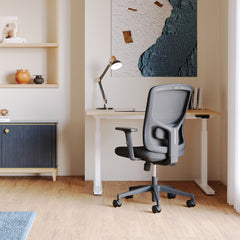
If your current desk is limiting your posture, upgrading the chair alone can feel underwhelming. Sometimes the smarter move is to evaluate the desk options that better match study needs, especially around surface depth and leg space. The Urbanica desks collection is helpful for seeing the range of desk styles and dimensions that can support more natural posture when you sit down to study.
Your neck works hard when your screen is low. A simple principle helps: the top portion of the screen should sit close to your natural eye level when you are seated upright. You do not need perfection. You need to avoid sustained downward neck angle.
Laptops encourage slumping because the screen and keyboard are connected. If you lift the laptop to improve screen height, the keyboard becomes too high. If you keep the keyboard at a usable height, the screen stays low. Many students feel fine at first, then gradually collapse into a posture that strains neck and shoulders.
When you raise your screen and separate input devices, your posture options open up. This can reduce neck strain and make your chair’s back support more effective because you are not constantly leaning forward.
For many setups, the simplest posture improvement is a stable stand that raises the laptop or monitor to a healthier height. The monitor and laptop stand accessories collection gives a clear sense of the kinds of solutions that support screen height changes without forcing a full workspace overhaul.
Standing all day is not the goal. A practical rhythm is to stand for short, low-intensity tasks and sit for deep work. This reduces fatigue and makes movement feel natural rather than forced.
Flashcards, skimming readings, organizing notes, and admin tasks are often easier to do standing. You are moving slightly, and the mental load is lighter.
Writing, problem sets, and long note-taking often require stable sitting. This is where chair support matters most, and where your desk height and screen height must align.
If you are considering a sit-stand desk for studying, focus on stability and a height range that works for your body. A desk that wobbles during typing or writing can be frustrating. A desk that cannot adjust to a comfortable standing height will not get used consistently.
The Standing Desk page serves as a reference for buyers who want to understand how sit-stand desks are typically described, including the kinds of details that affect daily use such as footprint and how the desk is meant to be used in a home workspace.
Studying is rarely just a laptop. Add a notebook, a textbook, and a drink, and your surface fills up. A desk that feels fine for browsing can feel cramped for serious study, which encourages shoulder rounding and clutter stacking.
If the desk structure blocks your knees or forces you to sit offset, your chair support becomes less effective. You end up twisting or sitting diagonally, and that can create discomfort over time.
Clutter pushes items into awkward positions. A keyboard too close forces shoulders up. A notebook too far pulls you forward. A clean surface is not about aesthetics. It helps you place items where your body can use them without compensation.
If you want a straightforward desk to pair with a study chair, the Office Desk listing is a practical reference for understanding desk proportions, surface use, and what to expect from a standard desk setup in a home study area.
A chair can be a great fit and still be frustrating if assembly is confusing. Look for clear instructions, labeled hardware, and simple steps. If you have limited space, plan to assemble near the final location so you do not have to carry it far once built.
Armrest alignment and overtightening are common issues. Tighten gradually and evenly so parts align properly. This keeps the chair stable and reduces squeaks that can show up later.
Before checkout, confirm what happens if the chair feels wrong once you have studied in it for a real session. Fit is personal, and even careful measurements cannot guarantee a perfect feel on day one. Clear return policies protect you from guessing.
A chair is a moving product. Mechanisms and adjustments experience normal wear. A good warranty explanation is specific about what is covered and how claims are handled. The most important point is transparency. If the warranty terms are easy to understand, you can buy with more confidence.
When customers want clarity on delivery expectations, help choosing pieces, or how support works after purchase, we point them to the information that answers those practical questions in one place. The delivery and support details page is a useful reference for the kinds of questions buyers ask right before checkout, especially when coordinating a workspace purchase with real life responsibilities.
Use this checklist to prioritize features based on how you actually study.
1. If you study in long blocks, prioritize seat comfort over time, back support that keeps you upright, and adjustments that help you stay consistent.
2. If you type a lot, prioritize arm support that does not raise shoulders, plus a stable posture that keeps wrists neutral.
3. If you read from a laptop, prioritize a plan for screen height, because a chair cannot fully solve a low screen angle.
4. If you share a chair or workspace, prioritize easy adjustability so you can reset fit quickly without fuss.
5. If your desk is small, prioritize a chair profile and arm setup that lets you slide in close without leaning forward.
6. If you move often while thinking, prioritize stability and smooth movement so the chair supports micro-adjustments without wobble.
7. If your room is warm, prioritize breathability and materials that stay comfortable through long sessions.
| Chair Feature Area | What to check before checkout | Why it matters for studying |
|---|---|---|
| Seat height range | Feet-flat stability at your desk | Prevents leg strain and forward slumping |
| Seat depth feel | Knee comfort and thigh support | Protects circulation and reduces perched posture |
| Back support shape | Lower-back curve support | Helps maintain neutral posture during long blocks |
| Recline and tension | Stability for typing, give for reading | Supports movement without constant posture correction |
| Armrest adjustability | Height and desk fit | Reduces shoulder tension and wrist strain |
| Material choice | Breathability and pressure feel | Keeps comfort consistent across long sessions |
| Base stability | No wobble when shifting | Prevents bracing and fatigue |
| Floor interaction | Smooth, controlled rolling | Keeps setup calm, quiet, and predictable |
Study schedules change. Workloads change. Sometimes your space changes too. The safest approach is to buy around fundamental fit and support rather than chasing one “perfect posture.” A chair that supports neutral sitting, allows small adjustments, and pairs well with your desk and screen setup will stay useful as your habits evolve.
When we design and curate office furniture, we think in systems, not single products. A chair that fits your body, a desk that fits your work, and a screen height that fits your eyes create a setup that makes studying feel less like endurance and more like focus.


You have unlocked free shipping!
You're saving $29 and unlocked free shipping!
Leave a comment