



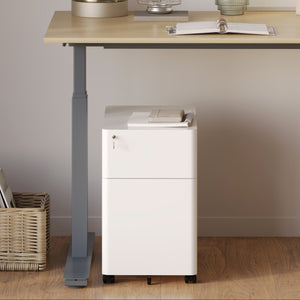

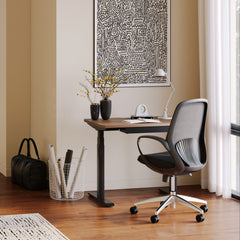


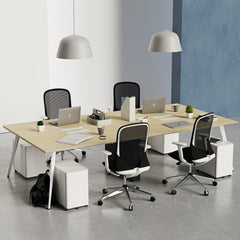
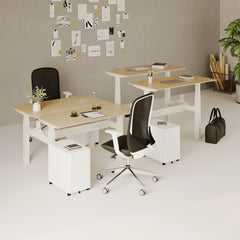
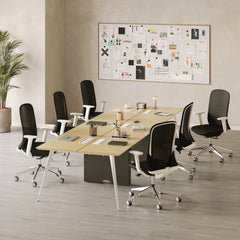


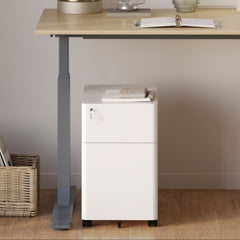


Filing Cabinet Choices for Cleaner Workstation Planning
Cleaner workstation planning starts with filing storage that matches the desk, document volume, security needs, and daily workflow. Explore how cab...
Learn more
Visit quiz page to see how we makes it easy to create an inspiring workplace


Back pain at your desk rarely comes from one single thing. It usually shows up when your chair, desk height, screen position, and daily habits create one repeated pattern. The fastest way to get relief is to match the fix to the pain signal instead of guessing.
Here’s a practical way we think about it at Urbanica when someone tells us, “My chair is killing my back.”
| Where you feel it most | What’s commonly driving it | Quick fix to try first | What should change right away |
|---|---|---|---|
| Low back (dull ache, end of day) | Pelvis tucked under, lumbar gap, chair too low | Raise seat slightly, add gentle lumbar contact | Less slumping, easier upright sitting |
| Mid back (tight, “compressed” feeling) | Ribs collapsing, reaching to keyboard/mouse | Pull inputs closer, rest forearms | Breathing feels less restricted |
| Neck and upper back (knots, headaches) | Screen too low, shoulders shrugged to armrests | Raise screen, lower or move armrests inward | Shoulders drop without effort |
| Tailbone (sharp pressure) | Sitting behind sit bones, too much posterior tilt | Scoot hips back, slight recline, firm sit-bone contact | Pressure shifts off tailbone |
| One-sided low back or sciatic-style zing | Seat edge pressure, crossed legs, one hip perched | Fix seat depth and foot symmetry | Less leg tingling, hips feel level |
This is the classic “pelvis tucks, spine rounds, back muscles guard” pattern. Often the chair is slightly too low, the seat is too deep, or the lumbar area has no contact so you collapse backward.
Sit tall without forcing your chest up. If you can stack ribs over hips and breathe comfortably, the chair can probably be adjusted. If you instantly slump or brace hard, your setup is working against you.
This often comes from reaching forward all day. When your keyboard and mouse are too far away, your ribcage collapses, your upper back rounds, and your mid-back starts doing overtime.
If your mid-back tightens most during focused work, your arms are likely pulling your torso forward more than your chair is supporting you.
This commonly shows up when your screen is low and your shoulders float up to meet armrests that are too high, too wide, or too far forward. Even a “good” chair can feel awful if your arms cannot settle naturally.
If you feel your shoulders creeping up while you type, armrests are not helping. They are creating tension that travels into your neck and upper back.
Tailbone pain is often a sitting position problem, not a cushioning problem. If you sit behind your sit bones or slide forward, pressure concentrates in the wrong place.
Think “sit bones under me.” If your sit bones feel more grounded and your tailbone feels less pinched, you are already moving in the right direction.
A deep seat edge can compress the back of the thighs. Add a crossed leg, a wallet, or a habit of perching on one hip, and your pelvis tilts. Your low back then twists a little for hours.
Empty back pockets, uncross legs, place both feet evenly. If symptoms reduce, the chair may not be the villain. The pattern is.
A chair cannot replace medical care, and it cannot erase every cause of back pain. What it can do is stop feeding the problem. This sequence focuses on neutral alignment, pressure distribution, and support that feels steady rather than forced.
If you want to compare your current chair’s adjustability against what many modern options typically include, scan our chairs collection and notice how many models offer basics like seat height, supportive back shape, and arm positioning.
Sit with feet flat and knees roughly level with hips. If your hips are far below your knees, you are more likely to tuck your pelvis and round your low back. If your feet dangle, your low back often tightens to “hold you up.”
Use a stable foot support like a firm book stack or a small footrest. The goal is steady contact, not perfection.
Slide your hips back so your backrest can actually support you. Then check the space behind your knees.
You want about 2 to 3 fingers of clearance behind the knee so the seat edge does not dig in. If your chair seat is too deep and cannot adjust, you can sit back with a small cushion behind your low back to reduce effective depth.
Lumbar support should feel like a gentle fill-in, not a hard push. If you force a big arch, your ribs flare and your back muscles tense.
It should contact the curve of your low back above the belt line, not jam into your sacrum.
Many people try to sit bolt upright all day, then wonder why their back muscles fatigue. A slight recline can reduce guarding and let the backrest share the load.
You should be able to lean back a little and return upright without pushing hard with your legs.
Armrests should support your forearms so your shoulders can relax. If they are too high, shoulders shrug. If too low, shoulders droop forward. If too wide, you reach outward and flare your elbows.
Let your arms hang. Then raise your forearms to typing position. Adjust armrests to meet your forearms without lifting your shoulders.
If your elbows cannot stay near your sides, your spine will eventually pay the price. Pull your keyboard and mouse closer until your forearms can rest and your shoulders stop creeping forward.
Wrists stay neutral, elbows near your ribcage, shoulders down.
A low screen makes your neck crane. That often becomes upper-back tightness and headaches.
Your eyes should land naturally in the upper portion of the screen without you tipping your chin up or down. If you use a laptop, raising it and using an external keyboard and mouse is often the biggest single improvement.
There is no perfect static posture. The safest posture is the one you change often.
Every 30 to 45 minutes, do a 30-second reset. Stand, breathe, and sit back down with your hips all the way back in the chair.
We see this all the time: someone adds a thick lumbar pillow and ends up worse. Usually the problem is placement and thickness.
Roll a small towel, not a beach towel. Place it behind your low back so it fills the gap when you sit with hips back.
If you cannot inhale into your ribs comfortably, the roll is too thick or too high. Reduce thickness and try again.
Each option has a place, but none should force you into a rigid shape.
Jacket: good for a temporary fill-in when a chair is too deep or flat.
Small cushion: helpful when you need consistent contact and a little more padding.
Lumbar pillow: useful if it is modest in thickness and stays in the right spot.
Pinching in the low back, rib flare, or sliding forward off the chair. Those are cues to back off.
Before you worry about the pillow, set your pelvis. Sit back on your sit bones, bring ribs over hips, then add lumbar support only until the gap is gently filled.
Back pain does not always start in the back. Pressure under your thighs can change pelvic position and tension patterns up the chain.
If the seat edge presses into the back of your thighs, nerves and blood flow can get irritated. You may unconsciously slide forward or perch, and that often strains the low back.
Use a small cushion behind your back to reduce effective depth, or choose a chair with a shorter seat pan when you eventually upgrade.
Softness can feel good for a minute, then concentrate pressure in one spot. Balanced support spreads pressure across the sit bones and upper thighs.
Hips back, slight recline, chest relaxed. If you feel pressure shift away from the tailbone, keep that setup.
Perching on one hip can become automatic, especially when the chair feels uneven or the desk setup encourages twisting.
Put both feet down evenly, center your hips, then align armrests so one side is not “higher effort” than the other.
When you want a concrete reference for the kind of adjustments that help people dial in fit, the Ergonomic Novo Chair is a useful benchmark to look at. Even if you do not buy it, it shows the type of chair design that aims to support neutral posture through adjustable contact points.
A chair can only support what your desk setup allows. If your desk forces you to reach or shrug, your back will work overtime.
If the screen is too low or too far, you lean forward. Your head goes forward, your shoulders round, and your mid-back tightens.
If you use a laptop as your main screen, consider raising it and using a separate keyboard and mouse. This is often more impactful than changing the chair.
Reaching forward pulls your torso away from the backrest. That removes the chair’s support and loads your back muscles.
If your forearms can rest and your elbows stay closer to your sides, your back often stops bracing.
Desk too high: shoulders lift, neck tightens
Desk too low: torso folds forward, mid-back rounds
Desk too far: you reach, spine flexes
If you are trying to validate whether your desk height and surface depth are part of the problem, browse our desks collection and compare the overall proportions to what you are working with. The goal is not a perfect number. It is a setup that lets your elbows stay supported and your screen sit at a comfortable height.
We are big believers in “small, frequent” movement. It respects real workdays and still helps your spine avoid the locked-in feeling.
1. Stand up.
2. Exhale fully and let shoulders drop.
3. Take one slow inhale without lifting your shoulders.
4. Sit down with hips all the way back in the chair.
Sit tall and place your hands behind your head. Lean back gently over the upper part of the backrest and breathe.
Keep your chin slightly tucked and focus on expanding the chest rather than tipping the head back.
Step one foot back, keep your torso tall, and gently shift forward until you feel the front of the hip open.
Squeeze the glute on the back leg lightly. That opens the hip without forcing a low-back arch.
Do slow heel raises and ankle circles while standing or seated. It sounds small because it is small, but circulation and nervous system “calm” matter when you sit for long stretches.
When someone tries chairs in our showroom or compares models online, we encourage a simple principle: you should feel a difference quickly, but it should be a difference in support and pressure distribution, not a promise of instant healing.
A helpful chair fit typically feels like:
Sit bones feel grounded
Low back feels gently supported
Shoulders can relax without collapsing forward
If a chair makes you feel like you must hold a rigid pose, it may not be the right match.
Seat height that allows stable feet contact
Seat depth that avoids knee-edge pressure
Back support shape that meets your low back gently
Recline support that feels steady, not loose
Arm support that relaxes shoulders
Sometimes it helps to look at different chair styles and consider how each aligns with your pain pattern.
The Ergonomic Onyx Chair can serve as a reference point for an office chair positioned around ergonomic support and adjustability.
The Muse Chair offers a contrasting reference for chair form and comfort design, which can be useful when you are deciding whether you prefer a more structured feel or a more relaxed seating experience.
Neither option is “right” for everyone. The right choice is the one that reduces your specific triggers like seat-edge pressure, unsupported lumbar gap, or shoulder tension from poor arm support.
We take this part seriously. Furniture can support comfort, but it should never be framed as a medical solution or a guarantee.
Stress, intense focus, and deadline posture can create a bracing pattern where you hold your breath and clamp down through your shoulders and low back. If your pain spikes during high-focus tasks and eases when you walk, your body may be reacting to tension and stillness as much as to the chair.
If you have numbness, weakness, pain that is progressive, or symptoms that do not change with position, professional medical guidance is the safest next step.
Wallet or phone in a back pocket
Screen angled to one side so you twist all day
Sitting cross-legged for long stretches
One armrest used, the other ignored
These patterns can overwhelm even the best setup.
If you want to test chairs in person and compare how different seat depths, back shapes, and desk pairings feel, start from our office furniture showroom page.
When you do decide to upgrade, the safest way to choose is to match chair design to the trigger you already identified.
Look for a back shape that meets your low back gently and encourages you to sit with hips back. Prioritize adjustability that lets you fine-tune contact without forcing an exaggerated arch.
Any chair that creates a single hard pressure point in your low back or makes you feel “locked” into one posture.
Focus on pressure distribution and seat shape. Tailbone comfort often improves when you can sit on your sit bones with a stable back support and a seat that does not force you to slide forward.
If you can sit for a few minutes and feel pressure spread more evenly, that is a better sign than “this feels super soft.”
Chair choice matters, but your screen height, input reach, and arm support usually matter more. A chair that allows forearm support without shrugging tends to reduce upper-body tension.
If you are balancing aesthetics with everyday usability, the Seashell Chair can be a helpful reference point when considering seat feel and visual style together.
Back comfort at the desk is rarely a one-time adjustment. It is a routine made of small decisions that hold up under real schedules.
Start the day with the 8-minute fit protocol
Do one 30-second reset every 30 to 45 minutes
Re-check seat depth and feet support after long calls
End the day by standing and walking for a few minutes before you fully “shut down” work mode
The goal is not a perfect chair or perfect posture. The goal is a workspace that supports you consistently, reduces predictable triggers, and keeps your body moving enough to stay resilient.


You have unlocked free shipping!
You're saving $29 and unlocked free shipping!
Leave a comment