



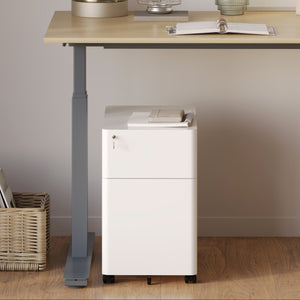






















Filing Cabinet Choices for Cleaner Workstation Planning
Cleaner workstation planning starts with filing storage that matches the desk, document volume, security needs, and daily workflow. Explore how cab...
Learn more
Visit quiz page to see how we makes it easy to create an inspiring workplace


Working from home in a small space often feels like a constant compromise. You want comfort, focus, and function, but the room seems to push back with every furniture decision. Many people assume that limited square footage means settling for cramped layouts and awkward setups. In reality, smart furniture choices can completely change how a small home office feels and performs.
This guide breaks down furniture ideas that help compact home offices feel open, intentional, and comfortable without sacrificing productivity or style.
Small home offices rarely feel cramped because of their size alone. More often, the issue comes from furniture that is too bulky, poorly scaled, or not designed for flexible use. Oversized desks, deep chairs, and unnecessary storage pieces quickly eat up visual and physical space.
Another common problem is layout rigidity. When furniture forces you into a single posture or position all day, the space starts to feel restrictive. A well-planned small office should support movement, adaptability, and visual openness.
In compact offices, every inch counts. Furniture needs to fit the room without overpowering it.
Slim profiles reduce visual clutter
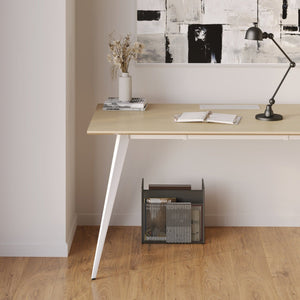
Open leg designs keep sightlines clear
Lighter silhouettes help rooms feel larger
Furniture that emphasizes height rather than width draws the eye upward, making ceilings feel taller and rooms more open. Wall-adjacent layouts also preserve floor space for movement.
The desk is the centerpiece of any home office, but in small spaces, it must do more with less.
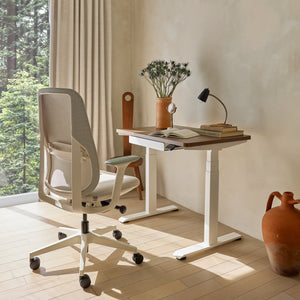
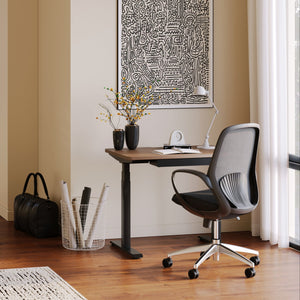
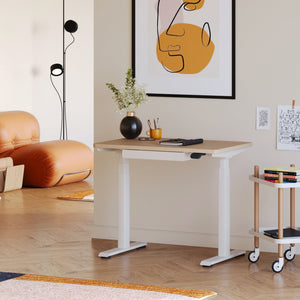
Adjustable-height work surfaces allow posture changes
Compact footprints preserve walking space
Flexible positioning supports different tasks
A thoughtfully designed height-adjustable work surface allows you to switch between sitting and standing without needing extra furniture. This adaptability reduces the feeling of being boxed in by a single setup.
Layout can make or break a small home office. Even the right furniture will feel overwhelming if placed incorrectly. Floating furniture slightly away from walls, aligning pieces along a single visual axis, and avoiding corner overcrowding all help create breathing room.
Compact spaces benefit from negative space. Leaving areas intentionally open helps the room feel balanced rather than stuffed with function.
Seating often gets overlooked in small offices, yet bulky chairs are one of the biggest contributors to cramped environments.
Narrow seat profiles with full support
Upright posture guidance without rigidity
Smooth mobility for easy repositioning
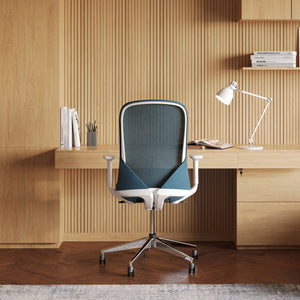
Research into furniture solutions for small spaces highlights how ergonomic design does not need to come at the cost of space. Well-engineered seating supports the body while maintaining a light visual footprint.
Accessories can quietly clutter a small office if they are not chosen carefully. Arm supports, monitor mounts, and keyboard trays should enhance comfort without adding visual weight.
A streamlined adjustable arm support solution keeps screens and peripherals aligned while freeing up valuable desk surface. This helps maintain a clean, open look while improving posture.
|
Furniture Element |
Space Impact |
Visual Effect |
|
Slim desk |
Saves floor area |
Opens sightlines |
|
Adjustable surface |
Reduces extra furniture |
Encourages movement |
|
Compact chair |
Fits under desk |
Minimizes clutter |
|
Arm support |
Clears desk surface |
Cleaner appearance |
|
Minimal storage |
Limits overcrowding |
Balanced layout |
A room that allows easy movement always feels bigger than one that restricts it.
Clear pathways reduce mental clutter
Easy chair movement prevents bottlenecks
Accessible surfaces eliminate awkward reaching
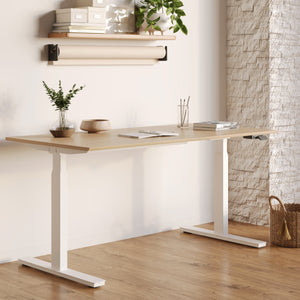
A streamlined office desk with balanced proportions supports daily tasks without visually overpowering the room. When the desk fits naturally into the space, everything else feels more intentional.
Comfort should never be sacrificed for size. A compact office can still support long workdays if furniture is designed with the body in mind. Seating that promotes upright posture, desks that adjust to your height, and accessories that reduce strain all contribute to a space that feels supportive rather than confining.
For those designing compact workspaces in California, solutions like Mini Standing Desk California show how thoughtful proportions and flexibility can transform even the smallest rooms into productive environments.
A posture-supportive ergonomic seating option further reinforces comfort without dominating the room visually.
Lighting plays a quiet but powerful role in how small offices feel. Poor lighting compresses a space visually and mentally, making even well-chosen furniture feel crowded. Thoughtful lighting placement helps define zones, improve focus, and expand the perceived size of the room.
In compact offices, the goal is to layer light sources without overwhelming the space or cluttering surfaces.
Use task lighting that focuses only where work happens
Avoid oversized lamps that dominate desk space
Place light sources slightly above eye level to reduce glare
Choose adjustable lighting so intensity changes throughout the day
Good lighting makes the room feel intentional instead of improvised.
Storage is often where small home offices go wrong. Adding bulky cabinets or multiple drawers may solve clutter temporarily, but it often shrinks the room visually. Smart storage should blend into the background and support daily habits.
The best storage solutions in small offices are designed to disappear when not in use.
Keep frequently used items within arm’s reach
Store rarely used items vertically instead of horizontally
Choose storage that tucks under or integrates with existing furniture
Avoid open storage that visually fragments the room
When storage supports flow instead of interrupting it, the office feels calmer and more spacious.
Furniture finishes and materials influence how large or small a room feels. Heavy textures and dark finishes can make compact offices feel enclosed, while lighter surfaces help reflect light and open up the space.
Consistency is more important than contrast in small rooms.
Stick to a limited color palette for furniture pieces
Use lighter finishes to enhance natural light
Mix textures subtly rather than dramatically
Avoid high-gloss surfaces that show clutter easily
When materials work together instead of competing, the room feels cohesive rather than crowded.
Small home offices work best when every piece earns its place. The goal is not to fit more into the room, but to make smarter choices about what belongs there.
Does each piece serve more than one purpose?
Can you move freely without obstruction?
Is your posture supported throughout the day?
Does the room feel visually balanced?
Are surfaces clear and intentional?
When these boxes are checked, a small home office stops feeling cramped and starts feeling considered.


You have unlocked free shipping!
You're saving $29 and unlocked free shipping!
Leave a comment