



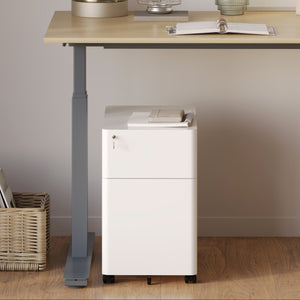






















Filing Cabinet Choices for Cleaner Workstation Planning
Cleaner workstation planning starts with filing storage that matches the desk, document volume, security needs, and daily workflow. Explore how cab...
Learn more
Visit quiz page to see how we makes it easy to create an inspiring workplace


We design for real homes where a single surface often handles deep work in the morning, a quick lunch at noon, and a creative project at night. A table that adapts across activities is no longer a luxury. It is the core of a resilient home workspace. Thoughtful proportions, quiet aesthetics, and reliable mechanisms let one piece of furniture support shifting roles without visual noise.
Our approach begins with the room as a whole, not just the table. Lines stay clean so the eye can rest. Edges are softened for comfort. Power and cable routes are planned early so devices connect neatly and can be stowed when it is time to reset the room. When a surface can move between laptop sessions, sketching, reading, and household tasks, the rest of the space stays calmer.
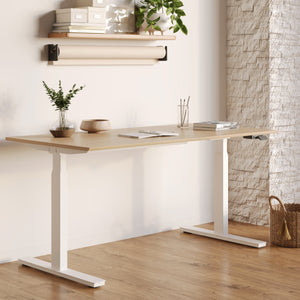
For customers exploring broad options that balance function and design, our collection highlights a range of forms suited to different floor plans and styles. Browse our contemporary desk designs to see how varied silhouettes, finishes, and leg profiles can support an integrated home.
A multi-purpose table earns its keep by doing several jobs well without calling attention to itself. We evaluate every model against five criteria that matter in daily life.
Height movement supports posture, focus, and task changes. Modularity expands the surface or reconfigures the footprint. Drop-in returns, reversible panels, and swappable leg sets allow small layout changes that make a big functional difference. When parts move smoothly and lock confidently, the table can pivot between typing, writing, and collaboration without fuss.
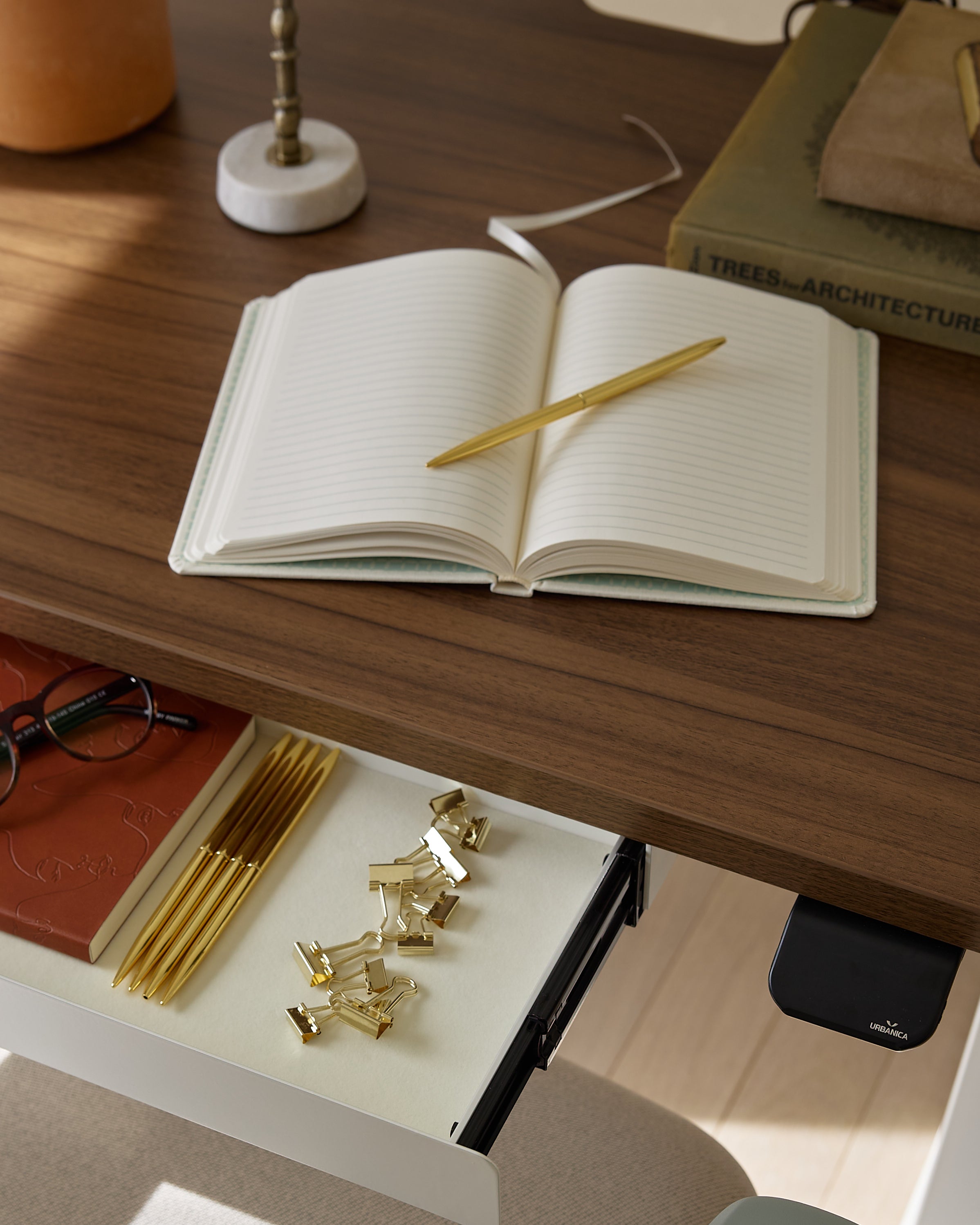
Multi-use spaces benefit from storage that does not look like office furniture. A shallow organizer keeps notebooks and chargers close without adding bulk. Under-surface rails hold hooks or baskets for cables and small accessories. Drawers slide quietly and sit flush with the aprons to keep the silhouette light.
We plan a cable path from the wall to the worktop before anything else. Desk grommets, under-surface trays, and leg-channel routing guide wires along predictable routes. A tidy path reduces visual clutter and minimizes snag risks when the table moves. It also makes resetting the room fast.
Surfaces should resist micro-scratches from trackpads, mugs, and notebooks. Durable laminates are easy to maintain and look crisp for years. Veneers add warmth and texture. Powder-coated steel frames provide stiffness and stability. We color-match feet and hardware so protection features remain discreet.
A multi-purpose table must feel planted. We verify lateral stability, rack resistance, and lift smoothness. Leveling glides or casters with secure locks keep the surface steady on uneven floors. If a model is designed to roll, the braking mechanism should be intuitive and dependable.
When a single piece needs to combine durability, storage, and clean lines, our versatile home office desk illustrates how a balanced specification supports daily rhythm without visual heaviness.
Healthy posture and movement are essential in spaces that serve both work and life. We design to reduce strain, maintain circulation, and support concentration.
Keep forearms roughly parallel to the surface and shoulders relaxed. Knees and hips should sit comfortably near right angles with feet supported. A neutral wrist position reduces pressure during typing and pointing tasks. Lighting should avoid glare while keeping the work area bright enough for reading and handwriting.
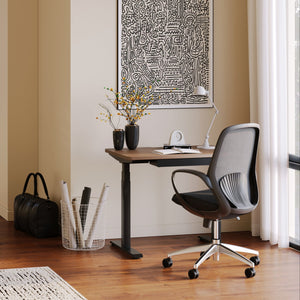
Short standing intervals refresh circulation and help the back. Smooth, quiet height changes encourage frequent transitions without breaking focus. For customers who want that flexibility built in, our height-adjustable standing desk is engineered for steady movement and easy adjustment so posture changes become a natural part of the day.
Investing in comfort means aligning with credible guidance. OSHA publishes practical insights that help reduce musculoskeletal risk and discomfort. We recommend reviewing official ergonomics recommendations from OSHA when dialing in monitor height, keyboard placement, and reach zones so your setup supports long-term well-being.
Position the top of the display close to eye level to avoid bending the neck.
Keep commonly used items within a relaxed forearm reach to minimize shoulder lift.
Use a footrest if feet do not sit flat when seated at a comfortable chair height.
Small rooms and shared zones can produce a surprisingly capable workspace when the table and accessories are chosen with intention.
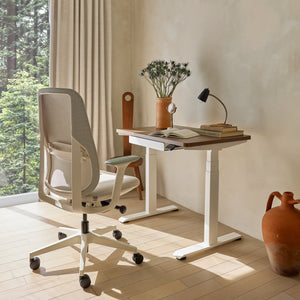
Define a micro-zone with a rug or a lighting cue. Place the table so natural light falls from the side, which reduces screen glare and improves comfort for reading. Pair with a slim task lamp for evening work. A shallow shelf or peg rail above the surface organizes peripherals without crowding the tabletop.
If you need to reclaim the room after work, look for compact proportions, smooth casters, and minimal overhangs so the table can slide close to a wall. A fold-away keyboard tray or a magnetic cable wrap leaves the top clean when it is time to reset.
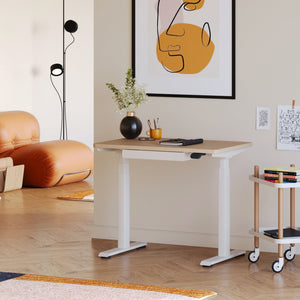
For customers who need a small footprint that still supports healthy posture, our compact mini standing desk delivers useful adjustability in tight spaces while maintaining a light visual presence.
Many households support two professionals, a parent and a student, or rotating users. The table should encourage collaboration without crowding.
Orient seating so each person has equivalent access to power and daylight. Use a centered light with dual arms, or two focused lamps, to reduce shadows between stations. Provide separate cable paths so devices can disconnect cleanly.
Equal elbow room, independent monitor positioning, and optional privacy screens help both people maintain focus. A gentle divider or a felt panel can soften sound and create a visual boundary without turning the table into a wall.
When a single surface needs to serve two people comfortably, our two-person adjustable office desk provides balanced seating positions, ample routing for devices, and intuitive height control for both sides.
Families often blend remote work, independent study, and creative hobbies. A multi-station table brings order to this flow.
Assign zones for laptop work, handwriting, and creative tasks. Use washable mats or cutting pads that can be removed when the activity changes. A center rail or shared organizer can store pens, brushes, chargers, and scissors so tools are ready when needed.
Household tables see frequent repurposing. Choose a top that resists stains and handles repeated cleaning. Frames should resist racking when children lean on the edges or move stools. Rounded corners add safety in high-traffic areas.
If your household often works in parallel, the modular quad workstation design supports four seats with clear personal zones, generous cable routing, and surfaces that clean up quickly between tasks.
Some customers convert a spare room or studio into a small team environment. The goal is to provide professional capability while preserving the comfort of home.
Map circulation routes so people can move without bumping chairs. Keep walkways clear and plan a shared wall for displays or whiteboards. Place the working edge of the table under even light to reduce glare and shadow stripes.
Use under-surface trays for power strips. Add grommeted access near the center so cables drop neatly. Provide a single charging shelf for shared devices to avoid scattered adapters across the work surface.
When a coordinated setup is required, our six-person collaborative workstation organizes seating, wiring, and lighting alignment for dependable daily use while keeping the room visually calm.
The right choice depends on available space, the number of users, and the kinds of tasks handled most days. Use this table to frame the decision.
| Table Type | Primary Strength | Best For | Surface Behavior | Footprint Guidance |
|---|---|---|---|---|
| Adjustable single-user | Smooth posture changes | Solo professionals, long sessions | Stable under typing and sketching | Works in compact rooms if cable paths are tidy |
| Compact lift model | Small footprint with movement | Studio apartments, hybrid zones | Resists wobble despite a light build | Ideal for corners and alcoves |
| Dual-user configuration | Balanced comfort for two | Partners, parent and student | Clear cable routes for each seat | Needs planned lighting to avoid shadows |
| Four-seat modular | Parallel work across roles | Creative families, study pods | Durable finish for frequent cleanup | Suits larger rooms with good circulation |
| Multi-person studio | Coordinated team tasks | Home-based teams and micro-offices | Managed wiring for shared tech | Requires dedicated room and even lighting |
A multi-purpose surface should look good for years while standing up to real use. Material choices and simple maintenance habits make the difference.
High-pressure laminate: Strong scratch resistance with consistent color and pattern, easy to clean with mild soap and water. Great for households that repurpose the table throughout the day.
Wood veneer over engineered core: Natural variation and warmth with reliable flatness. Wipe spills promptly and use coasters to preserve finish quality.
Solid wood: Character develops with time. Expect subtle expansion and grain movement. Apply protective pads under devices and consider a desk blotter for writing.
Glass: Visually light and easy to disinfect, but fingerprints show readily. Works best in low-glare lighting plans.
Powder-coated steel frames: Provide rigidity and crisp lines. Clean with a soft cloth and avoid abrasive pads.
Radius edges are kinder to forearms during long typing sessions. A modest waterfall edge helps when seated lower. Crisp square edges offer a modern look for writing and sketching but may benefit from a desk mat.
Mid-toned, low-sheen finishes hide fingerprints and minor scuffs better than ultra-matte or high-gloss surfaces. Patterned laminates and wood grain also mask small scratches more effectively than flat solid colors.
Use a soft cloth and mild cleaner.
Avoid harsh solvents that can dull protective layers.
Lift equipment rather than sliding it to reduce micro-scratches.
Refresh protective pads under stands and speakers twice a year.
A good table becomes a great workstation when it is installed with care. This sequence keeps the setup quiet, clean, and human-centered.
1. Map power and data. Identify outlets, surge protection, and cable paths before placing the table.
2. Place for light. Orient the surface so natural light falls from the side. Add a task lamp that can articulate above documents without glare.
3. Level the base. Use glides to stabilize on uneven floors. Confirm there is no racking when you press the corners.
4. Set cable routes. Install trays and clips under the surface. Keep power bricks off the floor where possible.
5. Calibrate posture. Adjust chair height and then set the table height so forearms rest comfortably. Arrange screens so your gaze is near the top edge.
6. Define zones. Reserve a small tray for tools and a second for personal items so the work area stays open.
7. Create a reset ritual. At the end of the day, coil chargers, stow peripherals, and clear the surface. Routine is what keeps multi-purpose spaces feeling restful.
Accessories should serve the table rather than compete with it. We recommend pieces that keep lines clean and movement easy.
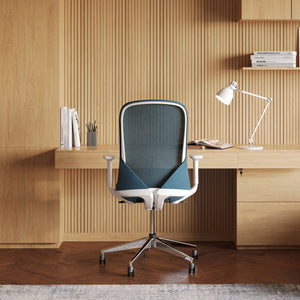
Choose a chair with supportive lumbar shaping and a stable base. If space is tight, look for a slim profile that slides fully under the surface. A compact footrest can help shorter users maintain stable posture without raising the chair too high.
A task light with adjustable arms lets you set brightness and angle for typing, handwriting, and reading. Warmer color temperatures tend to be more comfortable at night, while neutral whites support accurate color work during the day.
A shallow desktop organizer holds pens and cables, while an under-surface tray keeps power strips and adapters out of sight. Label the back of chargers to avoid confusion when multiple users share the table.
Homes will continue to blur the line between professional and personal life. The tables we build are guided by quiet capability, reliable movement, and materials that welcome daily touch. As households evolve, furniture that adjusts without spectacle will support healthier routines and calmer rooms. A future-ready home office is not about chasing the newest feature. It is about dependable mechanisms, durable finishes, and proportions that invite focus today while flexing gracefully for whatever tomorrow’s routine brings.


You have unlocked free shipping!
You're saving $29 and unlocked free shipping!
Leave a comment