












Filing Cabinet Choices for Cleaner Workstation Planning
Cleaner workstation planning starts with filing storage that matches the desk, document volume, security needs, and daily workflow. Explore how cab...
Learn more
Visit quiz page to see how we makes it easy to create an inspiring workplace


A desk can be large on paper and still feel cramped in daily use. That usually happens because the problem is not total square footage. It is layout friction. The monitor sits at the center of attention, its base claims valuable surface area, and everything else begins to collect around it. A notebook lands to one side, a charger settles near the edge, a pen cup drifts inward, and before long the desk starts to feel busy even when there are not that many items on it.
A monitor stand can help create space for a cleaner desk layout because it changes how the most important zone of the desk is used. Instead of allowing the monitor base to dominate the middle of the surface, it lifts the screen and turns that area into something more useful. The result is often less crowding, better separation between work tools, and a setup that feels easier to maintain.
That does not mean every desk needs the same solution or that one accessory instantly fixes a cluttered workspace. A cleaner layout comes from how the pieces work together. Screen position, desk depth, chair support, lighting, and the placement of everyday items all affect whether the surface stays open or slowly fills up again. When those elements are aligned, a monitor stand can become one of the simplest ways to make the desk feel calmer and more functional.
The first mistake many people make is judging a desk by its outer dimensions rather than by its usable center. A desk may appear generous until a monitor, keyboard, mouse, lamp, notebook, and charging devices all need a place to live at once. The issue is not just the number of objects. It is that many of them compete for the same front-and-center area.
Usable work area is the space that remains comfortable for active tasks. That includes typing, writing, reading, sketching, reviewing documents, or moving between a laptop and a secondary device. When the monitor base takes up the center of the desk, it often breaks that area into awkward fragments. The desk may still have open corners, but it no longer feels practical.
The monitor is usually the visual anchor of the workstation. Because it sits in the center, anything around it becomes more noticeable. When the base is bulky or low, people tend to place essential items around it rather than beneath it. That creates a ring of clutter around the screen, which makes the whole desk feel denser than it really is.
A crowded desk does not only reduce function. It also increases visual noise. When the eye sees too many overlapping objects near the main work area, the space feels harder to read. Even a well-made desk can lose its sense of openness when the layout lacks clear zones.
A monitor stand is useful because it alters the geometry of the desk without changing the desk itself. That is the real value. It does not add more square feet, but it often improves the shape and usability of the space you already have.
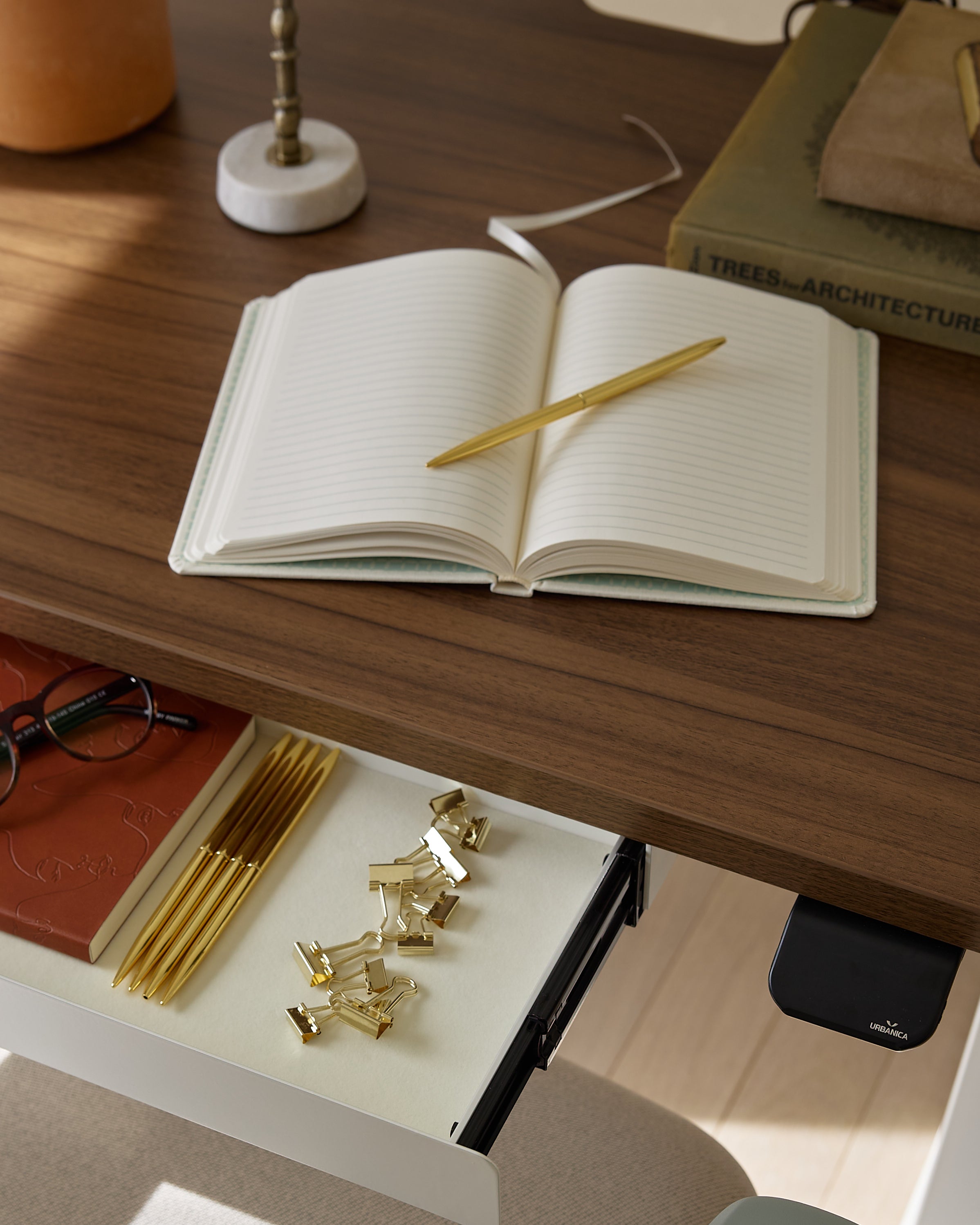
The area directly beneath the monitor is often wasted. Once the screen is raised, that zone can hold a keyboard when not in use, a slim notebook, a small tray, or other low-profile items that do not need permanent exposure. This single change can free the front edge of the desk for active work.
A cleaner desk layout usually has clearer roles for each zone. The monitor area should support viewing. The front section should support hands-on work. The side areas should support essential tools that need quick access. A stand helps define those zones more naturally because the monitor no longer spills into the same plane as everything else.
Many desks do not need more stuff on top of them. They need better vertical use. This is where a thoughtful mix of office furniture accessories can support a cleaner setup by organizing what already belongs in the workspace rather than forcing more objects into the main work area.
When the center line of the desk is less crowded, the entire setup feels more intentional. The desk looks easier to use because the eye can understand where work happens and where storage begins.
Front-edge space matters because it supports the body. It is where wrists rest, papers sit, and tools move in and out of use. A monitor stand often protects that zone from becoming accidental storage.
A tidy desk is not always the same as an effective desk. A workspace can look minimal and still be uncomfortable or impractical. What matters more is whether the surface supports daily habits without creating friction.
A useful desk does not need to be empty. It needs boundaries. Once the monitor is elevated, it becomes easier to define where active work belongs, where reference materials go, and where low-frequency items should stay out of the way.
Without a stand, it is common for sticky notes, charging cables, and small accessories to drift toward the base of the monitor. Over time, the display area becomes mixed with storage. A stand helps prevent that overlap by giving those items a more intentional place.
When every item has to compete for the same surface, tidying becomes a repeated chore. When the monitor area is better structured, the desk often stays cleaner with less effort because the layout itself encourages order.
A monitor stand is often discussed as a space-saving tool, but its layout benefits are closely connected to ergonomics. When the screen sits too low, people tend to lean forward, pull items closer, and crowd the area in front of them. That posture can shape the entire desk.
A low screen often brings the body forward. As that happens, the keyboard, mouse, notebook, and other tools are nudged closer too. The desk starts to compress toward the user, leaving less breathing room in the middle.
When the monitor sits at a more natural height, it becomes easier to keep the keyboard and mouse in more stable positions. The body no longer needs to chase the screen. That simple change can help reduce the habit of piling items into the immediate work zone.
A cleaner desk supports better positioning, and better positioning makes it easier to keep the desk clear. The relationship works both ways. That is why screen elevation often matters more than it first appears.
The area beneath a raised screen is valuable because it can absorb the kinds of objects that usually clutter the middle of the desk.
Low-profile items work best here. A keyboard can slide beneath the stand when the desk is used for writing. A notebook can rest there between meetings. A slim tray can hold small items that would otherwise scatter across the surface.
Not everything deserves a permanent place on top. Old notes, extra chargers, packaging, and low-use accessories tend to create visual weight without improving function. The cleaner the core zone stays, the more noticeable the benefit of the stand becomes.
The best use of under-monitor space depends on the kind of work being done:
1. Writing-heavy workstations benefit from sliding the keyboard away when not typing.
2. Hybrid desks benefit from a place to park tablets or notebooks between tasks.
3. Shared desks benefit from quick-reset organization that keeps the center visibly clear.
A monitor stand can improve most setups, but the desk still sets the limits. Depth matters more than many people expect. On a shallow desk, even a small monitor can dominate the usable area. On a deeper desk, the stand has more room to work with and can create clearer separation between zones.
A shallow desk compresses everything toward the front edge. In those cases, raising the monitor can make a meaningful difference because it restores a bit of functional layering. On deeper desks, the stand can still help, but its main advantage may be better organization rather than urgent space recovery.
A well-proportioned desk gives the monitor stand room to do its job. Pairing it with ergonomic office desks can support a layout that feels more balanced in everyday use, especially when the goal is not just style but sustained comfort and practical surface control.
People often assume a small desk must remain sparse to work well. In reality, a compact desk can feel highly capable when the screen is lifted, the center is protected, and only true daily essentials remain within reach.
Not every setup needs the same type of monitor support. A standard stand and a monitor arm can both improve the desk, but they do so in different ways.
A stand works well when the goal is simple structure. It keeps the screen elevated, creates under-monitor storage, and helps define the central zone without requiring constant adjustment. For many desks, that is enough.
An adjustable monitor arm can free even more of the desktop by lifting the monitor off the surface entirely. That can be especially useful for people who shift between screen-focused work and paperwork, or who regularly reconfigure the desk for different tasks.
| Setup priority | Monitor stand | Monitor arm |
|---|---|---|
| Under-screen storage | Strong advantage | Limited |
| Fully open surface | Moderate | Strong advantage |
| Simple, stable layout | Strong advantage | Moderate |
| Frequent repositioning | Limited | Strong advantage |
The better choice depends on how the desk is used. A stand tends to suit steady routines. An arm tends to suit flexible ones.
Desk layout is often treated as a surface problem, but it is also a body-position problem. If the chair does not support how a person sits, items on the desk tend to drift into compensation positions.
When the body lacks support, the keyboard may move too close, the mouse may shift inward, and reference materials may spread unpredictably. These small adjustments create a layout that feels unstable.
When posture improves, the desk often becomes easier to use as intended. A more grounded seated position can help maintain consistent spacing between tools, which reduces the tendency for the center area to become crowded.
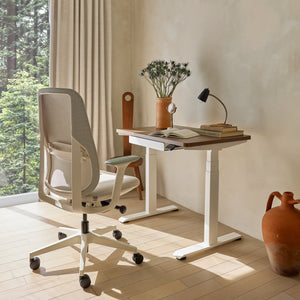
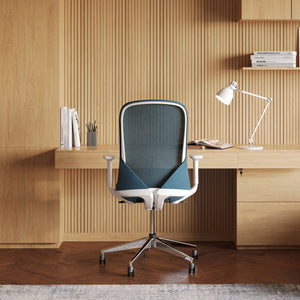
Well-designed ergonomic office chairs support the broader goal of a desk that feels usable, open, and easier to maintain across long work sessions.
Lighting is one of the most overlooked parts of desk planning. A lamp can improve comfort and visibility, but it can also take over a valuable corner or visually weigh down the layout if it is not chosen carefully.
The desk should not feel like a contest between the screen and the lamp. The cleanest layouts use lighting to complement the workstation rather than interrupt it.
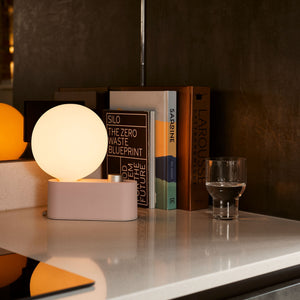
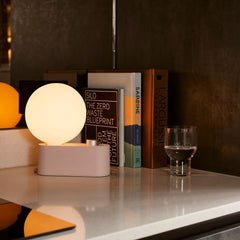
A piece such as the Alumina Lamp fits naturally into a discussion about compact task lighting because it serves a clear functional role without needing to dominate the surface visually.
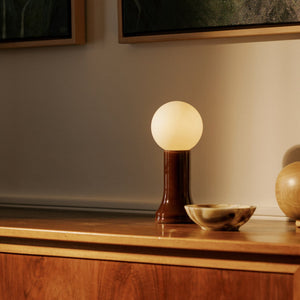
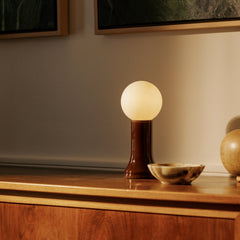
A more expressive piece like the Shore Table Lamp can still belong in a cleaner desk arrangement when the rest of the surface is controlled and the lamp is positioned to support, not crowd, the composition.
Good desk lighting does not have to make the surface feel busier. The best setups use it to frame the workspace and reinforce a sense of order.
The value of a monitor stand becomes more obvious in desks that need to do more than one thing well.
In smaller rooms, every inch matters. A monitor stand can make the difference between a desk that only holds a computer and one that can also support writing, reviewing materials, or quiet planning.
Many desks serve as workstations by day and general-use surfaces at other times. In those cases, reclaiming center space helps the desk transition more easily between functions.
A cleaner desk is not only about organization. It also affects how the space feels. Workspaces shaped by modern, ergonomic thinking often favor layouts that are visually lighter and more disciplined, which is why broader references to modern ergonomic workspace solutions fit naturally into this conversation.
People who spend time on video calls often notice desk clutter more quickly because the screen area becomes part of the visual presentation of the workspace. A monitor stand can help that zone feel calmer and more composed.
Once the monitor is elevated, the next step is to keep the layout from slipping back into clutter.
Start by clearing the area directly in front of the monitor. That is the zone most likely to become congested, so protecting it has an outsized effect on how the whole desk feels.
Let the center support active work. Let one side support lighting or a small essential. Let the under-monitor zone hold slim items that do not need constant visibility. This structure makes the desk easier to reset.
A cleaner desk is not built by hiding everything. It is built by deciding what earns permanent space. If an item is not used regularly, it should not live in the primary work zone.
The strongest layouts come from coordination. The monitor stand shapes the screen area. The desk defines the available surface. The chair supports the body. The lamp protects visibility. When those pieces work together, the desk feels less crowded and more capable without making unrealistic promises or relying on excess.
A monitor stand can absolutely help create space for a cleaner desk layout. Its greatest strength is not that it magically enlarges the desk, but that it reorganizes the part of the desk that matters most. By reclaiming the center, supporting better screen position, and creating room for clearer zoning, it helps the workspace function with more intention. In many setups, that is exactly what makes the desk feel cleaner.


You have unlocked free shipping!
You're saving $29 and unlocked free shipping!
Leave a comment