



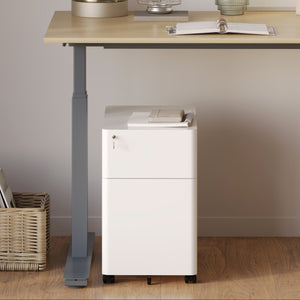






















Filing Cabinet Choices for Cleaner Workstation Planning
Cleaner workstation planning starts with filing storage that matches the desk, document volume, security needs, and daily workflow. Explore how cab...
Learn more
Visit quiz page to see how we makes it easy to create an inspiring workplace


A bistro table can work as a laptop table for daily productivity when the setup is aligned with the way people actually work at home. That distinction matters. A table that looks attractive in a corner is not automatically a productive workstation. The right surface needs to support concentration, physical comfort, and daily repeatability without making the room feel overtaken by office furniture.
For many people, especially those who work primarily on a laptop, the old idea of a home office no longer fits real life. Work now happens in apartments, dining corners, studio layouts, guest rooms, and living areas that need to serve more than one purpose. In those spaces, a bistro table often becomes appealing because it offers a smaller footprint, a lighter visual presence, and a more residential character than a traditional desk.
That does not mean a bistro table is the best solution for everyone. It means it can be the right solution when the workflow is focused, the room is limited, and the setup is chosen with intention. A productive workstation is not defined by whether it is labeled a desk or a table. It is defined by whether it supports the demands of the day without introducing unnecessary friction.
The idea of working from a compact table is not just about saving space. It reflects a broader change in how people define a productive home environment. Many workers no longer need a large workstation with deep drawers, heavy storage, or room for stacks of papers. They need a surface that feels calm, usable, and easy to live with.
In many homes, there is no separate office. A single room may need to function as a place to eat, read, relax, and work. Furniture that can transition naturally between those uses tends to feel more realistic than furniture that locks the room into one identity.
A bistro table fits that shift well because it does not demand visual dominance. It can hold a laptop during the workday and still feel appropriate as part of the room after hours. That flexibility is often more valuable than sheer size.
A large surface has benefits, but it also creates room for distraction. Extra paper, cables, chargers, cups, notebooks, and decorative objects quickly spread out when the table seems to have endless capacity. A smaller setup encourages editing. Only the essentials stay in front of you.
That restraint can help support attention. When the workspace is limited to what matters most, tasks often feel easier to approach and easier to complete. A thoughtfully scaled modern bistro table can create exactly that kind of contained work zone, especially for laptop-based routines that do not rely on large equipment.
Furniture affects mood as much as function. In homes with a warm, design-conscious look, bulky office pieces can feel visually disconnected from the rest of the environment. A bistro table often feels softer and more integrated. That does not directly increase output, but it can make the workstation more inviting and easier to use consistently.
When a setup belongs naturally in the room, it is easier to maintain the habit of returning to it every day.
The question is not whether a bistro table can hold a laptop. The question is whether it can support real work for hours at a time without causing strain, distraction, or inefficiency.
A productive laptop table should comfortably handle the basics. That usually includes a laptop, a phone, a notebook, a charging cable, and a beverage. For some people, it also includes a lamp or a small external keyboard. If the surface becomes crowded immediately, the setup may look good but feel frustrating in practice.
The goal is not abundance. The goal is enough functional room to work without constant adjustment.
Even slight movement becomes irritating during a long work session. Typing on an unstable surface breaks concentration and creates a subtle sense of physical annoyance that builds over time. For a daily workstation, sturdiness matters. If the table feels unreliable, productivity usually follows.
A table can be the right size and still be the wrong fit. If the height forces shoulders upward, wrists downward, or the neck too far forward, the setup becomes tiring very quickly. Productivity depends on comfort that can be repeated day after day, not just tolerated for a short period.
This is where many compact tables succeed or fail. The better ones allow the body to stay in a relatively neutral position without requiring constant correction.
A bistro table is not simply a smaller substitute for a desk. In certain homes and workflows, it is the more intelligent choice.
In small apartments, open-plan homes, and shared rooms, square footage matters. A desk with a larger top and heavier frame can easily make a corner feel crowded. A bistro table often preserves more breathing room while still offering enough function for laptop work.
This matters practically and visually. A room that feels open is easier to live in, and that sense of openness can influence how willing someone is to work there every day.
Some workstations only make sense when hidden behind a door. Others need to exist in full view. In those visible spaces, a table that blends into the overall design often performs better than one that insists on looking like office equipment.
For people comparing a bistro setup with a broader range of ergonomic office desks, the real issue is not whether a desk is useful. It is whether the added size and visual weight are truly necessary for the work being done. When the answer is no, the smaller option can feel more refined and more practical.
A workstation that feels easy to use tends to get used. A workstation that feels oversized, clutter-prone, or visually disruptive often becomes something people avoid or only tolerate. Bistro tables can reduce that resistance because they feel less formal and less demanding.
That ease can matter for writers, consultants, students, coordinators, and remote professionals whose work is primarily digital and task-based.
The biggest mistake in choosing a laptop table is focusing only on appearance. Daily productivity depends on whether the body can stay reasonably comfortable over time.
A laptop setup works best when the forearms can rest comfortably, the shoulders stay relaxed, and the wrists do not collapse into awkward angles. If the table is too high or too low, those issues show up quickly.
On a compact table, the margin for error can feel even smaller because there is less room to adjust position. That is why a bistro table should be seen as a complete workstation choice, not just a tabletop decision.
A good table paired with the wrong chair usually becomes a disappointing setup. Seat height, back support, cushion firmness, and posture control all affect how long a person can work without discomfort. On a smaller surface, those details matter even more because the rest of the setup has less flexibility to compensate.
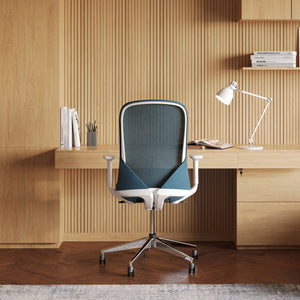
Choosing from a range of ergonomic office chairs can help turn a compact workstation into something genuinely sustainable. The goal is not to make the space look more technical. The goal is to support the body well enough that the table can do its job.
When the pairings are right, a compact workstation can feel surprisingly natural. A few signs usually stand out:
Feet rest comfortably on the floor
Elbows stay near a relaxed typing angle
The shoulders do not lift while working
The laptop is close enough to use without leaning forward constantly
There are also clear signs when the arrangement is not working:
Frequent slouching or shifting
Shoulder tension by midday
Wrists pressing sharply into the table edge
A constant sense that the laptop is either too near or too far away
If those problems show up regularly, the setup may need a different chair, a support accessory, or a different table altogether.
Not every job places the same demands on furniture. A bistro table is strongest when the work is streamlined, digital, and relatively self-contained.
Writers, editors, marketers, administrators, customer support professionals, students, therapists, consultants, and many remote coordinators often spend most of the day switching between documents, calls, messages, and browser-based tasks. Those workflows usually require focus more than equipment.
For that kind of work, a bistro table can feel efficient rather than limiting. It supports the essentials without encouraging unnecessary spread.
A smaller table becomes less effective when the work involves multiple monitors, paper-heavy processes, sketching materials, product samples, audio equipment, or ongoing storage needs. These are not minor differences. They change what the workstation must be able to support all day.
For those users, a bistro table may still work as an occasional station, but not always as the primary daily one.
Before choosing a table, it helps to assess the real demands of the workday:
1. What stays on the surface at all times
2. How many hours are spent seated there
3. Whether the setup needs to be permanent or flexible
4. How often notes, devices, and accessories must be within reach
5. Whether deep focus or equipment capacity is the bigger priority
These questions matter more than trends or furniture categories.
The table itself is only one part of a productive setup. Supporting pieces often determine whether the space feels temporary or truly workable.
Poor lighting makes any work surface feel more tiring. Overhead light alone often creates shadows or flat illumination that is not ideal for focused tasks. A dedicated task light improves visibility and also gives the workstation a clearer sense of purpose.
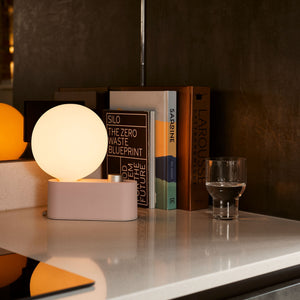
An LED table and wall light is especially useful in a compact area because it adds function without requiring a larger furniture footprint. Good lighting helps define the work zone and can make the difference between a corner that looks improvised and one that feels intentional.
On a small table, every object matters. The best accessories support work quietly and efficiently. Too many additions defeat the very reason a bistro setup feels appealing in the first place.
Useful pieces from a selection of office furniture accessories can help support a cleaner, more deliberate layout when chosen with restraint.
A slim laptop stand for better screen positioning
A compact keyboard for longer typing sessions
Minimal cable management to prevent tangles
A small tray for pens, notes, or daily essentials
One focused light source rather than several competing objects
The goal is not to make the setup busy. The goal is to remove repeated annoyances that interrupt the workflow.
People tend to underestimate how strongly the appearance of a workstation affects the experience of using it. A compact table can feel serene or cramped depending on what surrounds it. Thoughtful restraint usually wins. A few well-chosen elements create a sense of control. Too many objects make the table feel smaller and the work feel heavier.
The most useful comparison is not about which category is better in theory. It is about which one aligns more closely with the actual demands of daily work.
| Workstation factor | Bistro table | Traditional desk |
|---|---|---|
| Room footprint | Smaller and easier to place | Larger and more space-dependent |
| Visual presence | Lighter and more residential | More office-oriented |
| Best for | Laptop-centered workflows | Equipment-heavy routines |
| Flexibility | Strong in mixed-use rooms | Strong in dedicated work areas |
| Surface capacity | Moderate | Broad |
| Storage potential | Minimal | Often greater |
| Ergonomic optimization | Good with the right pairing | Usually easier to tailor |
There is no reason to deny the strengths of a traditional desk. It usually offers more room, more options for organization, and more adaptability for devices and tools. For some people, that is essential.
What a bistro table does better is fit into real living spaces with less visual and spatial strain. It works especially well when the aim is to support productivity without making the room feel like a permanent office.
If a workstation is too small, work becomes awkward. If it is too large for the room, the space becomes unpleasant. The right answer is rarely the biggest option or the most minimal one. It is the one that allows productive work to happen comfortably and consistently.
Placement matters almost as much as furniture choice. A good location can make a modest setup feel highly capable.
Natural light, a sense of enclosure, and some separation from the busiest parts of the room can all help support focus. Window corners and breakfast nooks frequently offer these qualities. They also tend to suit the scale and shape of a bistro table naturally.
Not every home has extra square footage, but many have underused edges. A guest room corner or a section of the living room can become a strong work zone when the furniture is proportioned correctly and visually connected to the rest of the space.
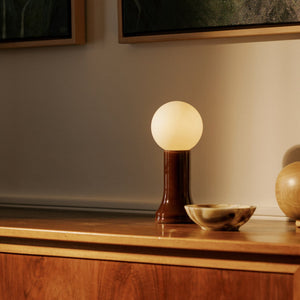
A recycled glass table lamp can help define that kind of compact workstation by adding light and character without pushing the area toward an overly corporate feel. In a residential setting, details like that often help the work zone feel more settled and more inviting.
When dimensions, finish, and compatibility matter, being able to browse relevant regional options can help narrow the search more effectively. A page focused on workspace furniture for local browsing can be useful when the goal is to compare pieces that suit a specific market, room type, or project style without losing sight of practical fit.
A bistro table often fails not because the concept is flawed, but because the setup choices around it are careless.
A table can look ideal in a product photo and still be too small, too tall, or awkwardly proportioned for the intended use. Surface size, leg placement, and usable clearance matter more than first impressions.
One of the fastest ways to ruin a good small setup is to overload it. A bistro table is strongest when it supports focused work with a clean edit. Turning it into a storage zone usually makes it feel cramped and ineffective.
A setup that feels fine for one afternoon can become frustrating after two weeks. Small discomforts compound. Slight inconvenience becomes habit-breaking friction. The most successful compact workstations are the ones designed for repetition, not novelty.
A bistro table can absolutely work as a laptop table for daily productivity when the work is digital, the room is compact, and the setup is supported by the right chair, lighting, and restraint. It is especially effective for people who want a workstation that blends into the home, protects open space, and supports focused laptop use without unnecessary bulk.
It is less effective when the job requires expansion, permanent accessories, or a large working spread. That is not a weakness in the furniture category. It is simply a matter of fit. The most productive workstation is the one that matches the real workload, supports the body well, and belongs naturally in the space where daily work actually happens.
When those conditions are met, a bistro table stops feeling like a compromise and starts functioning as a smart, grounded solution for modern productivity.


You have unlocked free shipping!
You're saving $29 and unlocked free shipping!
Leave a comment