










Filing Cabinet Choices for Cleaner Workstation Planning
Cleaner workstation planning starts with filing storage that matches the desk, document volume, security needs, and daily workflow. Explore how cab...
Learn more
Visit quiz page to see how we makes it easy to create an inspiring workplace


Small workspaces rarely feel cramped because of square footage alone. More often, they feel closed in because the furniture is visually heavy, the layout interrupts movement, and every object competes for attention. A bistro table changes that equation. Its smaller scale, lighter silhouette, and often rounded form can help a room breathe in ways a standard desk cannot.
That does not mean every bistro table automatically improves a workspace. The effect depends on proportion, placement, material choices, lighting, and the surrounding pieces that either support openness or quietly work against it. In a compact home office, studio corner, or flexible living area, the right bistro table can create a work zone that feels intentional without looking overbuilt.
The strongest small-workspace designs usually share the same principle: they do less, but do it better. A circular work surface can soften the geometry of a room. A pedestal base can free the view across the floor. A restrained lighting plan can make a tabletop feel functional without turning it into a staging area for clutter. When those decisions work together, the result is not just a smaller office. It is a calmer one.
A traditional desk is built to hold more, store more, and define the room more aggressively. That can be useful in larger offices, but in tight spaces it often creates the opposite of what most people want. The room begins to revolve around the desk’s bulk rather than around ease of movement and clarity of use.
A bistro table works differently. Its footprint is usually simpler, its profile less imposing, and its presence more adaptable. Instead of announcing itself as permanent infrastructure, it can create a work area that feels integrated with the room.
Small rooms are highly sensitive to hard edges. Rectangular desks push corners into walkways, interrupt sightlines, and create abrupt visual stops. A round tabletop softens that effect. The eye moves around it more naturally, which can make a compact area feel less segmented.
This is one reason a compact bistro table for office and home can suit a multipurpose room so well. It supports work, but it does not dominate the entire setting with the same visual insistence as a larger rectangular desk.
Base structure matters as much as tabletop shape. Four legs can be perfectly functional, but a pedestal base often feels lighter because it keeps the area beneath the table more open. That open lower zone helps preserve floor visibility, which plays a major role in how spacious a room feels.
In practice, more visible floor usually means less visual congestion. Even when the room dimensions stay exactly the same, the perception changes because fewer elements interrupt the field of view.
Small workspace design starts with restraint. It is tempting to choose the biggest possible surface that can technically fit, but technical fit and visual fit are not the same thing. A work area only feels open when it has enough clearance to function without constant negotiation.
The best table size is the one that leaves the room usable after the furniture is in place. That includes chair movement, walking paths, and enough surrounding negative space so the work zone feels settled instead of squeezed in.
A useful way to think about proportion is to ask three questions:
1. Can you pull the chair in and out easily?
2. Can you move past the workspace without twisting sideways?
3. Does the table leave visible floor around it rather than filling every available inch?
If the answer to any of those is no, the table is probably too large for the room, even if it technically fits.
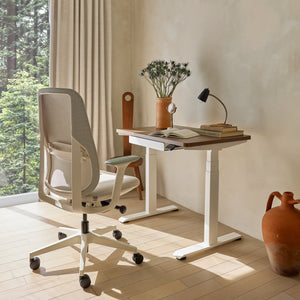
A small workspace does not always need a traditional desk footprint. In many compact rooms, comparing a bistro-table setup with ergonomic desk options for any space helps clarify what is actually necessary. For some people, a desk is still the right solution. For others, a lighter circular surface is the better match because their work relies more on a laptop, notebook, or a limited set of daily tools.
The point is not to reject desks as a category. It is to choose a surface that supports the work without making the room feel overfurnished.
One of the quickest ways to make a small office feel more open is to preserve the line of sight from entry point to window, or from one side of the room to the other. When furniture blocks that path, the room often feels shorter and denser.
A bistro table helps when it is positioned to support that visual continuity. That may mean floating it slightly off the wall, placing it near natural light without blocking it, or centering it in a corner arrangement where the round edge maintains a softer transition.
Not every compact workspace has a dedicated room. Many are carved out of bedrooms, living areas, studio apartments, or transitional corners. That is exactly where a bistro table often performs best.
Positioning a bistro table near a window can make the work area feel brighter and more expansive, especially if the table profile is low and visually light. Daylight keeps the zone from feeling boxed in, and the circular form helps avoid the blocky silhouette that can interrupt a more open view.
This works especially well when the table is paired with restrained styling. The goal is not to crowd the window with objects. The goal is to let the natural light remain the dominant feature.
Many small workspaces end up in corners by necessity. That does not have to make them feel improvised. A round bistro table can turn an awkward corner into an intentional workstation because it meets the angle of the walls without amplifying them.
Rectangular desks often make corners feel tighter by repeating the room’s hard lines. A circular surface introduces contrast and creates a more fluid transition between the work zone and the rest of the room.
When a workspace shares room with living, dining, or sleeping functions, furniture has to do more than serve one task. It needs to belong to the room as a whole. A bistro table makes that easier because it does not read as highly specialized office equipment.
That flexibility is one reason compact urban interiors often favor lighter, more adaptable furniture plans. The same design logic appears in showroom-quality workspace ideas that prioritize clean silhouettes, practical use, and visual balance for rooms where every piece has to earn its place.
Scale is only part of openness. Surface finish also shapes how dense or airy a room feels. Materials influence reflection, contrast, texture, and the overall visual weight of the workspace.
A lighter tabletop can help reflect available light and keep the work area from becoming the darkest anchor in the room. That does not mean everything should be white or pale. It means the dominant surfaces should not absorb so much visual energy that they make the room feel compressed.
Wood tones, matte finishes, and subtle neutral palettes can all work well when they remain cohesive with nearby flooring, walls, and storage pieces.
Small rooms benefit from editing. When every object introduces a new finish, color, or texture, the eye has too many transitions to process. That fragmentation makes the room feel busier than it is.
A more open workspace often comes from repeating a few materials consistently. For example, a warm tabletop, muted seating frame, and one or two carefully chosen accessories usually feel more grounded than a collection of unrelated finishes competing for attention.
Chairs have a major impact on openness because they sit directly beside the table and often occupy nearly equal visual importance. Choosing seating that works with the material language of the table helps the whole workspace feel composed rather than pieced together.
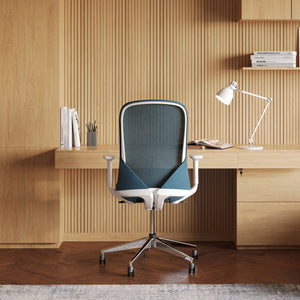
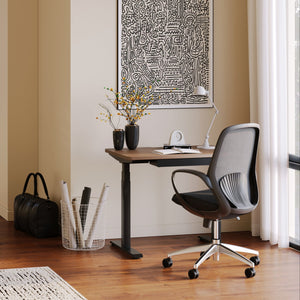
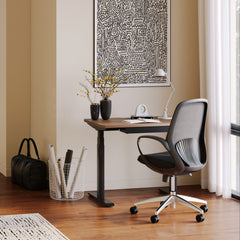
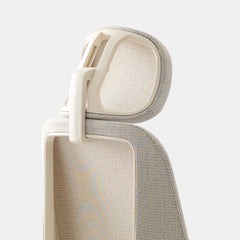
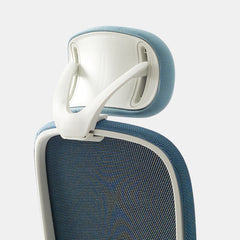
That is where ergonomic office chairs become especially relevant. In a small workspace, comfort still matters, but so does silhouette. A chair can support posture and daily use without looking oversized, padded beyond proportion, or too visually dense for the room.
A bistro table can only make a room feel open if the chair selection reinforces that effect. An oversized chair can cancel out the benefits of a lighter table in seconds.
Low-profile or visually open seating usually works better in compact offices than deep, bulky forms. That does not mean sacrificing support. It means avoiding shapes that dominate the table or create unnecessary volume around it.
Armless designs, narrower frames, and breathable forms often preserve more visual breathing room. They also make it easier to slide the chair fully in when the workspace is not in use.
A small round table paired with a large executive-style chair creates imbalance. The room begins to look as though two unrelated furniture plans were forced together. Better pairings feel proportional, both in height and visual weight.
The most effective setups usually let the table remain the anchor while the chair acts as a supporting element. When both pieces are trying to command the same level of attention, the workspace can feel crowded even before anything is placed on the surface.
Lighting is one of the most underestimated factors in small workspace design. Even a well-proportioned setup can feel closed in when the light is dim, uneven, or concentrated in ways that produce heavy shadow zones.
A bistro table has less surface area than a standard desk, so every object matters. Lighting should support work while preserving usable tabletop space. That makes placement and fixture design especially important.
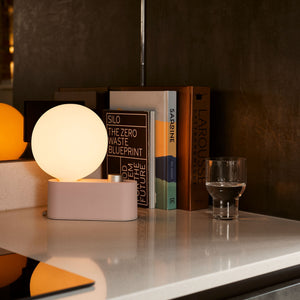
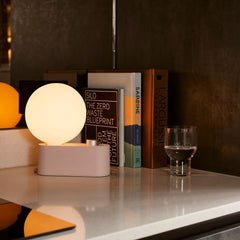
A multi-use LED table and wall light can be useful in this kind of setup because it supports focused illumination without demanding the visual heaviness of a large desk lamp. In a compact workspace, pieces that do more with less physical presence can help maintain clarity.
Small offices do not benefit from dramatic lighting schemes that introduce sharp contrast or decorative excess. What works better is layered light with a calm, functional purpose: enough illumination for reading and screen use, enough ambient support to soften the room, and enough balance to prevent the work corner from feeling isolated.
When the workspace is evenly lit, the room usually feels taller, cleaner, and easier to inhabit for longer stretches.
Styling a bistro workspace is not about adding personality through quantity. It is about making sure the few visible items serve the room rather than crowd it.
Empty space is not wasted space. On a small table, it is often the element that makes the whole arrangement feel functional. A crowded tabletop can make even the best furniture choice seem ineffective.
The most successful setups usually include only the essentials: a laptop or notebook, one light source, and a small number of supporting items. The remaining space lets the table continue to read as open.
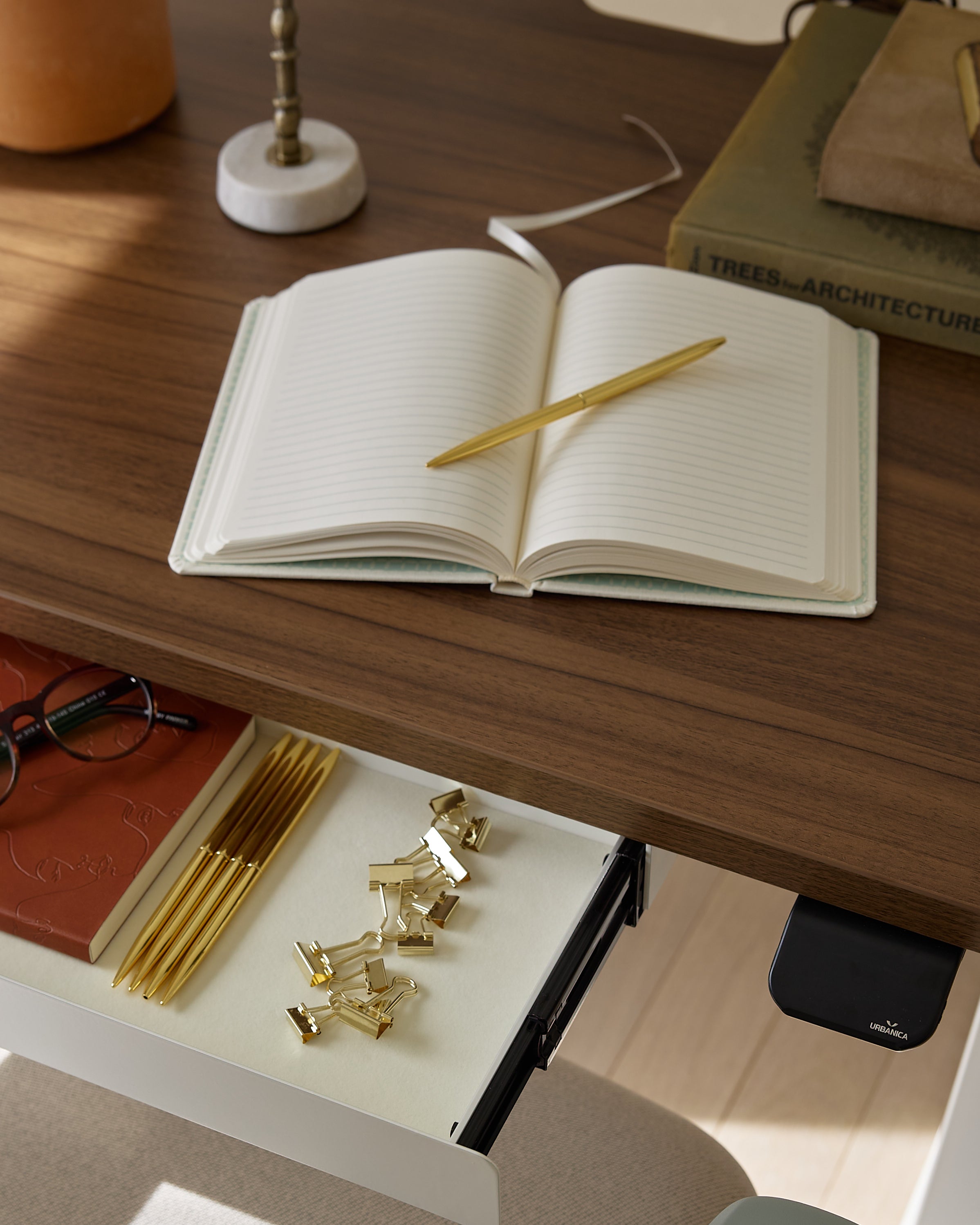
A compact office can still benefit from storage aids, trays, and visual finishing pieces, but the accessory plan has to stay controlled. A thoughtful office furniture accessories collection can help complete the workspace, yet the strongest results come from choosing only what improves function or reinforces the room’s calm visual rhythm.
This is especially important in small work areas because decorative layering tends to accumulate quickly. One object becomes three, and suddenly the table that once looked airy becomes a holding zone for everything that does not have a better home.
The following table shows how common styling choices affect openness in a compact workspace:
| Design choice | Effect on a small workspace | Better direction |
|---|---|---|
| Multiple decorative objects | Makes the surface feel busy | Keep one intentional accent |
| Large storage bins under table | Blocks floor visibility | Use closed storage elsewhere |
| Tall mixed-height items | Breaks visual calm | Limit vertical variation |
| Dark, heavy lamp base | Adds density to tabletop | Choose lighter or more refined forms |
| Too many finish changes | Creates fragmentation | Repeat a few cohesive materials |
Accent lighting can add warmth and character, but in a small workspace it should still support openness rather than compete with it.
On a full desk, a larger lamp may still leave enough functional space. On a bistro table, that same lamp can become visually dominant very quickly. Proportion matters, and so does materiality.
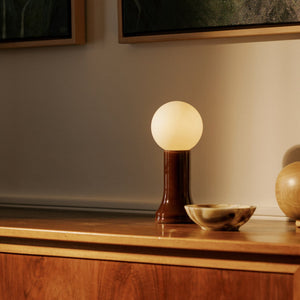
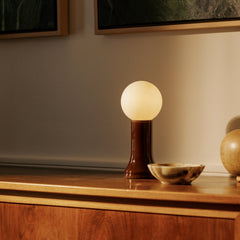
A recycled glass table lamp can work well in this context because glass tends to feel lighter than opaque, blocky forms. Transparent or reflective materials often contribute less visual heaviness, which helps preserve the airy effect that makes a bistro-table workspace successful in the first place.
Compact workspaces respond well to restraint. Instead of combining several decorative lamps, sculptural objects, and layered accessories, it is usually better to let one lighting element carry the visual interest. That keeps the space coherent and avoids the sense that every surface is trying to perform as display space.
Openness is not achieved through one product alone. It comes from a system of choices that continue to work together as daily habits change.
A workspace can look good in a photo and still feel frustrating in use. Real openness shows up in how easily a person can sit down, reach what they need, and move through the room without obstruction. That requires honest editing. If an item does not support work, comfort, or visual clarity, it probably does not belong on or around the table.
The best small workspaces adapt. A bistro table can support focused solo work, casual planning, reading, and lighter creative tasks without forcing the room into a single rigid function. That flexibility matters in homes where one corner may need to shift roles throughout the week.
When the table, chair, lighting, and accessories share a consistent visual language, the room feels settled. When they fight each other in scale, finish, or proportion, the workspace feels improvised. A more open small office is usually the result of careful consistency rather than dramatic design gestures.
A bistro table works because it encourages that discipline. It asks for less surface clutter, less visual bulk, and less spatial overcommitment. In return, it gives a small workspace something many oversized desks cannot: room to feel lighter, clearer, and more open while still supporting the way people actually work.


You have unlocked free shipping!
You're saving $29 and unlocked free shipping!
Leave a comment