



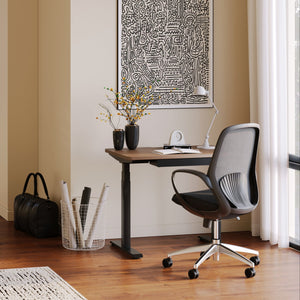
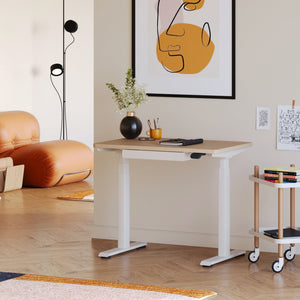






















How a Bistro Table Supports Modern Collaborative Furniture
A bistro table creates a practical middle ground between individual desks and formal meeting rooms. Explore how table height, round geometry,...
Learn more
Visit quiz page to see how we makes it easy to create an inspiring workplace


A workspace should feel calm enough to settle the mind and functional enough to support real concentration. The right table lamp plays a central role in that balance. It can soften a room that feels too clinical, brighten a task zone that feels dim, reduce visual tension during screen work, and give a desk a more intentional sense of order.
The best table lamp options for a relaxed but productive workspace are not defined by one style alone. A focused reader may need a directional lamp that brings clarity to documents. A laptop-based professional may need a softer lamp that reduces contrast between the screen and the surrounding room. A creative worker may prefer a sculptural piece that adds warmth and personality while still supporting visual comfort. A compact home office may need a small lamp that does not compete with the keyboard, monitor, notebook, or daily essentials.
Good lighting also depends on the environment around the lamp. Desk height, monitor placement, cord access, storage, surface finish, and natural light all affect whether a table lamp feels helpful or distracting. A relaxed workspace is built through layers: useful light, clean surfaces, thoughtful power access, comfortable screen positioning, and a style language that feels easy to live with every day.
A table lamp creates a defined area of attention. Overhead lighting may brighten an entire room, but it often does not give the desk enough controlled light for reading, writing, or detailed work. It can also create shadows, flatten the room visually, or make the workspace feel more like a general-purpose area than a place designed for focus.
A well-chosen table lamp gives the desk a visual center. It tells the eye where work happens. That small shift matters in home offices, shared rooms, and hybrid work areas where the boundary between personal time and work time can feel blurry.
Task lighting helps the eye stay oriented on the work surface. When reviewing notes, sketching, writing, or reading printed material, a table lamp can create a clean pool of light where it is needed most. This reduces the need to lean forward, squint, or reposition papers under stronger overhead lighting.
For screen-heavy work, the goal is different. The lamp should not compete with the monitor or reflect into the screen. Instead, it should soften the area around the computer so the screen is not the only bright object in the room. This is especially helpful during evening work, early mornings, or cloudy days when natural light shifts.
A productive workspace does not need to feel cold or severe. Harsh lighting can make a desk feel tense, even when the furniture is comfortable. A table lamp with a shaded, diffused, or warm-neutral glow can make the same desk feel more composed.
This is important for home workspaces because they often sit inside bedrooms, living rooms, dining areas, or multipurpose corners. The lamp has to do more than illuminate a task. It also has to blend into the room so the workspace does not feel visually disruptive when work is done.
A table lamp can subtly define a workstation without a divider, wall panel, or large office fixture. In a studio apartment, a soft desk lamp can separate a work corner from a lounge area. In a bedroom, it can make a small writing desk feel intentional without overwhelming the room. In an open-plan office, a lamp can add individual focus to a shared surface.
The best table lamp options for this kind of workspace have enough presence to shape the area, but not so much size or brightness that they dominate the desk.
Different table lamp styles support different work habits. The strongest choice depends on what happens most often at the desk: typing, reading, drawing, planning, video calls, or mixed daily work.
Directional task lamps are ideal for desks where paper still matters. They help illuminate notebooks, contracts, sketches, planners, printed reports, and books. A focused shade or adjustable head lets the user direct light onto the surface rather than flooding the entire room.
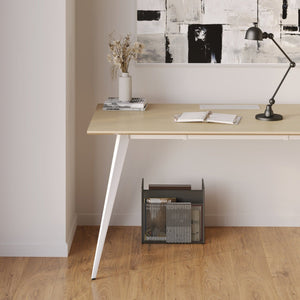
These lamps work especially well when the light can be angled away from the eyes and screens. For right-handed writing, the lamp usually works best on the left side of the desk to reduce hand shadows. For left-handed writing, the opposite placement often works better.
A directional lamp should feel precise, not aggressive. The goal is clear visibility without glare.
For laptop and monitor-based work, a softer lamp can be more useful than a highly focused beam. The main purpose is to reduce the sharp contrast between a bright screen and a darker surrounding room.
A shaded lamp, frosted diffuser, or warm-neutral bulb can make the desk feel easier on the eyes. This style is especially useful for remote workers, writers, analysts, designers, and anyone spending long periods in front of a screen.
Soft ambient lamps can also make video-call setups feel more natural. A lamp placed slightly to the side can add gentle facial illumination, helping prevent a dark or uneven appearance without creating a harsh spotlight effect.
Creative workspaces often benefit from lamps that bring more character to the desk. A sculptural table lamp can add material contrast, color, curve, or texture while still offering useful light.
This style fits design studios, writing desks, mood-board stations, and home offices where atmosphere matters. A lamp with a distinctive form can make the workspace feel less utilitarian and more personal. The key is to choose a piece that still provides usable illumination, not just decoration.
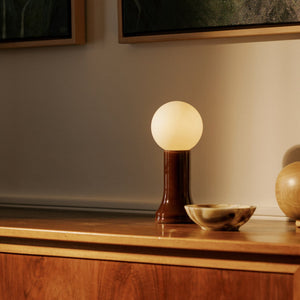
For a workspace that benefits from material warmth and a softer visual presence, the Shore recycled glass table lamp can fit naturally into a desk setting where the lamp is meant to contribute both light and character.
Some work areas need a lamp that can adapt. A desk may also function as a reading table, creative station, side table, or small home office surface. In that case, a multi-use lamp can support different room arrangements without feeling locked into one purpose.
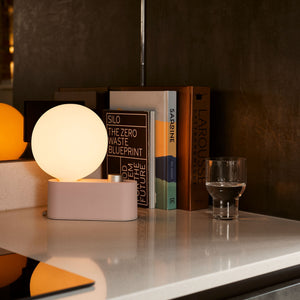
A lamp that works on a table or wall can be especially useful when the desk layout changes or when surface space needs to stay open. The Alumina LED table and wall lamp aligns with this kind of flexible setup because the product is presented as a table and wall lighting option, making it suitable for work areas where adaptability matters.
A workspace lamp should be selected by how the light behaves, not just how the lamp looks. Brightness, color temperature, shade shape, and diffusion all influence whether the desk feels calm, clear, or visually tiring.
Many people still think about brightness in terms of wattage, but wattage describes energy use, not the amount of light. Lumens provide a better way to understand brightness. A desk used for reading or paperwork may need more focused light than a desk used mostly for laptop work. A dark room may need stronger support than a room with large windows and pale walls.
The right brightness should make the task visible without making the workspace feel washed out. A lamp that is too dim can lead to leaning and eye strain. A lamp that is too bright can create glare and make the desk feel uncomfortable.
Warm-neutral light is often the most balanced choice for a relaxed but productive workspace. Very warm light can feel cozy, but it may not provide enough clarity for detail-heavy tasks. Very cool light can feel sharp or clinical, especially in a home office.
A warm-neutral range supports concentration while keeping the room comfortable. It works well for typing, reading, planning, and video calls because it keeps the workspace bright enough for function without pushing the room into harsh office-light territory.
The shade is one of the most important parts of a table lamp. A cone or dome shade directs light downward, which works well for reading and task work. A drum shade diffuses light more broadly, which can help soften a desk zone. An exposed bulb may look minimal, but it can create glare if the bulb is too bright or directly visible from a seated position.
The shade should also relate to the desk size. A wide shade on a small desk can feel crowded. A tiny shade on a large surface may not provide enough useful spread. The lamp should feel proportionate to the work area and the tasks being performed.
| Workspace Need | Best Lamp Quality | Light Feel | Why It Works |
|---|---|---|---|
| Laptop work | Diffused shade or side lighting | Warm-neutral and soft | Reduces contrast around the screen |
| Reading documents | Directional shade | Clear and focused | Improves visibility on paper |
| Writing or sketching | Adjustable light angle | Focused but controlled | Helps reduce hand shadows |
| Video calls | Soft side illumination | Warm and even | Supports a more natural appearance |
| Evening work | Dimmable or low-glare lamp | Warm and gentle | Keeps the room calm while preserving visibility |
| Compact desk | Small base and controlled spread | Localized and tidy | Saves usable surface area |
The best table lamp options are practical because they reflect real work patterns. A desk used for focused writing needs a different lighting strategy than a desk used for video meetings, laptop work, or creative review.
A lamp for screen work should not shine directly into the display or create reflections on glossy surfaces. The light should sit to the side, behind the screen plane, or slightly angled away from the monitor.
A shaded lamp often works better than a bare bulb. The goal is not to brighten the screen. It is to soften the surrounding field of vision so the monitor does not become the only intense light source in the room.
Paperwork needs more direct illumination. Reading printed documents, marking up notes, reviewing plans, or studying from books requires clarity across the surface. The lamp should be positioned to avoid shadows from the hand, arm, or body.
For this setup, a lamp with a directional shade or adjustable head is more useful than a purely decorative lamp. It should make the paper easier to read without forcing the user to move the document repeatedly.
Creative desks often hold more than a laptop. They may include sketchbooks, material samples, color references, tablets, models, notebooks, and design tools. One fixed pool of light may not support every task.
A flexible lamp allows the worker to shift light where needed. A softer secondary light can also help maintain atmosphere while a task lamp handles detail work. This layered approach keeps the creative workspace inviting without sacrificing visibility.
A desk used after sunset should not rely on harsh overhead light alone. A table lamp can create a gentler transition into evening work, especially when tasks involve reading, planning, or light computer use.
The lamp should keep the workspace usable while allowing the rest of the room to stay calm. A warm, shaded, or dimmable option can make late work feel less abrupt and more sustainable.
Even the best lamp will struggle in a cluttered workspace. Papers, cables, stacked accessories, and scattered supplies interrupt the way light falls across the desk. A relaxed but productive workspace depends on visible order as much as good lighting.
A lamp should illuminate the task, not a pile of unrelated items. When the desk surface is crowded, light becomes uneven. Shadows appear in odd places, documents get partially blocked, and the desk starts to feel visually noisy.
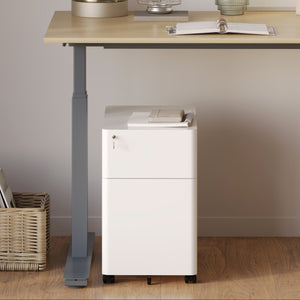
Storing extra paper, office supplies, and small essentials away from the primary work surface helps the lamp perform better. A compact filing cabinet for desk-side storage supports this kind of setup by keeping frequently used items close without requiring them to live on top of the desk.
A table lamp adds a cord to the workspace unless the power source is planned carefully. That cord can quickly join laptop chargers, monitor cables, phone chargers, and accessory lines. When cords are visible from the main seated position, the desk can feel less calm even if the lamp itself is beautiful.
Good lighting should be paired with intentional cable paths. Cords can run toward the back edge of the desk, down a leg, through a power module, or toward a nearby outlet in a way that does not interrupt the visual field.
Soft lighting works best when the desk has room to breathe. A warm table lamp on a crowded surface may make the clutter more visible. The same lamp on a clean, edited desk can create a composed atmosphere that supports focus.
This does not mean the desk has to be empty. It means the items on the desk should have a purpose: laptop, notebook, pen tray, lamp, monitor, keyboard, and perhaps one personal object. Everything else should earn its place.
Lighting and ergonomics are closely connected. When a workspace is poorly lit, people often lean forward, tilt their heads, raise their shoulders, or move closer to the screen. A lamp should support a comfortable posture, not compensate for an uncomfortable layout.
A laptop sitting too low can pull the head downward, which changes how the eyes meet the screen and how light reflects across the display. Raising the screen can improve posture and make it easier to position a lamp without glare.
A laptop stand for better screen height can help create a more comfortable relationship between the lamp, screen, and seated eye level. Once the screen is better positioned, the lamp can be placed to support the workspace instead of fighting reflections or awkward viewing angles.
A shallow desk may need a compact lamp with controlled light. A deep desk can handle a taller lamp or wider shade, especially if the work surface includes both screen and paper zones. Desk depth also affects reach. A lamp that is difficult to turn on, adjust, or move will be less useful in daily work.
The best lamp should sit where it can be used naturally. If adjusting the shade requires leaning awkwardly across the desk, the lamp may not support productivity as well as a simpler, better-positioned option.
When light is inadequate, the body adapts in subtle ways. A person may lean toward paperwork, tilt the screen, hunch over a notebook, or move the chair closer than ideal. These small adjustments can build discomfort over long work sessions.
A proper table lamp helps keep the work visible from a relaxed seated posture. The user should not need to chase the light. The light should support the natural working position.
A table lamp needs power, and so does the modern workspace. Laptops, monitors, phones, tablets, speakers, and task lights can quickly overwhelm a single outlet. Planning power access helps the lamp become part of a clean system rather than another source of cord clutter.
For a dedicated workspace, built-in power can keep devices connected without running multiple cords across the desk. This is useful when the table lamp shares space with a laptop charger, monitor, phone charger, or desk accessory.
An in-desk power module with AC and USB ports is a relevant companion for workstations where power access should feel integrated into the desk rather than scattered around it. This kind of setup can help keep the table lamp functional while reducing visual clutter around outlets and adapters.
Not every desk setup is permanent. Some workstations move, change orientation, or need power access without built-in installation. A clamp-on option can be useful for renters, shared work areas, height-adjustable desks, or desks that need more accessible outlets along the edge.
A clamp-on desk power with multiple outlets can support a lamp and other devices in a flexible setup where power needs to remain within reach. This is especially helpful when the lamp location changes based on daylight, room layout, or task type.
Before placing the lamp, it helps to notice where cords will travel. A beautiful lamp can feel distracting if the cord cuts across the writing zone or hangs awkwardly from the front of the desk. The cleanest setups usually send cords toward the back edge, side edge, or a dedicated power access point.
The lamp should look settled, not improvised. Proper cord direction makes the entire workspace feel more intentional.
A relaxed but productive workspace should reflect the person using it. The best lamp option for one desk may feel wrong on another because the room, tasks, furniture, and working rhythm are different.
A minimalist workspace benefits from a lamp with a simple profile, restrained finish, and controlled light spread. Matte metal, white, black, soft gray, or warm neutral finishes can work well. The lamp should support focus without becoming the loudest object on the desk.
For this type of workspace, the strongest choices usually have clean geometry and modest proportions. The lamp should make the desk feel quiet, not empty.
A creative desk can handle more expressive lighting. Curved shapes, glass, textured finishes, or sculptural forms can add inspiration without making the surface chaotic. The lamp should still provide practical visibility for sketching, reviewing, reading, or screen work.
The best creative workspace lamp feels personal but useful. It contributes atmosphere while respecting the tasks that happen at the desk.
An executive desk often needs lighting that feels polished and dependable. The lamp may support document review, planning, signing, calls, and focused reading. Symmetry can work well here, especially on larger surfaces where one lamp balances the desk without crowding it.
Materials matter in this setting. Metal, glass, ceramic, or refined matte finishes can create a composed presence. The lamp should feel substantial enough for the desk scale but not oversized.
A small workspace needs a lamp that respects limited surface area. A narrow base, vertical profile, or wall-capable design can help preserve room for a laptop, notebook, and daily tools. The lamp should provide enough light without taking over the desk.
In compact spaces, the lamp often needs to look good even when work is not happening. It becomes part of the room, not just part of the desk.
A shared workspace may require a more adaptable lamp. One person may use the desk for video calls while another uses it for reading or household planning. A lamp with adjustable direction, soft diffusion, or flexible placement can help the desk serve multiple users without constant rearranging.
The best choice is one that supports different tasks without requiring a complicated setup.
The lamp should feel connected to the desk, chair, storage, and surrounding room. It does not need to match everything exactly, but it should belong within the material palette.
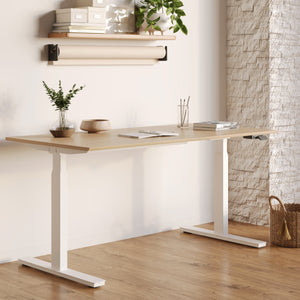
Wood has natural warmth, and the right lamp can bring that quality forward. A warm-neutral bulb, fabric shade, soft glass, or matte finish can make a wood desk feel grounded and inviting.
The lamp should not overpower the grain or tone of the wood. Instead, it should enhance the sense of calm that natural materials already provide.
White and light-colored desks reflect more light than darker surfaces. A lamp that is too bright or too exposed can create glare across the work area. Diffused shades, lower-intensity bulbs, and angled placement often work better.
The goal is clarity without reflected harshness. A white desk can feel clean and focused when the lamp is soft enough to balance the brightness.
Black, charcoal, or dark wood desks can feel sophisticated, but they may absorb light. A table lamp can bring necessary visibility while softening the overall mood. Warmer light and rounded forms can keep a dark desk from feeling severe.
This is where material contrast helps. A glass lamp, lighter shade, or brushed metal detail can brighten the surface without making the workspace feel visually busy.
Glass, lacquered, or glossy desktops can reflect light directly into the eyes or screen. A lamp for these surfaces should have good shade control and careful placement. Angling light downward and away from reflective screen paths is usually more comfortable than placing the lamp directly beside a glossy monitor.
For reflective surfaces, the most stylish lamp is not always the most comfortable one. The light pattern matters.
A table lamp works best as part of a layered lighting plan. Relying on one source of light can create strong contrast, uneven shadows, or a workspace that feels isolated from the rest of the room.
Natural light can make a workspace feel energized, but it changes constantly. Morning light may be soft, afternoon light may be direct, and cloudy weather may leave the desk dim. A table lamp helps stabilize the workspace through those changes.
The lamp should not compete with the window. It should fill in the darker areas and support the work surface when daylight becomes uneven.
Overhead lighting can keep the room from feeling too dark, while the table lamp supports the actual task. This combination prevents the desk from becoming a bright island surrounded by darkness.
A balanced setup feels easier on the eyes because the brightness difference between the desk and room is less extreme.
In the evening, a nearby floor lamp, shelf light, or low-level background light can make the workspace feel calmer. The table lamp handles the task, while the surrounding light prevents the room from feeling too stark.
Layered light is especially useful for people who work in living spaces. It helps the room remain comfortable while still supporting productivity.
A lamp can look good and still be wrong for the desk. The most common mistakes usually involve scale, glare, brightness, or placement.
A lamp should fit the room visually, but appearance alone is not enough. Shade shape, bulb type, height, base size, and light direction all affect comfort. A decorative lamp that does not provide useful light may become frustrating during daily work.
Style should support function. The best options do both.
Very cool light can make a workspace feel harsh, especially in a home environment. Excessive brightness can also create glare or visual fatigue. A productive desk should feel clear, not overexposed.
Choosing a softer, warmer, or better-shaded lamp often creates a more sustainable workspace.
A common mistake is setting the lamp beside the monitor without checking reflections. This can create bright spots on the screen, especially with glossy displays. Moving the lamp slightly behind the screen plane, angling the shade, or shifting it to the opposite side can make a major difference.
The lamp should support the screen environment, not compete with it.
A lamp that is too large for the desk can interfere with the keyboard, mouse, notebooks, or writing area. This is especially common on small desks where every inch matters. The lamp base should leave enough room for the primary work zone.
A relaxed workspace depends on physical ease. If the lamp makes the desk harder to use, it is not the right fit.
A good table lamp decision becomes easier when the selection process is systematic. The right option should match the work, the desk, the room, and the way the user moves through the day.
Before choosing style, identify the main activity. Laptop work needs soft support. Reading needs focused light. Creative work may need flexibility. Video calls benefit from side lighting. Mixed work may require a lamp that balances diffusion and direction.
The clearest task should guide the lamp type.
A large executive desk can handle a lamp with more presence. A compact laptop desk needs a smaller base and tighter light spread. A shared table may need a lamp that can be moved or angled easily.
Scale affects both comfort and appearance. The lamp should feel proportionate to the surface.
The lamp should be tested from the actual working posture. From a seated position, the bulb should not shine directly into the eyes. The shade should not block the monitor. The light should reach the work area without creating harsh reflections.
A lamp that looks perfect from across the room may behave differently at the desk.
The lamp’s cord should have a clean route to power. If the desk also supports multiple devices, power planning becomes part of the lighting decision. A clean power setup helps the lamp feel integrated rather than added as an afterthought.
1. Choose diffused light for screen-heavy work.
2. Choose directional light for reading, writing, and paperwork.
3. Use warm-neutral light for a balanced workspace mood.
4. Keep the bulb or brightest point out of direct eye line.
5. Place the lamp to avoid screen reflections.
6. Match the base size to the available desk surface.
7. Keep storage and power access organized so the lamp can support a clear work zone.
The best table lamp options for creating a relaxed but productive workspace are the ones that support the complete environment. The lamp should help the desk feel calmer, make tasks easier to see, reduce visual clutter, and fit the furniture around it.
A productive workspace is not built from brightness alone. It comes from thoughtful relationships: the lamp and the screen, the lamp and the desk finish, the lamp and the power source, the lamp and the storage nearby. When each part works together, the desk feels easier to approach and more comfortable to use.
For workspaces where lighting, desks, seating, and accessories need to feel cohesive rather than pieced together, exploring modern office furniture for creative workspaces can help connect the lamp choice to the larger environment. A table lamp may be a small object, but when it is chosen carefully, it can change the entire rhythm of the workspace.


You have unlocked free shipping!
You're saving $29 and unlocked free shipping!
Leave a comment