



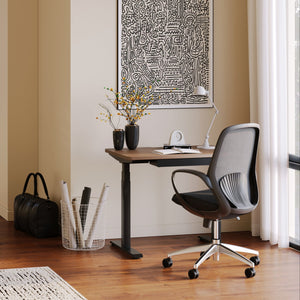
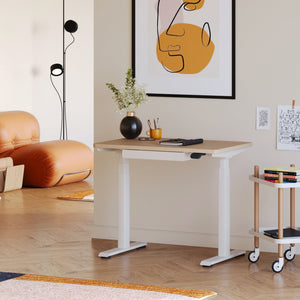
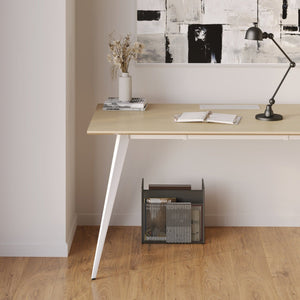
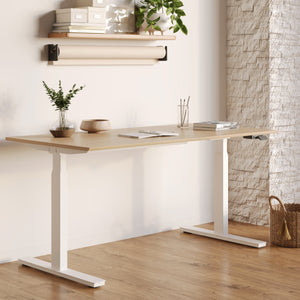

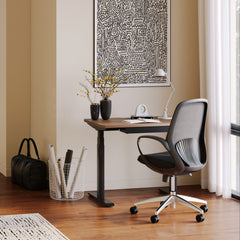
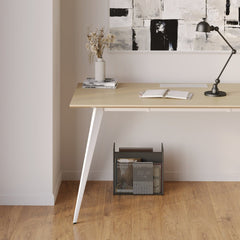
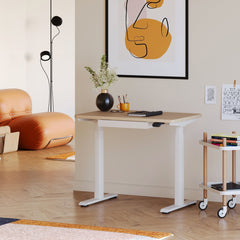

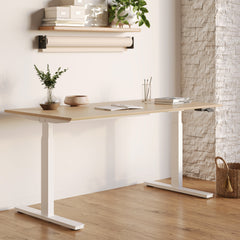





Filing Cabinet Choices for Cleaner Workstation Planning
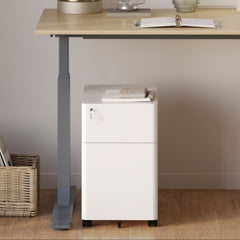
Cleaner workstation planning starts with filing storage that matches the desk, document volume, security needs, and daily workflow. Explore how cab...
Learn more
Visit quiz page to see how we makes it easy to create an inspiring workplace


For people who spend most of the day at a computer, the question is usually not whether sitting is inherently bad. The more practical concern is what happens when sitting becomes the default position for nearly every hour of the workday. Long stretches of stillness can lead to stiffness, reduced posture awareness, and a setup that quietly encourages the body to stay in one position longer than it should. That is where standing desks enter the conversation.
A standing desk can be a useful improvement for people who already sit all day, but not because standing is automatically healthier in every situation. The stronger benefit is that a standing desk makes it easier to change positions throughout the day. That shift matters. The body tends to respond better to variation than to extremes, and a workstation that supports movement can be more valuable than one that forces either constant sitting or constant standing.
The best answer is not that standing desks replace sitting. It is that they can reduce how often someone gets stuck in one posture for hours at a time. For office workers, remote professionals, and home users trying to build a more functional setup, that distinction matters far more than trends or one-size-fits-all advice.
Most desk-related discomfort builds gradually. It often begins with a few hours of concentrated work, a monitor that is slightly too low, shoulders that creep upward, and a keyboard position that encourages the wrists to do more work than they should. None of that feels dramatic in the moment. Over time, though, prolonged stillness can make the workday feel heavier on the neck, back, hips, and legs.
That is why the standing desk gained traction. It offered something many workstations did not: the ability to change posture without abandoning the desk itself. People who began looking into height-adjustable desk options were often trying to solve a simple but important problem. Their work required them to stay at the desk, but their body did not want to stay in one position the entire day.
The popularity of standing desks also created some confusion. Standing can help break up seated time, but standing alone is not the end goal. Someone who stands in one place for long periods without changing position may still feel fatigued, especially in the feet, calves, knees, or lower back. The body generally benefits more from alternating positions than from locking into a single upright posture for hours.
That is why the most useful way to think about a standing desk is as a movement-support tool. It creates more opportunities to shift posture, reset alignment, and change how the body carries workload during the day.
Sitting is not necessarily harmful when it is supported well and interrupted regularly. The issue is that most people do not sit in a perfectly supported posture for eight or nine hours. They lean, slump, crane forward, reach awkwardly, and forget to stand until discomfort reminds them. Once the body remains in those positions too long, stiffness becomes more likely.
This is especially common in work that involves long stretches of typing, task management, data review, creative production, or virtual meetings. The body is capable of handling seated work, but it does not perform as well when seated work becomes static work.
Many people start the morning with better posture than they end the afternoon with. Fatigue changes how someone sits. Attention shifts away from body mechanics. A person who begins the day with feet grounded and shoulders relaxed may later find themselves leaning into the screen or collapsing into the chair.
That is why a better workstation is not only about initial setup. It is also about making posture resets easier throughout the day. A dedicated adjustable standing desk can support this by giving users a practical way to switch positions when seated work starts to feel heavy or compressed.
Someone may work out regularly and still feel the effects of sitting all day. A morning walk, gym session, or evening workout is valuable, but it does not always undo the strain of being largely motionless at a desk for most of the day. That does not mean the situation is hopeless. It simply means that workday behavior still matters.
A standing desk can help because it improves the workday itself. It adds more variation to the hours that usually have the least movement.
The biggest benefit of a standing desk is convenience. Without an adjustable workstation, changing posture often means leaving the desk, improvising on another surface, or simply deciding to stay seated because switching feels disruptive. A standing desk removes much of that friction.
That matters because people are more likely to change habits when the habit is easy to perform. Standing for a call, reviewing notes while upright, or shifting to a new position between tasks becomes much more realistic when the desk is built to support those transitions.
When a desk changes height, users often become more aware of monitor position, elbow angle, hand placement, and how their body is interacting with the workstation. That does not guarantee perfect ergonomics, but it encourages more active participation in the setup. Instead of adapting the body to a fixed surface, the workstation can be adjusted to better match the user and the task.
A standing desk is not a cure for discomfort. If the screen is poorly positioned, the wrists are bent upward, or the user never takes walking breaks, the desk alone will not fix those issues. In the same way, switching to standing is not a replacement for exercise, proper chair support, or better workstation organization.
A good desk helps the body change positions more often. It does not remove the need for thoughtful setup or consistent daily habits.
For many people, yes. A standing desk is often better than sitting all day without meaningful breaks because it makes variation easier. That can help reduce the feeling of being locked into one posture, especially during long computer-heavy workdays.
The improvement usually comes from reducing uninterrupted sedentary time. It is less about standing for heroic lengths of time and more about inserting posture changes into the workday before discomfort builds.
A standing desk is not automatically helpful if someone uses it to stand for long unbroken periods without paying attention to comfort, fatigue, or alignment. Overuse can create its own problems, including sore feet, tired legs, and reduced focus.
The stronger approach is balanced. Sit for tasks that benefit from support and stability. Stand for tasks that are easier to do upright. Switch often enough that neither position becomes a strain.
Many desk workers are not looking for dramatic transformation. They want to feel less stiff by midday and less compressed by the end of the afternoon. Alternating between sitting and standing may help some people relieve that pressure, especially when seated work has been continuous for hours.
Neck and shoulder tension often come from a mix of screen position, posture drift, and repetitive arm placement. A standing desk can encourage resets that improve alignment, but only if the workstation is adjusted properly for both sitting and standing heights.
Some users report feeling more alert when they stand during lighter tasks such as reading messages, joining calls, reviewing documents, or planning work blocks. The reason is not magic. Small posture changes can make repetitive work feel less stagnant, and that alone may improve how a person experiences the day.
The most meaningful advantage may be behavioral. A desk that supports standing also encourages smaller movements around the day. Someone may step away more often, shift weight, stretch between tasks, or change position after a meeting. These are modest changes, but they are often the ones people maintain.
A standing desk works best when the whole setup supports easy transitions. If chargers are hard to reach, cables snag during adjustment, or the desktop feels cluttered, users may avoid changing height even when they know it would help.
That is why features such as integrated desk power access can be useful in the right setup. The goal is not to turn the desk into a gadget showcase. It is to reduce daily friction so the workstation remains functional whether the user is seated or standing.
A desk that technically adjusts but feels inconvenient will often be underused. Practical details matter. A cleaner setup, reachable accessories, and better cable control can make posture changes feel normal rather than disruptive.
For workstations that need additional charging access without cluttering the surface, a clamp-mounted power hub can support a more organized layout while keeping essential connections within easier reach.
A common mistake is trying to stand for too long too soon. That can make the experience feel tiring and unsustainable. A better approach is to start with shorter standing periods during lighter tasks and build comfort gradually.
Not every task needs the same posture. Standing often works well for:
video calls
reading and reviewing
inbox management
planning and light brainstorming
Sitting may be better for:
long typing sessions
precision design work
detailed editing
deep focus work later in the day
There is no universal ratio that fits everyone. A more realistic goal is to avoid staying in one position so long that it becomes uncomfortable. When the workstation supports smooth switching, people are more likely to find a rhythm that suits their job and body.
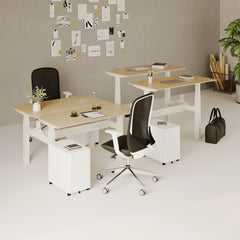
For users who rely on multiple screens, keep several tools on the desk, or spend most of the workday at one station, a larger adjustable desk often makes the most sense. More surface area can support better monitor placement, easier organization, and fewer compromises.
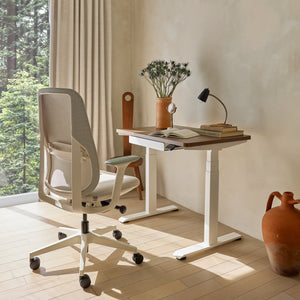
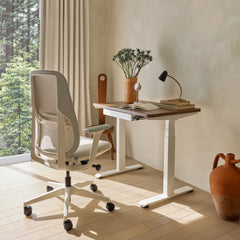
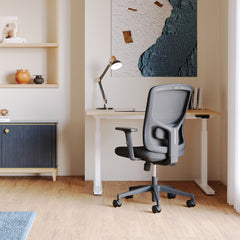
Not every workspace needs a large footprint. In apartments, tighter home offices, or flexible secondary work areas, a compact sit-stand desk for smaller work areas may provide the benefits of posture variation without taking over the room. This kind of setup can be especially useful for laptop users or anyone building a lighter workstation.
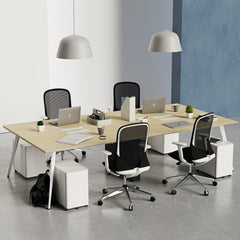
Some workplaces need solutions that support more than one user within the same layout. In those cases, a dual-user adjustable workstation can fit collaborative environments where flexibility, layout consistency, and efficient use of space all matter.
| Workstation type | Best fit | Main advantage | Main limitation |
|---|---|---|---|
| Fixed-height desk | Users comfortable with a seated-only setup | Simple and familiar | Limited posture variation |
| Full-size standing desk | Primary daily workstation | Supports regular sitting and standing transitions | Requires thoughtful setup and organization |
| Compact standing desk | Smaller rooms or lighter workflows | More flexible footprint | Less surface area for equipment |
| Shared sit-stand workstation | Team spaces or dual-user layouts | Supports collaborative flexibility | Needs careful planning for shared use |
The best option depends less on what sounds most advanced and more on what supports realistic daily use. A standing desk should make movement easier, not complicate the workspace.
A standing desk should feel suitable for the way the desk is actually used. Surface size, layout compatibility, and adjustment practicality matter more than marketing language. The most impressive-looking desk is not always the one that best supports the user’s routine.
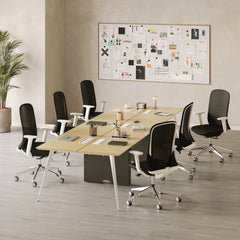
In home offices, space constraints often shape the right choice. In professional environments, consistency, finish, team workflow, and planning across multiple workstations may become more important. For businesses or individuals looking at broader workspace solutions, regional office furniture solutions for professional workspaces can help connect the desk decision to the rest of the work environment.
Standing desks can be better for people who already sit all day, but the real value comes from what they allow the workday to become. They make it easier to change positions, interrupt long sedentary stretches, and build a workstation that supports movement without sacrificing productivity.
That is a more honest and more useful standard than treating standing as a cure-all. The strongest setup is one that helps someone move more naturally, stay organized, and avoid getting trapped in a single posture for hours at a time. For people whose jobs require long desk days, that kind of flexibility is often the real upgrade.


You have unlocked free shipping!
You're saving $29 and unlocked free shipping!
Leave a comment